What core mathematical structure provides the metric system's primary advantage over historical Imperial units?
Inherent reliance on the decimal base, using factors of ten, one hundred, one thousand, and so on.
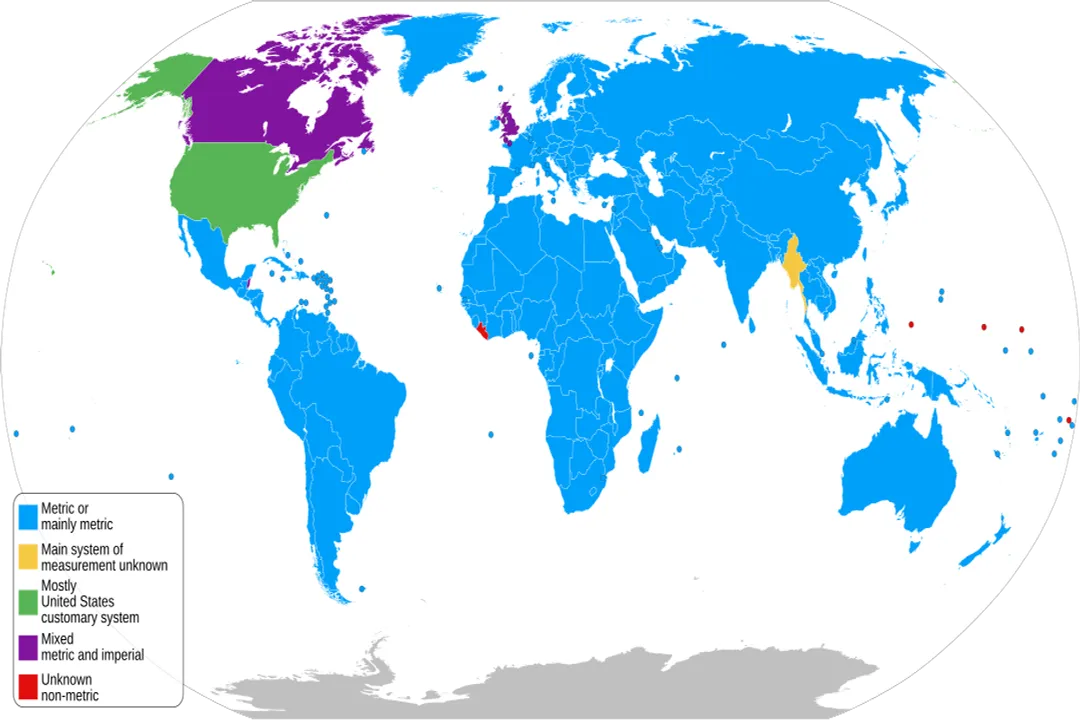
The defining characteristic that guaranteed the metric system's eventual global dominance over systems like the US customary units is its foundation in the decimal base. All relationships between multiples and sub-multiples within the metric system are structured by powers of ten (10, 100, 1000, etc.). This structure is managed through standardized prefixes like *kilo-* (1,000) and *milli-* (1/1,000). This makes conversions straightforward multiplication or division by factors of ten, drastically reducing the potential for calculation errors, especially in technical fields like engineering, physics, or chemistry, which require complex arithmetic. Historical systems, conversely, relied on disparate conversion factors such as multiplying by three (yards to feet) and twelve (feet to inches), which are far more error-prone.
#Videos
Who Invented the Metric System (and Why It Isn't As Perfect as You ...