Who invented metrics?
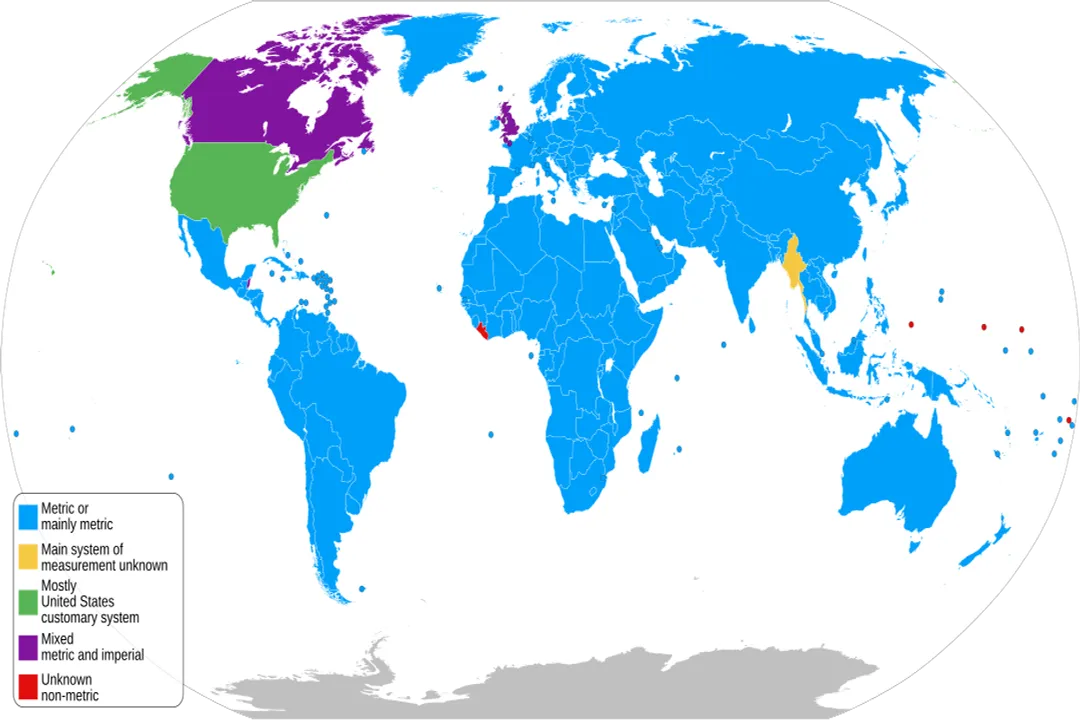
The invention of the metric system was not the work of a lone genius toiling in a basement laboratory, but rather a sweeping, ambitious political and scientific project born from revolutionary fervor and the Enlightenment's demand for universal reason. It arose from the deep, practical frustration caused by the chaotic mess of weights and measures that governed commerce and daily life across Europe, and particularly within France, prior to the late 18th century. [6][4] Imagine trying to conduct trade when the definition of a "foot" or a "pound" changed not just from country to country, but often from town to town, or even between different guilds within the same city. [2] This inconsistency bred distrust, hindered fair trade, and made scientific collaboration incredibly difficult. [4]
# French Necessity

The intellectual climate of the late 1700s provided the necessary push. The ideas circulating during the Age of Enlightenment championed logic, clarity, and universality in all human endeavors. [6] When the French Revolution erupted, the momentum to sweep away the old structures extended to the very tools used for measurement. The goal was explicitly to create a system that was natural and universal, not based on the whim of a monarch or local custom, but rooted in immutable natural standards. [6][7]
The French National Assembly took up this challenge, recognizing that a standardized system would be a powerful symbol of the new, rational republic. [6][4] They charged the French Academy of Sciences with the monumental task of developing this new standard. [6] This was a deliberate move to imbue the new system with scientific authority, separating it from the arbitrary nature of the ancien régime. [2]
# Earth's Measure
The scientific commission faced an immediate, profound question: what immutable standard should define the fundamental unit of length? The answer they settled upon was both audacious and profoundly symbolic: the Earth itself. [6] The resulting definition for the meter was established as one ten-millionth of the distance from the North Pole to the Equator, measured along the meridian passing through Paris. [6][1][7] This choice elegantly linked the unit of measure to the planet on which all commerce and science occurred.
To realize this definition, scientists undertook an extraordinary geodetic survey. In the 1790s, surveyors Jean-Baptiste Delambre and Pierre Méchain embarked on a grueling, decade-long measurement campaign spanning from Dunkirk in the north to Barcelona in the south. [6][4] They were tasked with precisely measuring the arc of the meridian. This survey was fraught with peril and technical difficulty; the surveyors faced suspicion from local populations during the Reign of Terror, and one, Méchain, struggled with the perceived inaccuracy of his early measurements, tragically taking his own life. [6] Despite these immense human and logistical costs, their work culminated in the creation of the definitive prototype standards.
The other critical component established at this time was the kilogram, defined as the mass of one cubic decimeter of pure water at the temperature of its maximum density, which was determined to be about Celsius. [1][7]

# Prototype Standards
By 1799, the first physical benchmarks—the physical representations of the meter and kilogram—were deposited in the French Archives for safekeeping. [1] These official platinum artifacts, known as the mètre des archives and the kilogramme des archives, served as the primary reference points for the fledgling metric system. [1] While the initial system was technically based on a calculation involving the Earth's size, these physical objects became the practical basis for measurement for decades afterward. [7]
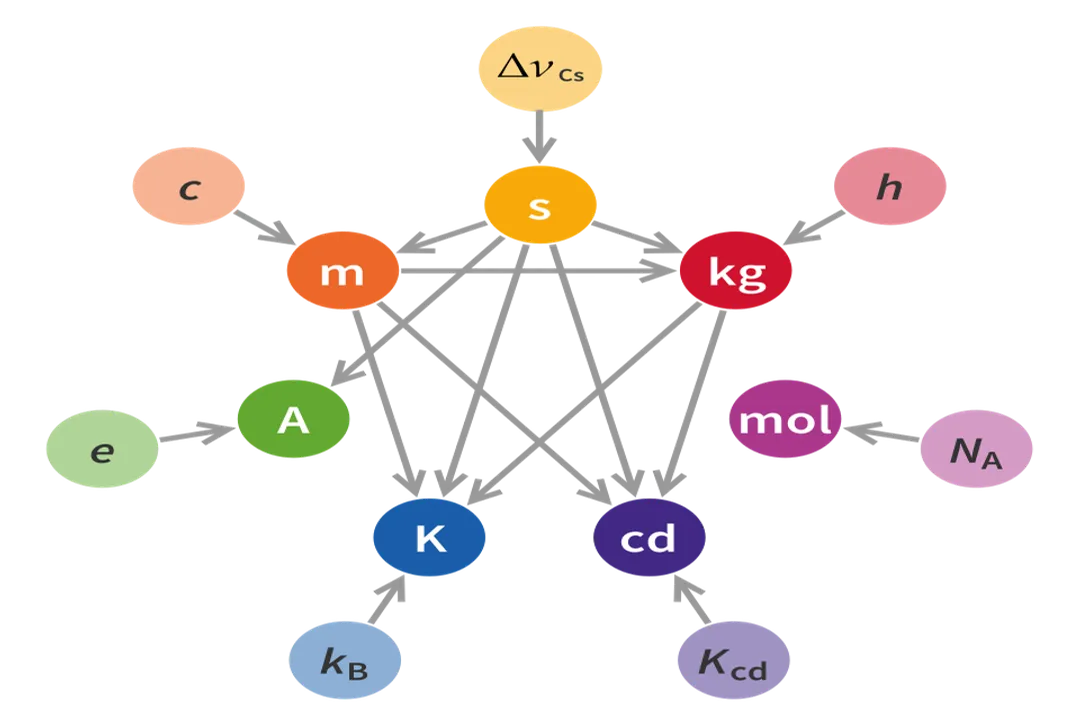
It is fascinating to observe how the scientific intent has shifted over time. The initial system, though scientifically rigorous for its day, was inherently political—it had to be tied to something eternal (the Earth) to gain legitimacy against local customs. [6] This contrasts sharply with the modern metric system, now known formally as the International System of Units (SI), where the definitions are purely empirical and universally agreed upon by international treaty, often relying on fundamental constants of nature rather than physical objects susceptible to wear or damage. [7][10] For instance, the meter is now defined by the distance light travels in a vacuum during a specific fraction of a second, a reference point far more stable than any terrestrial arc. [7]
# Global Diffusion
The metric system was legally mandated in France in 1795, but its adoption was far from immediate, even domestically. [6] Napoleon temporarily allowed for the return of older, traditional units around 1812, acknowledging the difficulty ordinary citizens and many businesses had transitioning to the completely new system of prefixes and powers of ten. [6] Internationally, adoption was even slower. Countries like the United States and the United Kingdom historically favored their inherited customary systems. [2]
The British experience, for example, highlights the tension between scientific progress and established tradition. While Britain contributed significantly to the eventual precision and standardization that would lead to the SI, its initial resistance to full adoption was rooted in centuries of commercial precedent. [10] Even when nations agreed to adopt the metric system formally, the actual integration into commerce often lagged significantly, proceeding sector by sector. One interesting observation from this period is that scientific and academic communities—where precision was paramount—usually adopted metric units decades before local retail markets fully converted. This meant that for a long time, an engineer in London might calculate engine displacement in cubic centimeters while a grocer across town weighed sugar in pounds and ounces. [2]

# Evolution to SI
As metrology advanced throughout the 19th and 20th centuries, the necessity for even greater precision drove the system to evolve beyond the platinum artifacts stored in Paris. [7] The system needed to become independent of any single physical object. This led to the development of the International System of Units (SI), which is the modern, standardized form of the metric system used globally by nearly every country for trade and science. [10][7]
The shift involved creating international bodies, such as the General Conference on Weights and Measures (CGPM), to oversee the definitions. [10] This international cooperation, involving key nations working toward exact congruence in their measurements, ensured that a meter measured in Tokyo would be exactly the same as a meter measured in Berlin. [7] This high level of global standardization, built upon the original French framework, is one of the key reasons globalized high-tech manufacturing and instantaneous electronic communication are possible today. When precision is paramount, relying on an artifact that could theoretically be damaged or degraded is unacceptable; relying on the speed of light is not. [7]
The eventual move to redefine the base units based on universal physical constants—such as the speed of light for the meter, Planck's constant for the kilogram, and the charge of the electron for the ampere—cemented the metric system's status as the most reliable system devised to date. [7] This transformation shows that "invention" wasn't a single event in 1799, but an ongoing process of refinement driven by the relentless pursuit of accuracy.
# Decimal Advantage
A core feature that made the metric system superior to its predecessors, and which ensured its eventual worldwide acceptance over Imperial or US customary units, is its inherent reliance on the decimal base. [1] All multiples and sub-multiples are related by factors of ten, one hundred, one thousand, and so on, easily managed using standard metric prefixes like kilo- (1,000) and milli- (1/1,000). [1]
Consider the sheer simplicity of conversion: if you know a road is 5 kilometers long, converting that to meters is a simple matter of multiplying by 1,000, resulting in 5,000 meters. [1] Contrast this with historical systems, where converting yards to feet involves multiplying by three, and feet to inches involves multiplying by twelve—a system prone to calculation errors, especially in fields like engineering or chemistry where complex calculations are routine. [2] This decimal structure acts as a built-in error-reduction mechanism, which likely explains why even nations that have not officially adopted the SI for all purposes frequently employ metric units in their scientific or technical literature. [2] The ease of calculation outweighs cultural inertia in specialized fields.
The story of who invented metrics is thus multifaceted. It wasn't a person, but a committee of French scientists acting under revolutionary decree who conceived of defining length by the Earth. Yet, it was later generations of international metrologists who perfected the system by decoupling its definitions from physical objects and anchoring them in the fundamental laws of the universe, ensuring its longevity as the SI. [7][10]
#Videos
Who Invented the Metric System (and Why It Isn't As Perfect as You ...
Related Questions
#Citations
History of the metric system - Wikipedia
Origin of the Metric System
History of the Metric System
Who invented the metric system? | HISTORY
The Origins of the Metric System - Pro-Lite Technology Iberia
How France created the metric system - BBC
Measurement system - Metric, Units, Conversion | Britannica
The Origin of the Metric System | Smithsonian Institution
Who Invented the Metric System (and Why It Isn't As Perfect as You ...
How the British Invented, and Contributed to, the Metric System and ...