How do modern e-commerce bots processing a suggestion differ from ELIZA's immediate context handling?
Answer
Modern bots deal in semantics, historical preference matrices, and predictive modeling
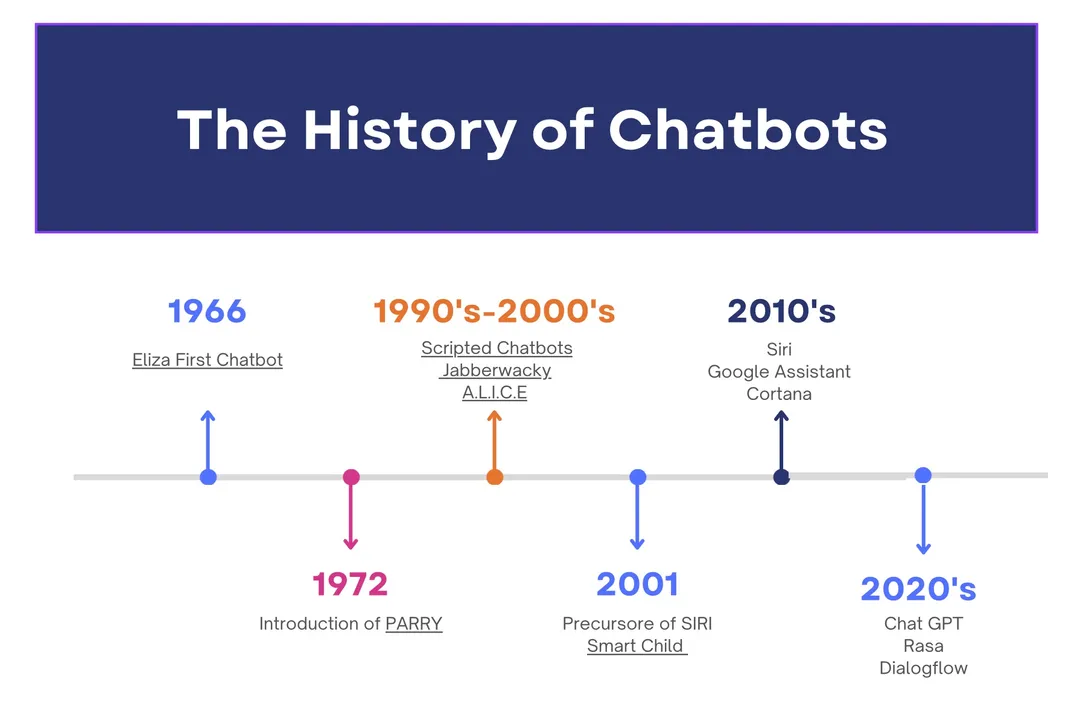
The core technical divergence lies in the depth of processing. ELIZA operated primarily at the level of syntax, reacting only to the immediate words used in the current turn of dialogue, using static templates. In stark contrast, a modern recommendation bot functions by analyzing complex semantics, accessing historical preference matrices derived from past user behavior, and employing predictive modeling to generate highly personalized suggestions, such as recommending a specific brand of coffee based on prior purchases.
Related Questions
Who developed the foundational program ELIZA at MIT in 1966?What was Joseph Weizenbaum's initial intent for creating ELIZA?What core mechanism did the early program ELIZA utilize for generating responses?Which psychiatrist developed PARRY in the early 1970s to simulate a specific mental state?What was the primary focus of early chatbots like ELIZA compared to modern recommendation bots?What three technological ingredients were necessary for the evolution to modern recommendation chatbots?What key reaction regarding ELIZA convinced Weizenbaum he should critique AI?What underlying technology governed the responses of both ELIZA and PARRY?How do modern e-commerce bots processing a suggestion differ from ELIZA's immediate context handling?What role does the principle of using conversational language play in modern chatbot existence?