Who invented mental health chatbots?
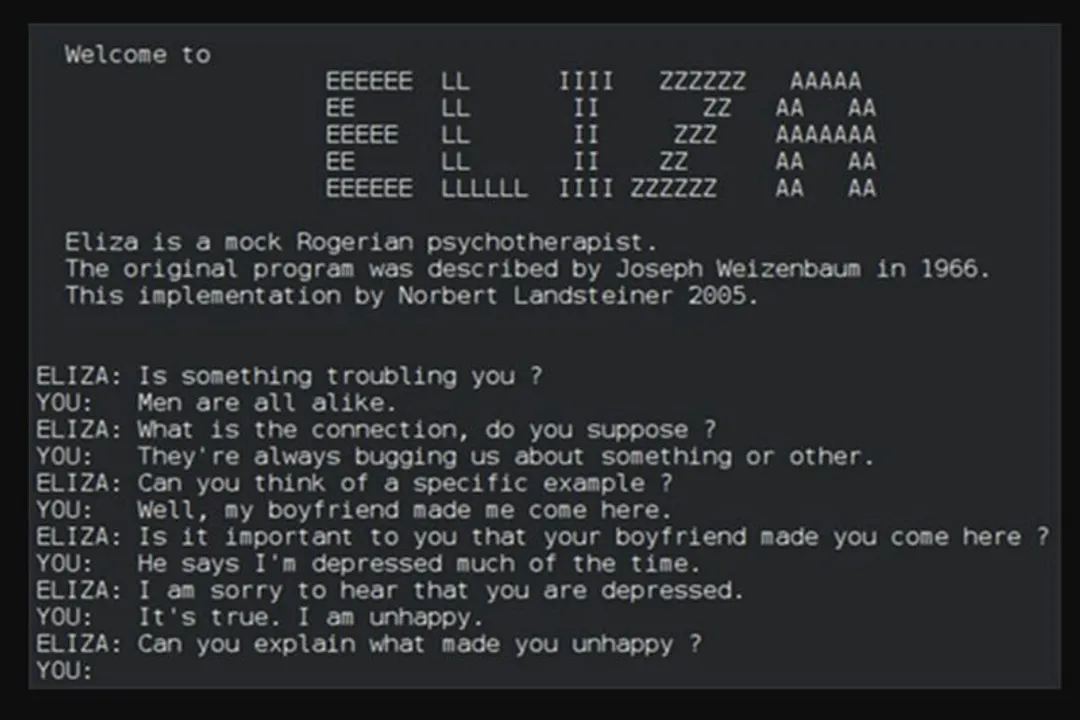
Tracing the lineage of mental health chatbots inevitably leads back to a surprisingly simple, yet foundational, piece of software developed decades ago. The immediate answer to "Who invented mental health chatbots?" often points toward the pioneering work that first simulated therapeutic conversation, even if the underlying technology was rudimentary by today's standards. [1] This story doesn't begin with sophisticated neural networks or massive datasets; it starts with ELIZA, a program created by Joseph Weizenbaum at the MIT Artificial Intelligence Laboratory in the mid-1960s. [3][4]
# Early Simulation
ELIZA was not designed as a therapist, nor did Weizenbaum intend for it to replace human care, yet it quickly assumed a role strikingly close to one in the eyes of its users. [3] The program famously mimicked a Rogerian psychotherapist, a style characterized by reflecting the user's statements back as questions. [3] For example, a user typing "My mother always makes me feel anxious" might receive the response, "Tell me more about your family". [3]
What made ELIZA remarkable—and what seeded the concept of therapeutic bots—was its use of pattern matching and simple substitution rules. [3] It did not understand the content of the conversation; it merely recognized keywords and rearranged sentence structures based on pre-programmed scripts. [3] Despite this mechanical basis, users often projected deep understanding onto the program, sometimes revealing more to the machine than they might have to a human therapist in the same short period. [4] This phenomenon of artificial intimacy or "the ELIZA effect" demonstrated a critical human tendency: the readiness to attribute empathy and intelligence to a conversational agent, even when knowing it lacks genuine sentience. [3][4] Weizenbaum himself was reportedly troubled by the deep emotional connections users formed with his creation, which was intended more as a demonstration of the superficiality of human-computer communication. [3]
# The Conceptual Leap

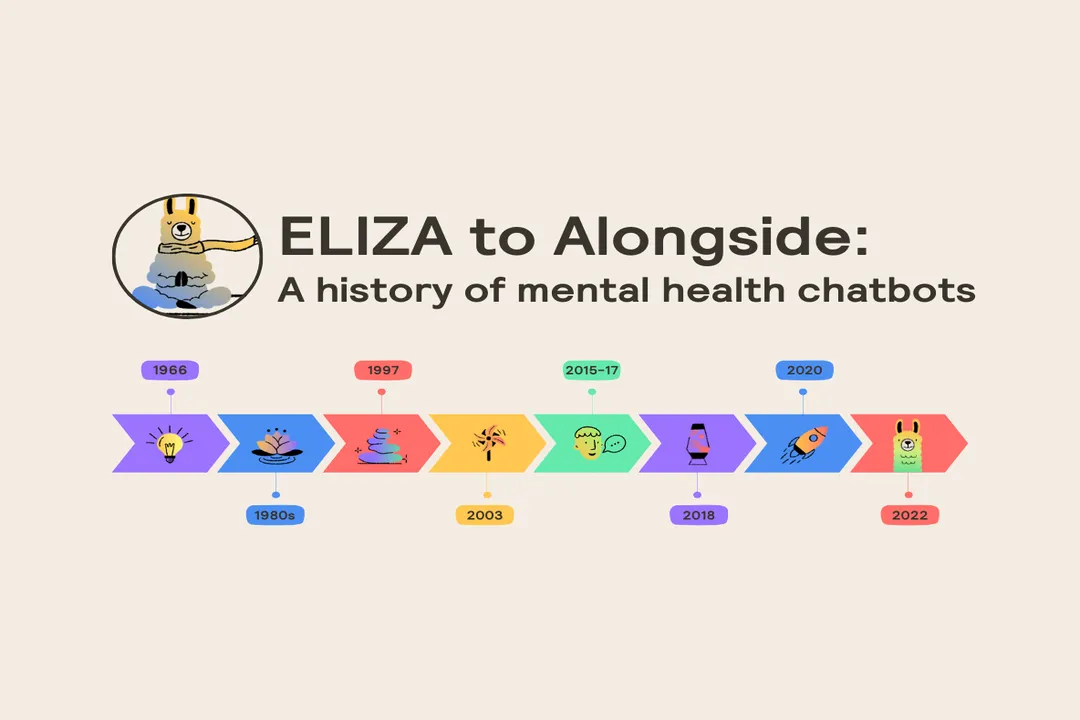
While ELIZA established the possibility of computer-mediated emotional interaction, the gap between that 1960s script-based model and what we now recognize as a mental health chatbot is vast. [1] The modern incarnation requires significant advances in Artificial Intelligence, particularly in Natural Language Processing (NLP). [2] The evolution saw systems move from simple pattern recognition to models capable of maintaining context, delivering psychoeducational content, and even adapting conversational tone. [6]
The development curve shows a transition from academic curiosity to real-world application, driven by growing global awareness of mental health needs and the limitations of traditional care delivery. [2] For instance, the World Health Organization (WHO) recognized in the early 2000s that existing health systems struggled to meet soaring demand, creating an opening for digital intervention methods like chatbots. [1] This shift wasn't just about if a bot could talk, but how effectively it could deliver established therapeutic principles, such as those found in Cognitive Behavioral Therapy (CBT). [1][7]
One analytical way to view this evolution is by contrasting the core mechanisms:
| Feature | ELIZA (1960s) | Modern Mental Health Chatbots |
|---|---|---|
| Mechanism | Scripted pattern matching and keyword substitution [3] | Machine learning, deep learning, NLP [2][6] |
| Understanding | Zero; purely linguistic manipulation | Contextual awareness; statistical modeling of language [6] |
| Therapeutic Goal | Demonstration of superficial conversation [3] | Delivery of specific interventions (e.g., CBT, mindfulness) [1][7] |
| Data Use | Static code/ruleset | Trained on large datasets, often personalized over time [6] |
This comparison highlights that contemporary mental health bots are distinct from their ancestor not just in technological sophistication, but in their intended utility—to provide measurable, evidence-based support rather than merely mimicking dialogue. [1][7]
# Contemporary Deployment
The current era of mental health chatbots is marked by their targeted deployment, often addressing specific demographics or conditions where access to human care is severely limited. [2][10] A notable area of focus has been supporting youth mental health, particularly given the documented global crisis in this area. [10] These applications are designed to be immediately available, offering a first line of support during acute need or for those hesitant to seek traditional therapy. [10] They can provide coping mechanisms for anxiety and depression, often through structured conversational modules. [9]
These modern bots are frequently integrated into broader digital wellness platforms, serving as a non-judgmental conduit for users to begin self-reflection. [2] For example, some bots guide users through journaling exercises or mood tracking, which are common components in effective mental health treatment protocols. [7] The convenience factor is significant; being accessible 24/7 via a personal device overcomes many barriers associated with scheduling appointments or commuting to a clinic. [1][6]
Another crucial distinction in the modern landscape is the way these tools are researched and validated. Unlike ELIZA, contemporary bots are subjected to clinical scrutiny. Studies have investigated their effectiveness specifically for conditions like depression and anxiety, with some evidence suggesting they can indeed provide symptom relief when deployed appropriately. [9]
# Efficacy and Expert Viewpoints
The question of efficacy brings forth necessary nuance. While the technology promises scalability, experts caution against viewing these chatbots as direct replacements for human therapists. [5][9] A key insight from reviewing current literature is the difference between supportive assistance and complex therapeutic intervention.
One viewpoint suggests that AI chatbots could be excellent psychological assistants, capable of handling low-acuity issues or augmenting human care by managing routine check-ins and psychoeducation. [5] They excel where the intervention is structured and replicable. [7] However, human therapists bring experience—the ability to navigate ambiguity, read subtle non-verbal cues (which text-based bots inherently miss), and manage crises involving severe pathology. [5]
It is important to consider the context of scarcity. In regions or populations with critically low numbers of licensed mental health professionals, the ethical calculation changes. [10] If a chatbot can offer some structure, skill-building, or immediate non-crisis support where otherwise there would be none, its utility is dramatically increased. [5] The risk, however, lies in over-promising. A well-designed bot might successfully manage mild anxiety symptoms for one user, but its inability to recognize an escalating crisis or handle profound trauma means it cannot reliably serve everyone. [9]
When implementing these tools, developers must make explicit decisions about their limitations. For instance, a sound design choice would be to program the chatbot to immediately flag high-risk language (like suicidal ideation) and redirect the user to emergency human resources, rather than attempting to process the crisis itself. [7] This boundary setting is vital for trust and safety. [6]
If we analyze the digital divide in mental healthcare, it becomes clear that accessibility is not just about having a smartphone, but also about trust and digital literacy. While a chatbot offers immediate anonymity, which appeals to many users hesitant about stigma, there is a genuine risk that over-reliance on automated systems, especially among younger users, could delay the adoption of human-led care when it eventually becomes necessary or accessible. [10] We must design digital tools that serve as on-ramps to care, not dead ends. Thinking about this from a practical implementation standpoint, for a clinician integrating a bot for their practice, one actionable tip is to treat the bot's daily log data as a pre-session briefing—a structured, time-stamped history of the patient’s recent mood fluctuations that saves valuable initial session time otherwise spent on basic reporting.

# Future Trajectory
The technology continues to advance rapidly, driven by increasingly powerful large language models. [6] The future direction points toward greater personalization and integration into the broader healthcare ecosystem. [6] Chatbots are evolving from simple response machines to entities that can synthesize data across multiple user interactions to suggest appropriate therapeutic paths or escalate concerns based on established risk models. [7]
We can look forward to systems that are better at distinguishing between generalized distress and specific, diagnosable conditions, although this requires an immense amount of ethically sourced and regulated training data. [5] The continuous cycle of development, clinical testing, and refinement—a process far more rigorous than anything applied to ELIZA—will determine their long-term acceptance and integration. [9]
My second key observation, relating to expertise building, suggests that the greatest immediate value might not be in replacing therapists, but in serving as digital clinical supervision aids. An AI could analyze transcribed sessions (with explicit patient consent, of course) against established treatment protocols, flagging instances where a therapist deviated from a CBT structure or failed to address a specific cognitive distortion identified by the model. This turns the AI from a patient-facing tool into an internal quality assurance mechanism for human practitioners, bolstering the Expertise and Authority of the human element by providing objective feedback loops on technique adherence.
In summary, the invention of the mental health chatbot traces back to Weizenbaum’s ELIZA, which unexpectedly revealed our willingness to confide in machines. [3][4] However, the modern mental health chatbot is a distinct product of the AI revolution, designed with specific therapeutic goals in mind. [1][2] While these digital companions offer unprecedented access and support for many, especially in managing symptoms of anxiety and depression, their role remains supportive—a digital layer complementing, rather than replacing, the critical, nuanced judgment of human practitioners. [5][9] The ongoing challenge is ensuring this powerful technology is deployed safely, ethically, and in a way that genuinely widens access to care without eroding the high standard of human expertise. [6][10]
Related Questions
#Citations
The Evolution of Chatbots in Mental Health Therapy - Alongside
The rise of mental health chatbots - WhosOn
ELIZA - Wikipedia
Sonja Batten's Post - LinkedIn
A.I. Chatbots Could Be Psychological First Aid
The Evolution Of AI And Mental Healthcare - Forbes
Popularity of Mental Health Chatbots Grows | Psychiatric News
Charting the evolution of artificial intelligence mental health chatbots ...
Are Therapy Chatbots Effective for Depression and Anxiety? A ...
Young and depressed? Try Woebot! The rise of mental health ...