Who invented recommendation chatbots?
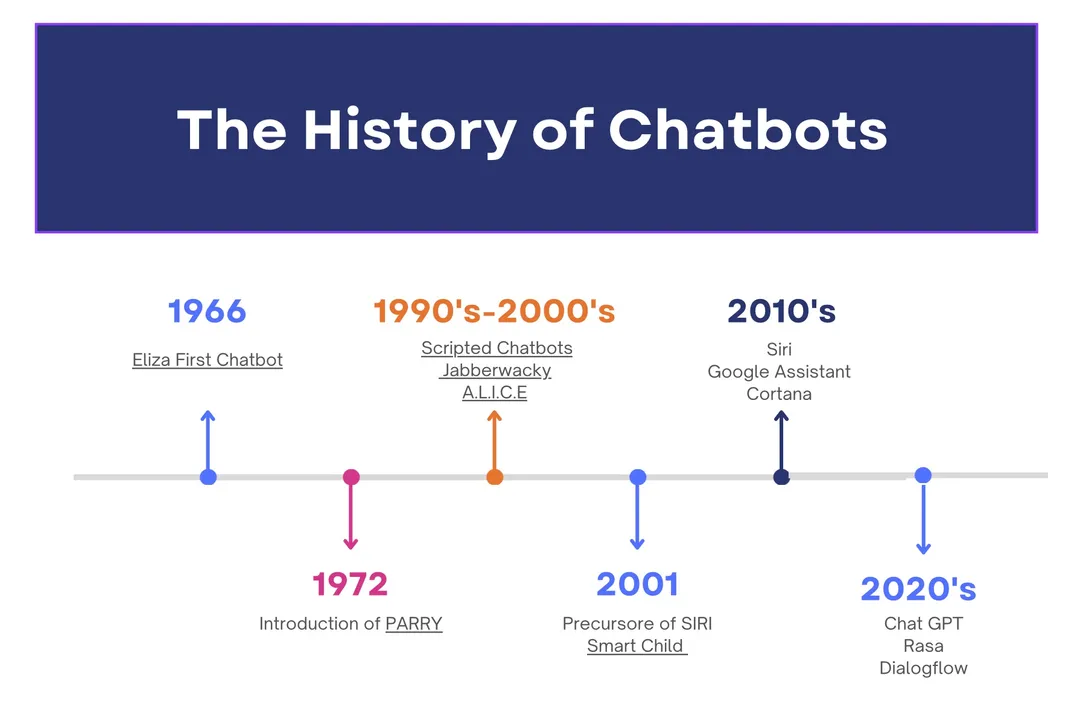
The lineage of interactive conversational agents, which now power everything from customer service to personalized product suggestions, traces its roots back to laboratory experiments in the mid-1960s. While the term "recommendation chatbot" implies a specific, modern function involving data-driven suggestions, the true origin lies in developing the very first programs capable of holding a simulated dialogue with a human user. The foundational work in this arena is overwhelmingly attributed to Joseph Weizenbaum, a computer scientist at the Massachusetts Institute of Technology (MIT). [3][5][7]
# The First Program
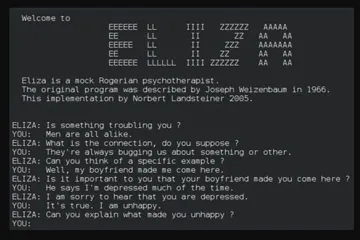
In 1966, Weizenbaum developed the program known as ELIZA. [3][5][4] This creation was not intended to be a general-purpose conversational system but rather an experiment designed to showcase the superficiality of communication between humans and machines. [6] ELIZA operated using simple pattern matching and substitution techniques, essentially reflecting the user’s statements back to them in the form of a question, mimicking a Rogerian psychotherapist. [4][5]
The structure of ELIZA was remarkably basic by today’s standards. It relied heavily on recognizing keywords in the user's input and applying pre-written templates to generate a response. [5] For instance, if a user typed, "My mother always made me feel sad," ELIZA might identify "mother" and respond with something like, "Tell me more about your family". [6] The program had no real understanding of the text; it was performing sophisticated linguistic guesswork. [4]
# User Deception
What shocked Weizenbaum and his colleagues was the depth of emotional connection users formed with the program. [6] Many participants, often unaware of the underlying mechanics, willingly shared intimate details, believing they were communicating with an entity capable of providing genuine insight or counsel. [6] Weizenbaum himself noted that some users treated the simple script as if it held profound understanding. [6] This reaction was a key observation: it proved that humans are often predisposed to anthropomorphize technology, even when the underlying intelligence is minimal. [6] The experience led Weizenbaum to become an outspoken critic of artificial intelligence, regretting how quickly people were willing to suspend disbelief regarding the machine’s capabilities. [6]
# A Simulated Illness
Following ELIZA's debut, the next significant milestone in conversational programming arrived in the early 1970s with the creation of PARRY. [4] Developed by psychiatrist Kenneth Colby, PARRY was designed to simulate a person suffering from paranoid schizophrenia. [4] Unlike ELIZA, which was largely reflective, PARRY embodied a distinct personality with specific beliefs and defensive conversational tactics. [4]
The existence of both ELIZA and PARRY allowed for fascinating early cross-program testing. They could be set up to converse with each other, a kind of digital therapy session where one simulated therapist interrogated a simulated paranoid patient. [4] While ELIZA followed set rules to maintain a supportive dialogue, PARRY’s responses were governed by parameters reflecting its simulated mental state, making it a more complex, albeit still rule-based, challenge. [4] These early programs, established primarily during the 1960s and 1970s, set the precedent for chatbot development, focusing first on interaction fidelity rather than information retrieval or recommendation. [7]
# Rule-Based Limitations
The breakthrough moment for conversational AI was less about true intelligence and more about mastering the illusion of intelligence through linguistic trickery. [5] Both ELIZA and PARRY were fundamentally based on if-then logic and string manipulation. [5] If the system encountered a phrase structure it recognized, it deployed a stored response pattern. [5]
This approach contrasts sharply with the systems that would eventually become true recommendation engines. A recommendation engine today depends on massive datasets and algorithms (like collaborative filtering or matrix factorization) to predict what a user might like based on past behavior and the behavior of similar users. [5] The early chatbot inventors were focused on the interface—the ability to talk—whereas modern recommendation systems focus on the algorithm—the ability to accurately suggest. [5][7]
We can observe this divergence by looking at the core mechanism. ELIZA dealt in syntax and immediate context, whereas a modern e-commerce bot that suggests "You might also like this specific brand of coffee based on your last three purchases" deals in semantics, historical preference matrices, and predictive modeling. [7] The initial invention provided the mouth, but the actual brain for personalized suggestion developed decades later.
To illustrate this historical separation between conversational invention and algorithmic recommendation, consider this basic comparison:
| Feature | ELIZA (1966) | Modern Recommendation Bot |
|---|---|---|
| Core Logic | Pattern Matching / Substitution | Machine Learning (ML) / Deep Learning |
| Goal | Simulate human conversation/empathy | Predict user preference/drive conversion |
| Data Dependency | Static rule sets programmed by hand | Vast quantities of user interaction data |
| Response Style | Reflective questions based on keywords | Specific, personalized product/content links |
| Underlying Tech | Simple string processing | Natural Language Processing (NLP) and Recommendation Algorithms |
| Source for Reference | [3][5][4] | [5][7] |

# The Long Transition
The immediate successors to ELIZA and PARRY in the academic sphere continued to push the boundaries of natural language processing, moving toward more structured understanding. [7] However, the path from these early systems to commercially viable, data-driven recommendation chatbots was lengthy and segmented. [9]
For many years following the initial AI boom, chatbots remained largely academic curiosities or simple, programmed decision trees used in very narrow domains. [7] It took the massive expansion of the internet, the creation of affordable cloud computing power, and the maturation of machine learning techniques in the late 20th and early 21st centuries for the concept to truly gain traction outside of research labs. [7][9]
The evolution required three major technological ingredients that were absent in Weizenbaum’s time:
- Massive Data Availability: Recommendations require knowing what millions of users have bought or viewed. [5]
- Sophisticated NLP: To understand complex queries like "Show me a jacket similar to the one I bought last year but in blue". [5]
- Scalable Computing: To run complex prediction models in milliseconds, as users expect immediate responses. [7]
The early chatbots were inventions of linguistic possibility—they proved a machine could talk. Modern recommendation bots are inventions of commercial necessity—they prove a machine can effectively guide purchasing decisions at scale. [7][9]
# The Context of Invention
It is important to recognize that the motivation behind these early conversational programs often involved testing psychological theories, not building customer service tools. [4] Weizenbaum was interested in the limits of human perception, and Colby was interested in modeling mental illness. [4] The concept of a chatbot as a tool for commercial guidance or personalized suggestion did not exist in their original mandate.
Think about the context: In the 1960s, interacting with a computer usually meant typing esoteric commands into a mainframe terminal. ELIZA provided an interface that felt human, which was the radical invention in itself. [5] This shift to a natural language interface, regardless of the response quality, is the true intellectual property born from the work of Weizenbaum and his peers. [5][9] This principle—using conversational language as the primary mode of interaction—is what enables today's recommendation bots to exist, even if their recommendation algorithms are worlds away from ELIZA’s substitution rules. [7]
When looking at the historical record, the invention of the chatbot—the conversational interface—is firmly rooted in the work of Weizenbaum in 1966. [3][5] The invention of the recommendation engine—the algorithmic core that personalizes the chat—is a separate, albeit later, technological achievement that was later married to that conversational interface. [5][7]
If we were to create a modern "chatbot invention timeline," ELIZA occupies the spot for "First Successful Conversational Interface," while the modern, sophisticated recommendation bot only appears when ML/Big Data intersects with that interface, likely in the 2010s with platforms like Facebook Messenger and Slack opening up their APIs for third-party bot development. [7][9] The foundational blueprint, however, remains the deceptively simple script from MIT. [6]
Related Questions
#Citations
The History Of Chatbots – From ELIZA to ChatGPT - Onlim
History of Chatbots: From ELIZA to Advanced AI Assistants
The Story Of ELIZA: The AI That Fooled The World
ELIZA - Wikipedia
History of Chatbots - Codecademy
Weizenbaum's nightmares: how the inventor of the first chatbot ...
Mapping the History of Chatbots - GoodData
An Overview of Chatbot Technology - PMC - NIH
Chatbots: A Brief History Part I - 1960s to 1990s - Botsplash
The Origins of Modern Chatbots - Druid Enterprise Chatbots Blog