During the post-5th Century AD Medieval period in Europe, how was human waste typically managed?
Answer
Using chamber pots and emptying them into cesspits or streets
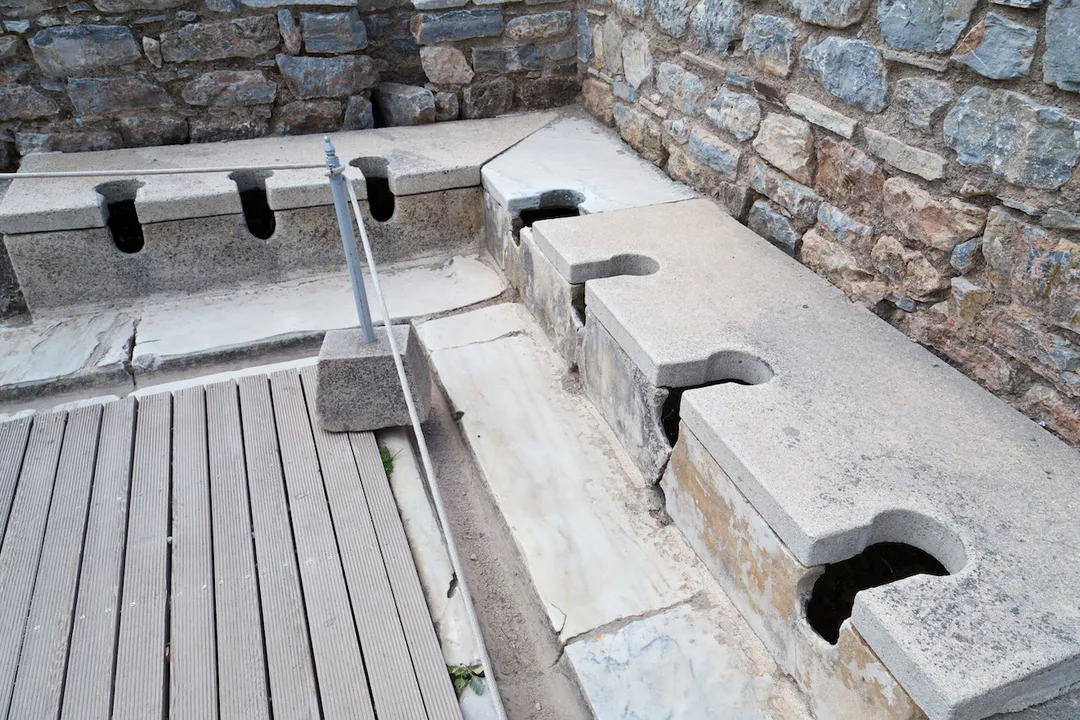
Following the decline of the Roman Empire, Europe experienced a significant regression in sanitation practices that lasted for centuries. During the Medieval period, organized sewer systems vanished. Households typically relied on manual methods, primarily using chamber pots to collect waste. These vessels were emptied by hand, either by discarding the contents directly into the streets or into purpose-built cesspits located near dwellings, resulting in a system that was far less hygienic than the water-managed systems of antiquity.
#Videos
A brief history of toilets - Francis de los Reyes - YouTube
Related Questions
Which civilization is credited with the earliest recognizable indoor plumbing around 2500 BC?What was a key feature of the public latrines used throughout the Roman Empire?What name did Sir John Harington give to the flush toilet device he documented in 1596?Why did Sir John Harington's 1596 Ajax invention fail to gain widespread acceptance during his lifetime?What major sanitary problem did Alexander Cumming solve with his 1775 S-trap patent?In 1778, what specific improvement did Joseph Bramah make to the existing flush toilet design?What is the primary reason Thomas Crapper is frequently misidentified as the inventor of the flush toilet?Which specific mechanism did Thomas Crapper patent in 1874 to improve toilet cisterns?During the post-5th Century AD Medieval period in Europe, how was human waste typically managed?What differentiates the Indus Valley approach to sanitation from that of the Roman Empire?