Who invented the first ever toilet?
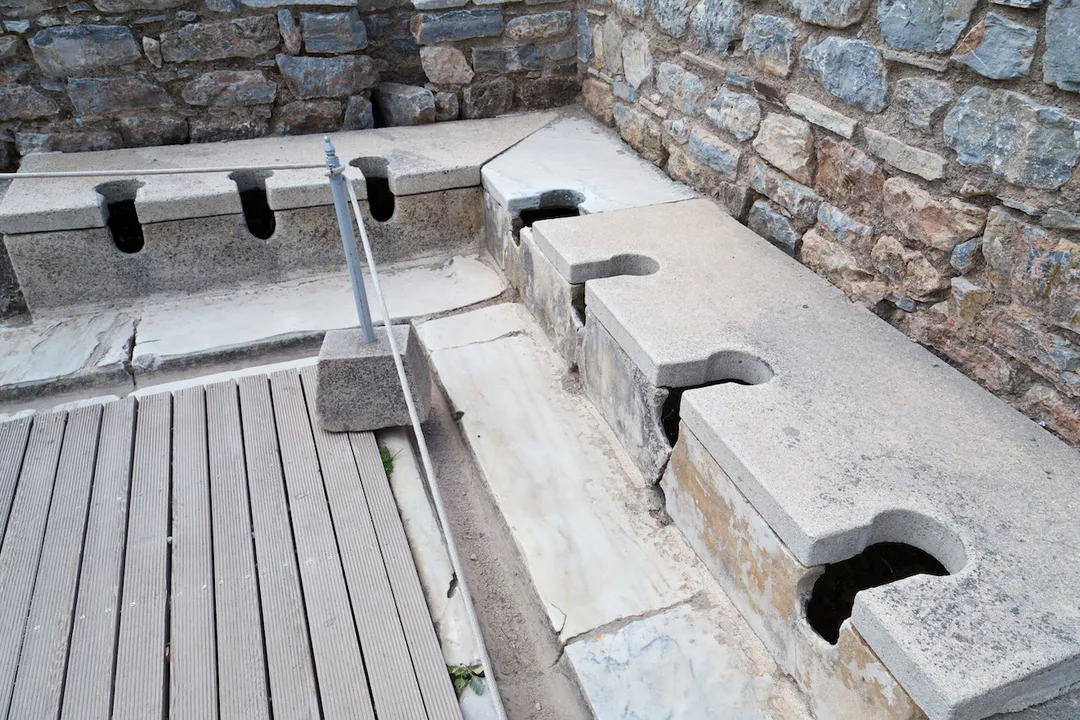
The story of who deserves the credit for inventing the toilet stretches back millennia, far preceding the Victorian era figures often cited in popular culture. While many people associate the modern plumbing breakthrough with a specific English plumber, the foundational concepts of sanitary waste disposal using water are incredibly ancient. Evidence suggests that the earliest recognizable indoor plumbing and toilet systems existed in the Indus Valley Civilization, around 2500 BC. [5][6] Cities like Mohenjo-daro and Harappa featured sophisticated systems where private bathing areas and toilets were connected to covered drains beneath the city streets. [5][6] This level of infrastructure management demonstrates an advanced understanding of sanitation that would not be fully matched again for thousands of years. [5]
# Roman Comforts
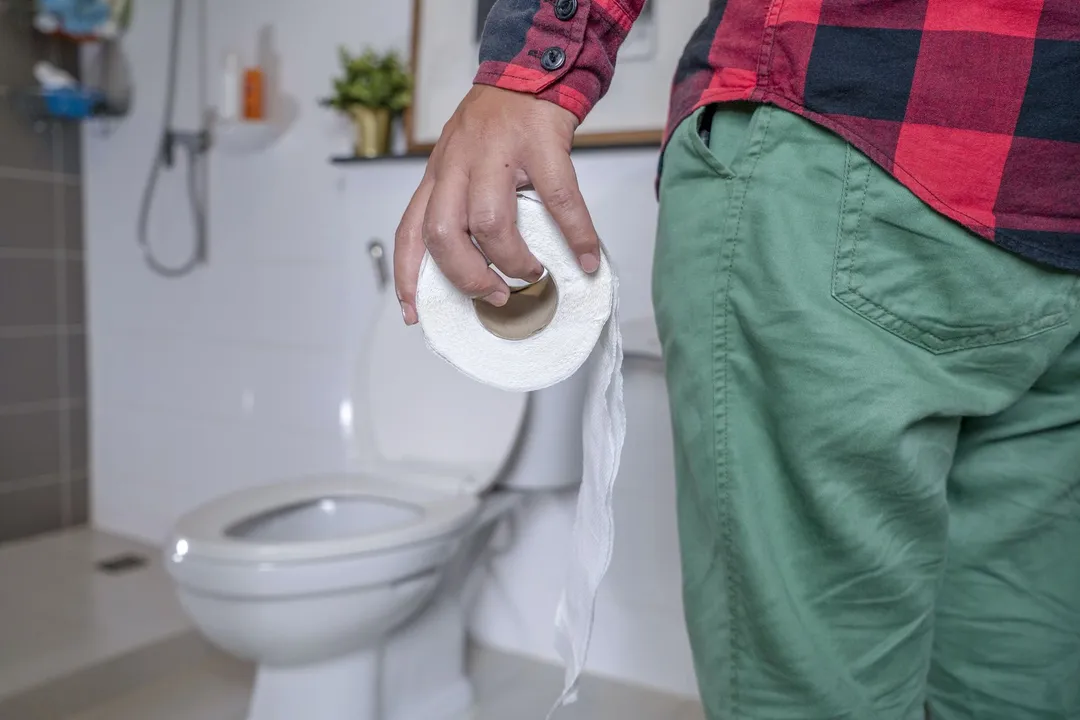
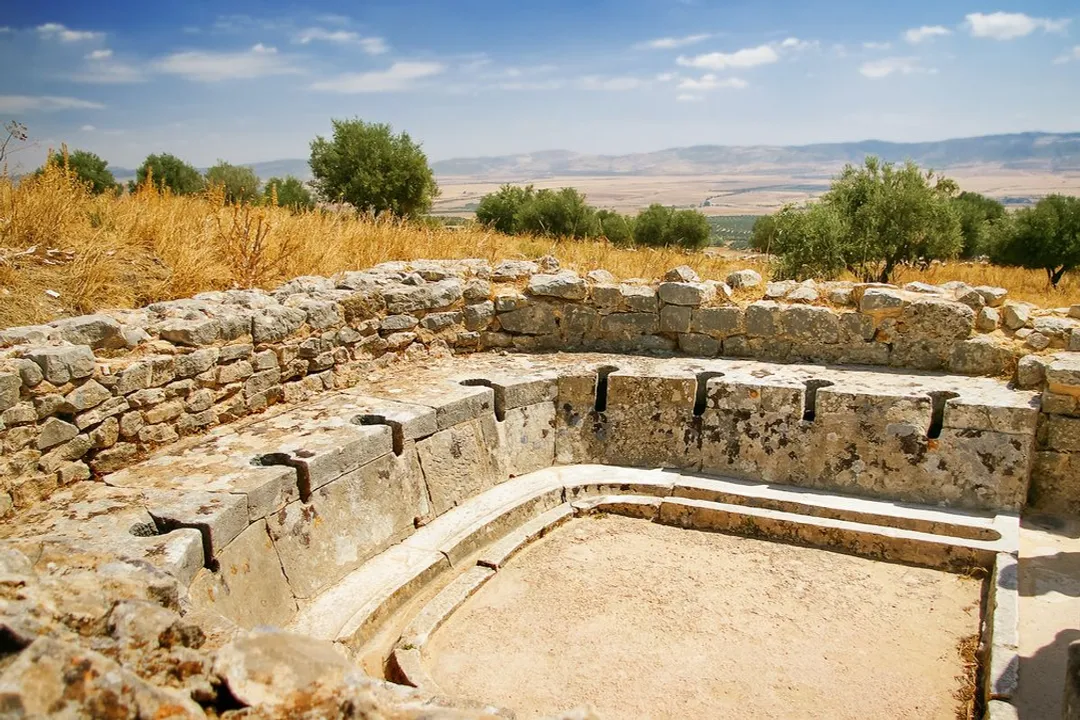
Following the Indus Valley innovation, the Roman Empire made significant contributions to public sanitation. The Romans understood the power of running water to manage waste, installing extensive networks of aqueducts and sewers. [5] While not featuring the enclosed, private stall design we know today, Roman public latrines were remarkably advanced for their time. [5] These facilities often consisted of long rows of seats situated over a continuously flowing channel of water that washed the waste away into the main sewer system. [5][6] These spaces were often communal, fostering social interaction during necessary functions. [5]
The contrast between these early systems highlights a key difference in approach. The Indus Valley appears to have prioritized private, domestic sanitation integrated into individual homes, whereas the Romans excelled at large-scale, public sanitation projects. [5]
| Civilization | Approximate Era | Key Feature | Waste Removal Method |
|---|---|---|---|
| Indus Valley | c. 2500 BC | Indoor, private facilities | Connected to covered drains |
| Roman Empire | Antiquity | Public communal latrines | Continuous running water flow |
| Medieval Europe | Post-5th Century AD | Chamber pots, cesspits | Manual emptying or ground absorption |
# Medieval Stagnation
With the decline of the Roman Empire, organized sanitation systems largely vanished across much of Europe. [6] For many centuries, waste management reverted to much simpler, less hygienic methods. [6] Instead of flushing systems, waste was often collected in chamber pots. [6] When full, the contents were typically dumped into streets or into purpose-built cesspits dug near dwellings. [6] This regression meant that while the idea of water-based waste removal existed in antiquity, it was not practically maintained or improved upon for over a thousand years. [6]
# Harington's Design
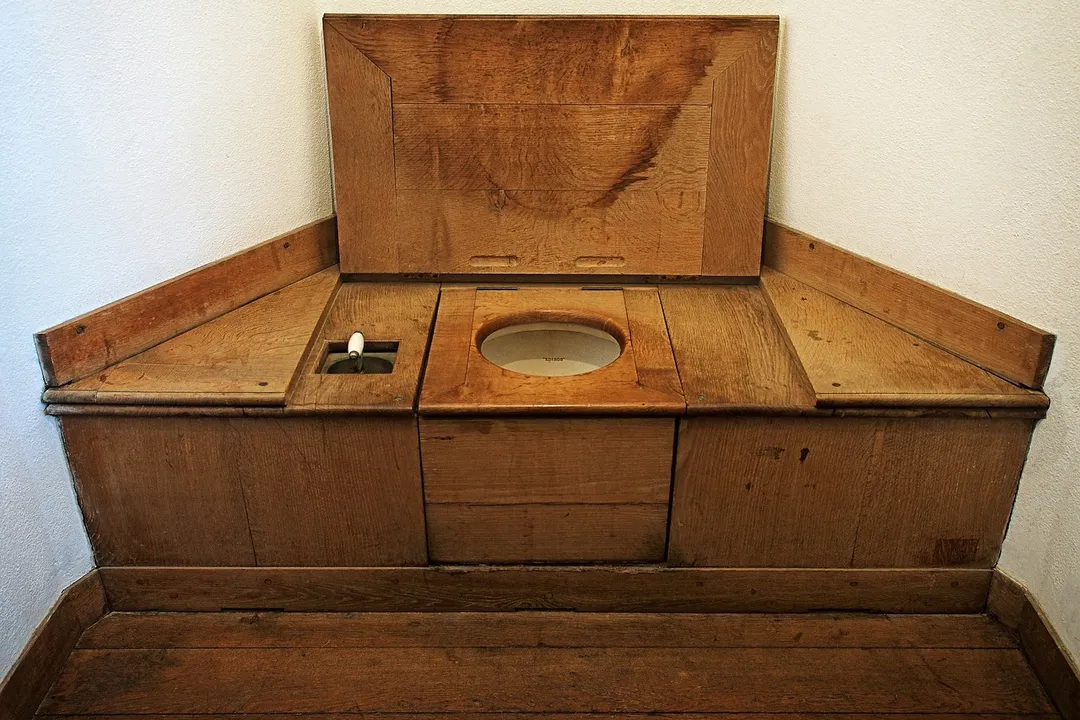
The concept of the modern flush toilet—a device that uses a cistern of water to actively wash waste out of the bowl—was first documented in 1596. [1][6][8] The inventor was Sir John Harington, a godson to Queen Elizabeth I. [1][6][8] He named his creation the Ajax. [1] This device incorporated the critical element of a flush valve designed to release a measured amount of water from an elevated cistern to clear the bowl. [1] Harington was forward-thinking enough to install one for his own use and another for the Queen at Richmond Palace. [1]
Despite this early innovation, the Ajax did not gain widespread acceptance. [1][8] A primary obstacle was the simple lack of supporting infrastructure. [1][8] Cities lacked the necessary pressurized water supply and adequate sewage networks required for such a device to function reliably and without causing nuisance odors or blockages. [1][8] The design, while technically sound for its time, was ahead of its municipal context. Considering this environmental limitation, it becomes clear that invention is often only half the battle; successful adoption requires supportive societal infrastructure. While Harington conceived of the mechanism, it remained largely an interesting novelty rather than a public health solution for over a century and a half. [1]
# Trap Essential
Significant advancements in toilet design were necessary before flushing systems could become practical and, more importantly, livable in domestic settings. The biggest problem remaining after Harington was the stench that wafted back up from the drains. [6]
This critical issue was addressed in 1775 when Scottish inventor Alexander Cumming patented the S-trap. [1][6][8] This simple yet brilliant addition involved creating a downward bend in the pipe leading from the toilet bowl. [1] This bend retained a small amount of water after each flush, forming a seal that physically blocked noxious sewer gases from rising back into the house. [1][8] This innovation fundamentally solved the public health and comfort issue that had plagued earlier designs. [1]
Shortly after, Joseph Bramah further refined the mechanism in 1778 by improving the valve system with a hinged flap at the base of the bowl, which made the seal more reliable than Harington's original design. [1] These 18th-century patents provided the necessary technological building blocks for the domestic flush toilet to finally take hold as water systems slowly improved throughout the 19th century. [1][8]
# Crapper Myth
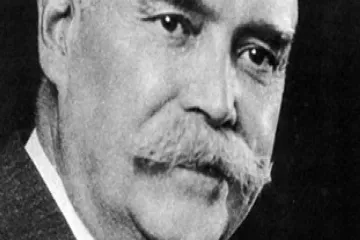
The figure most popularly, though incorrectly, credited with inventing the flush toilet is Thomas Crapper (1836–1910). [2][4][5][6][7] This enduring misconception is perhaps one of the most famous errors in the history of practical inventions. [2][4] Crapper was indeed a highly successful Victorian plumber and businessman who did a great deal to popularize and improve the toilet, but he did not invent the basic flushing mechanism or the S-trap. [2][4][6]
Crapper's real contribution was one of promotion, refinement, and marketing. [7] He owned a plumbing company and was known for opening a showroom that featured working models of sanitary fixtures, making modern plumbing visible and aspirational for the public. [7] He held several patents, including one in 1874 for an improved floating ballcock mechanism used to refill the cistern after a flush. [2][4][5] Furthermore, his company manufactured and installed high-quality plumbing equipment across London. [7]
Crapper’s success meant his name became synonymous with the product, especially as the word "crap" existed in the common vernacular, leading to a humorous association that stuck. [2][4] The lasting legacy is that while he was not the inventor, Thomas Crapper was instrumental in making the flush toilet an acceptable, desirable, and widely available fixture in private homes during the late 19th century. [7]
# Invention Context
Tracing the lineage reveals that the "inventor" depends entirely on the definition used. If the definition is the first water-based waste disposal system, the answer lies with the engineers of the Indus Valley. [5] If the definition is the first device to actively flush waste using a cistern and valve, the credit goes to Sir John Harington in 1596. [1][8] If the definition is the first practical, gas-sealed domestic toilet, then Alexander Cumming’s S-trap patent in 1775 is the most significant technological step. [1][6]
Thomas Crapper’s importance lies not in conception but in commercialization and acceptance. [7] He operated at a time when municipal sewer systems were finally becoming widespread in major cities, finally providing the necessary foundation that Harington’s earlier invention lacked. [1][8] Crapper took the established, improved technology and made it mainstream. [7] Thus, the toilet's history is less about a single eureka moment and more about a succession of necessary engineering solutions built upon ancient concepts. [6]
#Videos
A brief history of toilets - Francis de los Reyes - YouTube
Related Questions
#Citations
A Brief History of The Flush Toilet
The legend of Thomas Crapper, the man who didn't invent the toilet
Learn Who Invented the Toilet - Brubaker, Inc.
Thomas Crapper - Wikipedia
Who Invented the Toilet? History and Fun Facts - Sanitary Plumbing
Who invented the toilet? | Live Science
Did Thomas Crapper invent the toilet? - Facebook
Who Invented the Flush Toilet? - History.com
A brief history of toilets - Francis de los Reyes - YouTube