Who invented wastewater treatment plants?
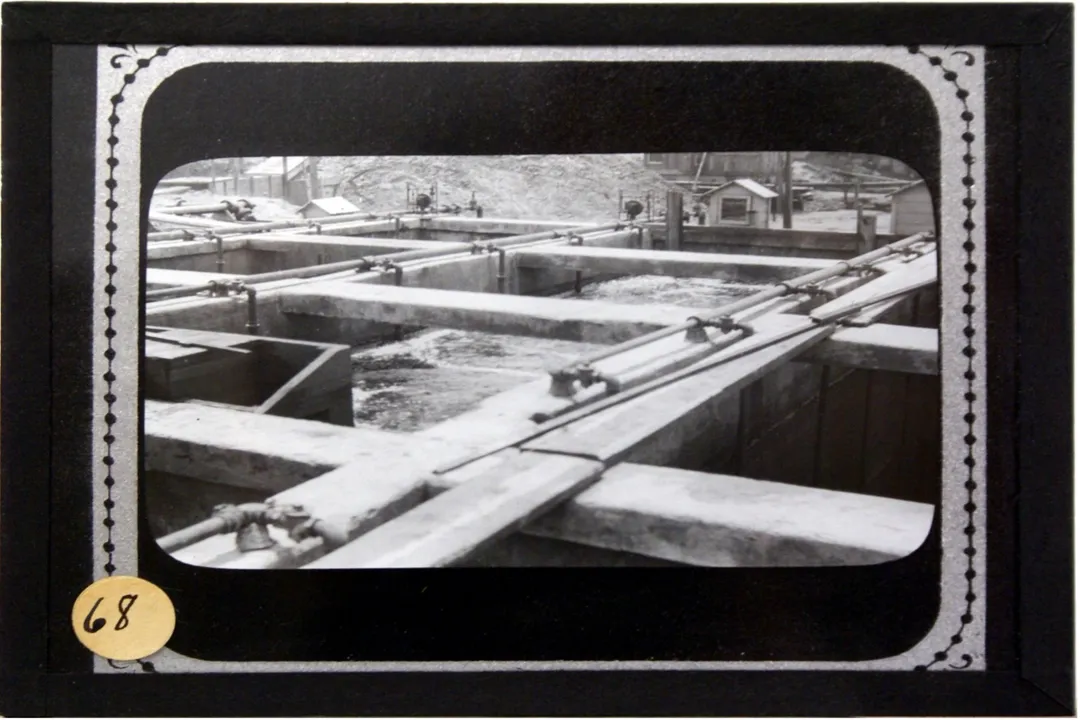
The story of wastewater treatment plants isn't a tale featuring a single lightbulb moment or one pioneering inventor; rather, it is a slow, often painful evolution driven by necessity, disease outbreaks, and incremental scientific discovery. For millennia, the primary goal was simply disposal—moving waste away from population centers, often by dumping it directly into the nearest available water body, whether it was a river, the sea, or an underground Roman drain. [5][1] The true invention of the treatment plant required a fundamental shift in understanding: recognizing that sewage was not just a nuisance, but a potent carrier of lethal disease agents. [5]
# Ancient Disposal
Long before the concept of microbial action or chemical analysis, major civilizations demonstrated an advanced capability for waste conveyance. The Minoans, for instance, had elaborate plumbing systems thousands of years ago. [5] The Romans developed impressive networks of sewers, famously the Cloaca Maxima, designed primarily to drain marshlands and carry effluent out of the city walls. [5][7] These ancient methods were masterful exercises in gravity, hydraulics, and civil engineering focused on separation and conveyance, but they offered no actual purification of the water itself. [1] Once the waste left the city limits, the problem was considered solved, a flawed premise that plagued urban centers for centuries. [7]
# Sewage Crisis
The inadequacy of simple disposal became glaringly apparent as populations swelled during the Industrial Revolution. Cities became crowded, and rivers—the primary recipients of this untreated waste—became open sewers. [5] A critical turning point in the mid-1800s was the crisis in London, often termed the "Great Stink" of 1858. [5][1] The Thames River, inundated with human and industrial waste, became so foul that Parliament could barely function. [1] This environmental catastrophe spurred immediate, massive action focused on collection infrastructure, rather than immediate treatment science. [5]
In response, engineers like Joseph Bazalgette designed and oversaw the construction of London's massive, modern underground sewer system. [5][1] This was arguably the greatest public works achievement of its time, successfully separating storm runoff from sanitary waste and intercepting it miles downstream for eventual release into the sea. [5] It is important to draw a clear distinction here: Bazalgette engineered a vastly superior collection and conveyance system, which bought humanity precious time, but he did not invent the treatment plant, as the effluent was still released untreated into the natural environment. [2] The real need for treatment arose when societies realized that even distant receiving waters could not cope with the volume or the unseen pathogens. [5]
# Bacterial Understanding
The scientific foundation for modern wastewater treatment arrived with the development of germ theory in the late 19th century. Figures like John Snow had already linked contaminated water to diseases like cholera, but a concrete biological mechanism was needed to drive engineering solutions. [5] Scientists began to understand that treating wastewater meant harnessing or accelerating the natural processes of decomposition carried out by microorganisms. [5][2] This realization shifted the goal from moving pollution away to destroying it in a controlled setting. [2]
Early pioneers began experimenting with ways to encourage aerobic and anaerobic bacterial action to break down organic matter before discharge. Research indicated that sewage could be treated effectively by allowing solids to settle out (sedimentation) followed by biological filtration. [2] This transition from physics-based conveyance to biology-based remediation marks the true genesis of the wastewater treatment plant as we understand it today. [2][5]
# First Treatment Sites
Pinpointing the very first facility that employed these new biological principles is difficult, as various techniques were being tested concurrently across Europe and the United States around the same time. [4] However, specific sites are recognized as milestones for demonstrating practical, sustained success. [4][8]
In the United States, the plant at Lawrence, Massachusetts, built in 1893, is frequently cited as the first sewage treatment facility to utilize true biological treatment methods successfully. [4][8] This plant implemented a process starting with septic tanks, followed by the crucial step of passing the effluent through slow sand filters. [4] The sand filters provided the necessary surface area for beneficial bacteria to thrive and consume the pollutants. [4] This model, building upon European principles, proved that sewage could be adequately purified locally rather than simply diluted downstream. [7]
Across the Atlantic, the development was equally rapid. In England, work in Exeter during the 1890s was instrumental in proving the efficacy of continuous bacterial filter beds—a precursor to modern trickling filters. [2][5] These early European efforts often focused on using bacterial beds to oxidize dissolved impurities, whereas the American pioneers, like those in Lawrence, often prioritized the removal of solids followed by filtration. [4] It is fascinating to compare these early designs: Exeter was perfecting continuous biological oxidation, while Lawrence demonstrated the efficacy of batch or intermittent filtration coupled with sludge handling. [4][2]
| Location | Approximate Date | Key Treatment Step Demonstrated | Primary Focus |
|---|---|---|---|
| London (Bazalgette) | Mid 1800s | Large-scale Sewer Collection | Conveyance/Disposal [5] |
| Worcester, MA | c. 1890 | Early Sludge Digestion Concepts | Solids Management [4] |
| Exeter, UK | 1890s | Continuous Bacterial Filters | Biological Oxidation [2] |
| Lawrence, MA | 1893 | Septic Tanks followed by Sand Filtration | Complete Local Treatment [4] |
This initial period of plant development—roughly 1890 to 1915—established the essential sequence: preliminary screening, primary sedimentation (settling solids), and secondary biological treatment. [5]
# Process Refinement
Once the concept was proven, the race was on to make the process faster, smaller, and more efficient. Early sand filters required large land areas, making them impractical for dense cities. [4] This spurred the development of the trickling filter, where sewage was sprayed over rocks or coarse media, creating a biofilm where bacteria could work more intensely. [2]
The next major leap forward, which truly modernized the industry, was the invention of the activated sludge process in the early 20th century. [2] This process, developed around 1914, involves keeping the active microbial culture suspended in the wastewater through aeration—effectively bringing the necessary bacteria into constant, intimate contact with the pollutants. [2] This allowed for significantly smaller tanks and much higher treatment efficiency, enabling modern high-rate treatment plants to be built in space-constrained urban settings. [2][5] It required a better understanding of aeration techniques and the biology of floc-forming microorganisms, moving beyond simple gravity and filtration into controlled microbiology. [2]
# Evolutionary Progress
So, who invented the wastewater treatment plant? The most accurate answer is that it was invented by public health necessity, driven by scientific inquiry, and realized through the persistent engineering efforts of dozens of individuals across the globe. [5] No single patent or name claims sole authorship. The conceptual blueprint—using biological action to purify water contaminated by human waste—was solidified in the 1890s through concurrent testing in sites like Lawrence and Exeter. [4][2]
Observing the timeline, it becomes clear that the biggest hurdle was overcoming the sheer economic inertia of "out of sight, out of mind." Cities had already invested heavily in sewers; convincing municipal leaders to spend more money on a facility that didn't discharge visible effluent required irrefutable proof of health benefits, which early successful pilots finally provided. [7] The success of these early biological adopters allowed the United States, for example, to begin accelerating the adoption of mechanical and biological treatment nationwide in the ensuing decades, moving from systems relying on dilution and irrigation to standardized secondary treatment. [7] The legacy is a collaborative one, built on the foundations laid when people stopped asking where to send the waste and started asking how to clean it. [1][5]
#Videos
History of wastewater treatment - from Hippocratic sleeve ... - YouTube
Related Questions
#Citations
Wastewater Management Throughout History - ACUA
The History and Evolution of Wastewater Treatment Plants
History of wastewater treatment - from Hippocratic sleeve ... - YouTube
[PDF] A BRIEF HISTORY OF WASTEWATER TREATMENT
History of water supply and sanitation - Wikipedia
Discovering Images of Early 20th Century Wastewater Treatment ...
Wastewater treatment | Process, History, Importance, Systems ...
[PDF] History of Wastewater Treatment in the US
About How Long have Wastewater Treatment Plants been in ...