Who invented thermal rescue cameras?
The ability to see heat signatures has fundamentally changed how emergency services operate, turning the invisible into actionable intelligence in conditions from zero visibility to dense smoke. These thermal imaging cameras, essential tools for firefighters and rescue personnel, represent a culmination of decades of scientific curiosity evolving into life-saving hardware. Pinpointing a single "inventor" of the thermal rescue camera is complex, as the technology evolved through distinct phases, beginning with the mere detection of infrared energy and culminating in the sophisticated, digitized imaging devices we rely on today.
# Early Sightings
The genesis of seeing beyond the visible spectrum dates back to the dawn of the 19th century. It was William Herschel in 1800 who first successfully detected infrared radiation, demonstrating that there was energy invisible to the naked eye beyond the red end of the light spectrum. While this was a monumental scientific discovery—the classification of an entire region of the electromagnetic spectrum—it was purely observational, not imaging.
A century later, work continued to explore this unseen radiation. Dr. Robert Wood is noted for performing the first infrared observations in 1917. This early 20th-century work established the physical properties of infrared, but the leap from detecting a phenomenon to building a device that could translate that energy into a viewable image required entirely new engineering and sensor technology.
# The Military Leap
The true breakthrough in creating a functional imaging device—the ancestor of every modern thermal camera—occurred in the 1950s. This development was largely driven by military necessity, a common catalyst for complex technological advancement. During this era, the goal was not finding lost hikers but rather enhancing surveillance and night-time operational capabilities. The United States military spearheaded this research.
The specific breakthrough involved creating a device that could convert the thermal energy received by a sensor array into a visual display, often a scan image. This meant overcoming significant hurdles in materials science and electronics that were not present in simpler scientific instruments. The first device capable of producing a visual image, even a crude one, emerged from this military research.
# Sperry’s Contribution
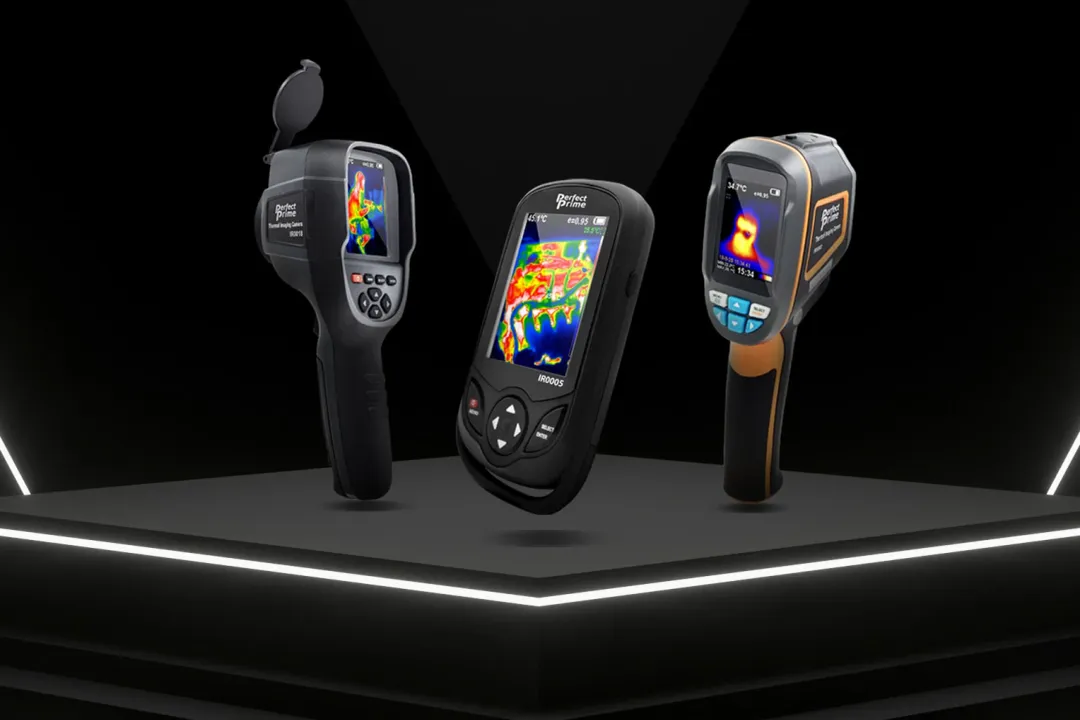
When assigning credit for the first practical infrared camera, the name Dr. Evelyn Sperry frequently appears. Working within the context of the 1950s military-driven research, Sperry is credited with developing what is often cited as the first practical infrared camera. This development took place while she was reportedly associated with Texas Instruments.
The significance of Sperry’s work, alongside that of her contemporaries in military labs, was transforming the theoretical knowledge of infrared into a functional, albeit likely large and complex, apparatus capable of translating heat patterns into a recognizable image format. This technology transition from simple detection to active image creation is the most critical step in the lineage leading to today’s rescue cameras. It established the fundamental architecture: a lens, a sensor array sensitive to thermal radiation, and a means to process and display the collected data.
# Tiny Camera Development
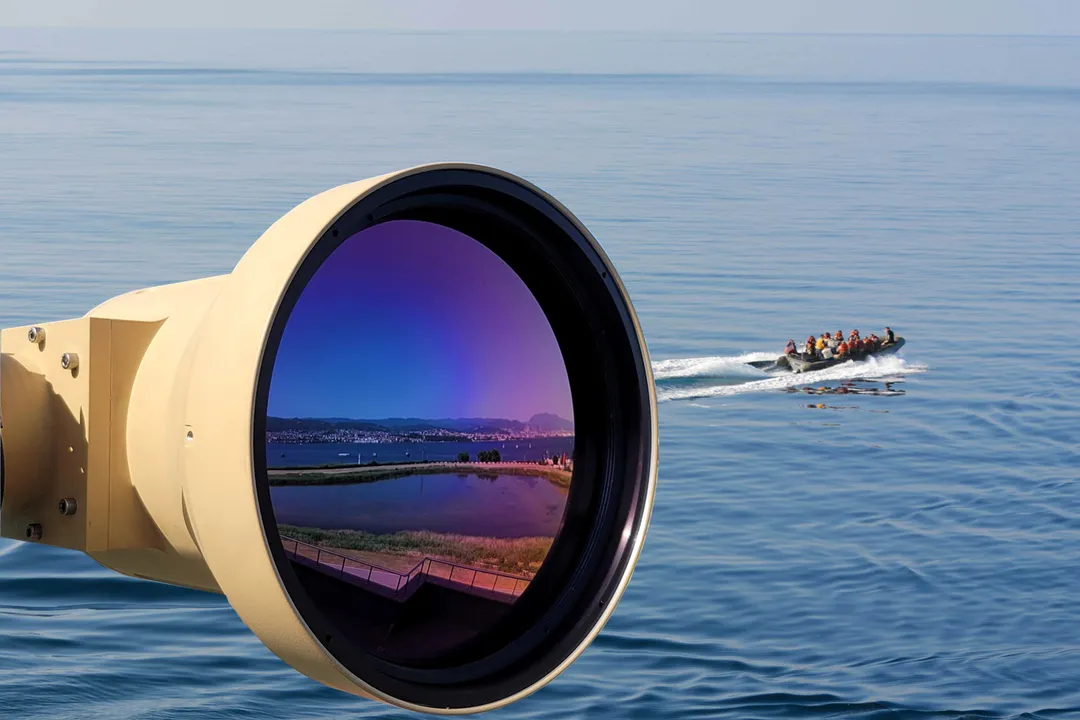
Another name surfaces in the narrative of miniaturization: Paul Hyams. Sources indicate that Hyams invented a tiny infrared camera born out of necessity. While the sources do not explicitly link Hyams' invention to immediate fire or search and rescue applications, the drive toward creating a tiny infrared camera aligns perfectly with the evolution toward handheld, portable rescue units. The shift from large, tripod-mounted military surveillance equipment to something an individual could carry onto a scene is as vital to the "rescue camera" concept as the initial imaging capability itself.
It is important to recognize that the invention of the camera and the invention of the rescue application are two separate milestones. Dr. Sperry and others provided the core imaging technology during the 1950s military programs. The incorporation of this technology into rugged, readily available tools specifically marketed and used for public safety, like identifying trapped victims or locating hotspots in smoky buildings, occurred much later as the components became smaller, more sensitive, and crucially, more affordable.
# Engineering the Image
To appreciate the inventors' challenges, one must consider what they were trying to achieve: mapping invisible energy. A modern thermal camera works by using a specialized lens to focus the infrared radiation—heat—emitted by objects onto a microbolometer array. This array consists of thousands of tiny detectors, each registering the amount of heat energy hitting it.
The engineers of the 1950s faced the immense task of creating detectors sensitive enough to measure these slight temperature variations and electronics sophisticated enough to process those disparate signals into a coherent, real-time picture. The earliest versions likely produced slow-scanned, monochromatic images, far removed from the crisp, high-contrast displays firefighters use now. The evolution from that first military scanner to a high-refresh-rate camera relied on continual improvements in detector material and processing speed, an incremental path that the initial inventors set in motion.
For instance, consider the difference between detecting a heat source from an aircraft miles away—the likely initial military application—and needing a firefighter to hold a device up to a wall to check for heat transfer behind it. The latter demands a rapid refresh rate, high sensitivity to smaller temperature differentials (to distinguish between a faint victim signature and background clutter), and exceptional durability.
# Technological Progression Milestones
The path from research to rescue tool involved several necessary leaps in performance:
- Detection: Herschel's initial proof that IR exists.
- Imaging: Sperry and the 1950s military development of a system to convert IR into a visual scan.
- Miniaturization: Hyams' work toward a tiny camera, paving the way for portability.
- Affordability/Ruggedness: The later phase where commercial entities adapted military-derived technology for public safety demands.
One interesting observation is that the initial development cost of these systems was astronomical due to the cutting-edge materials and complex fabrication required for the sensor chips. In the early days, these were strictly tools of national interest, where cost was secondary to capability. This contrasts sharply with today’s fire service, where department budgets must weigh the life-saving potential against the significant price tag of reliable thermal units. The men and women who developed the first cameras in the 1950s operated in an environment where budget constraints were far less pressing than the immediate need for superior reconnaissance capabilities.
# Analysis of Adoption Timing
The fact that sophisticated thermal imaging cameras became common rescue tools only decades after their invention speaks volumes about the maturation curve of defense technology. When Sperry and others created the first cameras, they were likely expensive, bulky, and required specialized operators. For decades, such equipment remained largely confined to military or highly specialized industrial inspections. The transition to the fireground required not just better thermal sensors but also robust packaging and lower manufacturing costs. This democratization of the technology—making it accessible enough for a municipal fire department to purchase multiple units—was perhaps as significant an engineering challenge as the initial invention of the imaging principle itself. It moved the technology from the laboratory bench to the chaotic, high-stress environment of an active emergency scene.
# Public Safety Integration
Once the technology was proven and portable, the focus shifted to how public safety agencies could best employ it. Thermal imaging cameras became invaluable for search and rescue operations, allowing teams to see through smoke, fog, or darkness to locate victims based on body heat. In firefighting specifically, these cameras help incident commanders assess the progress of fire suppression, find hidden fire spread within walls or ceilings, and monitor ambient temperatures to prevent flashover conditions.
The technology’s immediate value in these scenarios solidified its status as indispensable equipment. While William Herschel simply found an invisible ray, and Dr. Sperry built a machine to see that ray, the true "inventors" of the rescue camera could arguably include the early fire service leaders who championed the adoption and refinement of these systems for the specific demands of emergency intervention. They provided the essential feedback loop to the manufacturers, pushing for features like higher resolution, better contrast adjustment, and waterproofing that define a modern rescue tool.
The long gap between the invention of the IR camera in the 1950s and its widespread adoption as a standard piece of gear in the late 20th and early 21st centuries underscores that technological utility often requires time to align with practical accessibility and proven field reliability. The initial inventors solved the "how to see heat" problem; later engineers and end-users solved the "how to use it effectively in chaos" problem.
# Enduring Legacy
Ultimately, the history of the thermal rescue camera is not a single breakthrough but a layered progression. It begins with Herschel’s fundamental discovery, progresses through the military-funded engineering of the 1950s—where Dr. Evelyn Sperry played a critical role in realizing practical imaging—and continues through the ongoing miniaturization efforts exemplified by people like Paul Hyams.
The technology now serves the exact purpose it was arguably least designed for initially: saving lives in low-visibility environments. Every time a firefighter uses a thermal camera to sweep a dark room and locate an unresponsive person, they are using a device whose direct lineage traces back to Cold War-era surveillance needs and the patient scientific work that preceded it by over a century.
Related Questions
#Citations
The History of Thermal Imaging Cameras - Speedir
Why Are Thermal Cameras So Expensive? - Clear Align
When Was Thermal Imaging Invented and Who - AGM Global Vision
The History of Infrared Thermography - InterNACHI®
5 Thermal Imaging Camera Applications for Public Safety
What Is A Thermal Camera And How Does Thermal Imaging Work?
Paul Hyman's invention—a tiny infrared camera—was born out of ...
Thermal imaging camera - Wikipedia
How Does a Thermal Camera Work? - PerfectPrime
argus® developed the first ever handheld thermal imaging camera ...