When was the small box camera invented?

The desire for an easily accessible, personal recording device that fit into everyday life has been a quiet undercurrent throughout photographic history, yet the true democratization of the camera didn't arrive with complex bellows or precision optics. Instead, it came in a simple, often cardboard or pressed wood container. When people ask when the small box camera was invented, the answer often points specifically to a revolutionary device introduced at the dawn of the twentieth century, a product designed not for the professional studio but for the parlor table and the child’s picnic basket. [2][4]
# Early Concepts
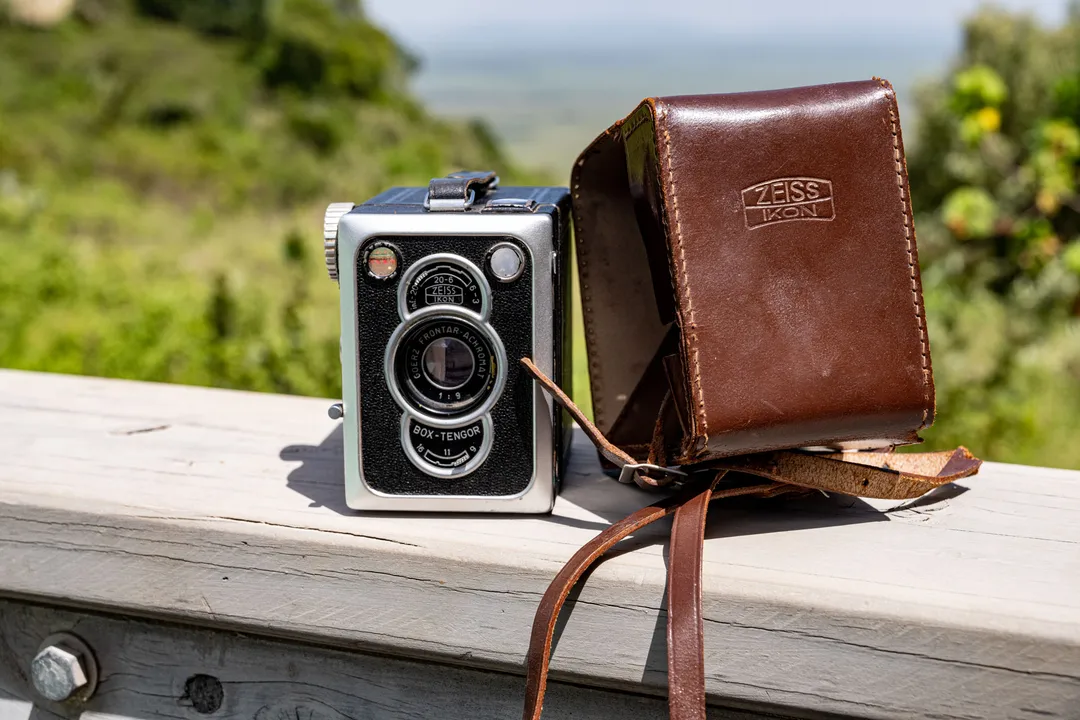
Before the camera became truly "small" and affordable for the masses, the basic form factor of the box camera was already established. [3] A box camera, by its very definition, is a rudimentary camera, usually rectangular or box-shaped, that employs a simple fixed focus lens and a fixed aperture opening. [3][7] This design stripped away the need for intricate focusing mechanisms or adjustable settings that characterized professional equipment of the time. [7] While the term "box camera" can apply broadly to many simple designs, its modern connotation—the camera that brought photography to the common household—is inextricably linked to one brand and one price point. [1] Many of these early iterations, while simpler than plate cameras, still required a degree of technical familiarity, often loading glass plates or specialized, costly roll film. [7] The real hurdle wasn't just the physical mechanism; it was the economic barrier keeping photography locked behind glass cases and technical manuals. [2]
# The One Dollar Start
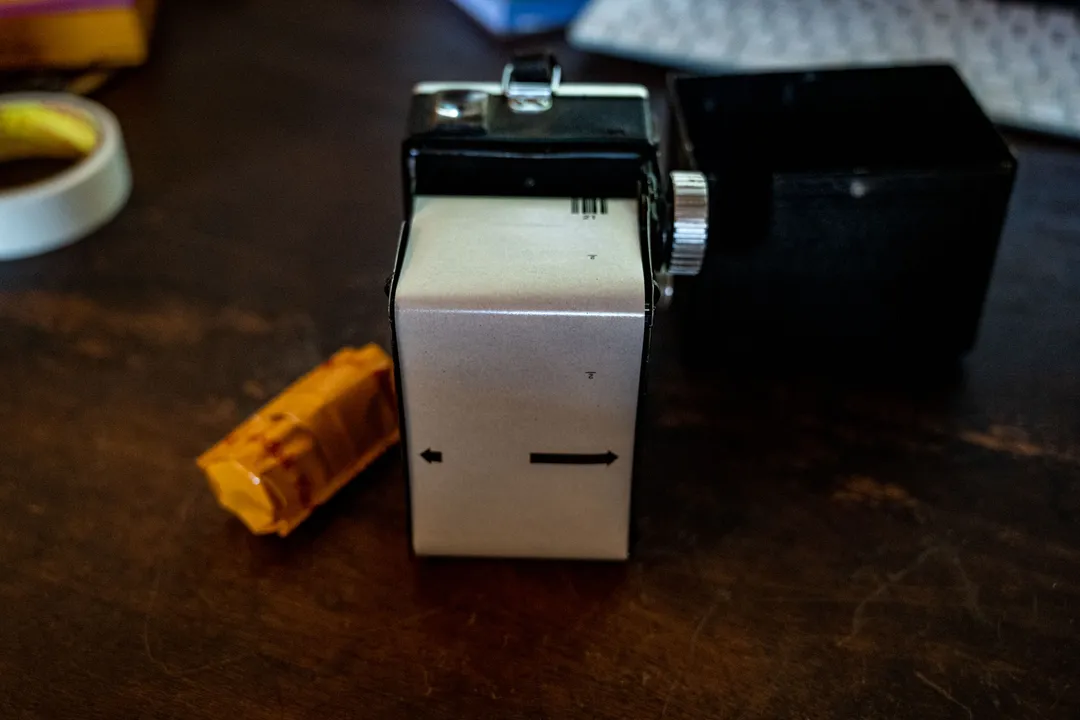
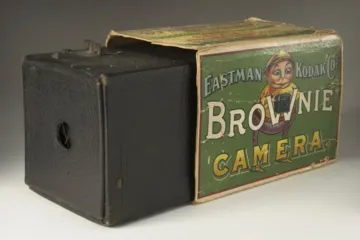
The specific moment the small box camera truly entered the public consciousness arrived in 1900 with the introduction of the No. 1 Kodak Brownie camera. [1][2] This invention was not just an incremental step; it was a deliberate, market-shifting strategy executed by George Eastman's Kodak company. [2] The initial purchase price was astonishingly low: just $1.00. [1][2] This affordability instantly removed the primary obstacle that kept photography an exclusive pursuit for the wealthy or dedicated hobbyists. [2]
The genius of the Brownie wasn't just its price tag but its philosophy, encapsulated in Kodak's famous slogan: "You press the button, we do the rest". [2][5] The user simply loaded a roll of film, pointed the box in the general direction of the subject, pressed the shutter release, and sent the entire camera back to Kodak when the roll was finished. [5] This completely outsourced the technical aspects of development and printing back to the manufacturer, fulfilling the promise of simple picture-making for everyone. [2][4]
# Technical Simplicity
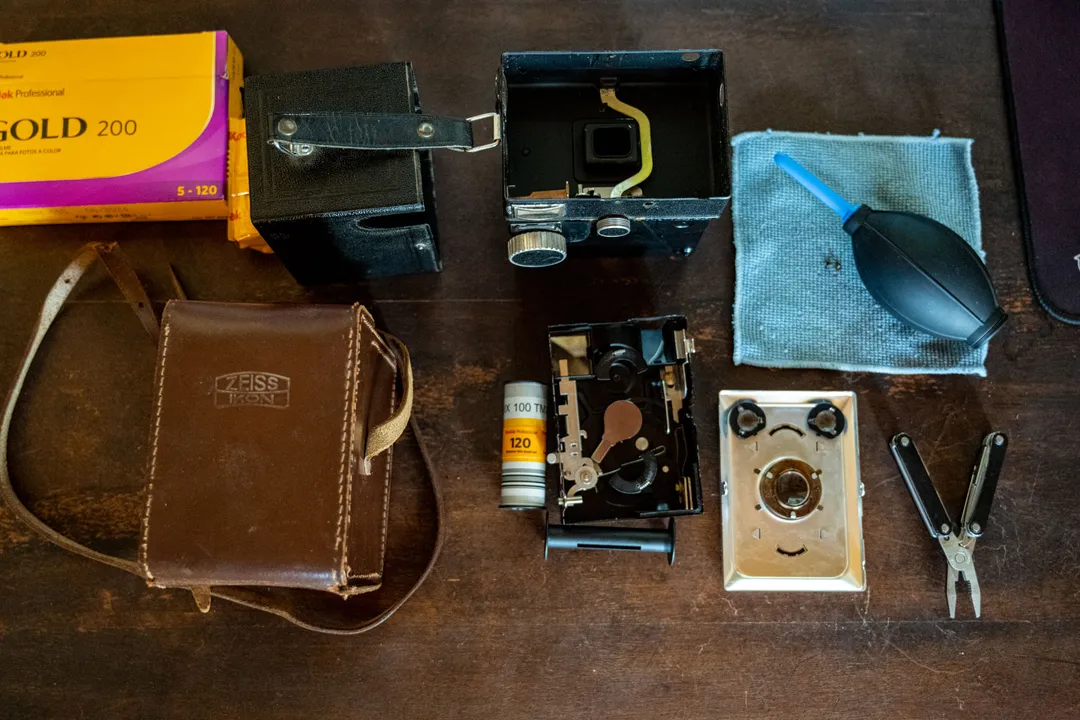
The physical construction of the early Brownie models reflected this dedication to simplicity and low cost. [1][7] The original No. 1 Brownie was essentially a simple pasteboard box, often finished with a dark covering. [1] It utilized a meniscus lens and a simple rotary shutter that offered only two speeds: instantaneous (for daytime use) and time exposure. [1] Later versions, such as the No. 2, retained the box shape but often upgraded to wooden construction and utilized a different film format. [7]
The film itself was central to this system. The No. 1 Brownie used a specific roll film, often referred to as size 107, which was simple to load inside the camera body. [1] Once the exposure was complete, the user didn't need to unload film in a darkroom; the entire unit was mailed back to Kodak for processing. [5]
Considering the camera's $1.00 price, a reader today might understandably assume that the bulk of the cost was hidden in the film. However, even when factoring in the price of the film and the subsequent processing—often costing slightly more than the camera itself for the first roll—the total entry cost remained incredibly low compared to contemporary cameras that required purchasing separate plates, chemicals, and developing equipment. [2][4] This initial outlay, which perhaps equaled the cost of a couple of lunches in 1900, meant that photography was no longer an investment but an accessible consumer good. [2]
# Cultural Shift
The invention of the Brownie, and by extension, the popularization of the small, fixed-function box camera, fundamentally altered the social function of photography. [5] Before 1900, photography was often associated with formality: stiff studio portraits, important historical events, or carefully composed landscapes requiring expertise. [4] The Brownie changed the subject matter of photography. [5]
Suddenly, people were capturing candid moments, snapshots of family gatherings, holidays, and everyday life—the very memories we now associate with snapshots. [5] This move toward casual documentation represents a significant cultural turn. While the earlier box cameras existed in various forms, [3] it was the Brownie’s flawless execution of a mass-market, low-cost, point-and-shoot mechanism that solidified the "snapshot" as a recognized art form, or at least, a common practice. [5] Think about how much personal history is documented today on a smartphone; the Brownie was the 1900 equivalent, moving the camera out of the expert's hand and into the hands of everyone. [4] The ability for a child to use one meant that the visual record of the family was no longer solely curated by the head of the household or a visiting professional, but by every member present at an event. [5]
# Model Proliferation
The success of the initial concept led to rapid iteration, showing that the basic box design was adaptable. [1][7] Following the success of the first model, Kodak introduced subsequent versions, often increasing the film size capabilities, thus making larger prints possible. [1][7] For example, the No. 2 Brownie, introduced shortly after the first, used a larger film roll capable of producing 2¼ x 3¼ inch prints, an appealing upgrade for users whose enthusiasm grew after their first roll. [7] These later models maintained the same user-friendly ethos but offered slight improvements in handling or resulting image size, ensuring the design remained relevant through the early decades of the twentieth century. [1] The No. 2, in particular, remained a popular model for years, indicating that the core mechanism worked exceptionally well for its intended purpose. [7]
# The Box Legacy
While the term "small box camera" could technically describe various simple cameras before 1900, the device that defined the category and launched modern amateur photography was the Kodak Brownie introduced in 1900. [2][7] It established the blueprint for the simple, self-contained imaging device that would later evolve into countless iterations, including simple plastic cameras and even the core concept behind many initial digital point-and-shoots. [3] The legacy of that $1.00 pasteboard box is the visual documentation of millions of lives that otherwise would have remained undocumented, proving that the greatest invention is often the one that makes complexity disappear. [2][4]
Related Questions
#Citations
Kodak Brownie - Wikipedia
Kodak Introduces Brownie Cameras | Research Starters - EBSCO
1900-1910: The Brownie Camera - ANGELICSCALLIWAGS
It All Started With a Brownie - Angama Mara
International Brownie Camera Day history - Facebook
Thinking Inside The Box: The Kodak No. 2!
The Beginning: Box Cameras - Lomography
No. 1 Brownie Box Camera | Science Museum Group Collection