Who invented a small box camera that made it cheaper to take pictures?
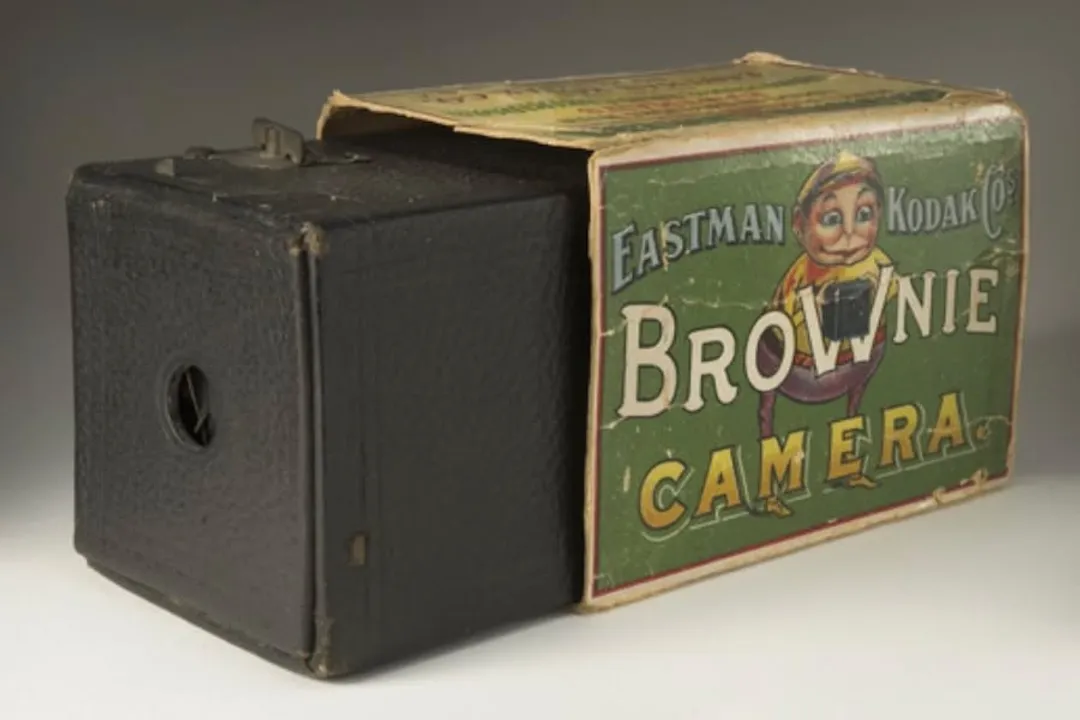
The camera that fundamentally changed how everyday people recorded their lives was not a complex, imposing machine reserved for studios or wealthy hobbyists. Instead, it was a humble, small box camera introduced at the turn of the twentieth century that made taking pictures an accessible, affordable pastime. This camera, the Kodak Brownie, arrived on the scene promising simplicity in an industry long defined by technical barriers and high costs. [1][3]
The story of making photography cheap begins with the ambition of one man: George Eastman. Eastman, the driving force behind the Eastman Kodak Company, held a profound belief that photography should not remain the domain of specialized professionals or affluent amateurs who wrestled with chemicals and heavy equipment. [4][7] His earlier innovations, like dry-plate photography, had already started to simplify the process, but his ultimate goal was complete democratization—getting a camera into the hands of absolutely anyone who wanted to document their world. [3][7] He famously sought to create a device that operated under the motto, "You press the button, we do the rest". [3]
# Eastman's Drive
Eastman's vision wasn't just about inventing a better gadget; it was about creating an entirely new market based on convenience. [7] Before Kodak and the Brownie, taking a photograph often meant managing bulky glass plates, wet chemical processes, and complex exposure calculations. [4] This was an involved, dirty, and expensive endeavor. Eastman understood that if you could simplify the mechanics and standardize the supply chain, you could lower the price point drastically and expand the customer base exponentially. [3][7] He recognized that the use of photography was what mattered to the masses, not the chemical mastery required to create it. [4]
His earlier introductions, like the original Kodak camera, proved this concept worked, using flexible roll film that eliminated the need for plates. However, the initial Kodak still carried a relatively high price tag, limiting its reach. [8] The challenge remained to shrink the camera, simplify the operation to the absolute minimum, and slash the introductory cost to something almost trivial.
# The Dollar Box
The culmination of Eastman’s drive arrived in 1900 with the launch of the Kodak Brownie camera. [1] This was the machine that truly delivered on the promise of inexpensive photography. The introductory price point was revolutionary: one dollar. [1]
To put this figure into perspective, while sources confirm the $$1$ price tag, it is worth noting what that meant in the context of the time. In 1900 America, a dollar represented a significant portion of a laborer’s daily wage, but crucially, it was accessible enough for a child to save up for, or for a family to purchase as an occasional item, unlike the many tens or hundreds of dollars required for earlier camera equipment. [1][8] It represented an investment in memory rather than professional equipment. The camera itself was a simple, sturdy box, designed to be rugged enough to withstand handling by its new, younger audience. [1][5]
The camera required no focusing mechanism and used a fixed aperture and shutter speed, ensuring that nearly every time the shutter was released on a reasonably bright day, a usable image would result. [3] This mechanical simplicity meant that the camera body itself was incredibly cheap to manufacture. [1]

# Roll Film Shift
The affordability of the Brownie was inextricably linked to its film system. It operated using roll film—a flexible material coated with an emulsion—which was a radical departure from the fragile, heavy glass plates previously standard. [3][4] The film was spooled inside the camera, and once a full roll was shot, the entire unit was sent back to Kodak for processing. [1][3]
This service model was arguably as important as the camera itself. The $$1$ price tag covered the basic box, often loaded with enough film for 15 exposures. [1] When the customer was finished shooting, they mailed the entire camera back to the factory. [3] Kodak would then remove the exposed roll, develop it, print the negatives, and return the original camera—often reloaded with fresh film—along with the new prints. [3] This circular economy meant the consumer never had to handle any chemicals or darkroom equipment whatsoever, perfectly fulfilling the "we do the rest" promise. [3] This complete outsourcing of the technical difficulty made the entire process manageable for anyone.
# Naming Origins
The name chosen for this groundbreaking device was almost as catchy as the concept itself. The camera was named the Brownie after a popular series of comic strip characters by Palmer Cox. [1][5] These characters were small, mischievous sprites who were often shown engaging in silly activities, making them a perfect, lighthearted namesake for a camera intended to capture everyday, informal moments. [1][5] The comic strip was well-known, lending immediate recognition and a sense of playful accessibility to the new product. [5]
# Mass Picture Taking
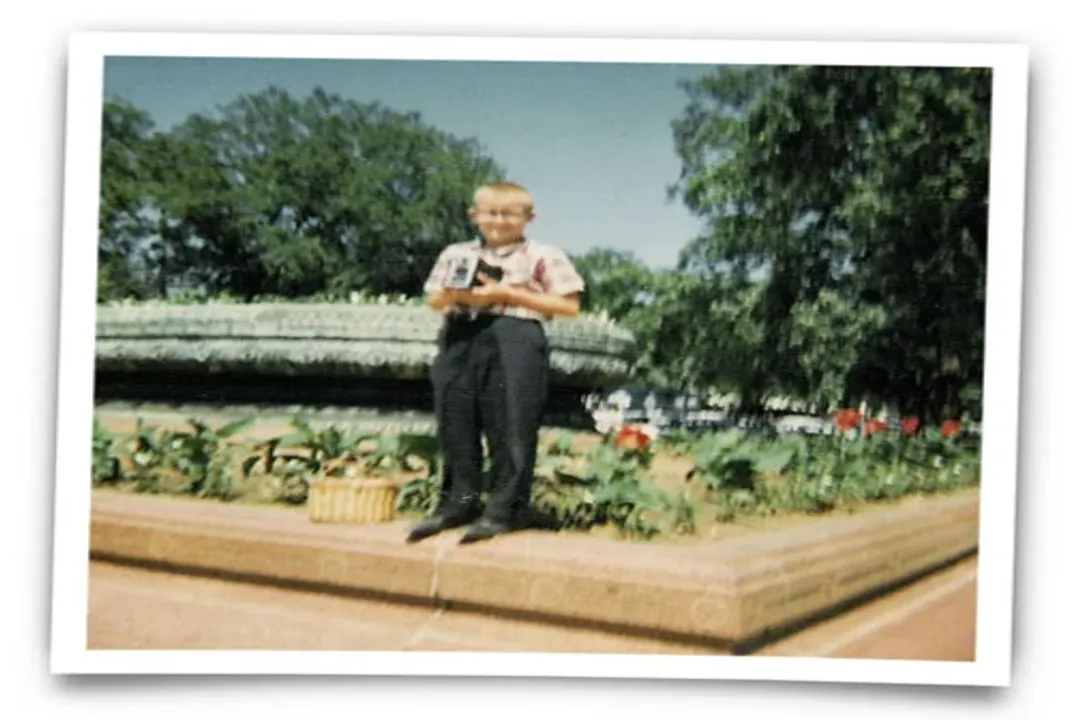
The impact of the Brownie on visual documentation cannot be overstated. By reducing the cost and complexity, Kodak opened up the possibility of taking pictures to the masses, including children, who were explicitly targeted by the branding. [1][5] This marked the true beginning of snapshot photography. [3] Before the Brownie, pictures tended to be formal events or important milestones because of the effort and expense involved. After 1900, casual moments—a picnic, a new pet, a day at the beach—became routinely documented. [3]
It is crucial to observe that the success was not purely in the hardware sale but in the recurring revenue stream generated by film processing. The $$1$ camera was a loss leader or, at best, a break-even proposition designed to lock the customer into Kodak’s processing loop for years to come. [7] This reliance on a service ecosystem, rather than just selling durable goods, established a new business model for consumer electronics that is still mirrored today in how companies sell printers or gaming consoles. The real profit was in the consumables and the proprietary service required to make the consumable useful. [7]
The Brownie line proved so successful that it spawned many variations over the following decades, constantly evolving to maintain that low price and high accessibility standard, even as photographic technology advanced in other sectors. [1] It shifted the cultural focus from how to take a picture to what to photograph, fundamentally changing the purpose of the camera from a scientific instrument to a personal recording device.
# Visual Culture Change
The Brownie camera didn't just sell units; it created a new visual language. When photography becomes cheap and easy, people take more pictures, and those pictures become less curated and more spontaneous. [3] This influx of casual imagery altered cultural memory, moving it away from stiff, posed portraits toward candid documentation. The world became visually cataloged by ordinary people, not just by official portraitists or newspaper photographers. [3]
This shift laid the groundwork for nearly every form of visual media we consume today, from personal photo albums filling attics to the spontaneous, image-heavy sharing prevalent on modern digital platforms. [2] The democratization achieved by Eastman's simple box over a century ago established the expectation that visual documentation of one's personal life should be instantaneous, inexpensive, and ubiquitous. [6] The small box camera invented by George Eastman and popularized by Kodak truly put the power of the image directly into the hands of the public. [1][4]
Related Questions
#Citations
Kodak Brownie - Wikipedia
Eastman Kodak's Brownie box camera revolutionized photography
Celebrating Free Enterprise and One Hundred Years of Kodak ...
Brownie Camera Invented - America Comes Alive
B is for... Brownie, the camera that democratised photography
In 1888, you could capture memories with George Eastman's ...
George Eastman, Kodak, and the Birth of Consumer Photography
Learn How the Brownie Camera Changed Photography Forever
How did George Eastman come to invent the Kodak box camera ...