Who invented the first small camera?
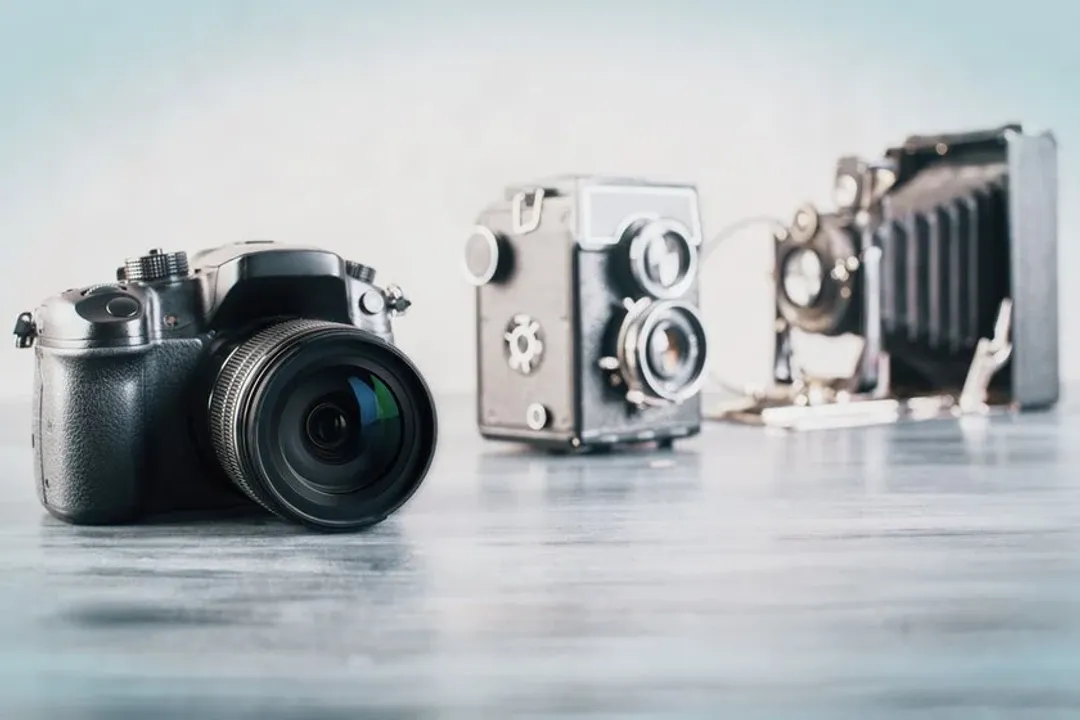
The very idea of capturing a fleeting moment with light has captivated thinkers and inventors for millennia, long before the word "camera" even referred to a photographic device. What we recognize today as a small, personal camera—something easily slipped into a pocket or bag—is the result of a gradual, centuries-long refinement of optical principles and chemical processes. [1][6] The path to miniaturization wasn't a single breakthrough but a series of necessary steps, starting with a dark room and ending with a digital sensor small enough to fit in your palm. [3][7]
# Ancient Optics
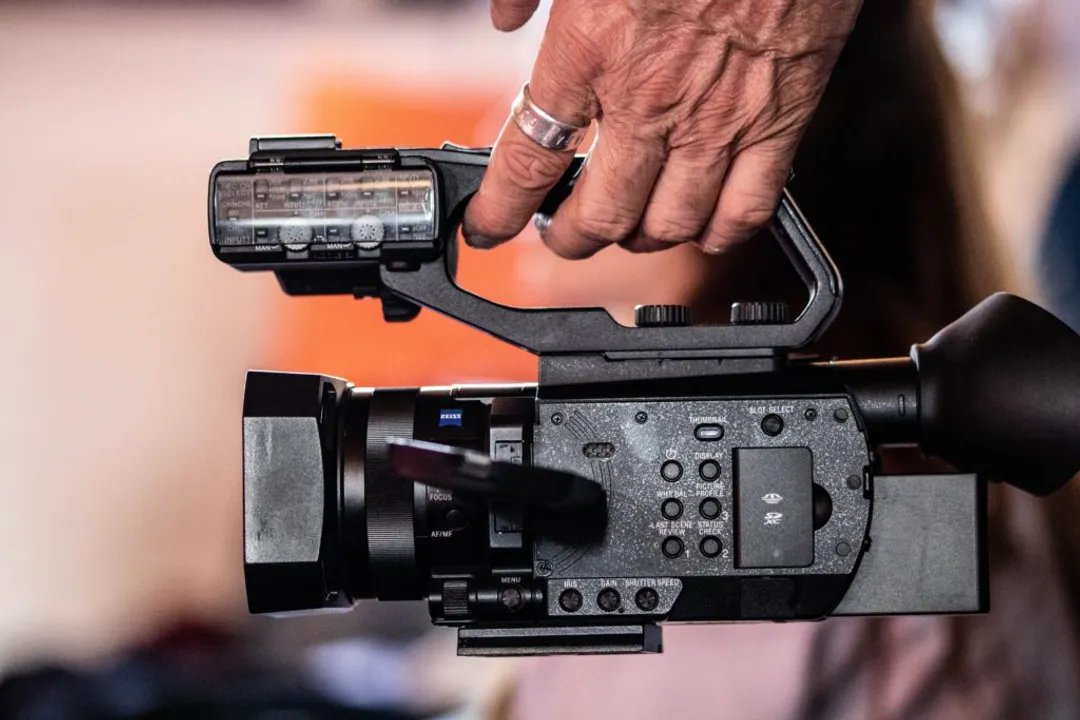
The foundational concept behind all cameras, large or small, is the camera obscura, or "darkened room," which operates on the principle that light passing through a small aperture into a dark space projects an inverted image of the outside world onto the opposite surface. [1][3][7] References to this phenomenon date back to ancient Chinese philosopher Mozi in the 5th century BCE, and it was also described by Aristotle. [1][3] Centuries later, the 11th-century Arab scholar Ibn al-Haytham provided significant early analysis of the concept. [1]
For hundreds of years, the camera obscura served primarily as a drawing aid. [1][3] Artists would trace the projected image, essentially creating a highly accurate sketch. [3] While it demonstrated the ability to project an image, it could not permanently record that image onto a surface. [7] This ability to fix the image—to truly invent photography—was the next monumental hurdle, and the devices used for these early experiments were certainly not "small" by modern standards; they were often rooms or large wooden boxes. [4]
# Fixing the Image

The transition from projection to permanent capture required chemistry. The first person widely credited with achieving a permanent photograph was Nicéphore Niépce. [3][4] Around 1826 or 1827, using a technique he called heliography, Niépce managed to capture the View from the Window at Le Gras. [1][4][7] This required an astonishingly long exposure time, potentially lasting several days. [1][4] The apparatus used was a large box camera that sat on a tripod, a far cry from anything a casual user could manage. [4]
Niépce later partnered with Louis Daguerre, who refined the process significantly. [3][4] Daguerre introduced the Daguerreotype process around 1839, which drastically cut exposure times down to mere minutes. [1][3] Though a massive leap forward in practicality, the Daguerreotype camera remained a bulky wooden box, often needing specialized stands for stability, and it produced a single, unique positive image on a silver-plated copper sheet. [4] Simultaneously, across the Channel, William Henry Fox Talbot developed the Calotype process, which allowed for paper negatives and thus multiple copies, also announcing his findings in 1839. [1][4] Even with these advancements, photography remained the domain of dedicated professionals and serious amateurs equipped with heavy, complex gear. [7]
# The Portable Revolution
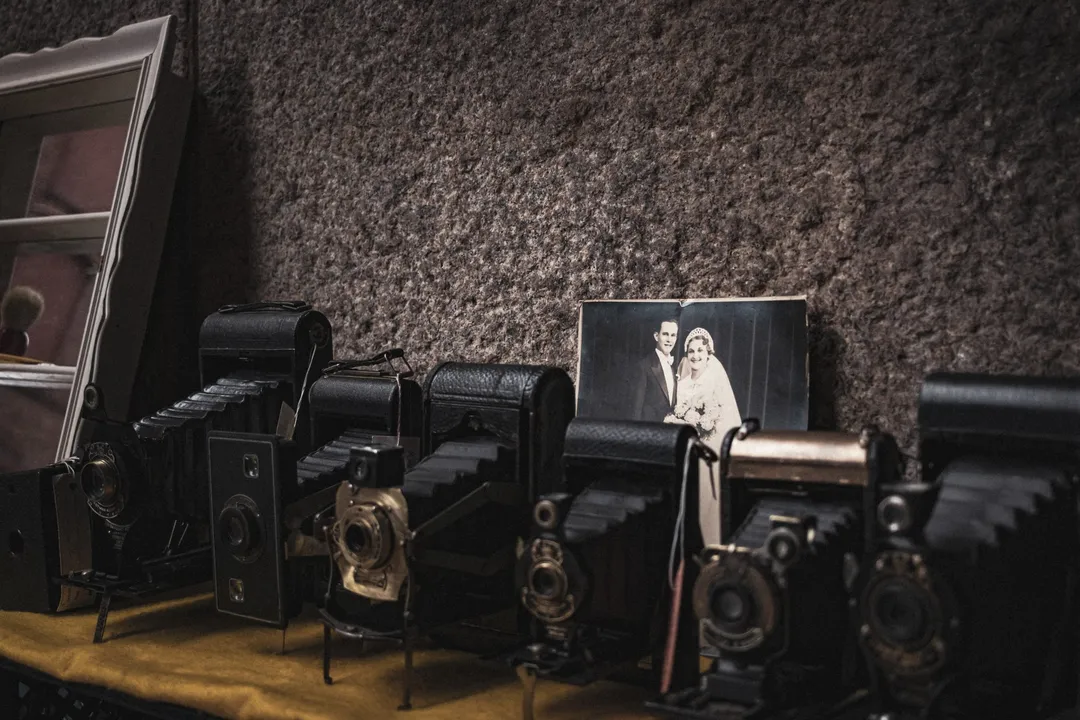
The true answer to "who invented the first small camera" must focus on accessibility and portability, the elements that separate a scientific curiosity from a consumer product. [3] The next major figure in this narrative is George Eastman. [1][3][4] Eastman recognized that the complexity of handling chemicals, wet plates, and heavy equipment was the primary barrier preventing photography from becoming a widespread hobby. [7]
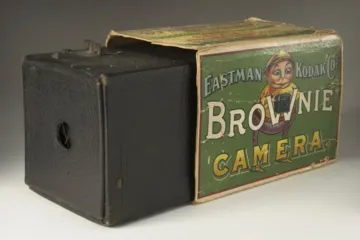
Eastman’s major innovation wasn't just a new chemical process, but a mechanical and commercial one: flexible roll film. [1][3] This invention allowed a camera to be loaded with multiple exposures that could be developed later, eliminating the need for the photographer to carry chemical supplies everywhere. [7] In 1888, Eastman released the first Kodak camera. [1][3][4][7] This device was not necessarily tiny by today's standard—it was a simple box camera—but it was small, light, and pre-loaded with enough film for 100 circular exposures. [3]
This was a paradigm shift captured perfectly by the company’s famous marketing slogan: "You press the button, we do the rest". [1][3][7] The user simply operated the shutter release, sent the entire camera back to Kodak's factory in Rochester, New York, where the film was processed, prints were made, and the camera was reloaded and returned to the customer. [1][7] While Niépce’s device required days of preparation and Daguerre’s required careful setting up, the 1888 Kodak turned photography into an accessible, almost automatic process. [4] This move from complicated equipment in the field to centralized processing defines the first truly small camera era in terms of user experience.
It is important to note that while the Kodak introduced the concept of a small, user-friendly camera, the subsequent standardization of film size, particularly the development of 35mm film formats later on, further drove miniaturization in professional and enthusiast circles. [1]
# Comparing Technological Leaps
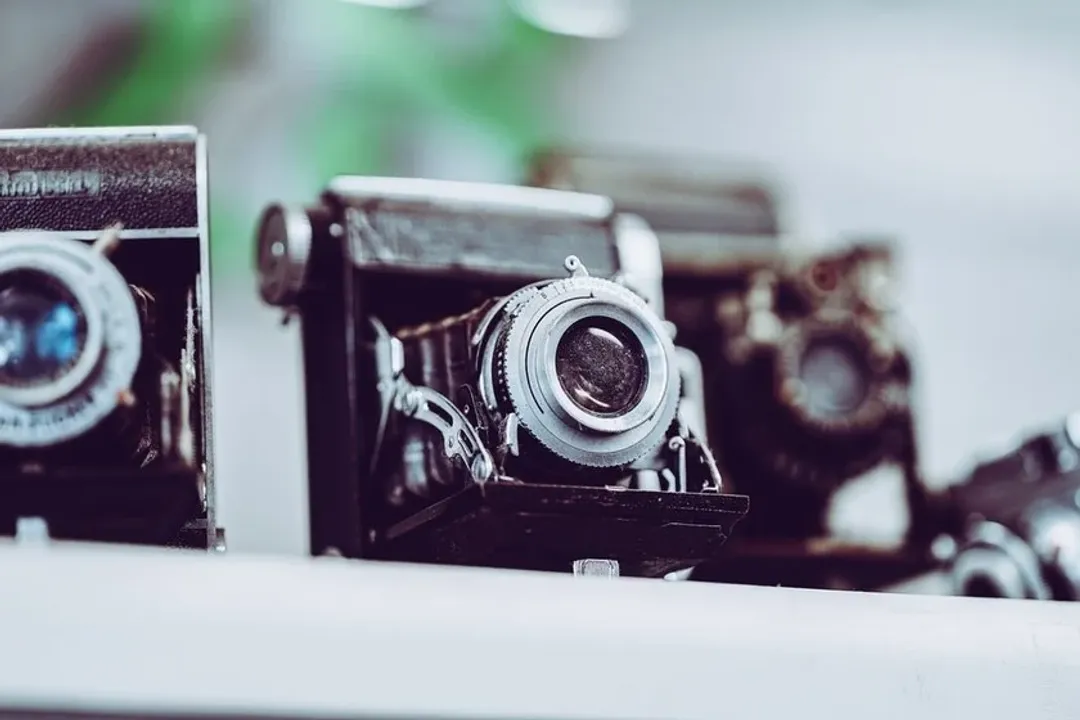
Considering the history, the invention of the camera obscura (the optical foundation) precedes the photographic invention by centuries. [1][7] Niépce and Daguerre invented the first practical photographic camera, but these were cumbersome, station-bound affairs. [4] George Eastman invented the first small, commercially viable, mass-market camera system that separated the act of taking the picture from the act of developing it. [3][7] If we are defining "small camera" as a device meant for personal, portable use by the general public, Eastman’s 1888 Kodak is the clear landmark. The engineering challenge overcome by Eastman was not just making the box smaller, but making the entire workflow smaller and simpler for the end-user, a change in thinking arguably as significant as the initial chemical fixation of light itself. [7]
This shift in the late 19th century mirrors the disruption seen in electronics centuries later. Imagine trying to explain to a 19th-century portrait artist—who relies on a multi-part apparatus of lenses, ground glass, and noxious chemicals—that in a few decades, people would simply carry a device that fits in a coat pocket, press a button, and get a perfect picture returned to them in the mail. The 1888 Kodak wasn't just an incremental step; it was the invention of consumer photography built around a portable mechanism. [3]
# The Digital Shrink
The pursuit of smallness didn't end with roll film. The 20th century saw continued refinement toward smaller formats, leading toward instant gratification and, eventually, digital capture. [6] While the sources focus less on the specific inventor of the first small digital camera (often credited to Kodak's Steven Sasson in 1975, though not explicitly named here), they do touch upon the era that digitized the handheld experience. [6]
The introduction of electronic imaging paved the way for ever-decreasing device size. [6] Early electronic still cameras, like the Sony Mavica demonstrated in 1981, showed the potential for capturing images without chemical film, though they relied on magnetic storage rather than solid-state memory. [6] This evolution meant that the bulky film canister and the complex winding mechanism could eventually be replaced entirely by microprocessors and memory chips. The core principle inherited from Eastman remained: make the capture process as simple and unobtrusive as possible so that the camera becomes an extension of the user’s eye, not a piece of scientific equipment they must manage. [7]
The journey from the dark room observed by Aristotle to the pocket-sized digital devices of today shows that "invention" has different meanings depending on the era. [1][3] The optics were invented by ancient observers, the permanence by Niépce and Daguerre, and the portability and accessibility that truly defines the "small camera" for the masses was gifted to the world by George Eastman in 1888. [1][7]
| Era / Inventor | Key Contribution | Device Size/Complexity | Primary Focus |
|---|---|---|---|
| Ancient Observers | Camera Obscura principle | Room-sized or large box | Image projection for tracing |
| Niépce / Daguerre | Permanent image capture (Heliography/Daguerreotype) | Large, specialized wooden boxes | Chemical permanence |
| George Eastman (1888) | Roll film and consumer model | Small box camera (portable) | Mass accessibility and ease of use |
| Digital Pioneers (1970s/80s) | Electronic capture | Miniaturized electronics | Instant viewing and storage |
| [1][3][4] |
#Videos
The History Of The Camera - YouTube
Related Questions
#Citations
History of the camera - Wikipedia
When Was The Camera Invented? Everything You Need To Know
First photograph taken in 1826 by Joseph Nicéphore Niépce
Who Invented the Camera? When Was the First Camera Invented?
When Was The First Camera Invented: A Brief History | Skylum Blog
A 'toaster with a lens': The story behind the first handheld digital ...
When Was the Camera Invented — Dates & Inventors Explained
Camera Evolution Timeline: 1600s to 21st Century
The History Of The Camera - YouTube