Who invented search-and-rescue sensors?
The story of who invented search-and-rescue (SAR) sensors is not a narrative about a single eureka moment or one solitary genius; rather, it’s a history detailing the progressive development of diverse technologies designed to bridge the gap between tragedy and recovery. From early radio signals to sophisticated electronic detectors, the creation of life-saving sensing equipment has been a collaborative, evolving process driven by necessity. The core challenge in any search and rescue scenario is location—pinpointing a victim's position accurately and quickly, often in environments where visibility is zero and terrain is unforgiving.
# Beacon Origins
One of the most fundamental advances in alerting rescuers to a distress situation came from the development of emergency position-indicating radiobeacons. These devices transmit standardized signals that are picked up by satellites, providing a broad initial location for search teams. The concept behind these beacons evolved from earlier signaling methods, gaining significant traction and standardization over time.
The Emergency Position Indicating Radiobeacon (EPIRB), which became a critical piece of maritime safety equipment, operates on specific radio frequencies, such as the international distress frequencies of 406 MHz and 121.5 MHz. The 406 MHz signal is digital and carries encoded information about the vessel or aircraft, while the 121.5 MHz signal is used for the final homing phase by overflying aircraft. These beacons are designed to float and automatically activate upon contact with water, though manual activation is also common. The system relies on the Cospas-Sarsat system, an international satellite-based system for distress alert and location determination, which has saved countless lives since its inception. While the initial groundwork for radio signaling predates modern digital beacons, the formalized, satellite-linked EPIRB system represents a significant, collaborative invention in remote detection.
# Specialized Detection

Moving beyond general distress beacons, other specialized sensor technologies were developed to locate individuals who might be incapacitated or hidden from aerial view, often after the initial distress signal had faded or never sounded. These systems focus on detecting specific materials or subtle electronic signatures left behind by the missing person or their gear.
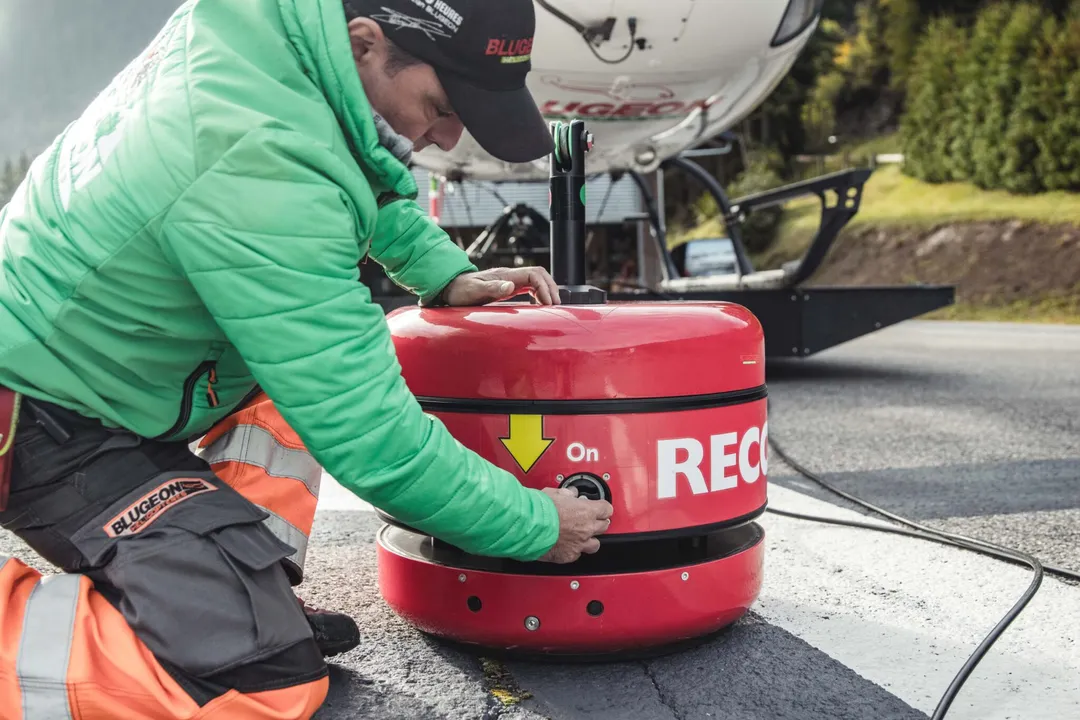
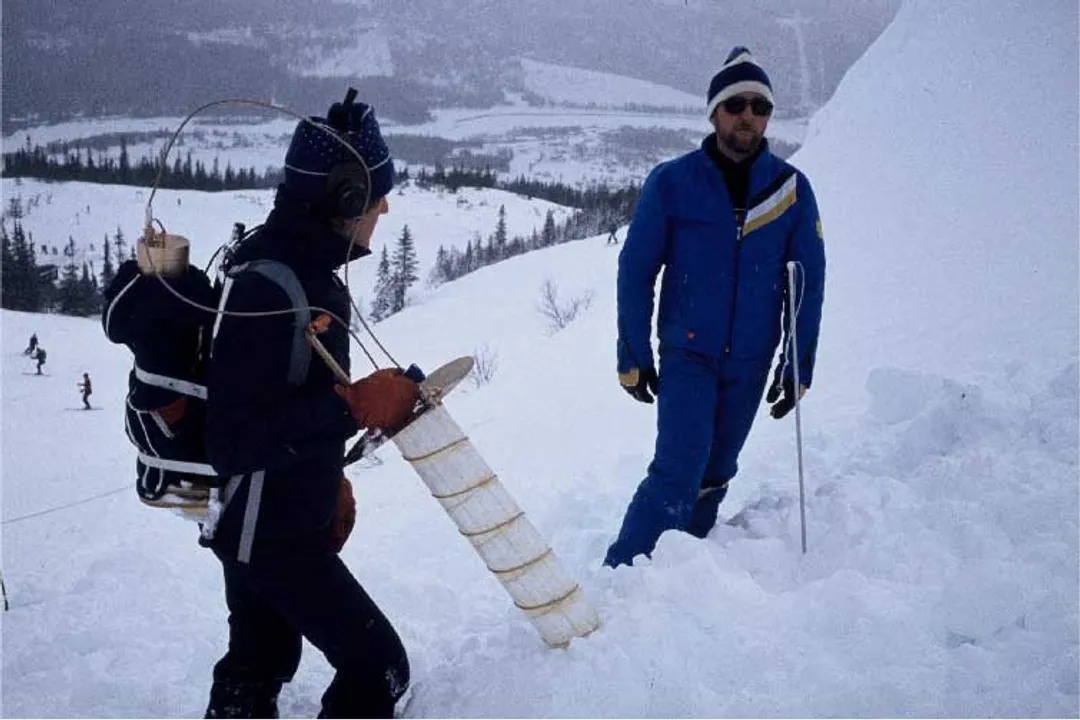
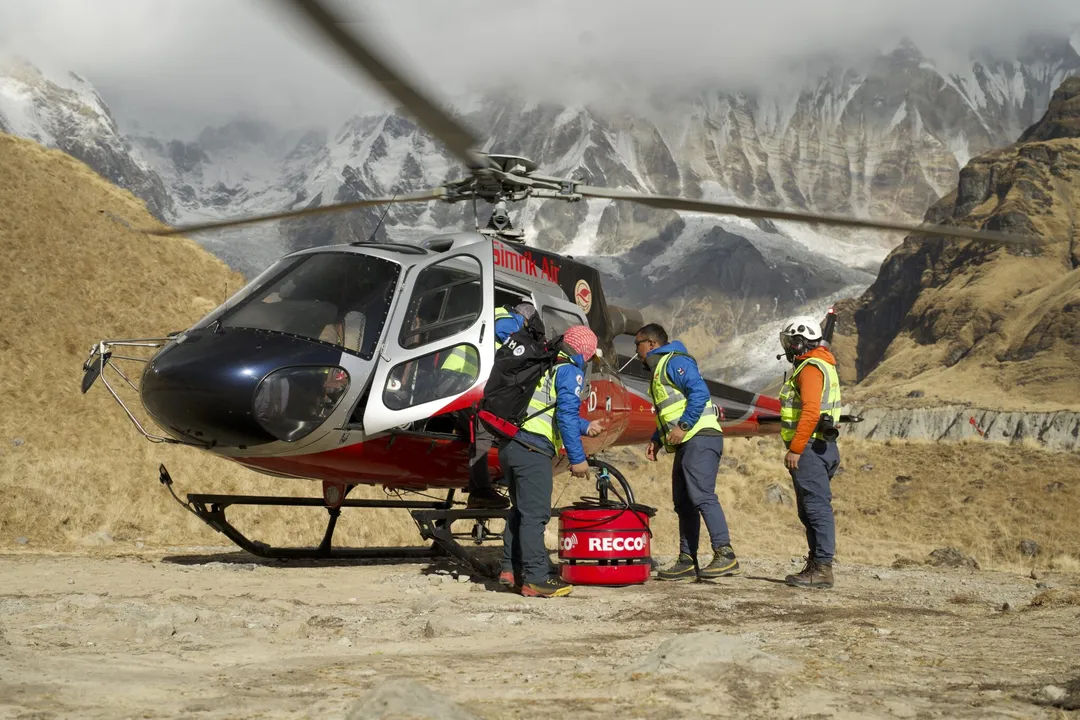
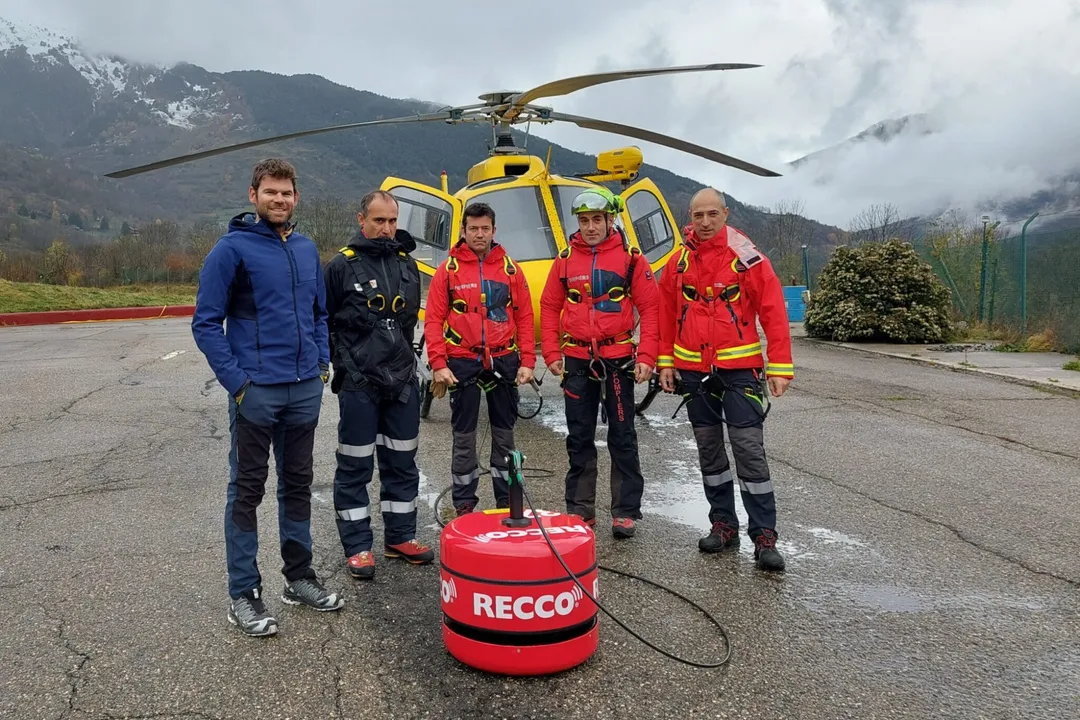
One notable example is the RECCO system, which has a history stretching back decades, beginning with an initial search for rescue technology in the late 1960s. The core concept was to use a radar-like device to detect small, passive reflectors. These RECCO reflectors, often integrated into ski gear, avalanche airbags, or even worn on the body, do not require batteries. The detector unit, carried by rescuers, sends out a microwave signal, and if a reflector is present, it returns a strong signal at a different frequency, allowing rescuers to pinpoint the exact location of the buried or lost person. The timeline shows continuous refinement, moving from early prototypes to becoming standard equipment in many ski resorts and mountain rescue organizations.
Another critical area involves technology spun off from space exploration. NASA has been instrumental in advancing SAR capabilities through technology transfer. For instance, advancements in thermal imaging used for spacecraft monitoring found direct application in detecting heat signatures from lost individuals, especially at night or through light cover. Furthermore, sensor technology originally developed for monitoring astronaut health and life support systems has informed the design of smaller, more reliable environmental monitoring devices used in remote environments.

# Advanced Locators
The continuous push for faster, more precise location has led to the introduction of proprietary and next-generation sensors. The LifeSensor system is an example of this evolution, designed to detect the presence of human life by sensing minute changes in the surrounding environment caused by respiration. This technology can detect a person even when they are buried under meters of avalanche debris, snow, or rubble. Unlike passive reflectors, this is an active sensor that seeks out a biological signature—the subtle air movement from breathing—offering a higher certainty of life presence than simple body heat detection alone.
The progression is clear: from a distress signal (EPIRB) to passive reflection (RECCO) to active biological signature detection (LifeSensor).
When considering the utility of these tools, it becomes evident that rescue missions often rely on layering these technologies. A rescue team first uses a wide-area search pattern, perhaps informed by survival theory, then deploys satellite data from an EPIRB activation. Once in the general area, ground crews might use an airborne or handheld RECCO detector for large-scale sweeps, followed by a focused LifeSensor sweep if the target is suspected to be under snow or rubble. The effectiveness hinges not on one inventor, but on the successful integration of various sensing principles.
# Robotics and Autonomy
The newest frontier in SAR sensing involves deploying autonomous platforms, effectively placing sensors directly into hazardous or inaccessible areas. Rescue robots, such as those designed for collapsed building search, carry an array of sensors including high-definition cameras, thermal imaging, and potentially gas detectors or microphones to detect faint sounds of life. These mobile sensor platforms allow rescuers to gain visual confirmation and environmental data without risking human life in unstable structures. The development of these robotic systems represents a convergence of mechanical engineering, advanced battery technology—like those developed by companies such as Amprius, which focus on high-energy-density batteries to power these remote operations for longer durations—and sensor integration.
A key technical challenge that has driven much of this sensor development is improving the Signal-to-Noise Ratio (SNR) across all platforms. Whether it is isolating a faint 121.5 MHz homing signal against background noise or filtering out thermal clutter from warm rocks to find a person, improving the SNR is the mathematical crux of successful remote sensing. The sophistication required to accurately identify a weak distress signal, even with advanced receiver technology, demonstrates the deep scientific background required for these life-saving tools.

# Theoretical Search Foundations
The success of any deployed sensor is contingent upon the theory guiding where the sensor should be looking. The principles of search, as outlined in SAR doctrine, dictate the most efficient way to cover an area based on probability, drift patterns (for objects in water), and environmental factors. The invention of the sensor is one half of the equation; the other half is the development of Search Theory, which determines the search effort distribution. An inventor might perfect a thermal imager, but without understanding the probability density function of where the subject is likely to be, the tool is used inefficiently. This combination of abstract search mathematics and concrete electronic sensing defines modern SAR effectiveness.
# Sensor Evolution Context
It is worth noting the distinct approaches taken by different industries. Security firms, for example, have long been involved in sensor evolution, often focusing on access control, surveillance, and perimeter protection. While this might seem distant from avalanche rescue, the underlying principles—reliable detection, low false-alarm rates, and remote monitoring—are shared across security and SAR applications. The shift from purely mechanical or visual observation to electronic detection marks a profound change in how we approach finding the lost.
If we consider the typical lifespan of a SAR scenario, the data suggests a heavy reliance on active electronic signaling in the first hours, followed by a shift to passive or biological detection as time passes and victims are either buried or lose power in their original devices.
To provide some context on how different systems compare in their primary function, we can look at their core mechanism:
| Technology | Primary Sensing Mechanism | Activation Type | Typical Use Case |
|---|---|---|---|
| EPIRB | Radio Frequency Transmission (Satellite link) | Automatic/Manual | Maritime/Aviation Distress Alert |
| RECCO | Passive Radar Reflection (Microwave signal) | Passive (Reflector must be present) | Avalanche/Outdoor Burial Search |
| LifeSensor | Active Biological Detection (Respiration) | Active Scanning | Avalanche/Rubble Search for signs of life |
| Thermal Imaging | Passive Infrared Detection (Heat Signature) | Passive | General visual search aid, day or night |
This comparison reveals that the "invention" isn't a single sensor type, but the system that combines them. A practical insight for any team adopting new SAR gear is to evaluate detection ranges against battery life; a high-sensitivity thermal camera is useless if it burns through its power source before the target area is reached, a problem that the development of high-density batteries directly addresses for robotic platforms. The choice between a passive system like RECCO, which relies on the victim carrying the required hardware, and an active system like thermal imaging, which relies only on the victim’s physical presence (heat), dictates the search protocol when resources are scarce.
Furthermore, one subtle but important aspect often overlooked in celebrating new sensor breakthroughs is the human factor in sensor interpretation. An algorithm can identify a thermal blob, but experience is required to distinguish that blob from a warm engine block or a patch of sun-warmed earth. As SAR technology advances toward greater automation, the expertise of the human operator in validating sensor output becomes even more focused—shifting from basic detection to complex data analysis. For example, when utilizing advanced sonar or ground-penetrating radar, the ability to filter out geological noise from actual anomalies requires significant, non-transferable field knowledge, something that no amount of electronic innovation can entirely replace. The human element, honed through training grounded in search theory, remains the final arbiter of what the sensor reports.
The trajectory of SAR sensing suggests an increasing reliance on miniaturization and multi-spectral analysis. Future systems aim to fuse data from acoustic, thermal, and radio frequency sensors concurrently, perhaps even embedded into smaller, drone-based platforms. This move toward integrated, multi-modal sensing is the current evolution, building upon the foundational beacons and dedicated reflectors of the past. The invention of SAR sensors, therefore, continues today, with each new successful recovery validating decades of incremental technological refinement.
Related Questions
#Citations
The evolution of sensors (and our role in their history) - Securitas
Emergency position-indicating radiobeacon - Wikipedia
Radar Device Detects Heartbeats Trapped under Wreckage
Timeline - Recco
Lifeseeker: A Game Changer in Search and Rescue
Search and rescue technology of the future: how tech is helping ...
All About Rescue Robots | Amprius Technologies
[PDF] The Theory of Search - A Simplified Explanation - Navcen.USCG.gov
Review-Microwave Radar Sensing Systems for Search and Rescue ...
Development of carbon dioxide sensing system for searching victims ...