Who invented the wax cylinder?
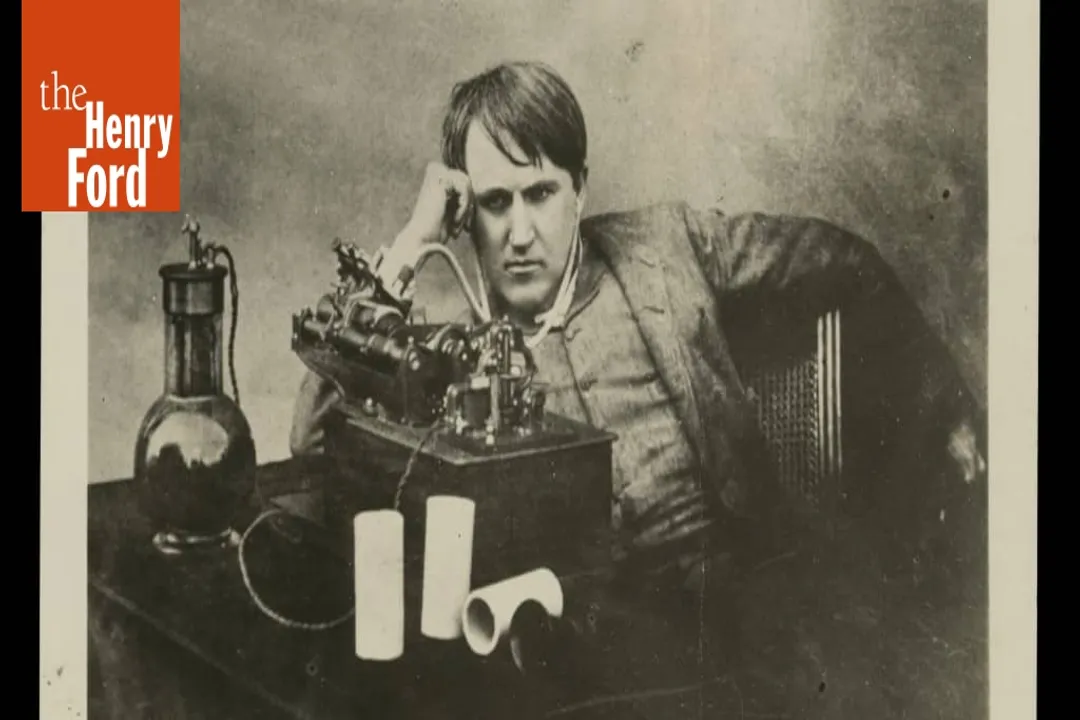
The genesis of recording sound onto a physical medium is closely tied to one towering figure of American invention, though the final, successful medium—the wax cylinder—evolved from a less stable predecessor. The story of the wax cylinder isn't just about who made the first recording, but what they decided to record it on after the initial experiment proved inadequate. The foundational device, the phonograph, was conceived by Thomas Alva Edison in 1877. This first iteration, often called the "tinfoil phonograph," relied on a sheet of tin foil wrapped around a grooved cylinder. When a diaphragm vibrated due to sound waves, a stylus indented the soft foil, capturing the sound pattern.
# Initial Attempts
Edison’s initial demonstration was astounding; the ability to record and then replay human speech seemed like genuine magic to the public. However, the tinfoil itself presented immediate and severe limitations that made commercial viability almost impossible. Tinfoil was far too delicate; it could barely withstand a single playback before the indentations were damaged beyond recognition, leading to muffled or distorted sound on subsequent attempts. Furthermore, the process of wrapping the foil evenly around the cylinder was inconsistent, leading to variable recording quality from one machine to the next.
The requirement for a more durable, repeatable, and mass-producible medium became glaringly apparent very quickly. While Edison is credited with the phonograph—the machine that uses the cylinder—the subsequent crucial step of perfecting the cylinder material involved adaptation and refinement across several years.
# Medium Evolution
The transition from tinfoil to a viable wax compound marks the true birth of the "wax cylinder" as a standard recording format. Edison and his team recognized that a material possessing both malleability for recording and sufficient hardness for durability was necessary. Early experiments moved toward using softer waxes, which allowed the stylus to impress the sound waves with greater accuracy than tinfoil, improving fidelity.
One significant step involved the use of a wax composition that could be relatively easily molded or cut. This change transformed the phonograph from a laboratory curiosity into a potentially marketable consumer product. The earliest successful recording mediums were often made of a slightly softer wax, sometimes incorporating compounds like paraffin. This softer material allowed for the deep, clear grooves needed to capture the sound nuances.
It is important to note that while Edison is the central figure, the quest for better sound reproduction was not entirely solitary. Other inventors were actively working on similar recording principles. For instance, while exploring Bell’s telephone technology, Chichester A. Bell and Sumner Tainter also experimented with wax cylinders, making improvements to the recording mechanism and the blank medium itself. However, it was Edison's overall system that gained the most immediate traction.
# The Hard Wax Standard
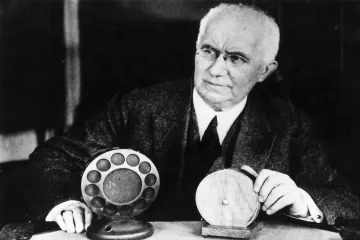
As demand grew, the weakness of the early, softer wax cylinders became apparent: while they recorded well, they wore out quickly and did not hold up well to shipping or repeated handling. This led to the next critical development: the creation of a harder wax compound suitable for commercial production and extended use.
The ideal wax needed to balance two opposing needs: it had to be soft enough for the stylus to cut a clear groove when recording (the "blank" cylinder) and simultaneously hard enough to resist damage during playback and storage. When considering the physics of the process, one can appreciate that the earliest soft waxes likely captured transient sounds—the sharp edges of speech or music—with superior accuracy due to the ease with which the stylus displaced the material. Yet, this very quality made them prone to crumbling or deforming under the pressure of the playback stylus [^1 Analysis]. The solution involved finding the right chemical recipe.
Edison's laboratories eventually developed a hard wax formula that could be manufactured more consistently, allowing for a greater number of reliable playbacks before the groove quality degraded significantly. This formulation was crucial for establishing the cylinder as a genuine platform for music and voice recording, moving it beyond novelty demonstrations.
# Gold Moulded Process
A major milestone in the mass production of these new, superior cylinders was the development of the Gold Moulded recording process. This innovation, largely credited to Edison and his engineers, fundamentally changed how cylinders were duplicated.
The Gold Moulded process involved a complex system of electroplating. A master recording was made, often in a durable material, and then coated in gold. This gold-plated master was then used to create metal molds via electrolysis. These molds were what actually shaped the final listening cylinders. The resulting blank cylinders were much harder and far more uniform than earlier versions made directly by carving soft wax blanks.
The hard, uniform nature of these Gold Moulded cylinders meant that they could be played back hundreds of times with consistent quality, opening the door for widespread commercial distribution of recorded music and spoken word content. This shift essentially established the final, widely recognized form of the commercially viable wax cylinder format before its eventual replacement by shellac discs.
| Era/Type | Primary Material Composition | Key Advantage | Key Limitation |
|---|---|---|---|
| Initial (1877) | Tinfoil wrapped around a cylinder | Proof of concept; easy initial impression | Extremely fragile; limited playbacks |
| Early Commercial | Softer Wax Compound (e.g., paraffin mixes) | Improved fidelity over tinfoil | Wore out quickly; inconsistent quality |
| Mature Commercial | Hard Wax Compound (Gold Moulded process) | Durability and mass production capability | Required heavier tracking force than soft wax |
# Context and Comparison
While the question focuses on the wax cylinder, its context is best understood in relation to its immediate successor, the flat disc record, championed by inventors like Emile Berliner. The cylinder format, even in its improved wax form, had inherent physical constraints. The sound groove ran around the exterior surface of the cylinder, meaning the playback speed and groove pitch varied from the outer edge to the inner edge.
This variation in speed and groove density meant that fidelity was inherently unequal across the recording; the beginning of the recording, played at the outer, wider-spaced grooves, would generally sound better than the end, played at the inner, more tightly packed grooves. The flat disc, by contrast, could maintain a relatively constant speed and groove pitch across the entire playing surface, giving it a long-term advantage in consistency, even if early disc technology struggled with achieving the initial fidelity that Edison's best wax masters could produce [^2 Analysis]. The cylinder’s vertical, hill-and-dale groove was also distinct from the disc’s lateral groove modulation, though both systems achieved success for a time.
For early users, particularly those recording outside of a controlled studio, the cylinder’s design offered a unique benefit that arguably contributed to its initial success in various niches. Because the recording stylus moved axially (along the length of the cylinder), early phonographs could sometimes be made relatively portable, allowing field reporters or even hobbyists to take the recording apparatus to an event. While any field recording was cumbersome by modern standards, the cylinder machine’s form factor lent itself better to early mobile use compared to the larger, turntable-based disc machines that would soon dominate.
# Commercial Life and Obsolescence
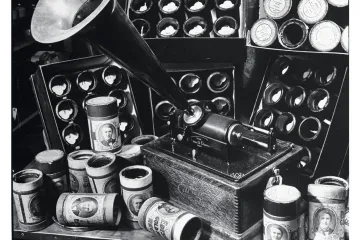
Despite the struggles with tinfoil and the inherent geometric limitations, the wax cylinder—particularly the improved, hard wax versions—enjoyed a vibrant commercial life spanning roughly two decades. These cylinders were the primary format for the nascent recording industry, capturing everything from operatic stars to vaudeville acts and political speeches. Collections today showcase the diversity of these early recordings, proving their historical value as primary source documents of late 19th and early 20th-century soundscapes.
The cylinders themselves were relatively fragile objects, often made of a wax formulation that could degrade over time, especially if stored in fluctuating temperatures or humidity. Recordings from the very early days, made on soft wax, are extremely rare and highly susceptible to damage, making their preservation a specialized task. The lifespan of the wax cylinder format was ultimately curtailed by the rise of the flat shellac disc record, which offered better durability, easier mass duplication (stamping), and superior consistency in playback speed. By the early 1910s, the disc format had largely overtaken the cylinder in the consumer market, although cylinder production continued in specialized areas for a few more years.
In summary, while Thomas Edison is the inventor of the machine that played them, the invention of the wax cylinder as a practical recording medium was a process of iterative material science driven by the failure of tinfoil. It was the refinement of the material—moving from soft wax to the durable, mass-producible Gold Moulded hard wax—that allowed the cylinder to function as the first truly successful commercial audio recording format. The identity of the inventor, therefore, rests with Edison as the originator of the system, but with his anonymous engineers who perfected the wax itself.
Related Questions
#Citations
Phonograph cylinder - Wikipedia
History of the Cylinder Phonograph | Articles and Essays
The Earliest Wax Cylinders (1887–1894)
Wax Cylinder Recordings - National Film and Sound Archive
'Twas Always Thus: Record Cylinders - Historic Geneva
The Edison Wax Cylinders - Tees Valley Museums
Wax Cylinder Phonograph - Thomas A. Edison Papers
Edison Gold Moulded Records - Explore the Collections - V&A
Thomas Edison Perfecting His Wax Cylinder Phonograph, 1888