Cylinder articles
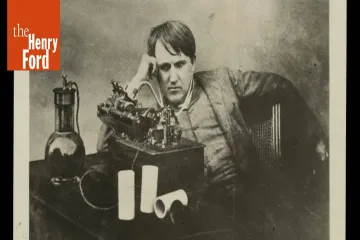
What material was used in the foundational tinfoil phonograph invented by Thomas Edison in 1877?
What was the most significant limitation making the initial tinfoil medium commercially unviable?
Which two inventors, exploring Bell’s telephone technology, also experimented with wax cylinders?
What key balance did Edison’s team seek when developing the viable wax cylinder compound?
What major innovation facilitated the mass production of uniform, durable wax cylinders?
What fundamental physical constraint inherent to the cylinder format caused fidelity inequality across a recording?
What groove modulation system did the cylinder format primarily utilize?
Compared to the turntable-based disc machines, what unique benefit did the cylinder’s axial recording stylus movement offer early users?
For roughly how long did the improved wax cylinder enjoy a vibrant commercial life as the primary recording format?
What characteristic of the flat shellac disc ultimately led to the cylinder format’s obsolescence in the consumer market?
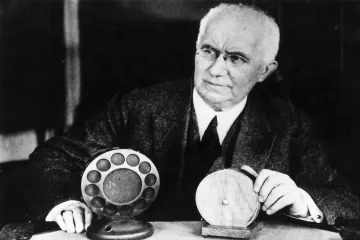
Who invented the device that successfully used flat discs for recording and playback?
What was the fundamental difference in groove movement between Berliner's Gramophone and Edison's earlier phonograph?
What was the primary technological advantage of the flat disc format over the cylinder format for replication?
What was the initial playback speed (rpm) for the very first iterations of the Berliner Gramophone?
What naturally occurring resin were the initial Berliner Gramophone discs typically made from?
Which company did Emile Berliner establish in the United States to market his device?
Which European licensee became highly successful and kept the name 'Gramophone' synonymous with recorded sound in regions like the UK?
What foundational physical geometry established by Berliner remained largely unchanged through the shift to vinyl LPs?
What standardized speed quickly superseded the initial 30 rpm speed for commercial use?
In the United States, what entity did Berliner's original company eventually evolve into or merge with?
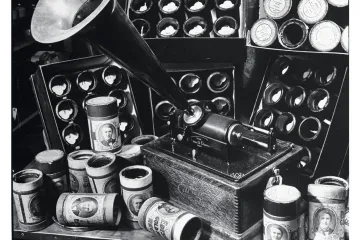
What material comprised Thomas Edison's earliest successful sound records?
What component converted airborne sound pressure variations into mechanical movement during recording?
What severely limited the dynamic range achievable with early mechanical recording methods?
Which mechanism ensured the recording stylus moved steadily along the length of the spinning cylinder?
If the resulting grooves etched into the wax were deeper or wider, what did this signify about the original sound?
What was the primary drawback of using the initial mechanical pantograph system for copying recordings?
How was faster mass production of consumer playing cylinders eventually achieved?
What was the function of the large horn during sound playback?
Compared to earlier brown wax, what advantage did later, harder wax formulations often offer?