Who invented the wax seal?
The story of the wax seal isn't about a single Eureka moment or a lone inventor standing up and declaring, "I have created the perfect closure!" Instead, it’s a narrative woven from centuries of necessity, spanning several ancient civilizations, all striving for the same goal: authentication and security. [1][3][5] Pinpointing the exact person who first melted beeswax and pressed a personal mark into it is impossible; the practice of sealing documents predates written history in many forms. [1][3] We must look at the evolution of sealing rather than a singular act of invention. [5]
# Early Markings
Long before the familiar red or green wax appeared on correspondence, ancient peoples understood the value of an impressed mark to signify ownership, approval, or protection. [1][3] In Mesopotamia, cylinder seals were rolled across wet clay tablets to authenticate records or contracts, a practice dating back as far as the fourth millennium BCE. [1][3] Similarly, in ancient Egypt, stamp seals, often made of clay or semi-precious stones, served similar bureaucratic and personal functions. [3] These early methods used materials like damp clay or soft mud, which would harden around the document or object, showing if it had been tampered with. [1][5] The core principle—a unique, non-reproducible mark confirming integrity—was established millennia before true sealing wax was widely adopted. [5]
# Roman Formalization
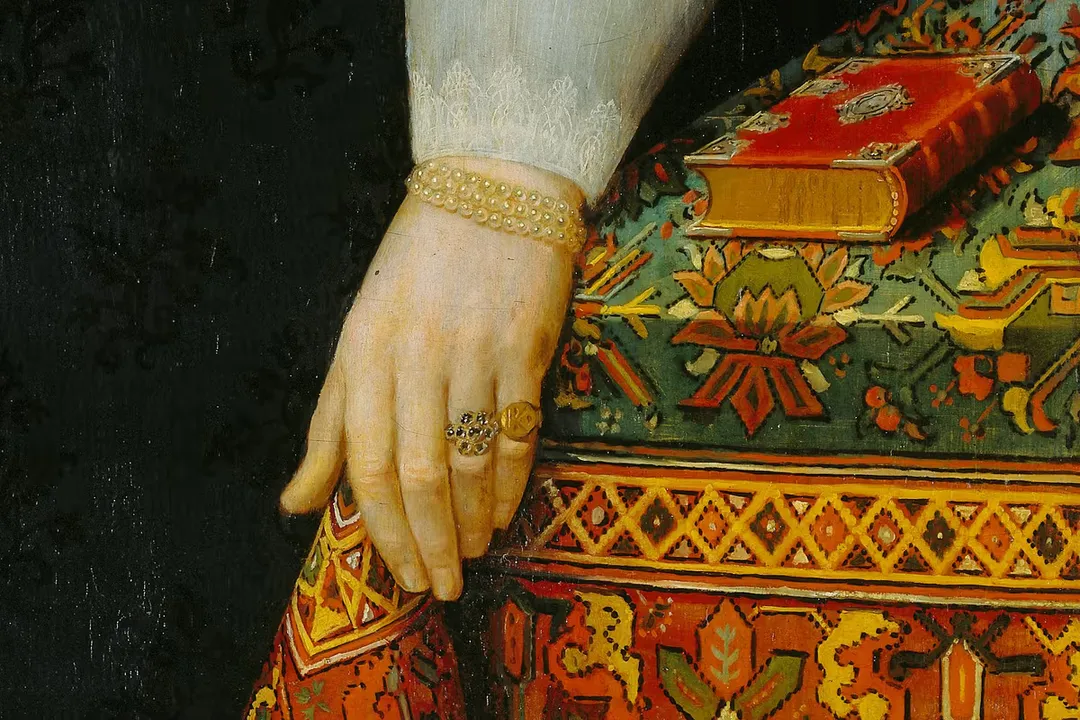
The shift toward something resembling the modern wax seal truly gained traction with the Roman Empire. [1][3] The Romans were meticulous record-keepers and administrators, necessitating a more sophisticated method for securing sensitive documents and official decrees. [1][5] They began applying a mixture, often based on resin or pitch blended with a colored substance for visibility, to the folded edges or tied cords of their scrolls or tablets. [1][5] This sealing material was pressed with a signet, typically an engraved ring worn by the official or individual. [4] This established the link between the person and the impression, making the seal a crucial extension of one’s legal identity. [4][5] While the exact composition varied—sometimes involving pine resin or even early forms of shellac—the Roman practice codified the method that would later be perfected in the Middle Ages. [1]
The use of signet rings in this era is fascinating. Unlike later medieval seals, which often involved casting a separate piece of wax on the document, the Roman style often utilized the ring directly on a blob of material or even on the parchment itself, sometimes using heated metal components attached to the ring structure for precision when sealing wax was not yet the dominant medium. [4] It was an immediate application of personal heraldry for administrative efficiency. [4]
# Medieval Peak
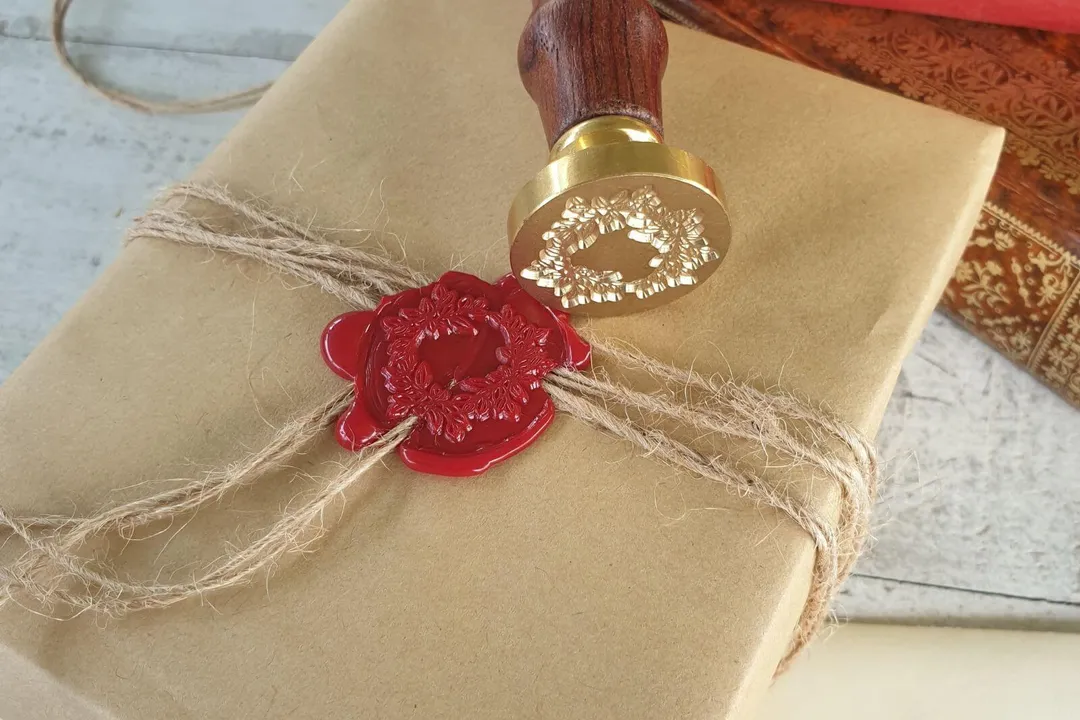
The true golden age of the wax seal arrived during the European Middle Ages, where the practice became standardized and deeply entrenched in governance, religion, and private correspondence. [1][5][6] This period saw the material evolve into the recognizable sealing wax we know today. [1][5] The standard recipe coalesced around beeswax, often mixed with resins like Venice turpentine or shellac, and colored with pigments such as vermilion for official documents or black for legal matters. [1][2][5]
In the high medieval period, particularly from the 11th century onward, an absolute commitment to the seal developed, especially in feudal Europe. [1][5] A king’s charter or a noble’s personal letter was often considered legally binding only when sealed, sometimes even more so than the written document itself. [5][9] This elevated the seal from a mere fastener to the ultimate guarantor of authenticity. [5][9]
It is during this era that the authority of the seal became a topic of legal and social discussion. For instance, an interesting point to consider is the sheer material cost this imposed on the nobility. A king or powerful baron might issue dozens of documents a day, each requiring a portion of expensive, imported beeswax and an impression from a carefully guarded signet ring. This wasn't just symbolic; it was a tangible drain on resources, reinforcing the status of the sealer. Conversely, the very fragility of the wax provided a perfect audit trail—if the seal was broken, the communication was compromised, a clear signal of tampering that dried ink alone could never offer. [1][9]
# Impression Craft
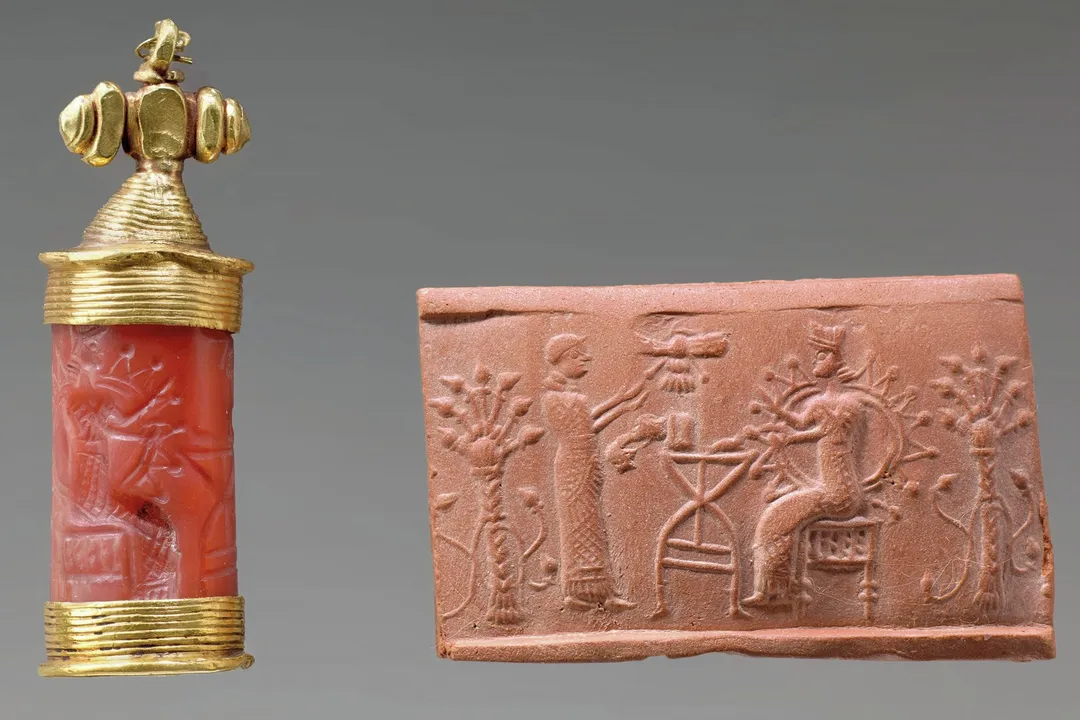
The tools used to create these indelible marks also evolved in sophistication. [5] While early impressions might have been made with simple metal stamps or even personalized coins, the high Middle Ages saw the rise of dedicated, intricately carved intaglio seals. [5][9]
These could take several forms:
- Signet Rings: Worn by individuals, offering convenience and constant access. [4]
- Desk Seals (or Counter-seals): Larger, heavier tools kept in the office, often used for official government documents or documents signed by high-ranking clergy. [9]
- Matrix Seals: Complex sets of dies used for governmental bodies, cities, or large institutions where one seal might represent an entire entity rather than a single person. [5]
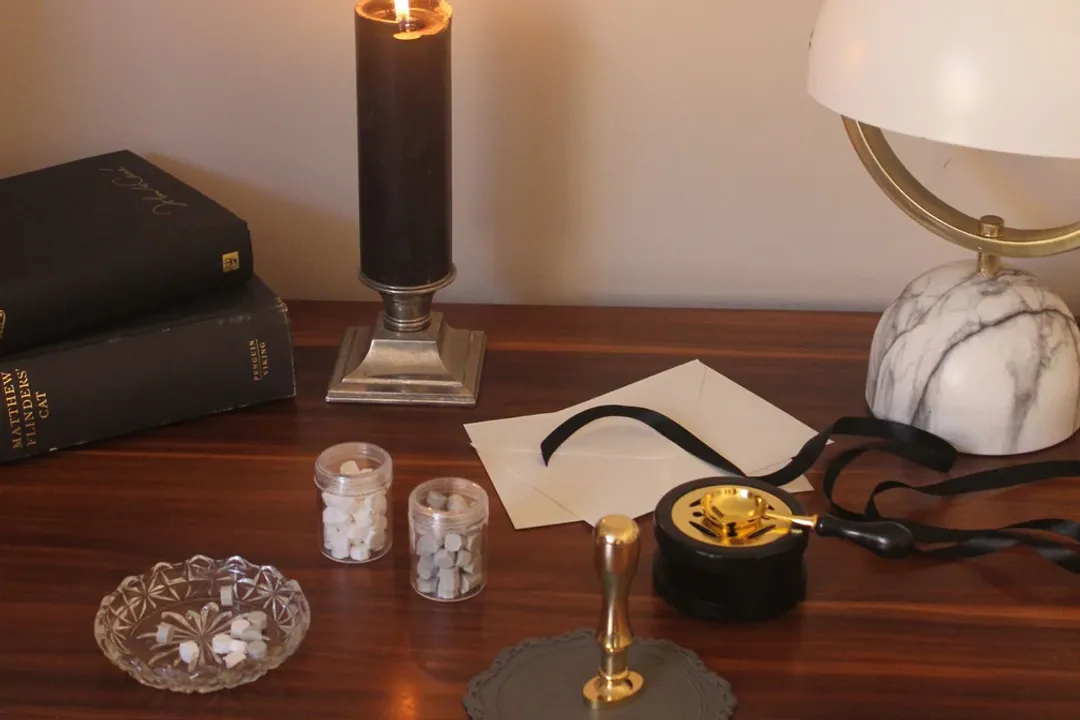
The act of sealing itself required skill. One had to melt the wax—either over a candle flame or by heating the matrix—until it formed a perfect pool on the document fold or attached ribbon, then carefully press the signet into the cooling wax without disturbing the structure. [5][6] The resulting impression, bearing the heraldic device, motto, or personal monogram, served as the unbreakable bond of trust. [5]
# The Shift Away
The dominance of the wax seal persisted for centuries, witnessing critical moments in European history—from royal decrees to papal bulls. [1] However, the need for this elaborate process began to wane with changes in communication technology and administration. [5]
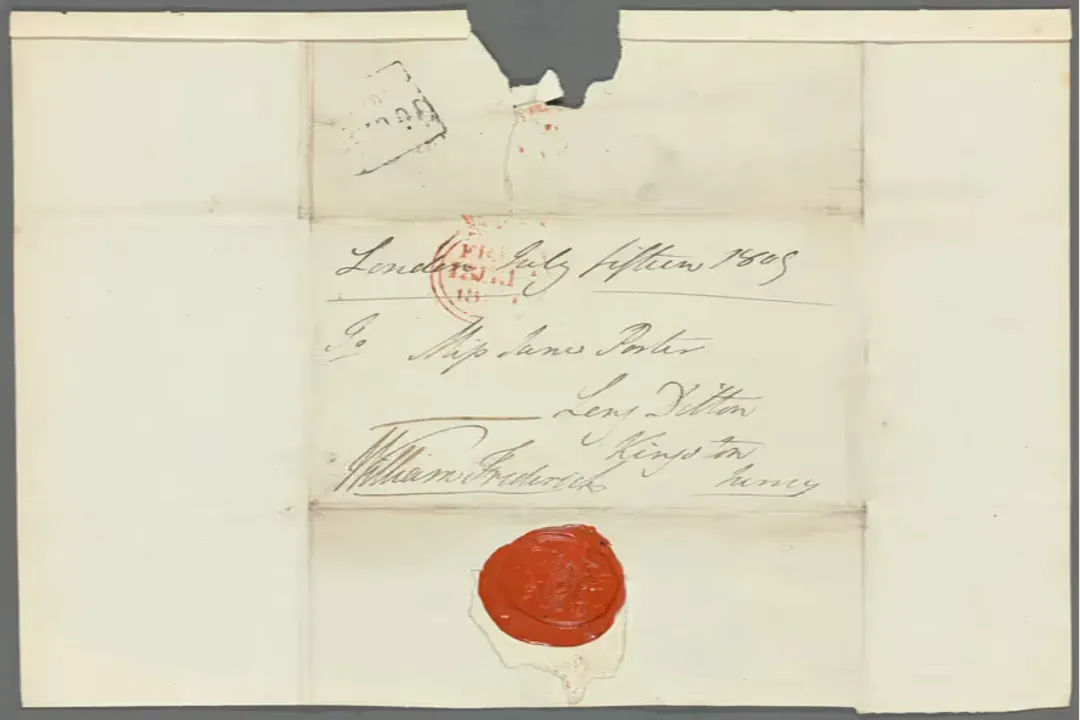
The introduction of the paper envelope, particularly by the 19th century, changed the landscape entirely. [5][7] Envelopes allowed letters to be folded and sealed neatly without exposing the contents or requiring complicated ribbon attachments, which were essential for traditional wax seals to adhere properly. [5] Furthermore, the rise of mass communication and the establishment of national postal services favored speed and uniformity over individual, time-consuming authentication methods. [5][7] The introduction of gummed envelopes meant that a simple lick and stick could secure a letter, something far quicker than heating and impressing wax. [5]
# Modern Application
While the need for universal security on every piece of mail disappeared, the wax seal never truly vanished. [2][7] It transitioned from a bureaucratic necessity to a symbolic choice. [2] Today, the practice has seen a significant revival, appreciated not for its security against a determined state actor, but for its aesthetic charm and personal touch. [2][7] Crafters, calligraphers, and those sending wedding invitations or high-end stationery favor the seal for the experience it provides the recipient. [2][7] Modern sealing wax has also evolved past traditional beeswax/resin blends; many contemporary products use shellac-based formulas, which melt easily at lower temperatures and are more brittle, allowing them to be molded quickly without sticking to the stamp. [1][2] This modern material science prioritizes ease of use and consistency for hobbyists over the durability required by medieval chancelleries. [1]
Even when observing modern crafting trends, it's worthwhile to note the materials available today. A traditional seal mixture might include cinnabar for red color, but modern hobbyists often use synthetic colorants or even add glitter or mica powders, something entirely alien to the medieval craftsman whose primary concern was ensuring the wax didn't soften in a summer courier's saddlebag. [2] The shift reflects a move from mandatory security to intentional personalization.
Ultimately, the person who "invented" the wax seal is best described as the cumulative ingenuity of ancient Mesopotamian scribes, Roman administrators, and Medieval alchemists, each adding a critical layer to the process until it reached its most famous form during the age of chivalry. [1][3][5]
#Videos
Wax Seals: How-to & History - YouTube
Related Questions
#Citations
Sealing wax - Wikipedia
The History of Wax Seals: A Journey Through Time
The History of Wax Seals - From Ancient Egypt to Today - Bounde
Signets and Wax Seals - Erica Weiner
Wax Seals: A History and How-To
The History of Wax Seals - Cody Calligraphy
Wax Seals: How-to & History - YouTube
History and Alchemy of Wax Sealing : r/WaxSealers - Reddit
The History of Wax Seals
The History of Wax Seals