How were wax cylinders recorded?
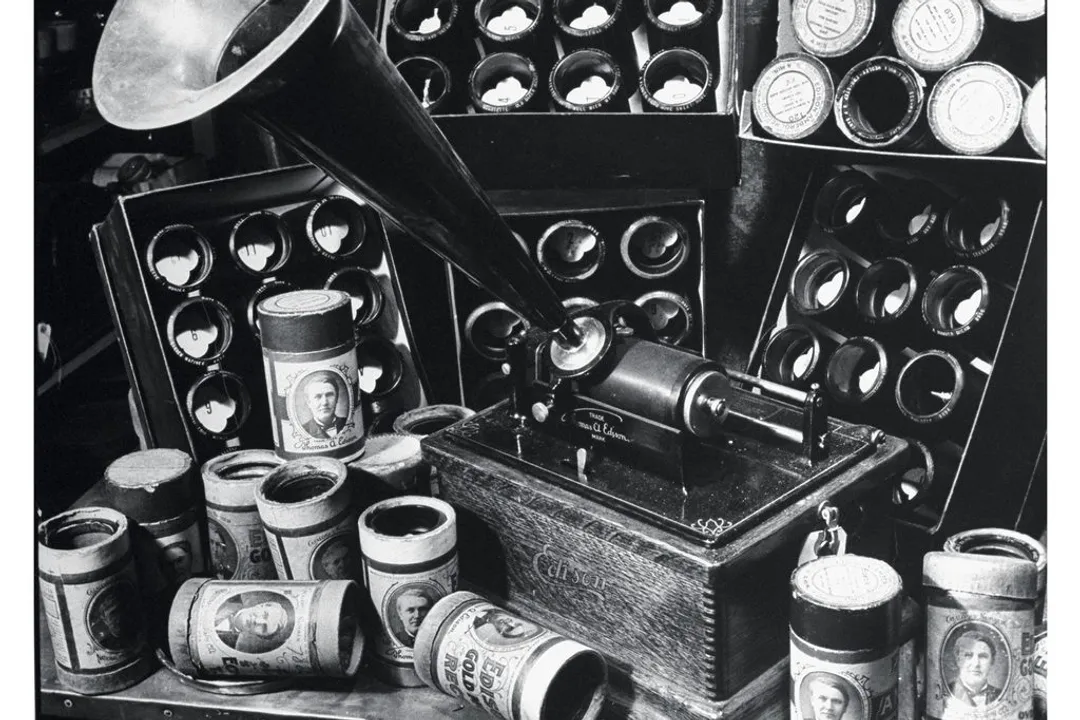
The first successful methods for capturing and playing back sound relied entirely on mechanical ingenuity, translating airborne vibrations directly into physical grooves etched onto a soft surface: the phonograph cylinder. [4] Before electricity played any significant role in recording or amplification, the entire process was a brilliant exercise in acoustics and precision mechanics, turning fleeting moments of sound into tangible, lasting records. [7]
# Vibration Mechanics
The entire principle behind early sound recording hinges on converting sound pressure waves into mechanical movement. [3] When a singer, musician, or speaker produced sound, the resulting pressure variations traveled through the air to the recording apparatus. This apparatus typically included a horn or mouthpiece designed to gather and focus those sound waves onto a sensitive component: the diaphragm. [2][4]
The diaphragm, usually a thin sheet of material, vibrated in perfect sympathy with the incoming sound waves. [3][5] A loud sound caused large, vigorous vibrations, while a soft sound caused small, subtle movements. This mechanical input was the source material for the entire recording process. [4] This direct, non-electronic approach meant that the dynamic range—the difference between the loudest and quietest sounds that could be captured—was severely limited by the physical constraints of the diaphragm's travel and the depth the stylus could cut without breaking the material. [1] Unlike modern electronic microphones that can capture nuances far outside human hearing range, the mechanical phonograph was fundamentally constrained by the physics of moving air and taut membranes. [2]
# Machine Components
The phonograph itself was an assembly of precise mechanical parts working in concert. [4] The focused sound waves vibrated the diaphragm, which was physically connected to the recording stylus—a sharp, hardened point or chisel. [3][5] This stylus assembly was mounted on a carriage or slide mechanism positioned just above the recording medium. [4]
The recording medium, the wax cylinder, was mounted on a turntable. This turntable was driven, often by a spring motor that needed regular winding, ensuring the cylinder rotated at a consistent, predetermined speed. [1][3] A key feature of the apparatus was the lead screw mechanism, which controlled the lateral movement of the carriage holding the stylus. As the cylinder spun, the screw slowly traversed the length of the cylinder, ensuring the stylus cut a continuous, unbroken groove from one end to the other. [4]
# Groove Etching
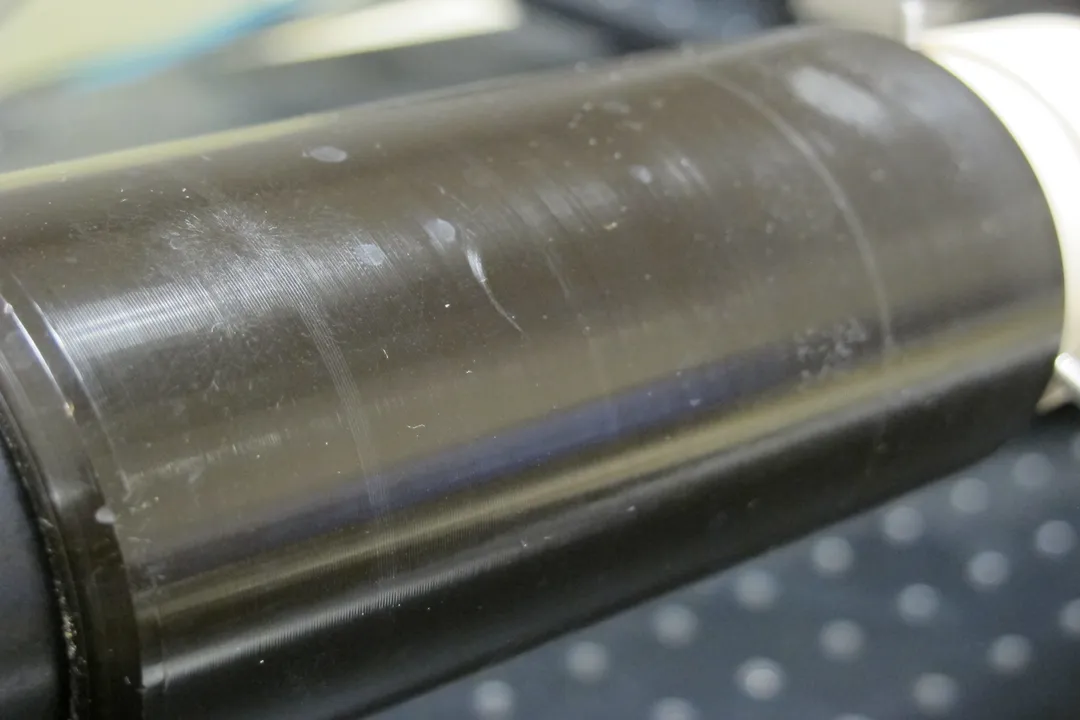
The moment of recording involved the stylus cutting into the soft, prepared surface of the rotating cylinder. [6] As the diaphragm vibrated, the attached stylus etched a corresponding wavy line into the wax. [3] If the sound was loud, the stylus deflected more widely, creating deeper or wider grooves; softer sounds resulted in shallower grooves. [4] These grooves contained the physical imprint of the sound wave's amplitude and frequency. [1]
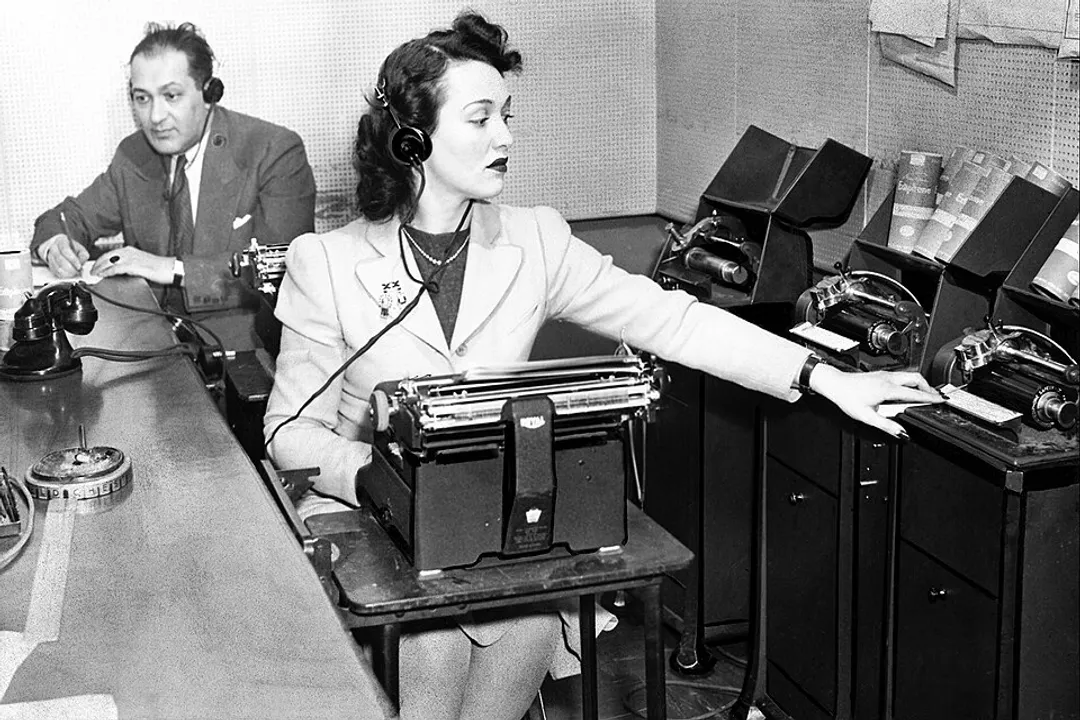
The result was a three-dimensional representation of the sound pressure etched onto the surface of the cylinder as it spun. [7] For early commercial recordings, several recording horns and corresponding styli could be arranged in parallel, allowing engineers to cut multiple master cylinders simultaneously, though each had to be individually managed for quality control. [4] The quality of the cut depended heavily on the hardness and uniformity of the wax, as any inconsistencies would translate directly into audible distortion upon playback. [6]
# Cylinder Composition

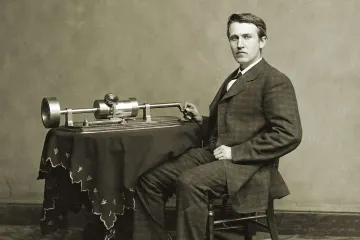
The physical medium itself evolved over time. Thomas Edison's earliest successful records used thin sheets of tinfoil wrapped around the cylinder core. [4] However, for practical recording, the material needed to be soft enough to be cut easily but firm enough to retain the fine grooves without crumbling. [6]
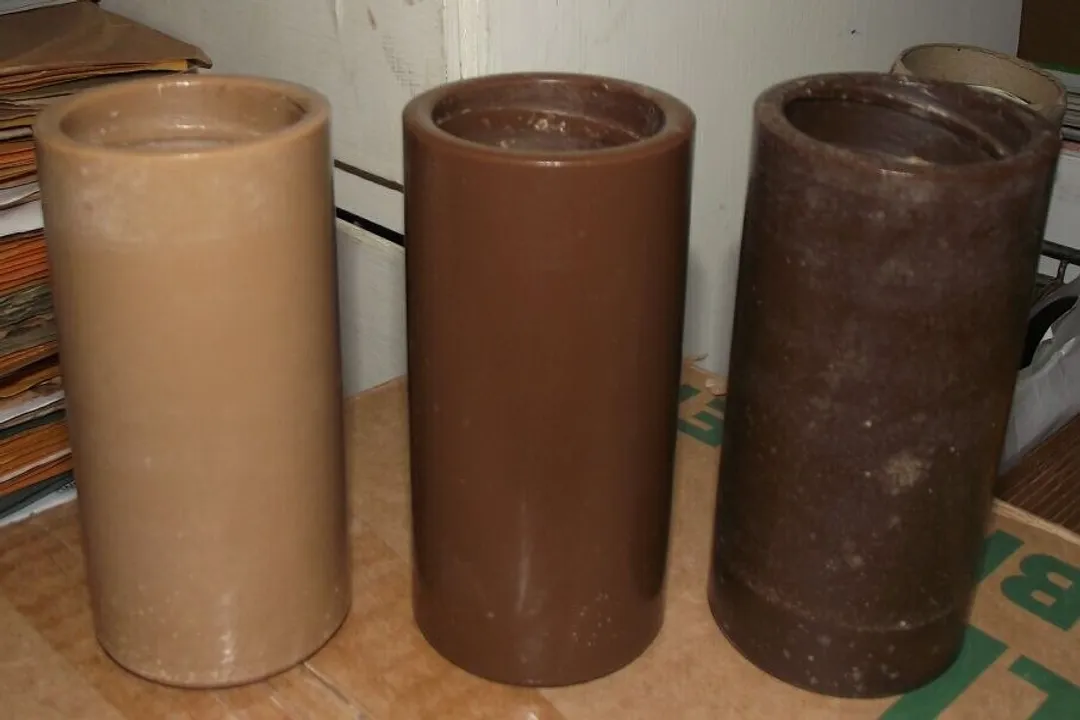
This requirement led to the adoption of wax cylinders. The initial formulations often involved pure wax, which was relatively soft. [4] As recording technology advanced and demand increased, manufacturers experimented with different compositions to improve durability and fidelity. [6] These later versions often incorporated mineral oil or other agents, resulting in materials that appeared in various colors, such as brown or a dark blue/black. [1][6] Despite these improvements, all wax cylinders remained physically delicate. They were easily damaged by handling, and the simple act of playing them back caused wear on the delicate grooves, meaning that the recording medium itself was subject to constant, irreversible degradation with every use. [4]
A point of fascination when comparing early brown wax cylinders—often recorded in less controlled environments—to the later, more standardized blue or black types is the noticeable shift in recording characteristics. While the brown wax might offer a rawer, perhaps closer representation of the original acoustic energy due to its softer composition, the later, harder waxes allowed for higher-frequency content to be impressed with greater stability, albeit sometimes sacrificing some of the bass response due to the stylus's physical mass. [6]
# Duplication Methods
Making copies of a recording was inherently challenging because the initial recording was a one-off carving into a soft medium. [4] Early duplication relied on a mechanical pantograph system. A stylus, acting as a tracer, would follow the groove of the original master cylinder. [1] This tracer was mechanically linked to a second cutting stylus, which simultaneously cut an impression into a blank cylinder that was being rotated parallel to the master. [4]
This process was slow and inherently lossy. Each duplication stage introduced cumulative noise, distortion, and a reduction in the frequency response because the tracer stylus had to physically follow the groove, which inevitably involved friction and mechanical imperfections. [3] This is a critical difference from modern digital cloning, where a perfect bit-for-bit copy can be made endlessly without quality reduction. With wax cylinders, if you made a copy of a copy, the resulting sound was noticeably muddier and quieter than the previous generation. [1]
To improve upon this initial slow pantograph method, manufacturers developed molding techniques. A durable master cylinder, often made of a harder compound, would be created first. [1] This master was then used as a pattern to press or mold the final, thinner-walled playing cylinders made of materials like celluloid or hard rubber. [4] This shift toward molding allowed for faster mass production necessary to meet growing consumer demand in the early 20th century, moving away from the painstaking, real-time recording process for every consumer unit. [1]
# Sound Reproduction
Playback was essentially the reverse of the recording process, though it substituted the cutting stylus with a playback stylus, often a sapphire or diamond point. [4] The listening stylus was designed to gently trace the recorded groove without cutting it further. [2]
As the stylus rode the undulations carved into the spinning cylinder, it vibrated the attached diaphragm. [3] This vibration was transferred to the air trapped within the horn assembly. [5] The horn acted as an acoustic transformer, taking the small vibrations from the diaphragm and efficiently projecting them as audible sound waves into the listening space. [4] Because there was no electrical amplification available, the sound produced was quite quiet, meaning listeners usually had to gather close to the horn to hear the performance clearly. [4][7] This reliance on pure acoustics underscores why large horns were such a prominent feature of early phonographs. [2]
# Early Format
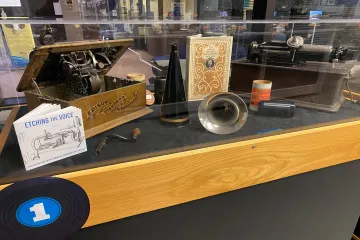
The wax cylinder holds a significant place in technological history as the first commercially viable medium for recording sound, commercialized by Edison’s work in the late 1870s. [4] It predated and coexisted with the flat disc record format, which eventually achieved market dominance due to its easier storage and, crucially, its superior capabilities for mass replication via stamping or pressing. [1] The cylinder, however, offered a genuine advantage in its initial recording phase, allowing for the direct mechanical inscription of sound which was crucial in the earliest days of sound capture. [7] Preserving these fragile artifacts today, often through digitization where the groove is scanned optically rather than played back mechanically, allows us to appreciate the raw acoustic reality of late 19th and early 20th-century performances. [9]
#Videos
How the Cylinder Phonograph Works - YouTube
Wax Cylinder Production - YouTube
Related Questions
#Citations
Phonograph cylinder - Wikipedia
How the Cylinder Phonograph Works - YouTube
ELI5:How did recording on wax cylinders in the early Phonograph ...
History of the Cylinder Phonograph | Articles and Essays
Exploring Thomas Edison's Phonograph: Wax Recording Process
Brown Wax Cylinders
Wax cylinders: what they are and how they revolutionised music in ...
The Digitization Process | Project IRENE