What was the first item to be invented?

The quest to identify the very first invention humanity ever conceived is less a straight line of discovery and more like peering into a dense fog obscuring the dawn of human consciousness. We seek a singular object, a moment frozen in time when Homo sapiens, or perhaps one of our immediate ancestors, first consciously shaped the world around them into something new. However, the definition of "invention" itself immediately complicates the search. Does it mean the first physical tool, the manipulation of a natural resource like fire, or something purely cognitive, such as the development of symbolic language or social rules? The answer changes drastically depending on the starting line we choose. [1][2]
# Defining Invention
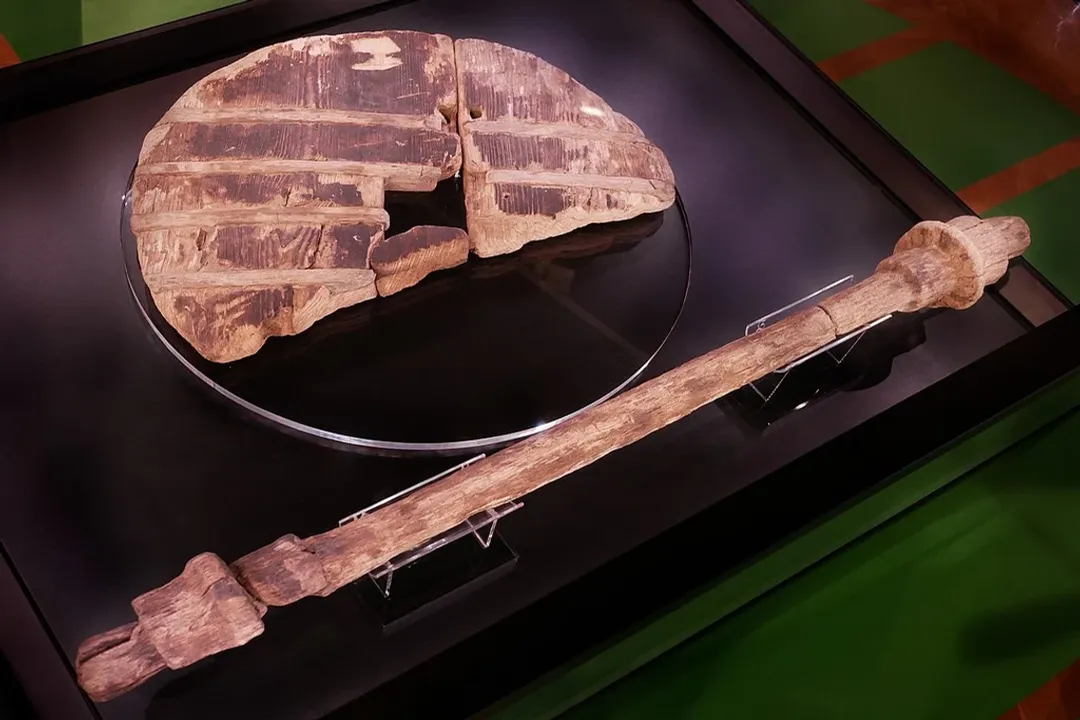
To begin the investigation, we must establish a working definition. If an invention is defined as an object created by modifying natural materials to solve a practical problem, the earliest candidates are likely stone tools. [3] These artifacts represent a cognitive leap: recognizing that a raw material possesses properties that can be intentionally altered for a specific purpose, such as cutting or pounding. [4] This separates a simple rock used as a hammer from a rock purposefully struck to create a sharp edge—the latter is an act of engineering. [5]
Yet, some argue that the control of fire predates toolmaking in terms of impact, even if the "invention" was more about taming a natural phenomenon rather than creating an object from scratch. [6] Fire offered warmth, protection from predators, and, critically, the ability to cook food, which may have even fueled the very brain development necessary for subsequent complex inventions. [7] If we define invention by its long-term transformational effect on the species, fire stands as a monumental contender, even if the exact moment of its mastery remains elusive. [1]
# Earliest Tools
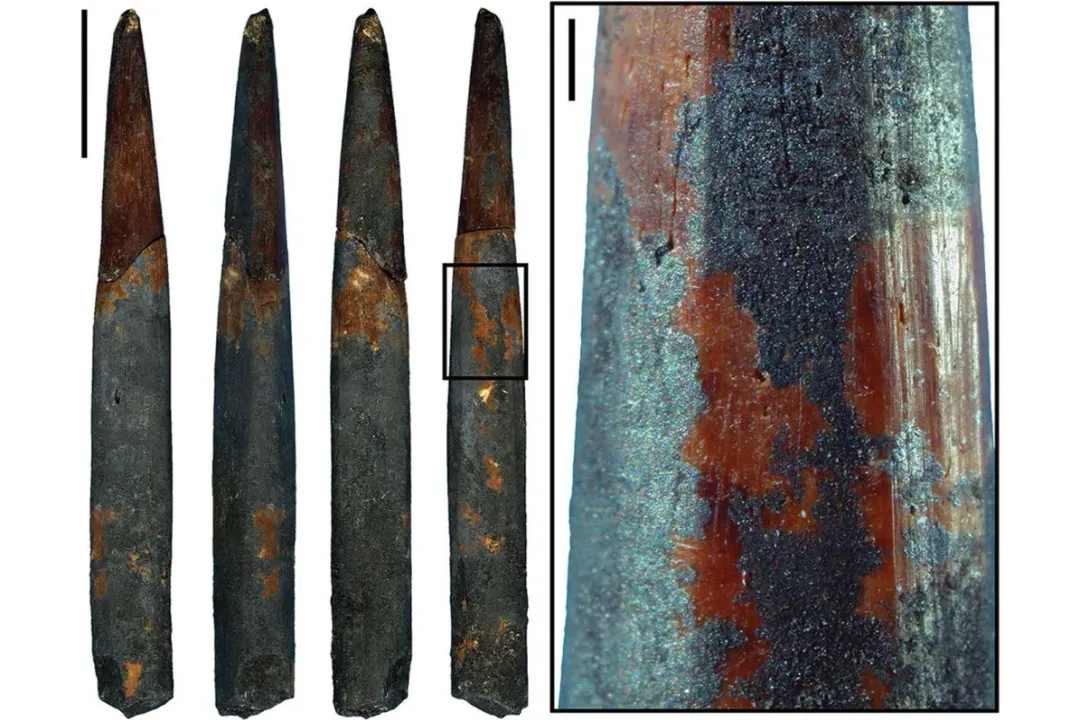
The archaeological record offers tangible evidence, though the timeline is vast and spans millions of years, involving numerous hominin species, not just modern humans. [1][5] The oldest known stone tools are generally associated with the Oldowan industry, dating back approximately 2.6 million years ago in East Africa. [3] These artifacts are relatively simple: core stones that have been struck to produce flakes with sharp edges, or the flakes themselves, used for cutting and scraping. [2]
Moving forward in time, the Acheulean industry, characterized by the sophisticated, teardrop-shaped hand axe, emerges around 1.76 million years ago. [1] The hand axe is significant because it demonstrates a planned, symmetrical design that was carried over long distances, implying forethought and standardization across different early human groups. [3][5]
A deep dive into this technological progression suggests a pattern of increasing cognitive load:
| Technological Stage | Approximate Start Time (Years Ago) | Key Feature | Cognitive Implication |
|---|---|---|---|
| Oldowan Industry | ~2.6 million | Simple core and flake tools | Recognizing fracturing properties [2] |
| Acheulean Industry | ~1.76 million | Bifacial hand axes | Symmetry, planning, standardization [5] |
| Middle Stone Age | ~300,000 | Prepared core techniques (Levallois) | Complex, multi-step manufacturing [1] |
What’s fascinating here is that while we might seek the first invention, we are tracking the first sustained technological tradition inherited and refined by successive generations. [4]

# The Cognitive Leap
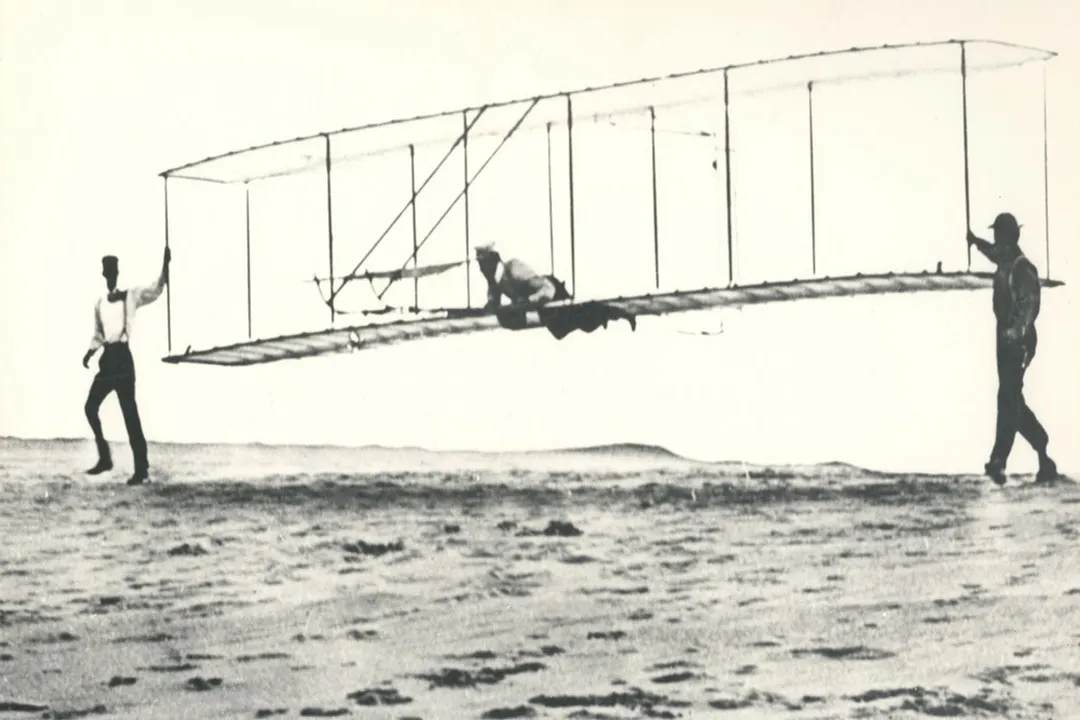
If we shift our focus away from lithic (stone) technology, the concept of the "first invention" becomes entirely abstract. Many anthropologists and historians argue that the first true invention was not a thing, but a system: language. [6]
Language, in its fully developed form, is a combinatorial system allowing for the communication of novel ideas, past events, and future plans. Without a shared, complex language, the transfer of skills—like how to make a specific kind of tool or how to butcher an animal effectively—would be severely limited, perhaps preventing technological accumulation altogether. [7] Similarly, symbolism—the assignment of meaning to an arbitrary marker—is a fundamental invention. Cave paintings, decorated artifacts, or even simple notches carved into bone (like the Ishango bone, dated perhaps tens of thousands of years ago) suggest abstract thought preceding complex societal organization. [1] These abstract systems are arguably the scaffolding upon which all tangible inventions are built.
An important consideration when evaluating these early milestones is the concept of persistence. A simple tool might have been made and lost immediately, never entering the archaeological record. However, a language or a social custom, once established, persists through imitation and teaching, making it the most enduring, albeit invisible, first invention. [2] It is highly probable that the invention of rudimentary vocal signaling and the invention of a sharpened rock occurred within a relatively close evolutionary window, as better communication aids the teaching of toolmaking, creating a positive feedback loop. [4]
# Comparing Material vs. Abstract Firsts

The inherent difficulty lies in comparing a physical object, like a sharpened flake, with a non-physical system, like syntax. Consider this analytical perspective: The simplest manufactured object, say, a sharp stone flake, requires the invention of technique—the knowledge of percussion mechanics. [5] The simplest abstract invention, perhaps the concept of "us" versus "them" (early social rules), requires the invention of theory of mind—the ability to attribute mental states to others. [6]
One might propose that the theory of mind required to conceive of a shared symbol (an abstract invention) is cognitively more demanding than the motor skill required to strike a stone twice correctly (a material invention). [7] If this cognitive hierarchy holds, then the first invention wasn't a thing you could dig up, but a mental capacity that allowed for complex problem-solving. This leads to an intriguing possibility: the invention of self-awareness, or at least a sophisticated level of awareness sufficient to recognize one’s own ability to manipulate the environment, must precede both complex toolmaking and complex language. [4] This self-referential ability, allowing an early hominin to think about their actions, stands as the conceptual prerequisite for all subsequent creation.
# The First Standardization: A Deeper Look
Returning to tangible objects, when we look for the first repeatedly invented item—the one that demonstrates widespread adoption and a successful template—the Acheulean hand axe is often cited. [3] However, the manufacturing process for a hand axe is relatively lengthy and resource-intensive. Perhaps an earlier, less glamorous invention was the first to become truly common.
Consider the simple chopper, a core from which only a few flakes have been removed to create a jagged edge. These date back nearly as far as the earliest stone artifacts. Unlike the carefully crafted hand axe, a chopper is an expedient tool—made quickly, used until dull, and discarded. [1]
If we define "first invented item" as the first thing whose production was systematized and replicated across a population for a sustained period, the chopper edges out the hand axe in terms of sheer chronological depth and ubiquity across early hominin sites. [2] The knowledge required is minimal: strike one rock with another. This simplicity suggests it might have been invented, lost, and reinvented countless times until a stable tradition formed.
Let's examine a theoretical first standardized kit based on minimal viable technology, imagining an early Homo erectus attempting to improve hunting efficiency:
| Tool Type | Primary Material | Minimum Cognitive Step | Estimated Age Range (Based on Record) |
|---|---|---|---|
| Chopper/Hammerstone | Quartzite/Basalt | Direct percussion; recognizing sharp edge | Over 2.6 million years ago [2] |
| Simple Scraper | Obsidian/Flint Flake | Controlled fracture; edge retention | ~2.6 million years ago [3] |
| Digging Stick (Unmodified) | Hardwood branch | Recognition of leverage/prying potential | Unknown/unpreserved |
This table highlights that the "kit" likely started with expedient tools, emphasizing function over form, unlike the later, more aesthetically pleasing hand axes. [5] The simplest functional tool might win the chronological race simply because it requires the least evolutionary step forward.
# The Neolithic Barrier and Manufactured Items
The shift to the Neolithic period—the advent of agriculture and permanent settlement around 10,000 BCE—introduces an entirely new category of "firsts," involving complex manufacturing processes and energy storage. [6] While farming and pottery are monumental inventions, they are far too recent to claim the title of first.
However, the Neolithic era provides a good counterpoint for analysis. The invention of pottery is a perfect example of an invention requiring a deep, specialized, and difficult-to-transfer knowledge base: understanding clay composition, managing drying times to prevent cracking, and, most critically, achieving high-temperature firing. [1] Contrast this with a chipped stone tool, which can be made by almost any hominin with basic dexterity. Pottery, therefore, represents a more advanced, secondary wave of invention, built upon the foundation laid by earlier, simpler innovations. [5]

# The Paradox of Discovery
The inherent paradox in answering "What was the first invention?" is that the most foundational discoveries—fire, language, perhaps even simple cutting—are the least likely to leave clear, undisputed artifacts. [4] The control of fire leaves charcoal, which can be natural, or burned bones, which may only indicate proximity to a natural fire, not active management. Language leaves no trace whatsoever in the archaeological record. [6]
This suggests that the most honest answer requires a layered approach:
- The First Cognitive Invention: The ability to intentionally separate a desired quality (sharpness, heat) from a raw material, likely involving theory of mind and basic planning. [7]
- The First Tangible Invention: The simplest intentionally shaped stone implement, probably a basic chopper or sharp flake, appearing millions of years ago. [3]
- The First Sustained Technological Tradition: The Oldowan toolkit, representing the first widely adopted, multi-generational technological solution. [1]
In the end, pinpointing the absolute first item may be impossible because invention is not a single event, but an accelerating process. It began not with a hammer, but with the first moment a hominin brain conceived of improvement over the natural state of things. [5] That singular moment of intent, captured imperfectly in a broken piece of rock millions of years past, is as close as we will ever get to the origin point. [4]
The continued study of early hominin behavior, looking not just at the tools themselves but the spatial relationships between different tool-making sites and resource locations, might offer the best clues to understanding the earliest decision-making processes that spawned invention. [2] These subtle patterns, showing repeated, intentional movement towards specific high-quality stone sources, might be the ghost image of humanity's very first planned manufacturing blueprint. [1]
#Videos
15 Early Inventions ahead of their time - YouTube
Related Questions
#Citations
Timeline of historic inventions - Wikipedia
What is the first thing that humans invented? - Quora
What was the First Invention? The History of Inventions - Davison
What inventions could reasonably be invented vastly earlier than our ...
The 5 Greatest Inventions in Human History - Oxford Royale
12 of humanity's most important first inventions
15 Early Inventions ahead of their time - YouTube
What 15 groundbreaking inventions looked like when they first came ...
What was the first thing man invented? - Science and Math Geeks
What was the first invention? - JustAnswer