Who invented the first microcontroller?
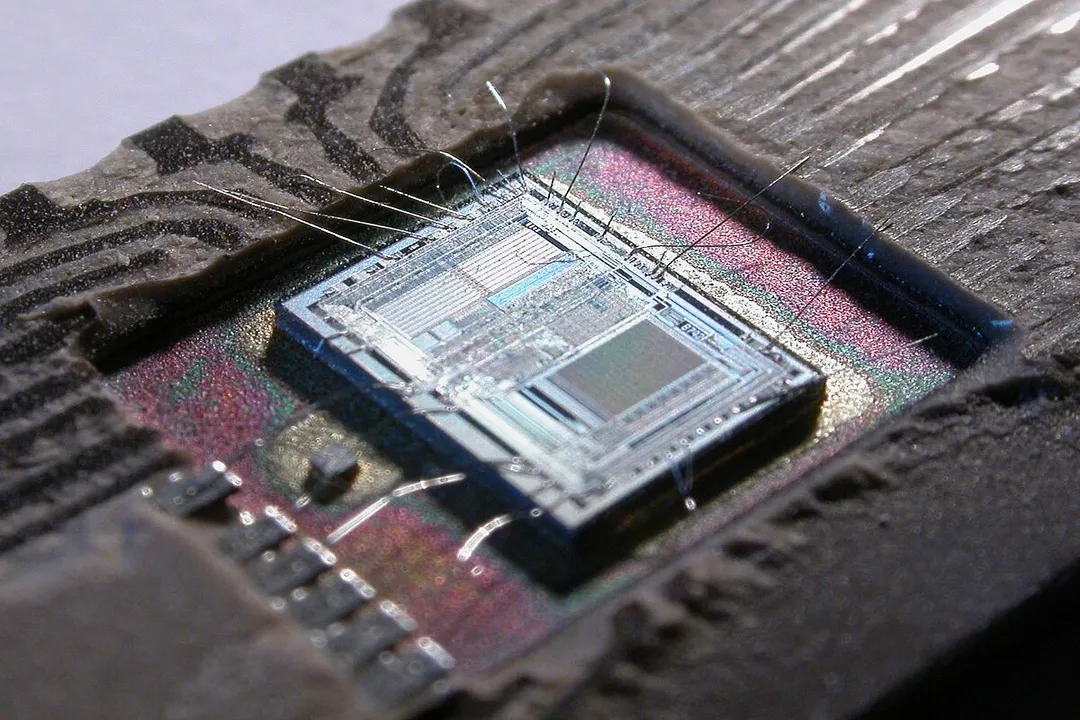
The true inventor of the first microcontroller is a point of ongoing debate, largely because the answer hinges entirely on how one defines "microcontroller" versus its close cousin, the "microprocessor". [1][5][9] There isn't one simple name to attach to the innovation; instead, history presents a few key candidates representing critical evolutionary steps in integrating computing power onto a single silicon die. [2][7]
# Defining Terms
To untangle the history, we must first distinguish the device’s architecture. A microcontroller (MCU) is essentially a small computer on a single integrated circuit chip. [8] It must contain a central processing unit (CPU), memory (both volatile RAM and non-volatile ROM or flash), and input/output (I/O) peripherals all packed together. [1][8] Conversely, the first microprocessors, like the famous Intel 4004, were essentially just the CPU core, requiring external chips for memory and I/O to function as a complete system. [2][3] This difference between a standalone computer on a chip and a CPU core is the dividing line between the historical claims. [7]
# Precursor Chip
The story often begins with the Intel 4004, released in 1971. [2][3] This chip is widely celebrated as the world's first commercially available, general-purpose single-chip microprocessor. [2][3] While revolutionary, the 4004 was not a microcontroller in the modern sense; it was designed for a calculator, and it needed companion chips to handle its memory and control functions. [3][7] Its significance lies in proving that a complex CPU could exist on one piece of silicon, paving the way for further integration. [7]

# Early Integration
The development path quickly shifted from general-purpose processing toward dedicated integration for specific embedded tasks. [3] One strong contender for the title of the first true microcontroller is from Texas Instruments (TI). TI developed the TMS1000 family, which started appearing commercially around 1971 or 1972. [7] This device integrated the necessary components—CPU, RAM, ROM, and I/O—onto a single chip, fitting the definition of an MCU much better than the 4004. [7]
Interestingly, sources suggest TI may have designed their system-on-a-chip concept for control applications before the 4004 was even released, though the 4004 captured the initial spotlight due to its microprocessor designation. [7] This suggests the concept of the integrated control system arrived almost simultaneously with the first microprocessor, but the market timing favored the latter’s fame. [7]
# Intel's MCU Family
While TI pushed the integrated control chip early on, Intel introduced what many engineers recognize as the first standardized microcontroller family: the Intel 8048 series, launched in 1975. [2] The 8048 integrated the CPU, RAM, ROM, and I/O peripherals onto one chip, cementing the architecture that would define the microcontroller market for years to come. [2] Some historical records show confusion or conflation with earlier chips like the Intel 4040 or 8040, but the 8048 is consistently cited as Intel’s landmark entry into the true microcontroller space. [5][9]
The competitive landscape meant that by the mid-1970s, the industry had two major players offering highly integrated solutions, though they achieved the goal from slightly different starting points. [2][7]
To appreciate the difference in design philosophy between the early general-purpose CPU and the integrated controller, considering a quick comparison helps clarify the evolution:
| Feature | Intel 4004 (Microprocessor, 1971) | TI TMS1000 / Intel 8048 (Microcontroller, Early/Mid-70s) |
|---|---|---|
| Primary Goal | General-purpose computation | Dedicated control/embedded tasks |
| On-Chip Memory | None (Required external chips) | Contained on-chip RAM and ROM/EPROM |
| System Build | Requires multiple chips to run | Functions as a complete system |
| Architecture Focus | CPU core strength | System integration and I/O capability |
The very existence of these early calculators and early embedded solutions highlights a key difference in engineering focus. While the 4004 was designed to be a building block for larger systems, the chips coming out of TI were specifically targeted at simplifying high-volume consumer electronics. Replacing a dozen or more logic chips with one small, inexpensive integrated circuit provides immediate, tangible savings in board space, power consumption, and manufacturing complexity for an appliance manufacturer. [3] This practical advantage, rather than raw processing power, drove the initial adoption of the MCU concept. [7]
# Naming and Marketing
The question of "who invented it" is also entangled with who named it first and who marketed it best. [7] The term microprocessor stuck firmly to the 4004, granting Intel the historical nod for creating the CPU on a chip. [2][3] However, the term microcontroller—the system-on-a-chip—found its earliest embodiments in TI's TMS family and later in the standardized Intel 8048. [2][7]
It is a classic example of how technological milestones sometimes get separated by semantic lines drawn after the fact. If the definition requires all components on one chip, then TI has a very strong case for the earliest commercial product in that category. [7] If the definition requires the chip to be recognized as a dedicated control unit released by a major semiconductor house in a standard format, the 8048 often wins the popular vote among some historians. [2]
# The Pioneer’s Perspective
When looking at the individuals involved, the historical narrative often smooths over the complexities of team development. While the patents and product announcements point to corporations like Intel and TI, the actual invention is the result of intense work by dozens of engineers. [6] For instance, some individuals who were part of those pioneering teams have been celebrated for their work in bringing these first highly integrated devices to market. [6] These pioneers understood that the real shift wasn't just about shrinking components, but about packaging an entire operational system for embedded control into a single, accessible package. [8] That shift marked the birth of modern digital control in everything from microwave ovens to early automotive systems.
In summary, the closest factual answer is that the invention was a tight race between two architectural approaches: the general-purpose CPU core, perfected first by Intel with the 4004, [2][3] and the fully integrated system-on-a-chip, with the TI TMS1000 being a very early, strong candidate, closely followed by Intel’s dedicated 8048 family. [2][7] The choice of which one to call the "first" reveals more about which definition of a computing device one prioritizes—the processing engine or the self-contained controller. [1][9]
Related Questions
#Citations
Microcontroller
History of Microcontrollers | Americas – United States
A History of Early Microcontrollers, Part 1: Calculator Chips ...
The TMS 1000: First Microcontroller Invented by Texas ...
Conflicting answers to: "What was the first microcontroller ...
Pioneer Of The First Commercially Available ...
The Early History of the Microcontroller Part 1
What is a microcontroller?
Who invented world's first microcontroller?