Who invented the pedal bin?
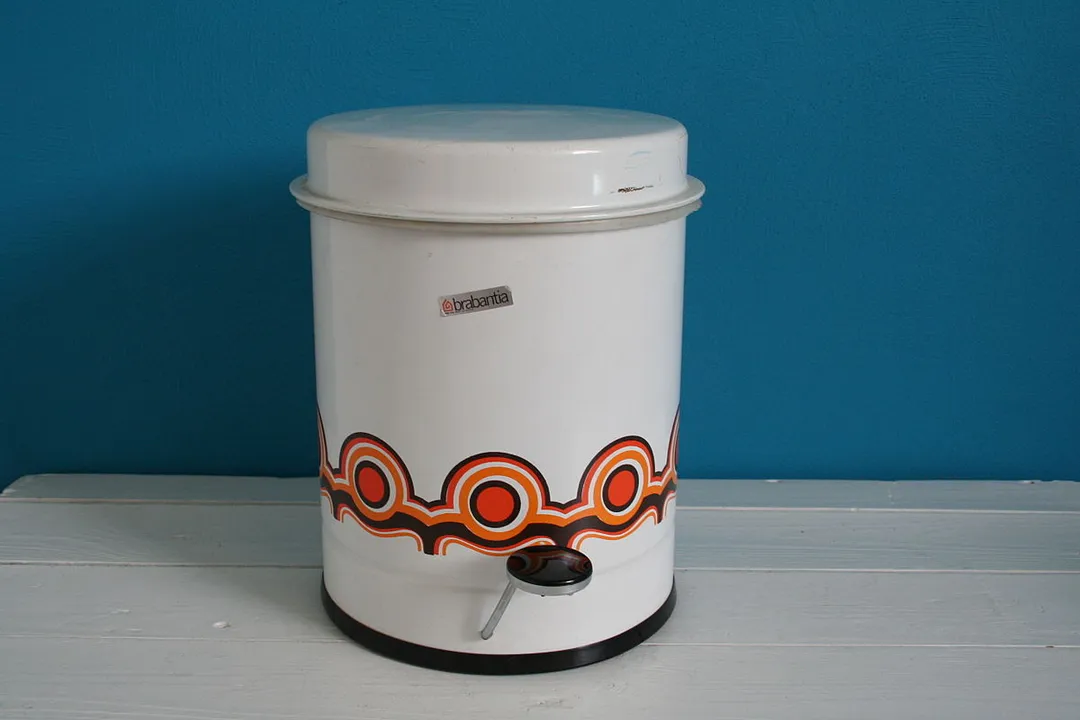
The common household item we know today as the foot-pedal trash can, or the pedal bin, has a surprisingly well-documented origin rooted in early 20th-century efficiency studies. The person credited with designing this deceptively simple yet highly effective kitchen tool was Lillian Moller Gilbreth. [1][3][6] Her innovation appeared during the 1920s, a period when domestic work was being scrutinized through the lens of industrial optimization. [2][5]
# The Inventor
Lillian Moller Gilbreth stands out not just as the inventor of the pedal bin, but as a towering figure in the fields of industrial psychology and engineering efficiency. [4][7] Born in 1878, she passed away in 1972, having lived through immense technological and social change. [9] Her career path was unusual for a woman of her time; she achieved a PhD in psychology, specializing in the study of motion and efficiency. [7][8] This background meant her perspective on domestic tasks was uniquely scientific, viewing the home as a workplace requiring streamlined processes. [7]
It is important to note that Gilbreth’s family life was as remarkable as her professional career. She was the mother of twelve children, [2][4][8] a fact that perhaps gave her an unparalleled, high-volume, day-to-day experience with kitchen logistics and necessary hygiene standards that many of her male contemporaries lacked. [7] While her husband, Frank Gilbreth, pioneered many of the initial time-and-motion studies, Lillian carried the torch, applying those principles in earnest, particularly after his death. [8]
# Efficiency Focus
The motivation behind the pedal bin was not arbitrary; it stemmed directly from Gilbreth’s established expertise in eliminating unnecessary human motion. [7] In industrial settings, eliminating wasted steps or movements was key to increasing output and reducing fatigue. Gilbreth reasoned that the kitchen, a primary workspace for homemakers, should benefit from the same rigorous examination. [7][8]
The act of disposing of waste traditionally required a person to stop their current task, bend over, use one hand to lift a lid—often contaminated by previous use—and then drop the item in, before repeating the process to secure the lid. [7] This interruption broke the rhythm of food preparation, whether one was chopping vegetables or cleaning up scraps. [7]
The foot pedal mechanism elegantly solved this problem. By assigning the opening mechanism to the foot, the hands were kept free to manage the item being discarded, or to maintain cleanliness. [7] This was a functional redesign focused entirely on reducing physical friction in a repetitive task. While her husband had previously focused on factory optimization, Lillian successfully translated these theories to the domestic sphere. [8]

# Design Principles
The pedal bin, in its essence, is a masterpiece of applied ergonomics within a constrained space. [6] It formalized the concept of hands-free operation for a receptacle that was historically a source of minor but cumulative annoyance. [7] It provided an immediate, sanitary way to interact with the rubbish container without using the hands, which were often engaged in messy or clean work simultaneously. [1]
We often consider innovations based on their complexity, but the pedal bin’s genius lies in its simplicity relative to the problem it solved.
The pedal bin represents one of the earliest successful consumer products to translate rigorous time and motion studies—usually reserved for factory floors—directly into household ergonomics, essentially automating the opening of the receptacle, which was a fundamental step in modernizing kitchen workflow before many other major appliance innovations took hold. [7] It made an invisible workflow improvement highly tangible for the average user.
# Form and Function
The initial pedal bins of the 1920s were designed to meet the evolving standards of home hygiene. [1] In an era preceding widespread, convenient garbage collection services in all areas, managing household waste cleanly was paramount. The sealed nature afforded by the foot-operated lid helped contain odors and discourage pests, adding a public health dimension to Gilbreth’s efficiency focus. [1]
While the core concept—a lidded container opened by a foot lever—remained consistent, the physical manifestation has changed significantly over the decades. Early models were likely constructed from materials available then, perhaps enameled metal, designed for durability in a busy kitchen setting. [6] The success of the concept is proven by its longevity; the basic premise remains in use globally. [6]
It is fascinating to compare the pedal bin to other contemporary efficiency measures. Where other inventions focused on mechanizing a task (like an electric mixer), the pedal bin focused on optimizing the interface between the human body and a static object. [7]

# Enduring Appeal
The pedal bin’s design has proven incredibly resilient across nearly a century of changing household aesthetics and material technology. [6] Despite the advent of sensor-activated, automatic bins, the mechanical pedal bin continues to command a significant presence in the market. [3] This persistence suggests that the direct, tactile feedback of the pedal mechanism provides a level of user confidence that motion sensors sometimes fail to match, especially in low-light or when a hand is full of debris rather than just approaching near the sensor. [6]
While the mechanism remains fundamentally the same, the modern pedal bin's evolution is less about the foot action and more about material science—moving from early, likely heavier metal constructions to lightweight plastics and soft-close dampeners—a change often overlooked when discussing the original 'invention' itself. [6] This shift from heavy-duty industrial style to lighter domestic application demonstrates how the fundamental blueprint has adapted to modern manufacturing capabilities while preserving the core Gilbreth insight about hand-free access. [6] The mechanism remains a quiet testament to the principle that small improvements in daily repetitive tasks yield substantial cumulative benefits over a lifetime of use. [7]
Related Questions
#Citations
Pedal bin - Wikipedia
Lillian Gilbreth, a mother of 12, invented the foot-pedal trash can in ...
Who On Earth Invented ... The Pedal Bin?!
Guys did you know that Walt Disney effectively invented trash cans ...
Who gave the world the trash can?
Colin Bisset's Iconic Designs: The Pedal Bin - ABC listen
Lillian Gilbreth: Your kitchen would look very different without her
pedal bin - Wikidata