Who invented LED lights and why?
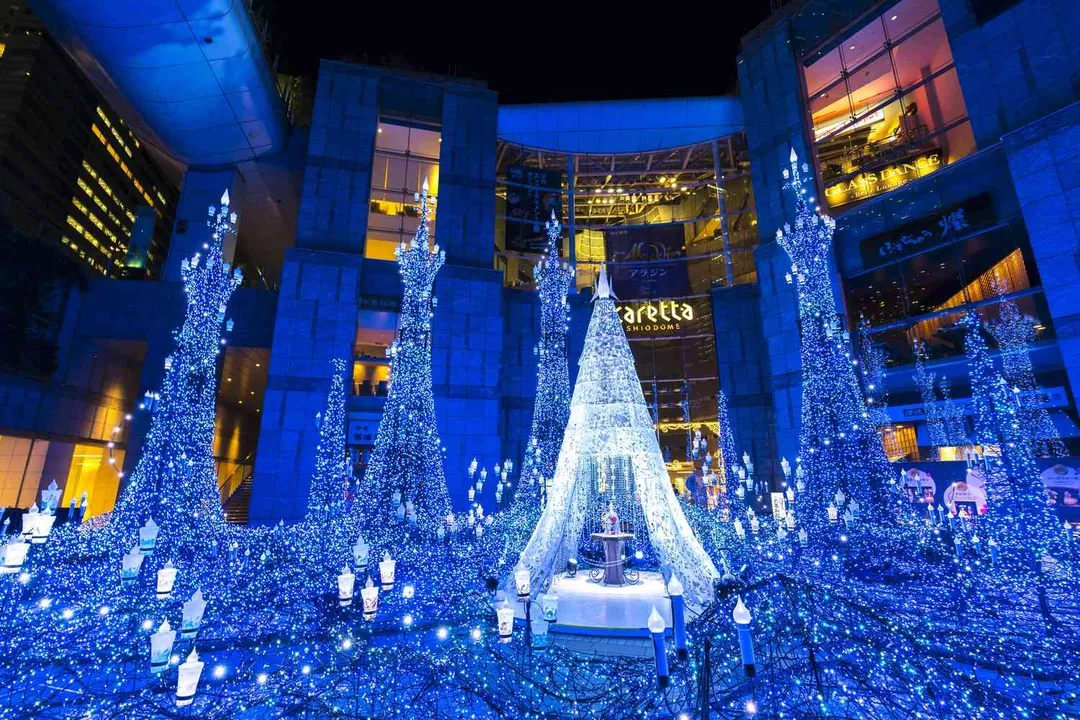
The story behind the light-emitting diode, or LED, isn't a tale of a single flash of genius from one isolated inventor, but rather a protracted scientific evolution spanning decades, involving multiple researchers across different continents who tackled physics problems in sequence. It’s a narrative of chasing efficiency, starting with faint glimmers in laboratory glassware long before these tiny components became the bright, ubiquitous sources of illumination we rely on today. The initial discovery that certain materials could produce light when electricity passed through them predates the modern electronics era by half a century, marking the foundation upon which the technology was built.
# Early Glow
The very first documented observation of electroluminescence—the phenomenon where a material emits light in response to an electric current—occurred in the early 20th century. In 1907, British engineer H. J. Round, while working at the Marconi research laboratory, noticed a glow emanating from a silicon carbide crystal detector he was testing. This was an accidental finding, a faint, greenish-yellow light produced by the crystal when voltage was applied, a phenomenon that didn't immediately translate into a practical light source but confirmed the basic principle was possible. Around the same era, perhaps even earlier in the 1920s, Russian scientist N. Semenov-Tyan-Shansky was also reportedly documenting similar electroluminescent effects, though his work received less international attention at the time. For decades, this initial observation remained a scientific curiosity rather than a commercial prospect, largely because the materials used were inefficient and the resulting light was too dim for general use.
# Semiconductor Beginnings
The next major step involved moving from simple crystal observation to controlled semiconductor technology, which brought the potential for a true diode that could emit light efficiently. This work began gaining serious traction in the 1950s and 1960s, primarily in the United States. Researchers at General Electric, including Robert Biard and Gary Pittman, were actively working on electroluminescent materials, seeking to create solid-state lighting components.
The credit for inventing the first practical, visible LED is most often assigned to Nick Holonyak Jr. in 1962. Working at General Electric, Holonyak developed a diode using a gallium arsenide phosphide (GaAsP) semiconductor junction. This invention was significant because it produced light in the visible spectrum—specifically, a deep red light. While the light generated was dim compared to incandescent bulbs, it was a functional semiconductor device that emitted light, distinguishing it from earlier, less controllable observations. Holonyak’s device was a massive step forward; it proved that light emission could be engineered using the relatively new tools of semiconductor physics, moving the concept out of the realm of laboratory anomalies and into engineering possibility.
# Early Limitations
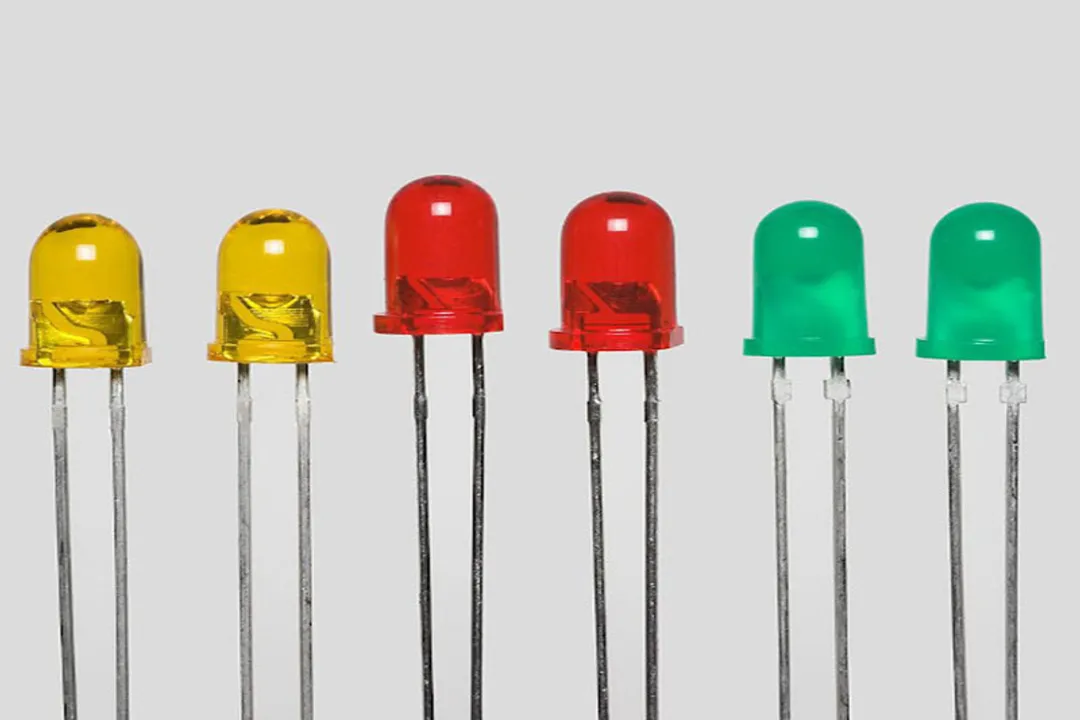
Despite Holonyak’s breakthrough, the initial commercial application of these early red and infrared LEDs was not in room lighting. They were too expensive and their brightness was too low for general illumination purposes. Instead, the earliest uses were in indicator lights—the small red dots that signaled power on or a system status—a far cry from lighting a desk or a kitchen. The red LED was a success, but to unlock the potential of LED technology for everyday lighting, the color spectrum needed to be broadened.
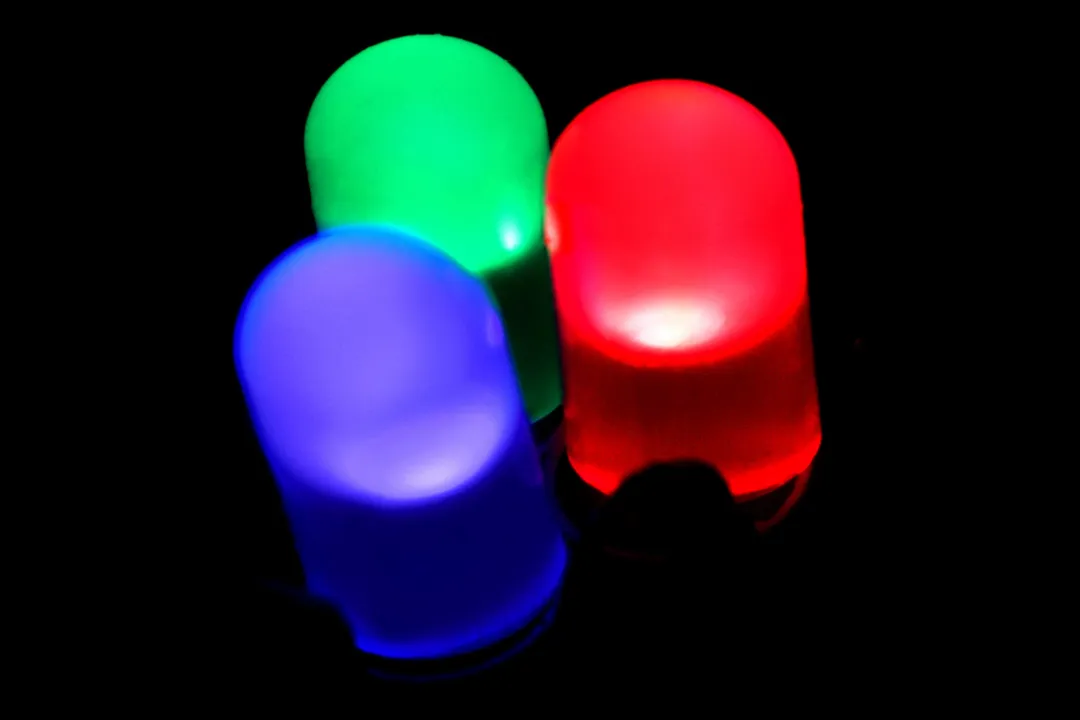
The primary challenge was the material science. To create other colors, different semiconductor alloys were required, but producing efficient junctions for green and, crucially, blue light proved exceptionally difficult. The scientific community understood that to achieve white light—the goal for general illumination—a combination of red, green, and blue (RGB) emitters would be necessary, or a single emitter that produced broad-spectrum light. The lack of a practical blue LED created a "color gap" that stalled the full realization of LED lighting for nearly three decades.
# The Blue Breakthrough
The invention that truly unlocked the modern LED revolution was the creation of the high-brightness blue LED. This achievement is largely attributed to Shuji Nakamura, who was working at Nichia Corporation in Japan during the early 1990s.
Nakamura’s focus was on materials that could bridge the gap left by earlier efforts, primarily Gallium Nitride (). was known to potentially emit blue light, but growing high-quality crystals and effectively doping them (introducing impurities to control electrical properties) were immense scientific hurdles. Previous attempts by other researchers to create blue LEDs using had failed to produce usable brightness.
Nakamura succeeded by refining the manufacturing process, utilizing specific growth techniques and materials, such as Indium Gallium Nitride (), to create highly efficient blue emitters. This was the critical piece of the puzzle. With red, green, and now bright blue LEDs available, engineers could finally mix these primary colors to produce white light.
This development in the 1990s is often regarded as the true birth of the modern LED bulb, turning the technology from a niche indicator light into a formidable competitor for household illumination. It’s fascinating to consider how much investment and research was poured into finding the right material science solution for that final color, essentially proving that the journey to a complete invention is often gated by the most difficult physical constraint.

# Engineering White Light
Once the high-efficiency blue LED was standardized, the path to white light involved two primary engineering approaches. The first, and most common commercially, involves combining the separate red, green, and blue diodes into a single package or cluster (RGB mixing). However, this method can sometimes result in an unnatural or fluctuating color quality depending on the individual diode aging.
The second, and increasingly popular, method relies almost entirely on the blue LED, but with a crucial addition: phosphor coating. In this design, the high-energy blue light emitted by the chip strikes a yellow-emitting phosphor layer dusted on the diode. The phosphor absorbs some of the blue light and re-emits it as yellow light. The resulting output is a mix of the remaining unfiltered blue light and the newly converted yellow light, which our eyes perceive as white light. This phosphor-converted blue LED (pc-LED) is what powers most of the energy-efficient bulbs currently screwing into household sockets.
# The Compelling Why
The intense, decades-long scientific pursuit was driven by a very simple, yet profound, economic and environmental why: efficiency and longevity. The traditional incandescent bulb, a technology that dominated lighting for over a century, operates on a fundamentally wasteful principle.
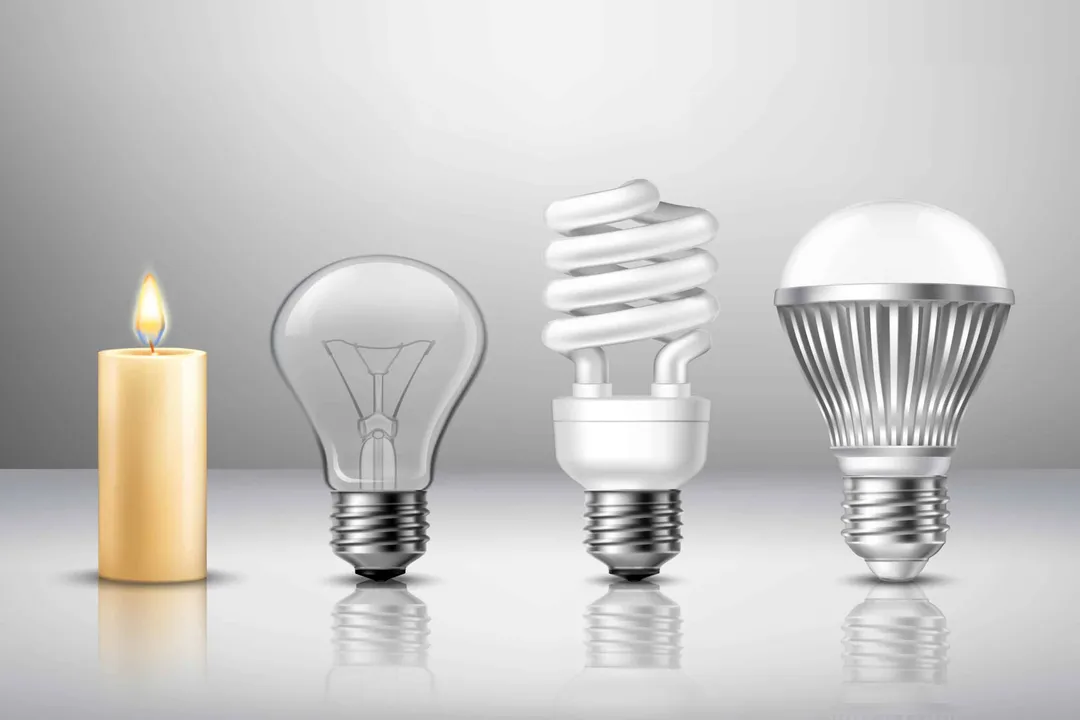
Incandescent technology works by heating a tungsten filament until it glows white hot, producing light through incandescence. This process is inherently inefficient; a typical incandescent bulb converts over 90% of the electrical energy it consumes directly into heat, with only a small fraction becoming visible light. This wasted heat is the primary reason they burn out relatively quickly, as the filament degrades rapidly under extreme thermal stress.
LEDs operate on an entirely different principle—electroluminescence—where electrons recombine with 'holes' in the semiconductor material to release energy directly as photons (light). Because this process bypasses the need to create heat first, LEDs are dramatically more energy-efficient. While early LEDs were dim, modern variants can provide the same light output (lumens) as a traditional bulb while consuming a fraction of the power.
Here is a comparison illustrating the shift in required energy for a standard illumination level:
| Lighting Technology | Typical Power Consumption (for lumens) | Estimated Lifespan (Hours) |
|---|---|---|
| Incandescent | 60 Watts | 1,000–2,000 |
| CFL | 13–15 Watts | 8,000–10,000 |
| LED | 8–12 Watts | 25,000+ |
Furthermore, the solid-state nature of the LED grants it superior durability. With no fragile filament to break and no glass envelope to shatter easily, LEDs are significantly more resistant to shock and vibration than older technologies. This translates directly into a far longer operational lifespan, often rated at 25,000 hours or more. For a homeowner, this means replacing bulbs perhaps once a decade instead of once a year, representing a significant saving in both replacement cost and maintenance effort, especially in hard-to-reach fixtures.

# Understanding Commercial Inertia
One interesting analytical point arises when looking at the timeline: Holonyak invented the visible red LED in 1962, but widespread adoption didn't occur until the late 1990s or early 2000s. Why the 30-year delay? The answer lies in the inherent difficulty of materials science versus the relative simplicity of using existing technology. The early red LED was a technological marvel, but it didn't replace the incandescent bulb because it couldn't perform the same job—general room illumination required the blue/white spectrum. It took the convergence of scientific persistence (Nakamura solving the blue problem) and economic incentive (rising energy costs making efficiency desirable) to make the full transition happen. If the blue LED had been commercialized alongside the red one in the 1960s, our world might look different today.
As a practical tip for consumers navigating the current market, it's worth noting that the color temperature of white LEDs (measured in Kelvins, K) directly reflects the engineering approach taken. A bulb labeled "Daylight" (often 5000K or higher) is heavily weighted toward the blue end of the spectrum, reflecting a higher proportion of direct blue emission from the chip, sometimes giving a slightly sterile appearance. Conversely, a "Warm White" bulb (2700K–3000K) relies more heavily on the yellow phosphor coating to shift the perceived light toward the warmer, yellower tones reminiscent of traditional incandescent bulbs. Understanding this difference allows one to select lighting that actually enhances the mood of a space rather than simply illuminating it efficiently.
# The Inventors’ Legacy
It is clear that the invention of the LED light is not attributable to one person, but rather a chain of innovators building upon preceding work. Round observed the phenomenon; Holonyak created the first useful visible emitter; and Nakamura solved the final materials puzzle necessary for white light. Holonyak and Nakamura, along with Isamu Akasaki (who laid foundational work on crystals), were eventually recognized with the Nobel Prize in Physics in 2014 for their work, acknowledging the monumental impact of their collective efforts on energy conservation and illumination. This recognition underscores that foundational scientific advances often require multiple breakthroughs separated by long periods of refinement.
#Videos
History of LED Lights - How do they Work? - YouTube
Related Questions
#Citations
Light-emitting diode - Wikipedia
the history of LED lighting
The History of LED Lighting: Then and Now
Who Invented the LED Bulb? History of the LED Light
Who Invented LED or the Light Emitting Diode? - ThoughtCo
Who invented the LED, and how? - Quora
LEDs have been around forever, why did it take so long to develop a ...
History of LED Lights - How do they Work? - YouTube
Lighting History: What Came Before the LED Bulb?