What invention led to improvements in transportation?
The story of human progress is inextricably linked to our ability to move—to transport ourselves, our goods, and our ideas across physical divides. What invention truly catalyzed the major improvements we recognize today is less about a single moment and more about a series of cascading innovations that built upon one another, each one solving a previously insurmountable problem of distance or capacity. [1][3] From the earliest efforts to simply support weight to the modern quest for supersonic speeds, transportation technology has consistently reflected humanity's changing needs. [1][3]
# Ancient Roots

The very first major breakthrough in land transport is credited to the Mesopotamian artisans around 3500 BCE with the invention of the wheel. [2][3] Before this, movement relied solely on human effort or simply training animals like horses, which were also domesticated around that time, or camels to carry loads. [2][3] The wheel radically reduced the energy needed to move heavy objects, evolving quickly from simple carts to chariots, which offered speed advantages for travel and military use. [1][2] This development immediately created a corresponding need for better pathways; while early paths were simply worn tracks, the Romans later developed extensive systems of paved roads by 312 BCE, enabling soldiers and trade goods to move with unprecedented reliability across their empire. [2][3] Water transport also saw early gains, with simple rafts evolving into dugout canoes, and later, around 3000 BCE in Egypt, the introduction of sailing boats that harnessed wind energy. [1][2] Further refinement in the Middle Ages, such as the invention of the horse collar in China, made land-based draft animals significantly more effective, improving the utility of animal-drawn carts before the age of mechanical power. [2]
# Steam Ascent
While early inventions improved efficiency incrementally, the Industrial Revolution ushered in an era where power was divorced from muscle, wind, or flowing water, leading to the transformation historians term the transportation revolution. [4] The key to this leap was steam power. [1] In the maritime world, inventors began experimenting with steam engines attached to boats. [2] While an experimental steam-powered model car was built as early as 1672, [2] the practical application for major transport came in the early 19th century. [2] Robert Fulton's North River Steamboat in 1807 is widely recognized as the first commercially successful steamboat, enabling reliable upstream and downstream travel on rivers, which was a huge step for moving goods like crops from western regions to eastern markets. [2][3] Simultaneously, the era saw a frenzy of canal building, like the famed Erie Canal in the U.S. (completed 1825), which drastically cut shipping costs and time by linking major waterways, thus connecting interior agricultural areas to coastal commerce centers. [4]

# Rail Dominance
If the steamboat conquered the rivers, the railroad conquered the continent, offering a speed and hauling capacity that canals and stagecoaches simply could not match. [4] Early work on steam locomotives took place in the late 18th century, [2] but it was George Stephenson who perfected the technology. [2] His Rocket, which won the Rainhill Trials in 1829, established the blueprint for nearly all future steam engines—using boiler tubes and a blast pipe, and running efficiently on coal rather than coke. [2] The opening of the Liverpool and Manchester Railway in 1830 marked a true turning point: it was the first public line operating without animal traction, featuring twin tracks for simultaneous travel, stations, and timetabled services, setting the template for the modern railway globally. [2]
The impact on the economy was profound. Railroads demanded massive inputs of coal, iron, and steel, directly fueling the growth of those primary industries and creating new jobs in manufacturing, maintenance, and operation. [4] The physical connectivity it fostered was astounding; travel time between Boston and Providence, which once took four days by older methods, was cut to half a day by train by 1840. [4] This ability to move raw materials and finished goods swiftly transformed localized economies into national markets. [4]
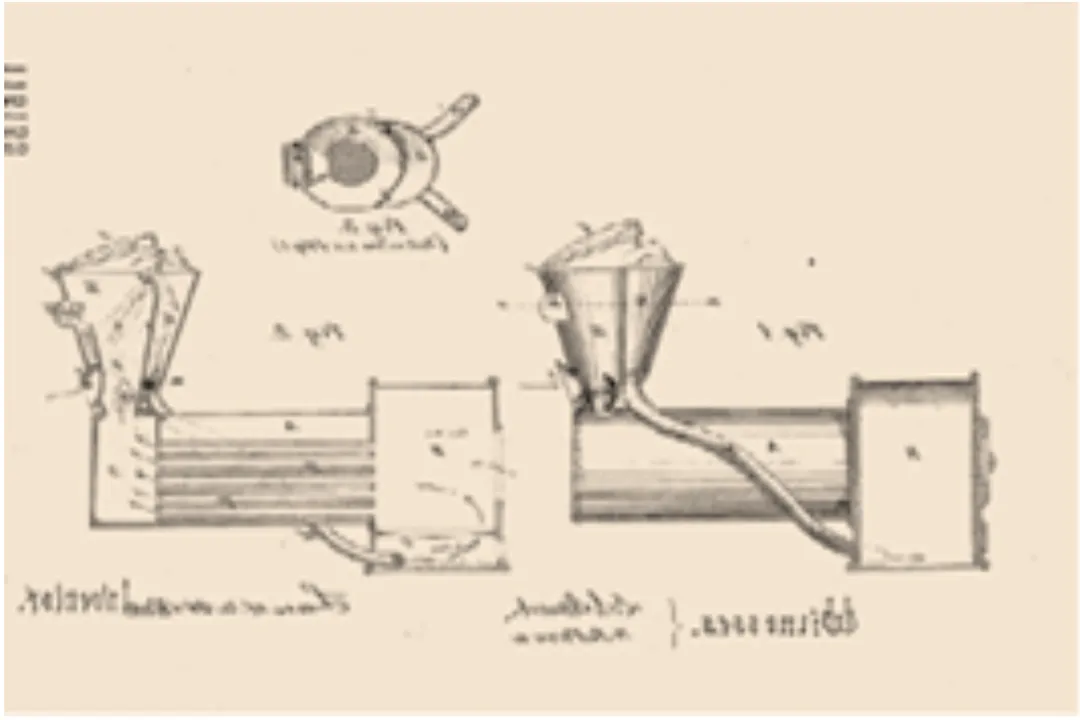
Consider this: the infrastructure itself became the invention that mattered most for a time. The Roman roads, while impressive, relied on the flexibility of the horse and cart to adapt to terrain, but the steam locomotive required an almost perfectly straight, level, and standardized pathway to operate efficiently. [4] The invention wasn't just the engine; it was the subsequent, massive commitment to laying precisely engineered track—a commitment that forced a level of standardization and cooperation in civil engineering that had never before been necessary for land transport. [2] This need for mechanical reliability also spurred smaller but vital inventions among African American engineers like Elijah McCoy, whose automatic lubricator for steam engines in 1872 allowed trains to run for longer periods without stopping for manual oiling, drastically increasing operational efficiency. [5] Similarly, Granville T. Woods’s Induction Telegraph System in 1887 allowed trains to communicate, preventing catastrophic collisions and enabling safer, more frequent scheduling. [5]
# Power Shift
The late 19th century brought the next major paradigm shift: the move away from coal-fired steam toward personal, localized power sources—electricity and the internal combustion engine (ICE). [2] While early electric locomotives existed by 1837, [2] the true revolution for personal transport came from the ICE. Karl Benz invented the first car powered by an ICE in 1885. [2] However, personal vehicles remained expensive novelties until Henry Ford introduced the assembly line method for the Model T in 1908. [2] This invention, rooted in manufacturing technique rather than pure vehicle design, slashed costs, making the automobile accessible and leading to the "rise of the automobile". [1][3] This new personal mobility reshaped society, allowing people to live farther from their workplaces and spurring the growth of suburbs and the massive construction of highways. [1]
Parallel to the car, inventors were also creating personal electric transport, with practical electric cars appearing in the 1880s. [2] Although steam, electric, and gasoline cars competed through the early 1900s, the ICE ultimately dominated for decades due to range and refueling convenience. [1] A vital safety innovation from this period was Garrett Augustus Morgan’s traffic signal, patented in 1923, which responded to witnessed accidents involving trolleys and cars by providing automated control over road junctions. [5]
# New Horizons
While ground travel was being standardized and mechanized, the sky opened up. [1] Following centuries of conceptualization, from Da Vinci's sketches to Sir George Cayley's glider concepts, the Wright brothers achieved the first motor-driven airplane flight in 1903. [2][3] They succeeded not just by creating an engine but by designing and building the entire system—engine, propellers, and airframe—and testing the aerodynamics using a purpose-built wind tunnel. [3] Within decades, aircraft evolved from fabric-and-wood contraptions to metal machines capable of carrying hundreds of passengers at high speeds. [1] The introduction of the jet engine in 1939 and the subsequent development of commercial airliners like the DC-3 marked the beginning of true global reach, shrinking travel times across oceans from weeks to hours. [2] Later milestones included supersonic flight with the Concorde and even travel beyond Earth with the space shuttle and moon landings. [2][3]
In the later 20th century, even speed records were being set on the ground by the Maglev train, which uses magnetic force instead of wheels, allowing the SCMAGLEV L0 Series to reach 603 km/h by eliminating physical track resistance. [3]
# Digital Era
The latest advancements shift focus from conquering distance to managing existing routes and energy use. [1] The 21st century has seen the re-emergence of electric power, driven by environmental concerns over carbon emissions, leading to hybrid and pure electric vehicles. [1] On the information side, digital technology has created new forms of transport management. Applications like Waze crowdsource real-time data, alerting drivers to hazards and traffic jams, effectively turning every user into an active participant in traffic flow monitoring. [3] Similarly, services like Moovel Group's Ride Tap aggregate real-time options—from public bus schedules to car-sharing availability—allowing users to choose the most efficient or cheapest route digitally. [3]
This modern fragmentation presents an interesting contrast to the unified, massive infrastructure projects of the Industrial Revolution. While Stephenson aimed to bind the republic with iron rails, today's innovations often aim to de-congest the personalized asphalt networks that the automobile created. [4] The challenge has moved from how to move massive volumes of goods between fixed points, to how to efficiently manage millions of individual, variable journeys within dense urban environments. [3] Furthermore, the development of autonomous vehicles signals a potential future where the human element, often the source of error in traffic, is gradually removed through complex sensor systems and computing power. [1][2] Even more futuristic concepts, like the Hyperloop—magnetic pods traveling through low-pressure tubes at near-airline speeds—seek to use vacuum and magnetic levitation to overcome the fundamental barriers of air resistance and friction that constrained all previous land-based systems. [1][3]
Ultimately, every improvement in transportation—from the wheel supporting a cart to a sophisticated algorithm optimizing a bus route—has fundamentally altered human geography, making the world smaller, more connected, and constantly demanding the next inventive solution to move faster, cleaner, or smarter. [1][4]
Related Questions
#Citations
Timeline of transportation technology - Wikipedia
Top 10 Innovations in Transportation - GIMI
Changes in Transportation over Time: Through the Ages Project Part ...
On the Move: The Transportation Revolution | US History I (OS ...
Transportation technologies | Research Starters - EBSCO
Pioneers of Transportation - Metro Transit