Who invented the first dimmable LED?

The story of the first dimmable LED is less about a single patent date and more about a critical, decades-long technological handshake between two separate inventions: the light source itself and the device meant to control its brightness. To truly appreciate the first dimmable LED product, we have to look back at the genesis of the light-emitting diode and the separate history of the dimmer switch, as their union was not immediate or simple.
# LED Genesis
The foundation of modern solid-state lighting was laid in 1962 when Nick Holonyak Jr., while working at General Electric, created the first practical visible-spectrum light-emitting diode, which produced a red light. [3][9][5] Holonyak, often celebrated as the "father of the LED," took existing concepts—like infrared LEDs developed by others—and pushed the technology into the visible spectrum. [3][5] This invention marked the beginning of a transition away from older lighting technologies, though it would take decades for LEDs to become efficient enough and produce white light suitable for general illumination. [9]
The early LEDs were simple switches, operating on a direct current (DC) basis. They were either on or off. If you tried to control their power output using the same methods applied to traditional light bulbs, you ran into immediate trouble because the underlying physics of how they produce light is entirely different. [10]
# Dimmer Development

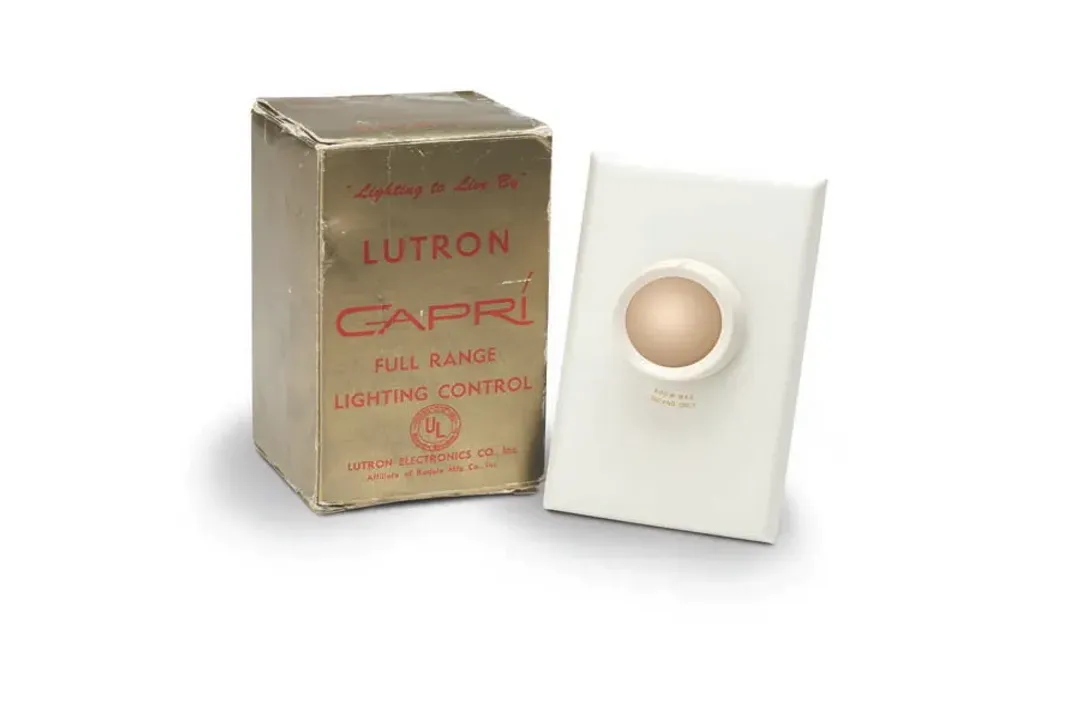
Long before Holonyak's breakthrough, the desire to control light levels in a home setting was already driving innovation. The mechanism most people associate with dimming—the simple wall-mounted knob or slider—has a distinct inventor: Joel Spira. [4][6] In 1959, while working at Lutron, Spira invented the first solid-state dimmer switch. [4][10]
Spira's device cleverly used a component called a TRIAC (triode for alternating current) to chop the alternating current (AC) waveform supplied to the light fixture. [4][10] By cutting off a portion of each AC cycle, less power reached the bulb, making it appear dimmer. This was elegant, compact, and a vast improvement over earlier, bulky rheostats that wasted energy as heat. [4] Spira secured the patent for this technology in 1961. [4]
However, there was an immediate complication when Spira's invention met the existing lighting market. Incandescent bulbs are quite forgiving; they can handle fluctuations in voltage or current reasonably well, sometimes even benefiting from lower voltage operation (though they can also suffer premature failure if cycled too frequently). [10] The existing dimmer technology was perfect for the resistive load of a traditional filament bulb.

# Compatibility Hurdle

The challenge in creating the first dimmable LED fixture was that the world of the LED and the world of the Spira dimmer switch were built on fundamentally different electrical requirements.
Incandescent bulbs are essentially variable resistors whose resistance changes with temperature. A dimmer changes the voltage supplied to that resistor. [10] LEDs, on the other hand, require a stable, regulated current to operate correctly and maintain light quality. [10] If you apply the fluctuating voltage output of a standard TRIAC dimmer directly to an early LED circuit, the results are disastrous. The LED might flicker wildly, fail to turn on consistently, or burn out very quickly due to the uncontrolled current spikes and drops. [10]
This incompatibility meant that inventing the LED and inventing the dimmer were only the first two steps. The real hurdle—the invention of the dimmable LED as a usable product—required a sophisticated electronic intermediary to translate the dimmer's signal into the precise, clean current the LED needed. It wasn't enough to just swap out the bulb; the entire driving mechanism had to change.
# Electronic Drivers
The missing piece was the LED driver. This small, specialized electronic circuit board acts as the translator between the home’s standard AC power (and the dimmer switch controlling it) and the DC current required by the LED chip itself. [5] The driver's job is complex: it must rectify the AC to DC, regulate the current precisely, and, for dimming functionality, interpret the signal coming from the dimmer switch.
Because the industry lacked a single, universal standard for this communication early on, different manufacturers developed proprietary ways to achieve dimming. The first dimmable LED products, therefore, were not just about Holonyak's diode, but about the dedicated, specialized driver circuitry that allowed the diode to respond gracefully to a traditional dimmer's output. [10] The invention of the dimmable LED, consequently, rests more heavily on the electronic engineering that successfully created these reliable drivers than on the initial creation of the light-emitting semiconductor itself.
Consider this difference in engineering requirements: the TRIAC dimmer works by simply blocking part of the power wave, an inherently analog and somewhat crude method ideal for a filament. The LED driver, however, must actively monitor the input power and adjust its internal components (like capacitors and MOSFETs) many thousands of times per second to maintain a smooth output current. This necessity explains why early dimmable LED bulbs often carried high price tags; they contained sophisticated electronics that were completely absent from their incandescent predecessors. [10]

# Current Standards
The consumer market today benefits from a relative standardization that was absent decades ago, even though the underlying problem remains one of translating signals. Modern, high-quality dimmable LEDs utilize drivers designed to work with specific dimmer types. The older, established dimmers that Joel Spira pioneered are known as "leading-edge" dimmers, which chop the beginning of the AC waveform. [10] Many modern LED drivers are designed to interpret this signal, sometimes using complex algorithms to avoid flickering or buzzing.
Conversely, newer "trailing-edge" dimmers chop the end of the waveform, a method often better suited for the lower power demands of LED electronics. [10] Understanding which type of dimmer you possess—especially if it's an older model installed years ago—is key to achieving proper LED performance. If a consumer buys a "dimmable" LED bulb but pairs it with an incompatible dimmer, they will experience the exact flickering and noise issues that plagued early adopters, making it seem like the LED itself is faulty, when in reality, the communication protocol between the switch and the driver is broken.
Ultimately, pinning the invention of the first dimmable LED to one person is misleading. It was a technological convergence. It required Nick Holonyak to give us the light, Joel Spira to give us the control mechanism, and an anonymous team of electronics engineers—likely at major lighting companies in the late 1990s or early 2000s—to solve the immense electrical incompatibility between the two, resulting in the creation of the functional LED driver that allowed light levels to be smoothly adjusted.
# Longevity Comparison
To put the performance of these modern dimmable systems in perspective against older technology, it helps to look at the practical impact of the solid-state revolution. While the original incandescent bulbs dimmed via a simple energy reduction, the LED system offers a distinct advantage in efficiency, even when dimmed. If an incandescent bulb is dimmed to 50% brightness, it still consumes a significant percentage of its full power, often wasting the rest as heat. A modern, well-designed LED driver, however, scales its power consumption almost perfectly with the light output. This means when a modern LED is dimmed to 50%, it uses roughly half the power of its full setting, a degree of efficiency improvement in partial-load scenarios that the older technology could never match. [9] This tight relationship between light output and energy consumption is the lasting legacy of solving the dimming puzzle for the diode.
Related Questions
#Citations
History of the LED - Wikipedia
Nick Holonyak Jr., pioneer of LED lighting, dies
NIHF Inductee Nick Holonyak, Who Invented LED
History of the Dimmer Switch - KB Electric LLC
The Dimmer. History | by Matthew Saccomanno - Medium
Inventor Turned Up Energy Savings by Dimming the Lights
Lighting the way: The evolution of the Light Emitting Diode (LED)
A brief history of the LED - EDN Network
Led history in brief - Did you know that the Led was invented in 1907?