Who invented wireless lighting?
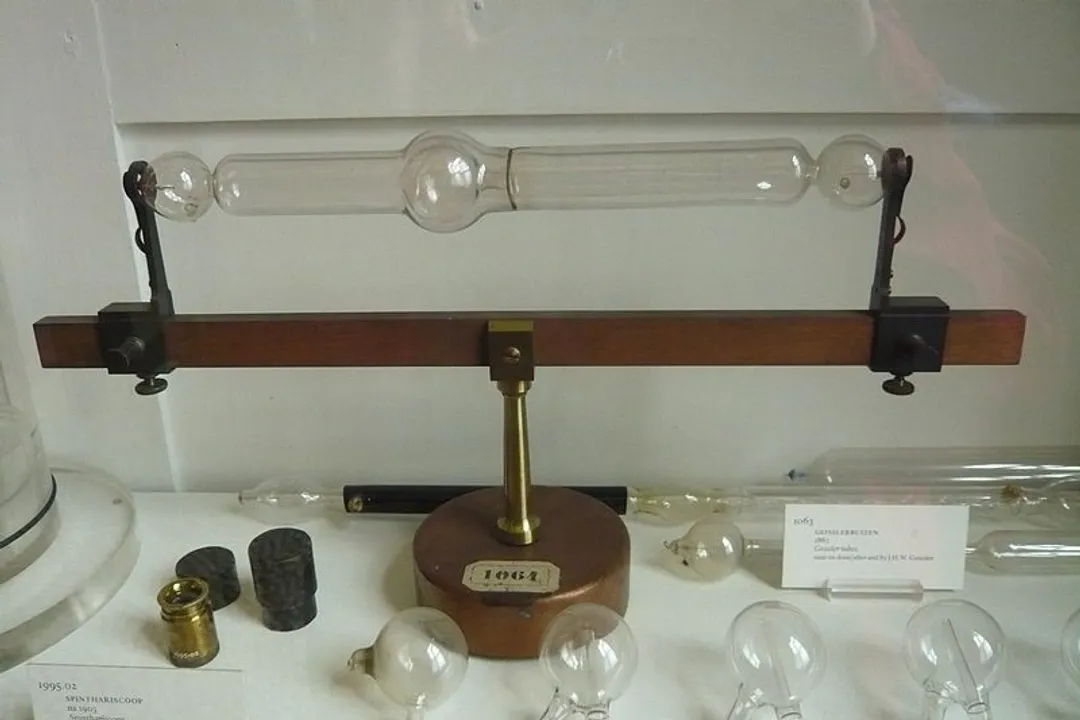
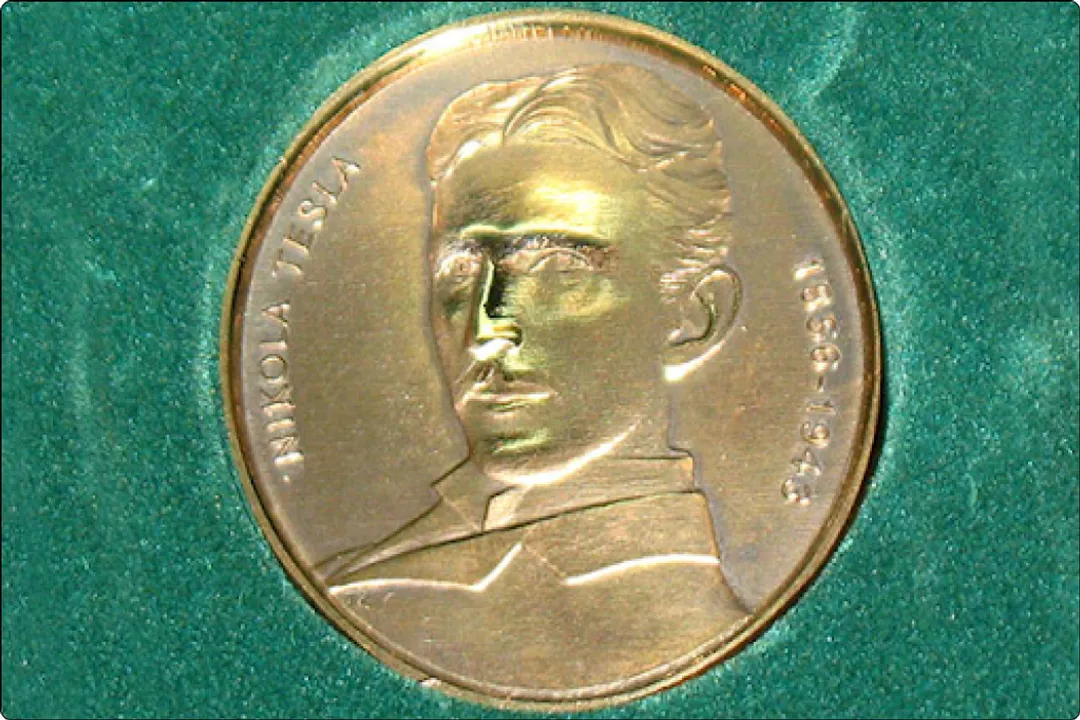
The concept of illuminating a room or an object without visible wires captures the imagination, suggesting a fundamental shift in how we interact with power. While the modern world relies on batteries or plugged-in devices, the true genesis of practical, large-scale wireless lighting belongs to one pioneering figure: Nikola Tesla. He wasn't just theorizing about transmitting electricity through the air; he was actively demonstrating it, creating glowing lamps held aloft in his hands, long before many of his contemporaries believed it possible.
# Early Experiments
Tesla’s exploration into harnessing electricity without conductors wasn't a sudden breakthrough but the result of systematic, high-voltage experimentation. His work often involved the study of high-frequency currents and the powerful fields they generated. In his early work, particularly involving the development of the Tesla coil—an apparatus designed to produce very high voltages at high frequencies—he stumbled upon a fascinating side effect. When working with these coils, he observed that nearby conductive objects, even light bulbs themselves, would begin to glow without being physically connected to the power source. This phenomenon pointed toward the possibility of broadcasting electrical energy through the surrounding space, essentially turning the air itself into a medium for power transmission.
# The Spectacular Proof
The most enduring images of this invention come from public demonstrations where the proof was impossible to ignore. Tesla famously staged these events to showcase the potential of his discoveries to a skeptical world. Perhaps the most consequential of these showcases occurred during the 1893 World’s Fair in Chicago. At this massive exhibition, Tesla illuminated rows of incandescent lamps without connecting them to the main power grid. Imagine standing in a darkened hall, watching a bare glass bulb suspended in mid-air or held in the inventor's hand suddenly burst into light—it was pure science fiction made tangible. These demonstrations were not small parlor tricks; they were large-scale proofs of concept intended to capture the attention of investors and the public alike. He managed to light up an entire room with bulbs receiving power transmitted wirelessly from a distance.
The key to these dramatic displays was the establishment of a powerful resonant circuit. The transmitter, driven by a high-frequency alternating current, created an electromagnetic field that was tuned to resonate with the receiver—the light bulb filament. This selective transfer of energy, often involving powerful electromagnetic waves, is what allowed the light to switch on across a gap of air or even through insulating materials. It is interesting to note how the spectacle itself might have influenced perception; for many attendees, the visual "magic" overshadowed the complex engineering, positioning Tesla more as a showman than a practical engineer in some circles, a difficult position when seeking serious funding for infrastructure.
# System Vision
Tesla's ambition extended far beyond simply lighting a few bulbs at a fair; he envisioned a comprehensive global energy network known as the World Wireless System. This wasn't just about sending power wirelessly to a single location; it was about broadcasting electrical energy across continents and oceans through the Earth itself and the upper atmosphere. The goal was to provide inexpensive, limitless power and communication services globally, accessible from any point on the planet.
The wireless lighting demonstrations were merely a small, visible component of this much grander design. The system relied on coupling the transmitter to the Earth at a very low frequency, using the planet as a massive conductor to propagate the waves.
If we look at this concept through a modern lens, it’s an extraordinary contrast to today’s energy distribution. Contemporary wireless power transmission, like that used in charging pads, relies on near-field magnetic induction over very short, precisely aligned distances [cite: Insight 1]. Tesla’s approach, however, was about far-field broadcast energy transfer across immense distances, relying on an open medium—the atmosphere and the Earth—for propagation. While modern local charging is highly efficient for small devices, it remains geographically constrained. Tesla’s vision, however efficient or inefficient the actual propagation proved to be, aimed at erasing geographical barriers to power access entirely [cite: Insight 1].
# The Science Behind It
The fundamental science underpinning wireless illumination relies on electromagnetic induction and resonance, principles Tesla mastered and scaled up dramatically. In a simple demonstration, one light bulb might be near the primary coil of a high-frequency transformer, while another bulb, placed farther away, glows when the electromagnetic field established by the first bulb's circuit finds its resonant frequency in the second bulb's circuit.
It is important to distinguish between what he accomplished and what the mainstream electrical industry settled on. The path taken by Edison’s direct current (DC) and later Westinghouse’s alternating current (AC) focused on wired distribution networks that minimized energy loss over copper wires [cite: Insight 2]. Tesla’s method involved broadcasting energy, which inherently faces dissipation challenges over distance, especially when the goal is to power large apparatuses rather than just light a small, tuned receiver [cite: Insight 2]. While the initial demonstration of lighting a bulb without a physical connection was achieved, scaling that broadcast power to run a city without massive energy loss proved to be the immense, perhaps insurmountable, hurdle that eventually saw his grand wireless system abandoned in favor of wired grids.
# Tesla's Identity
Nikola Tesla remains intrinsically linked to this innovation, often referred to as the "father of wireless". Born in the mid-19th century, his work on electricity and magnetism laid foundational groundwork for modern electrical engineering. His contributions span many areas, but the development and demonstration of wireless power transmission, with wireless lighting as its most visual proof, secures his place in this specific history. He possessed an extraordinary capacity for visualization, often designing and testing complex machinery entirely within his mind before building physical prototypes.
He was undoubtedly a figure of immense, if sometimes misunderstood, genius who managed to make the impossible tangible for a brief, shining moment. While others might have contributed to the theory of electromagnetic waves, Tesla was the one who actively engineered the systems to broadcast energy and make objects glow wirelessly in front of audiences.
# The Path Forward
The historical record shows that while Tesla successfully lit bulbs wirelessly, the dream of a complete, global, free-energy wireless system, as embodied by Wardenclyffe Tower, was never fully realized in his lifetime due to funding drying up and competing, more commercially viable wired systems taking hold. The immediate success of his demonstrations contrasted sharply with the long-term fate of his project, which never transitioned from a proof-of-concept marvel to global utility.
Nevertheless, the principles he established—high-frequency transmission and the concept of resonance for power transfer—did not vanish. They evolved. While we don't power our homes by drawing electricity from the ambient air, the basic physics that caused those bulbs to illuminate without wires continues to inform niche applications today, such as localized near-field charging for mobile devices and RFID technology [cite: Insight 1]. The legacy of the wireless light, therefore, is dual: a spectacular, unfulfilled vision of global energy broadcast, and the quiet, localized success of resonant energy transfer in modern electronics. Tesla provided the initial, astonishing spark that proved energy could travel without a wire, a feat that remains one of the most captivating moments in electrical history.
#Videos
He Invented Wireless Light—So Why Was This Black Genius Erased?
Related Questions
#Citations
Nikola Tesla - Wikipedia
Nikola Tesla's Wireless Light | Tesla Universe
Nikola Tesla: The Father of Wireless - AI bees
Tesla: Early Experiments with Wireless Power | PBS LearningMedia
Tesla Didn't Invent the Neon Sign, He Imagined Something Even ...
Tesla's Wireless Light by Nikola Tesla Scientific American February ...
Did Nikola Tesla figure out how to light a bulb wirelessly? - Quora
He Invented Wireless Light—So Why Was This Black Genius Erased?