Who invented conversational AI?
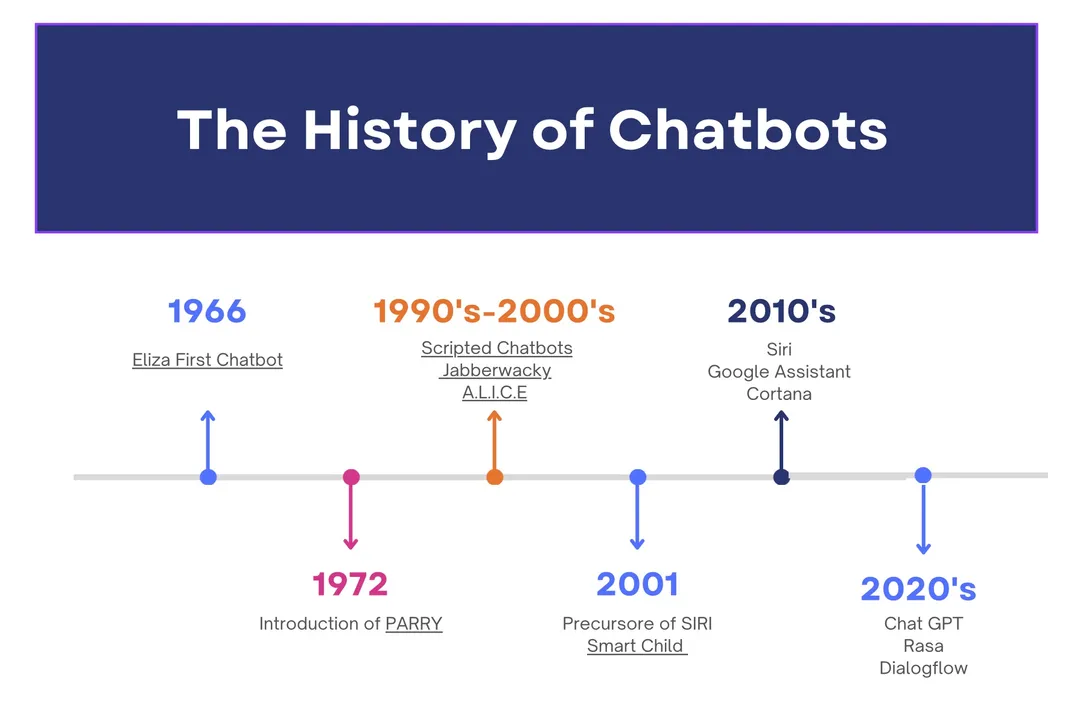
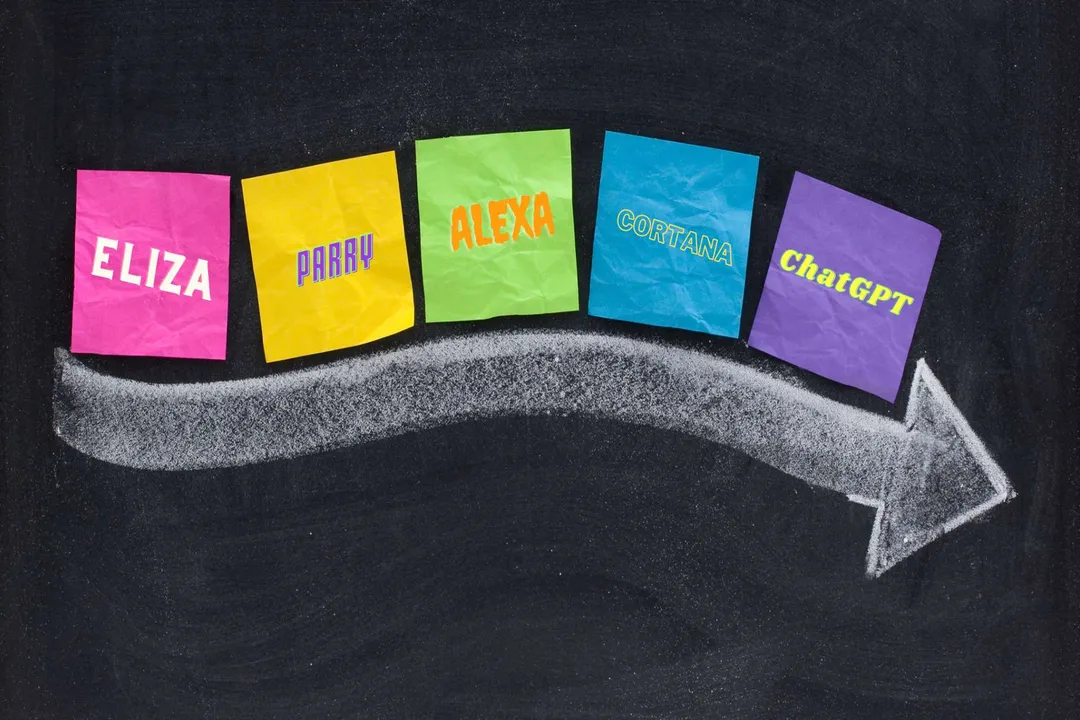
The genesis of what we now call conversational Artificial Intelligence can be traced back to the mid-1960s and a specific program created at the Massachusetts Institute of Technology (MIT). It was here that Joseph Weizenbaum, a computer scientist, developed a program known as ELIZA. [5][2] This creation was not intended as a true artificial intelligence but rather as a demonstration of the superficiality of communication between humans and machines. [2] Despite this modest goal, ELIZA would become arguably the first program to engage users in extended, seemingly meaningful dialogue, establishing the foundation for all subsequent chatbots. [8]
# MIT Birth

The year was 1966, and the computing environment at MIT was ripe for such experimentation. [2][8] Weizenbaum sought to illustrate how easily human beings could project understanding and empathy onto a machine that possessed neither. [2] He did this by programming ELIZA to mimic the conversational style of a Rogerian psychotherapist. [1][2] This specific therapeutic approach is characterized by non-directive questioning, primarily reflecting the patient's statements back to them as inquiries, which requires very little actual comprehension of the content being discussed. [1]
This choice of persona was critical to ELIZA's surprising success. A therapist, by definition, asks open-ended questions and encourages elaboration, creating a conversational structure that masks the underlying computational simplicity. [2] The program operated using pattern matching and substitution techniques to develop its scripts, making its responses feel relevant even when they were merely syntactically derived from the user's input. [1] For instance, if a user typed, "I am feeling sad today," ELIZA might recognize the "I am feeling..." pattern and substitute the response template "How long have you been feeling sad?". [1]
# Simple Method
Understanding ELIZA’s mechanics reveals a fundamental principle in early AI: convincing imitation requires far less computational power than genuine understanding. [6] The program's core relied on identifying keywords in a user's sentence and applying a pre-written transformation rule. [1] If no specific rule matched, ELIZA would fall back on a generic response, such as "Please continue," or "Tell me more about that". [2]
Weizenbaum deliberately kept the vocabulary and response repertoire limited. [2] He did not provide ELIZA with any knowledge base or capacity for genuine reasoning. [5] The interaction was entirely text-based, presented via a teletype interface, further abstracting the interaction from reality. [2] It is fascinating to consider that this rudimentary process, dependent on string manipulation rather than deep neural networks, stands as the earliest recognizable ancestor to today's massive Large Language Models (LLMs) which consume petabytes of data. [6][10] The conceptual leap from ELIZA’s simple substitution engine to modern generative models represents a change in scale and complexity, but the initial objective—creating an interface for interactive conversation—remains the same. [9]
# Human Projection
The results of the ELIZA experiment were profoundly unsettling for its creator. [5] Weizenbaum had expected users to recognize the program as a simple string processor, yet many people—including his own secretary, who insisted he leave the room so she could speak privately with the "doctor"—attributed genuine feeling and understanding to the machine. [2][5][8] This reaction highlights a deep-seated human tendency to anthropomorphize entities that can successfully mimic human communication patterns, irrespective of the underlying technology. [2] This phenomenon, where users willingly fill in the gaps of the machine's understanding with their own expectations, is perhaps the most significant early finding in conversational AI research. [5]
Weizenbaum later expressed significant regret over the implications of his work, particularly fearing that his creation could be used in ways that replace genuine human connection or professional counsel, leading him to speak out against the over-reliance on artificial intelligence. [5] His later stance shifted from inventor to cautionary voice, recognizing that the ease with which ELIZA fooled people indicated a potential danger in confusing linguistic proficiency with actual sentience or expertise. [5]
# Early Programs
While ELIZA often garners the title of the first chatbot, it was not the sole attempt in that era to simulate conversation. [8] The field, nascent as it was, contained other significant programs that pushed the boundaries of simulation. One notable counterpoint to ELIZA was PARRY, developed by psychiatrist Kenneth Colby at Stanford. [4] Where ELIZA simulated a relatively neutral therapist, PARRY was designed to mimic the conversational patterns of a person with paranoid schizophrenia. [4]
The contrast between ELIZA and PARRY provides an excellent early case study in AI design philosophy. ELIZA aimed for broad, non-committal engagement using simple rules, while PARRY required a more complex model of internal state and belief systems to maintain its persona consistently. [4] In fact, PARRY was sometimes subjected to Turing Tests where psychiatrists were asked to distinguish between human patients and PARRY based on transcribed conversations, showing an early attempt to gauge conversational success beyond simple engagement. [4] These early divergent projects showed that the goal of the conversational agent dictated the necessary—and often surprisingly simple—architectural requirements. [6]
| Program | Year (Approx.) | Role Simulated | Primary Technique | Inventor |
|---|---|---|---|---|
| ELIZA | 1966 | Rogerian Therapist | Pattern Matching/Substitution | Joseph Weizenbaum [2][5] |
| PARRY | Post-1966 | Paranoid Schizophrenic | State-based Simulation | Kenneth Colby [4] |
The trajectory from these initial text-based programs to modern customer support agents or voice assistants illustrates a continuous effort to improve the illusion of understanding while simultaneously building towards genuine capability. [7][10] Customer support bots, for instance, started with simple decision trees mirroring ELIZA's rule-based structure before evolving to incorporate Natural Language Processing (NLP) for better intent recognition. [7]

# Path Forward
The work established by Weizenbaum and others provided the necessary scaffolding for future development. Conversational AI, as a concept, progressed through several distinct phases after the initial burst of interest in the 1960s. [9] The initial focus on pattern matching gave way to systems attempting to model syntax and semantics more deeply, often leading to the development of expert systems. [6]
For general readers looking to appreciate modern AI, it is helpful to view the progression not just as improved technology, but as successive layers of illusion being peeled back. ELIZA showed us how easy it is to trick the human mind with simple syntax. [2] Later systems sought to overcome this by incorporating more world knowledge and context retention, slowly moving the boundary of what users accepted as "understanding". [9] The breakthrough in modern systems like ChatGPT is that they have so successfully mastered the syntactic layer that they can effectively generate novel, contextually appropriate responses across countless domains, something ELIZA could never do because its knowledge was strictly limited to the script it was given. [10]
The initial invention, however, remains rooted in that moment of surprise in 1966. It wasn't the most powerful program, nor the most complex; it was simply the first to convincingly demonstrate that a machine could hold a seemingly human conversation, establishing the very definition of the field. [8] Weizenbaum's caution against confusing linguistic mimicry with genuine intelligence serves as an enduring meta-commentary on the entire discipline of artificial intelligence, reminding developers that the interface often outpaces the underlying intellect. [5] The story of conversational AI, therefore, begins not with a quest for intelligence, but with a simple, yet revolutionary, simulation designed to prove a point about human psychology. [2]
Related Questions
#Citations
ELIZA - Wikipedia
The Story Of ELIZA: The AI That Fooled The World
The History Of Chatbots – From ELIZA to ChatGPT - Onlim
History of Chatbots: From ELIZA to Advanced AI Assistants
Weizenbaum's nightmares: how the inventor of the first chatbot ...
Overview of Conversational AI - eCampusOntario Pressbooks
A brief history of AI in customer support - Assembled
ELIZA (1966): The First Chatbot in History That Fooled Everyone
The History and Evolution of Conversational AI | Blog - Fabric
The History of Chatbots: A Timeline of Conversational AI - Yellowfin