Which innovation will improve transport most?

The transformation occurring in how people and goods traverse the globe is arguably the most profound shift since the invention of the wheel. Determining which single innovation will improve transport most is challenging because the current momentum is driven by the simultaneous maturation of several distinct technologies: autonomy, electrification, and hyper-connectivity, all fueled by data processing power. If forced to select the most fundamentally impactful, it is the invisible force of data intelligence and AI that underpins the potential of all others, making transportation systems proactively smarter, safer, and more efficient. However, the most visible and immediate improvements are manifesting through the twin forces of automated driving and decarbonization.
# Convergence Power
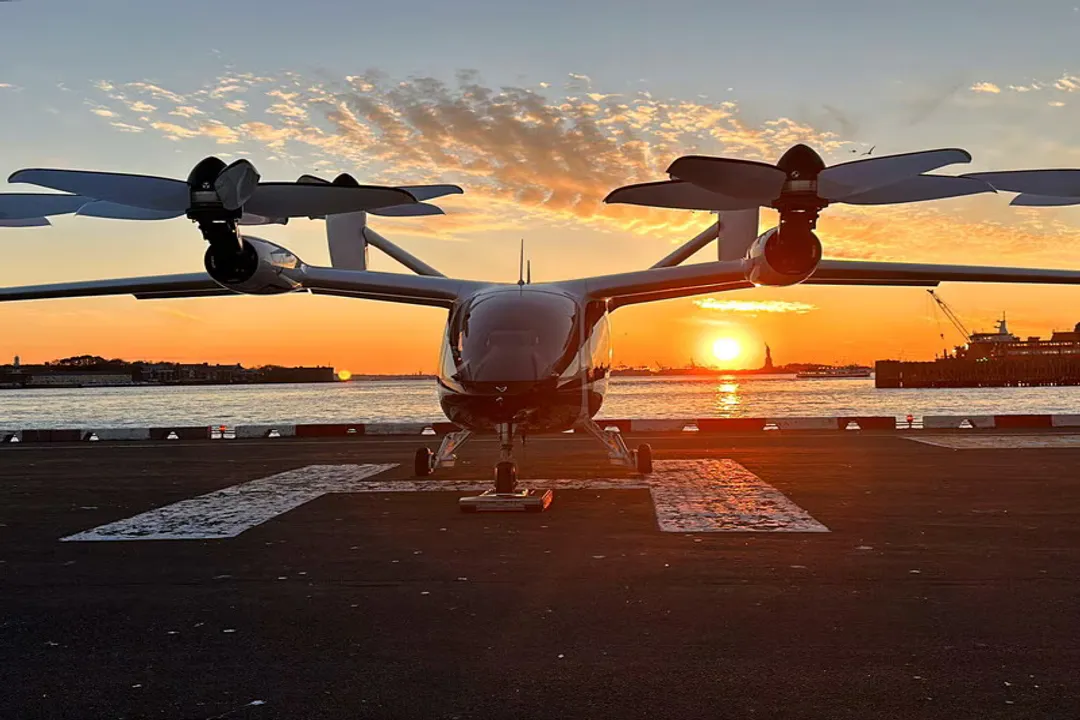
Transport is moving from a collection of discrete modes—trains, cars, planes—into an integrated, technology-dependent ecosystem. Innovations like Mobility-as-a-Service (MaaS) exemplify this by centralizing booking, payments, and route management across public transit, ride-hailing, and micromobility options. This convergence allows for systems that are more user-centric, prioritizing access and usage over outright ownership.
The sheer breadth of emerging solutions suggests that the greatest improvement will not come from a single 'silver bullet' technology but from the stacking and coordination of these advancements. For example, autonomous vehicles (AVs) are significantly safer and more efficient, but their full potential—such as reducing road accidents by allowing closer following distances (platooning)—relies on robust V2V communication, which itself is bolstered by 5G networks. Similarly, the viability of Urban Air Mobility (UAM) depends heavily on complex Unmanned Aircraft System Traffic Management (UTM) platforms and reliable, low-latency 5G connectivity.
This leads to a crucial distinction in impact speed: the improvements based on the digital layer are deploying faster and offer immediate benefits across existing infrastructure compared to those requiring massive physical layer overhauls. While visionary projects like the Hyperloop, which seeks to connect cities at jet-like speeds via vacuum tubes, present an exciting, high-reward proposition, they also face massive regulatory and infrastructure hurdles, making them a longer-term bet. In contrast, AI-driven traffic optimization, which uses real-time data from existing road sensors to adjust signal timing, can be implemented incrementally across current road networks, offering faster relief from congestion today. This digital layer improvement acts as an immediate equalizer across the entire system, whereas physical projects like Hyperloop or large-scale UAM vertiports require decades of capital investment before widespread benefits materialize.
# Driverless Future
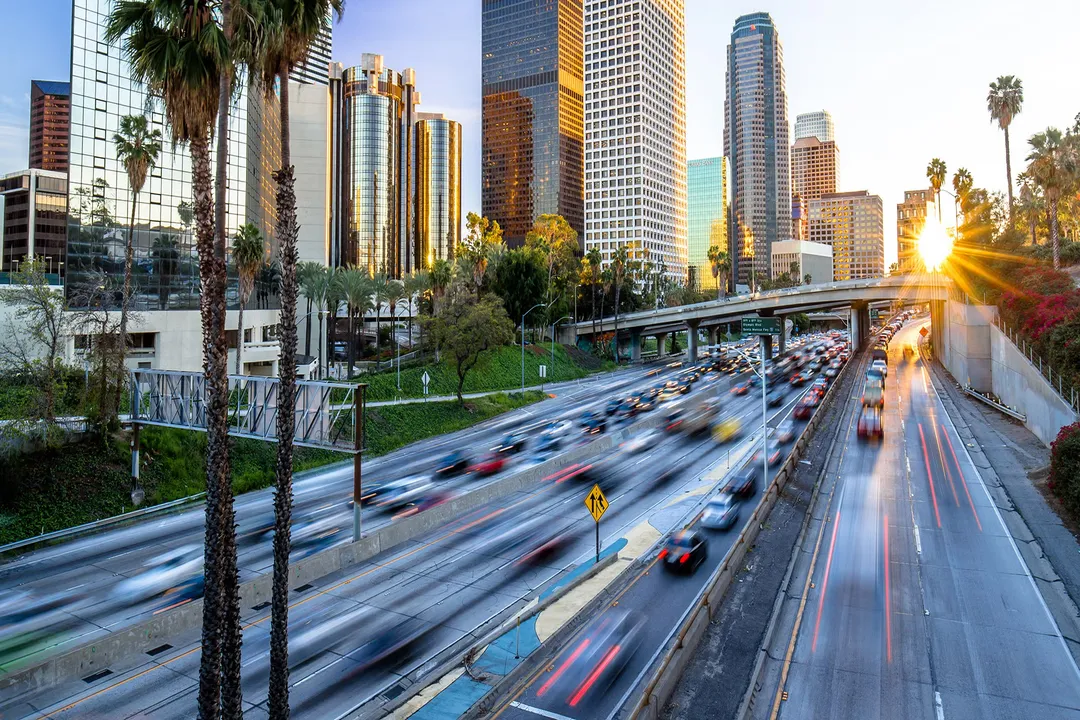
The move toward autonomy in all forms of transport promises immense safety gains and productivity benefits. Self-driving technology, classified from Level 0 to Level 5 by the Society of Automotive Engineers, is steadily advancing beyond driver assistance into conditional automation.
In personal and commercial road transport, Autonomous Vehicles (AVs) are the headline feature. Companies like Waymo already operate fully autonomous robotaxi fleets, demonstrating a safety record that is significantly better than human drivers, reporting 78% fewer injury-causing crashes. For freight, this same technology translates into platooning, where trucks travel in synchronized, close convoys led by a human driver, leading to enhanced safety and improved fuel efficiency. Experts estimate that autonomous trucking could reduce delivery costs by as much as 40%. This reduced human input—or elimination of it—frees up passenger time for other activities and allows commercial vehicles to operate longer without mandated rest periods.
The development in the skies mirrors this push, manifesting as Urban Air Mobility (UAM), including flying taxis (eVTOLs) and delivery drones. While passenger-carrying autonomous aircraft are seen as an aspiration requiring significant time for certification and public trust to develop—potentially 15 to 25 years for fully unmanned passenger services—the cargo application is more immediate. Delivery drones, often utilizing electric vertical take-off and landing (eVTOL) mechanisms, are rapidly solving the costly "last-mile" logistics problem, a segment that can account for over half of total supply chain costs. Cargo drone adoption is accelerating as regulatory bodies, like the FAA, begin granting permissions for operations beyond the visual line of sight (BVLOS).

# Zero Emission Shift
The imperative to combat climate change has made Electrification a non-negotiable driver of transport improvement. The transition from internal combustion engines (ICE) to Zero-Emission Vehicles (ZEVs) is seen as inevitable, with governments setting phase-out targets worldwide.
This shift covers all modes:
- Road: Electric Vehicles (EVs) continue to see rapid adoption, though the market is maturing, leading some OEMs to prioritize hybrid approaches temporarily. Key to sustained EV success, however, is addressing infrastructure. While wireless charging roads—embedding charging coils beneath asphalt—could eliminate range anxiety by allowing vehicles to top up while driving, this remains an early-stage technology that requires significant public road investment.
- Air: Sustainable Aviation Fuels (SAFs) are critical for decarbonizing air travel, potentially reducing lifecycle greenhouse gas emissions by up to 80% compared to traditional jet fuel. However, SAFs currently account for less than 0.1% of aviation fuel use, and scaling production to meet the goal of 10% by 2030 requires overcoming high production costs and securing consistent feedstock.
- Sea: The maritime sector is looking at Ammonia () as a potential carbon-neutral fuel. Innovations focus on safety, as ammonia's toxicity is a major barrier; patented designs are now compartmentalizing engine rooms with specific pressure and ventilation controls to contain potential leaks.
The improvement in transportation quality here is defined by sustainability. A vehicle that is safe but pollutes heavily offers a lower overall societal benefit than one that is moderately safe but zero-emission. For instance, a modern electric transit bus or an ammonia-fueled vessel provides a direct, measurable benefit to air quality and climate goals that a mere efficiency improvement in an ICE vehicle cannot match.
# Data Intelligence
If autonomy is the driver and electrification is the fuel, Artificial Intelligence (AI), Machine Learning (ML), and Big Data are the central nervous system of future transport improvement. These technologies unlock insights from the sheer volume of data generated by sensors, GPS, and connected systems, moving agencies from a reactive to a proactive stance.
AI integration is already optimizing traffic flow. Systems like Google Green Light use ML and crowd-sourced data to model and recommend signal operations to reduce congestion. In fleet management, AI analyzes real-time data from telematics to enable predictive maintenance, forecasting wear and tear before mechanical failures occur, which significantly reduces costly downtime. This data focus is even extending to environmental accountability, with platforms using blockchain to tokenize and immutably track Environmental Attribute Certificates (EACs), allowing logistics providers to accurately account for Scope 3 decarbonization targets.
The implementation of these intelligence layers is what allows for the efficiency gains promised by automation and multimodal integration. For instance, an AI-powered system managing a MaaS platform must process real-time demand, vehicle location, and traffic conditions instantaneously to offer the fastest or cheapest multimodal route to a user. The quality of the insight generated by AI is directly proportional to the quality and standardization of the input data; therefore, an often-overlooked but critical element is the data exchange and formatting necessary to feed these systems reliably.
# Service Ecosystems
The greatest user-facing improvement may be the shift from owning a vehicle to accessing a transport service. This is the domain of Mobility-as-a-Service (MaaS) and integrated urban planning. Cities are increasingly measured on their readiness to embrace these integrated systems.
MaaS platforms, often powered by AI scheduling and payment integration, allow users to solve a trip—be it to work or across an island using a ferry and an e-bike—through a single application. This ecosystem directly addresses urban equity and efficiency challenges. On-demand transit, a component of MaaS, is vital for providing cost-effective mobility to underserved communities, including those without personal vehicles. Furthermore, in urban centers, the successful integration of all these moving parts—AVs, public transit, micromobility—is only achievable through a centralized planning method like MaaS, reinforced by high-speed communication like 5G. The sheer projected market growth, with MaaS expected to exceed USD 754 billion by 2032, signals where consumer and business focus is rapidly moving: away from the asset and toward the access.
For a city planner looking at this landscape, the focus must immediately shift to managing the interoperability between these evolving services, ensuring that the introduction of autonomous fleets or new eVTOL routes enhances, rather than disrupts, existing mass transit networks. This requires proactive policy-making—a “sandbox” approach seen in cities like San Francisco—to test and integrate new solutions safely.
# Infrastructure Readiness
While the technologies themselves are advancing rapidly, the readiness of physical and regulatory infrastructure remains the bottleneck for maximizing the benefits of any singular innovation. For example, the promise of automated vehicles requires agencies to prepare road networks by ensuring high-quality, reflective lane striping that automated systems can consistently identify.
Consider the electrification wave: while EVs are inevitable, the supporting infrastructure requires more than just public chargers. Local governments must address community readiness, ensuring equitable access to charging, particularly in dense areas where home charging solutions are impossible for many residents. This logistical challenge highlights a gap between technological capability and societal implementation. A city must look not just at the volume of chargers needed, but the distribution and grid capacity to support charging surges, especially if commercial fleets transition rapidly. Failure to plan the grid before mass adoption means that the speed of EV adoption—the improvement in emissions—will be artificially capped by electrical supply constraints.
Similarly, the move to autonomous aerial vehicles is less about the aircraft and more about the sky itself. Experts caution that wide-scale deployment requires not just safe aircraft but robust Digital Tethering concepts to prevent GPS confusion, and strict governance over the data collected by these vehicles. Safety, security, and consistent standards across jurisdictions—as seen in the EU's approach to VTOL regulation—are the silent prerequisites for any high-impact technological rollout.
# Comparing the Transformative Scale
To return to the core question—which innovation will improve transport most—we must weigh potential versus reality.
| Innovation Pillar | Key Benefit | Current Stage & Scope of Improvement | Limiting Factor |
|---|---|---|---|
| Data/AI Intelligence | Proactive system optimization; safety analysis | Already delivering incremental gains in traffic flow, logistics, and maintenance across all modes. | Data quality, standardization, and organizational willingness to rethink data ownership. |
| Autonomy (AVs) | Vastly improved safety; reduced labor costs (freight) | Operational in limited geofenced areas (robotaxis); growing Level 2/3 adoption in consumer vehicles. | Regulatory hurdles; public trust; infrastructure readiness for Level 4/5. |
| Electrification (EVs) | Decarbonization; lower operating costs | Rapid consumer adoption; commercial fleet transition underway; battery tech improving. | Charging infrastructure deployment; grid capacity; cost of SAFs for aviation. |
| New Modes (UAM/Hyperloop) | Radical time reduction on specific routes | Mostly conceptual (Hyperloop) or in early deployment/testing (eVTOL cargo). | Massive capital expenditure; regulatory complexity; noise/visual pollution concerns. |
The evidence suggests that AI/Data Intelligence provides the highest quality improvement—safety, efficiency, and sustainability insights—that can be applied immediately across the existing physical assets. However, the question of most improved transport experience for the average person over the next decade likely rests with the Electrification and Autonomy convergence. When an individual or shipper experiences a zero-emission vehicle that is also safer due to automated systems, the combined effect on cost, environment, and personal security is maximized. The gradual implementation of smarter road networks and MaaS platforms will layer these benefits, but the move away from fossil fuels and human error represents the most fundamental quality change in the actual mechanism of movement. The success of these top contenders hinges entirely on the rapid establishment of common standards and supportive regulatory frameworks, ensuring that the parts—the batteries, the sensors, the communication protocols—can work together as a cohesive global system.
Related Questions
#Citations
Top 10 Innovations in Transportation - GIMI
12 Future Transportation Technologies to Watch | Built In
5 Emerging technologies in transportation - WIPO
Explore the Top 10 Transportation Trends & Innovations in 2025
Top 5 Trends in Implementing Transportation Technology | HDR
Innovation and Technology | US Department of Transportation
3 ways cities can accelerate towards the future of transport
6 Innovative Transport Solutions Shaping the Future of the ...