What was used to spin cotton in earlier times?
The process of turning raw, fluffy cotton fiber into usable, strong thread has a long and fascinating history, marked by slow, painstaking manual labor before the dramatic mechanical advancements of the Industrial Revolution. Before cotton truly dominated the global textile market, different fibers required different preparation methods, and even when cotton was available, spinning it was an endeavor reserved for those with patience and skill. [2]
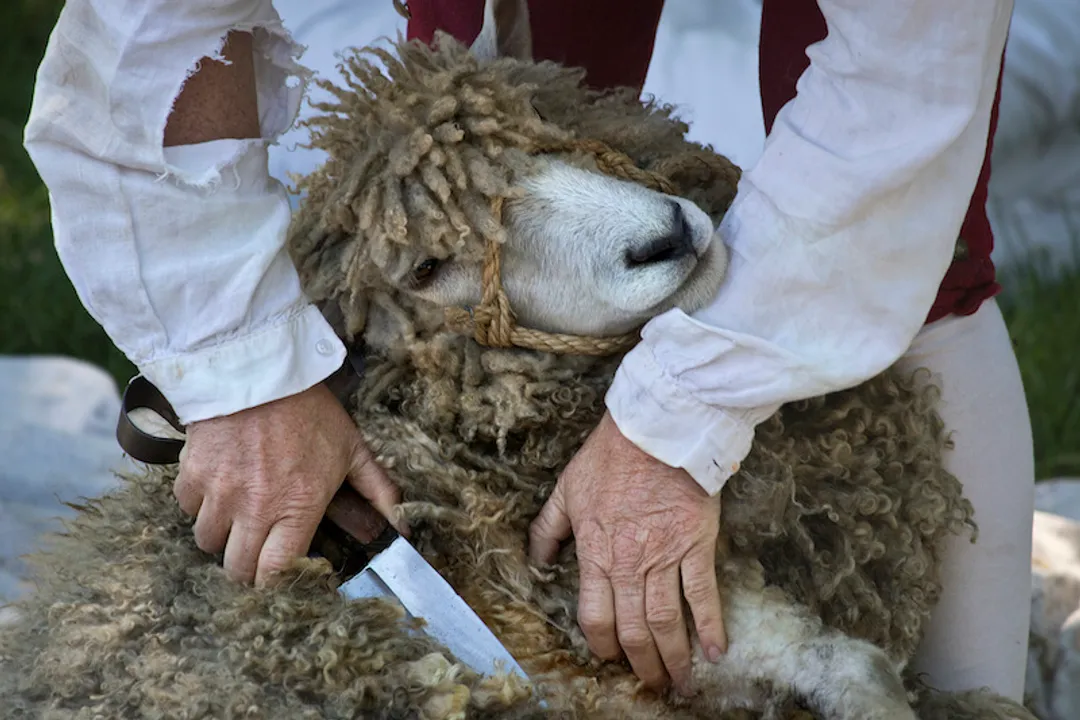
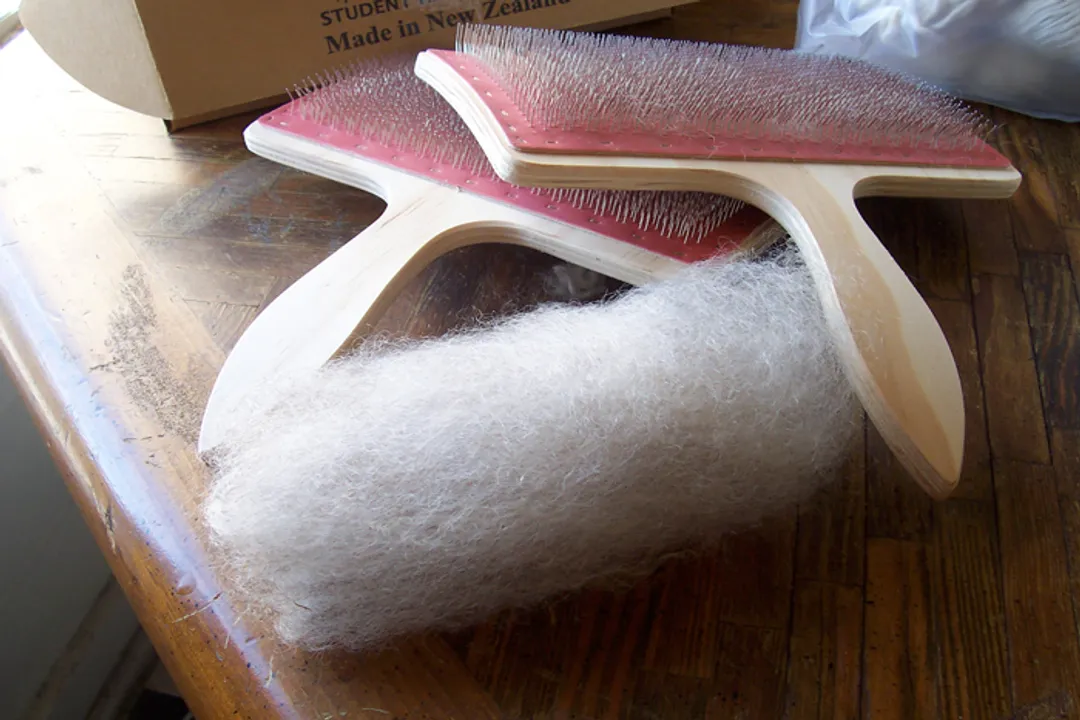
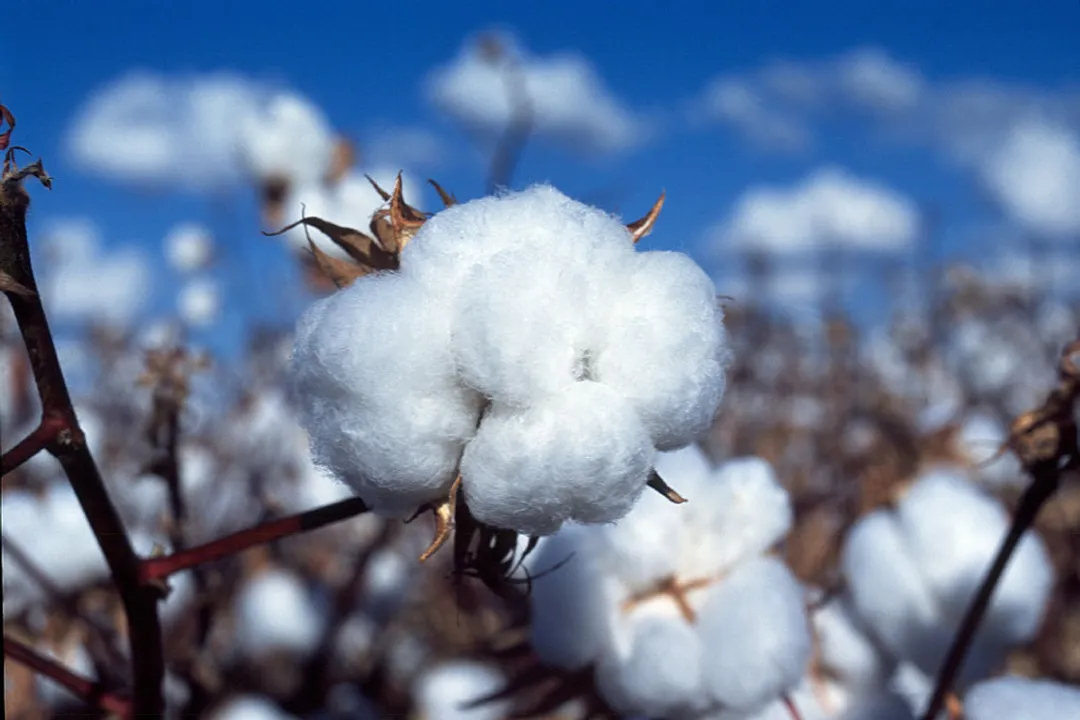
When considering what preceded the age of mechanized yarn production, it is important to remember that people did not always spin cotton. In earlier times, before cotton became easily accessible and widely processed, societies relied heavily on other natural materials for their thread supply. In many regions, this meant that wool, flax (which yields linen), and silk were the primary fibers spun into thread for weaving cloth or making ropes. [7] These materials all required different levels of preparation—flax needed retting and scutching, while wool needed washing and carding—but the actual twisting action to create the strand was largely consistent until the 18th century. [7]
# Hand Spinning
The most ancient and fundamental way to create thread from any fiber, including early cotton, was the drop spindle. This simple tool is essentially a stick with a weight, often a whorl (a small disk), attached near the bottom. [2] The process required an individual to draw out a few fibers from a mass—be it a distaff holding the fiber or a simple pile—and then impart a twist to these fibers by twirling the spindle, allowing it to drop down and spin freely. [2] As the spindle rotated, the twist set into the fibers, creating a continuous strand. [2] A spinner would then wind the finished thread onto the spindle shaft. It was a slow, continuous process demanding significant coordination; the spinner had to manage the draft (drawing out the fiber) and the spin simultaneously. [2]
This manual method placed severe limits on output. A skilled spinner might produce only a few yards of thread per hour, making textiles an expensive commodity and limiting the speed at which weaving could occur. [2] Cotton, being shorter-stapled and generally finer than some wools of the era, presented specific challenges for maintaining consistent tension and strength when spun entirely by hand, often resulting in relatively weak yarn compared to linen or long-stapled wools. [7]
# Jenny’s Debut
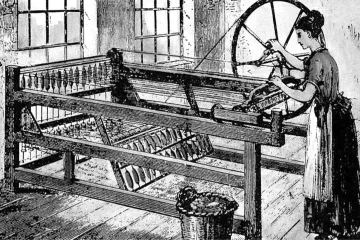
The textile landscape began its irreversible shift in the mid-1700s with the arrival of inventions designed to multiply the output of a single worker. The Spinning Jenny, invented by James Hargreaves around , was the first major machine to significantly address the bottleneck created by the slow drop spindle. [3][9]
The Jenny was an ingenious piece of machinery in its concept. Instead of one spindle, it mounted several, typically eight, in a row. [3][9] A worker would hold the raw fiber (sliver) and turn a single large wheel, which would then drive all the spindles simultaneously. [3] This meant one person could spin eight threads at once, offering an immediate, substantial increase in potential productivity compared to the single strand produced by a hand spindle. [2][3]
It is worth noting the immediate gain this represented: if a drop spindle produced one thread, the early Jenny produced eight. That is an 800% potential jump in thread-making capacity assigned to one laborer, dramatically lowering the effective labor cost per inch of yarn produced, even though the machine itself required careful tending to ensure the new strands didn't break or tangle. [9] However, the yarn produced by the early Jenny, while abundant, was generally weaker and suited for weft (the threads running across the width of the cloth) rather than warp (the stronger threads running lengthwise). [2]
# Water Power Mechanics
The next significant step moved the process away from the home cottage and into specialized buildings situated near reliable water sources. Richard Arkwright’s Water Frame, patented in , represented a transition from a hand-operated machine to one powered by external force—initially water wheels. [2][6]
The Water Frame used a system of rollers rotating at different speeds to draw out the cotton fiber, which was a mechanical improvement over the Jenny's simpler spinning action. [2] Because it was water-powered, it could produce a much harder twist, resulting in a significantly stronger and finer yarn than the Jenny could manage. [2] This strong yarn was suitable for use as warp threads, meaning for the first time, an entire piece of durable cotton cloth could potentially be made using mechanically spun yarn throughout. [2][6] The need for consistent water flow meant that production was centralized, leading to the establishment of early factories—structures like the mills at Belper, which became centers for this new industrial process. [1][6]
# The Mule's Superior Twist
The culmination of early spinning innovation arrived with Samuel Crompton's Spinning Mule, introduced around . [1][2] The Mule ingeniously combined the best features of both predecessors: it incorporated the roving mechanism (the drawing out process) of the Water Frame with the multiple spindles of the Jenny. [1]
The Mule operated on a moving carriage system. The drawing rollers would move away from the machine's headstock to draw out the cotton, and then the carriage would move back, allowing the spindles to impart a final, precise twist to the yarn, all while winding the finished product onto the bobbin. [1] This action resulted in yarn that was both incredibly fine and exceptionally strong, a quality previously unattainable. [1][2] The resulting yarn was versatile enough to compete successfully with the finest muslins and linens of the time. [1]
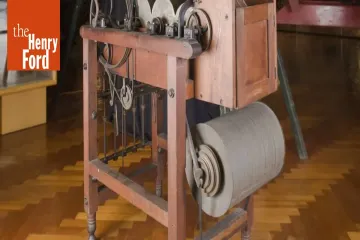
The very nature of these larger, power-driven machines dictated a new industrial reality. For instance, the machinery used at places like Belper North Mill represents the scale achieved once the Mule proved its capability to produce high-quality thread consistently. [1] The need to house these large frames, protect them from the elements, and supply them with continuous power meant that the spinner was no longer an independent artisan but an employee operating within a system designed around the machine. [5]
# Material Shift and Productivity Comparison
The introduction of these machines did more than just speed up production; it cemented cotton's dominance by making it affordable for the masses. Before these inventions, the high labor cost associated with making strong thread meant that fabrics of high quality were out of reach for many people. [7] Once machines like the Mule could produce vast quantities of high-quality yarn, cotton—which was relatively easy to grow in warm climates and offered a comfortable, washable textile—became the fabric of choice globally. [6]
| Method | Typical Output (Relative) | Yarn Quality | Power Source | Context |
|---|---|---|---|---|
| Drop Spindle | Very Low (1 unit) | Variable, often weak | Human Muscle | Domestic/Cottage Industry |
| Spinning Jenny | Moderate (8 units) | Soft, weaker (good for weft) | Human Muscle | Cottage/Small Workshop |
| Water Frame | High (Water Powered) | Strong, relatively coarse | Water Wheel | Early Factory System |
| Spinning Mule | Very High (Water/Steam Powered) | Fine and Strong (Muslin quality) | Water Wheel/Steam Engine | Industrial Factory System |
| [2][3][6] |
The reliance on water power for the Water Frame and early Mules fundamentally shaped the geography of early industrialization. Textile centers clustered tightly around fast-flowing rivers capable of turning large wheels, meaning that the availability of a reliable, consistent stream often dictated where the first major, large-scale spinning operations could be established. [2] This environmental dependency meant that early industrial expansion wasn't simply about having the invention; it was about having the correct local topography to run the invention year-round. [5] The very location of a mill spoke volumes about the source of its power and the engineering compromises made to harness it.
As steam power later supplanted water wheels, the geographic constraints loosened, allowing factories to spring up in urban centers or near coal supplies, further accelerating the mechanization trend begun by Hargreaves and Crompton. [5] The long-term impact was that the question shifted from "what did people use to spin thread" to "how fast can a machine produce thread," forever changing textiles from a laborious craft into a mass-produced commodity.


Related Questions
#Citations
The Spinning Mule - Strutts North Mill Belper
Early Cotton Spinners - Knitting Together
James Hargreaves' Spinning Jenny and the Industrial Revolution
Was cotton typically spun on a walking wheel in North America?
Automating Cotton Production | Baltimore Industry Tours
The Story of Cotton- How Cotton is Spun and Woven
What did people typically use for thread before cotton was available?
Out of whole cloth - The Roots of Progress
The Spinning Jenny: A Woolen Revolution - Faribault Mill