What are the weaknesses of the cotton gin?
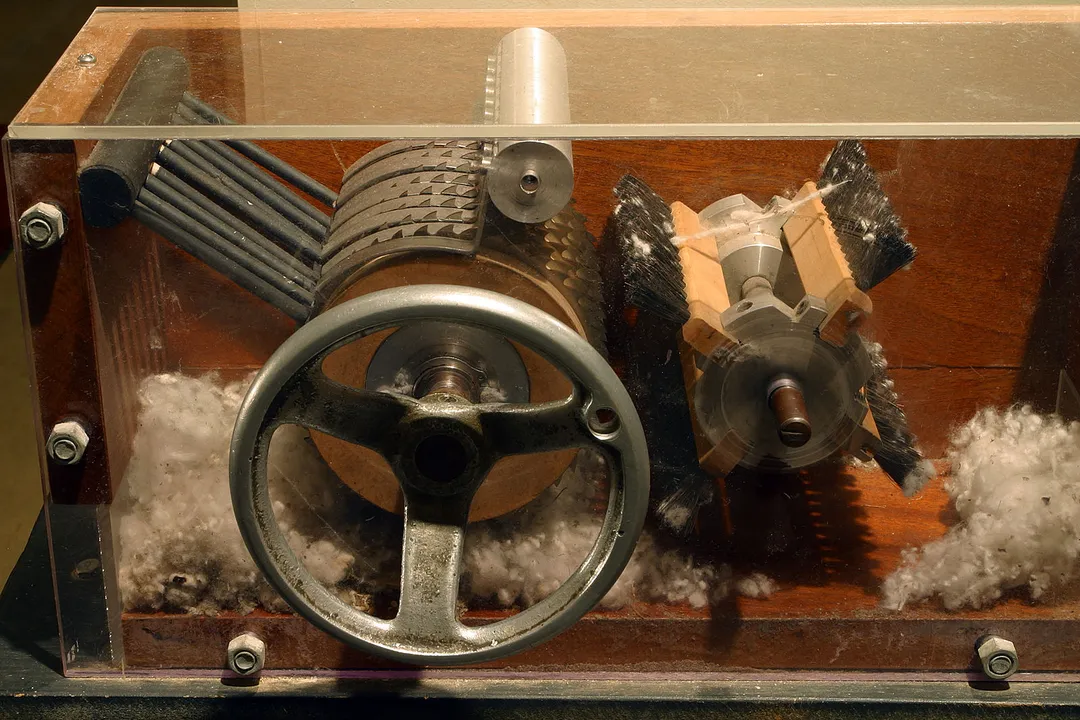
The invention of the cotton gin, while dramatically altering the trajectory of American agriculture and industry, introduced significant and troubling weaknesses, particularly when viewed through the lens of its societal impact and its initial mechanical limitations. [7][10] The machine’s success in separating the sticky seeds from short-staple cotton—a variety previously too labor-intensive to be profitable—created an economic incentive structure that proved devastating for millions. [4][7] The initial allure of rapid mechanical processing masked inherent flaws in the machine itself and paved the way for profound social regression. [10]
# Machine Flaws
Even setting aside the moral catastrophe it enabled, the first iteration of the cotton gin presented operational hurdles. [1][3] Eli Whitney's original design, while revolutionary, was not perfect for the task at hand. [10] One immediate technical weakness was the issue of fiber integrity versus separation speed. [3] The mechanism relied on wire teeth or rotating saws to pull the cotton fibers through a screen, leaving the seeds behind. [1][10]
This process often resulted in the saws tearing or damaging the delicate cotton fibers, leading to a reduction in the overall quality of the lint produced. [3] While the gin solved the massive bottleneck of manual seeding, it introduced a quality degradation that later inventors would strive to fix. [1] This trade-off between speed and quality is a common theme in early mechanization, where throughput often comes at the expense of refinement. [3]
Furthermore, the early gins, especially those handling the short-staple variety prevalent in the interior South, struggled to remove all the seeds efficiently. [1] The fuzzy coating on short-staple seeds made them cling stubbornly to the fiber, meaning the output often contained significant debris, requiring extensive, subsequent manual cleaning or "ginning" to make the cotton marketable. [10] A farmer using the gin might find that while they could process ten times the weight they could clean by hand, the resulting product still needed significant manual labor to meet market standards, negating some of the time savings. [1] Mechanical failures were also a frequent concern, as these early contraptions were prone to breaking down, halting production until repairs could be made. [1] The dusty environment created by the high-speed operation also posed clear, immediate respiratory hazards to the workers operating the machinery. [1]
# Slavery Expansion
The most profound and tragic weakness of the cotton gin was its direct correlation with the dramatic expansion and entrenchment of chattel slavery in the United States. [4][5][7] Prior to the gin, tobacco farming was exhausting the soil, and the low value of short-staple cotton made it an unattractive alternative for plantations reliant on enslaved labor. [4] The gin fundamentally changed this calculation overnight. [7]
By making short-staple cotton highly lucrative, the gin created an insatiable, mechanical demand for raw material that could only be met by increasing the acreage under cultivation and, crucially, increasing the number of enslaved people needed to plant, tend, and harvest the crop. [5][10] In the decades following its invention, the enslaved population in the South exploded, far outpacing population growth in the North. [7] This is a powerful example of how a technological innovation, designed to reduce manual labor in one step of production, can inadvertently intensify the need for human exploitation in preceding steps. [4]
The invention solidified the economic and political power of the planter class, who saw their primary assets—land and enslaved people—skyrocket in value because of the cotton boom. [7] This economic dependence on cotton and enslaved labor meant that Southern political efforts became fiercely dedicated to preserving and expanding the institution, making any path toward abolition vastly more difficult. [10] The economic logic became: the more efficient the gin, the more cotton we can sell, and the more enslaved people we need to pick it. [4][5]
I find it telling that in regions where long-staple, easier-to-process sea island cotton grew, the economic pressure to expand slavery via ginning technology was slightly lessened, highlighting how the specific type of fiber dictated the scale of the resulting social crisis. [10] The gin acted as a catalyst, turning a geographically limited industry into a national economic engine built upon human bondage. [7]
# Crop Reliance
Another structural weakness emerged from the very success of the industry the gin supported: an over-reliance on a single commodity, cotton. [1] As the South became overwhelmingly defined by its "King Cotton" production, regional economies became incredibly fragile, tied to global market demands and the price of that one crop. [1]
When cotton prices inevitably fluctuated due to external factors—war, overseas competition, or shifts in European textile demand—the entire Southern economy suffered immediate and severe contraction. [1] This monoculture meant that diversification into other forms of manufacturing or agriculture was often neglected, as the guaranteed profits from cotton disincentivized investment elsewhere. [1] For instance, a year with a poor harvest or a temporary global surplus meant that not just the major planters, but merchants, suppliers, and everyone connected to the cotton trade faced financial ruin. [1] This economic vulnerability contrasts sharply with Northern economies, which, while using cotton, had more diversified industrial bases that could absorb shocks better. [7]
# Subsequent Adjustments
As time went on, engineers sought to mitigate the mechanical shortcomings of the original design, although these adjustments did little to counteract the entrenched social weaknesses. [1] The introduction of roller gins and later, improved saw gins, helped reduce the quality loss associated with Whitney’s early model. [3] These advancements focused on creating more precise separations with less abrasion to the fiber. [3] Furthermore, the dust and inefficiency issues were partially addressed through better housing, more powerful drive systems (often water or steam power replacing early manual or animal power), and clearer mechanisms for routing the lint away from the seeds. [1]
However, the core weakness—the way the technology amplified the demand for enslaved labor—was never technically mitigated; it could only be addressed through profound political and moral change, which took a Civil War to achieve. [7][10] It stands as a stark historical reminder that a technological advancement is not judged solely on its efficiency score, but on the ethical and societal structure it reinforces or dismantles. [4] The cotton gin successfully automated one part of production but, in doing so, automated the growth of a deeply destructive labor system. [5]
Related Questions
#Citations
Disadvantages of the Cotton Gin - Certi-Pik, USA
What were some disadvantages of the cotton gin? - Quora
Challenges and Advances in Cotton Ginning
The Disaster of Innovation - TeachingHistory.org
Effect of Eli Whitney's cotton gin on historic trends in ... - AI Impacts
27a. The Crowning of King Cotton - USHistory.org
Impact Of The Cotton Gin by Gavin Phillips on Prezi
Pros and Cons | Cotton Gin - Wix.com
Turning A Problem Around: The Whitney Cotton Gin | Hackaday
Eli Whitney and the Cotton Gin – A Mixed Legacy