What was Thomas Edison's invention used for?
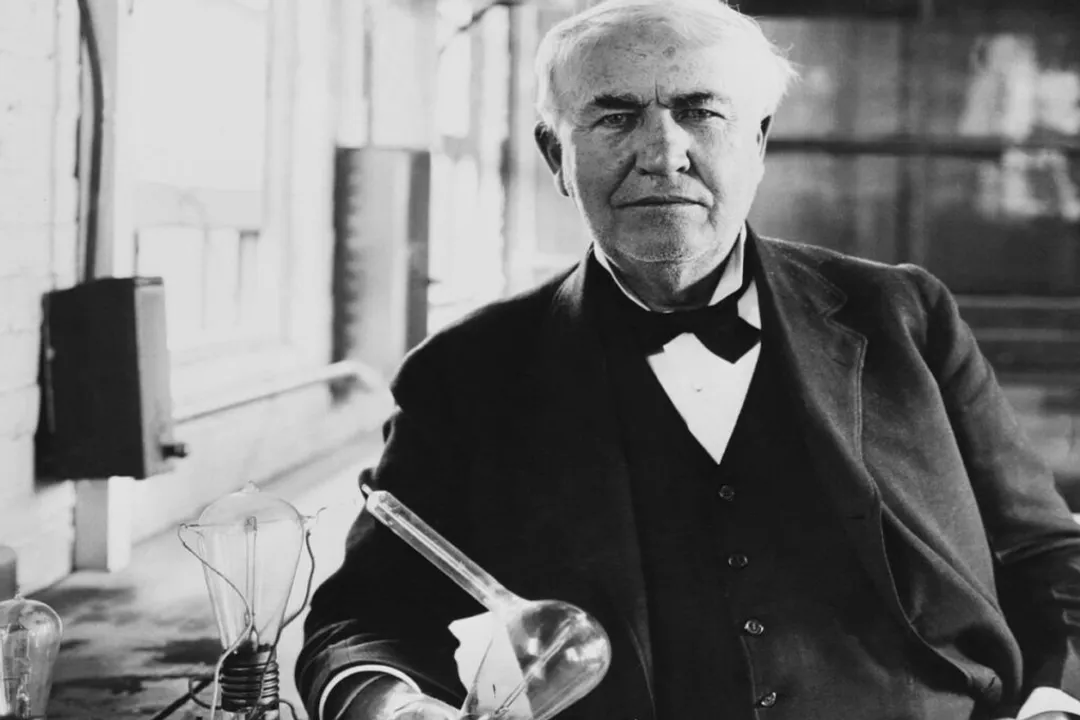
Thomas Edison’s name is almost inseparable from the electric light bulb, yet the true impact of his work stems from the sheer breadth of his inventions—over a thousand patents—and, more importantly, the practical uses he envisioned for them that reshaped daily existence for millions. [1][2][6] His genius was not just in conceiving novel devices but in creating entire functional systems that allowed these devices to transition from laboratory curiosities into essential tools for business, entertainment, and the home. [3][7][8] While the light bulb often receives the spotlight, understanding the application of his other creations reveals the foundation of modern electrical and media infrastructure. [4]
# Power System
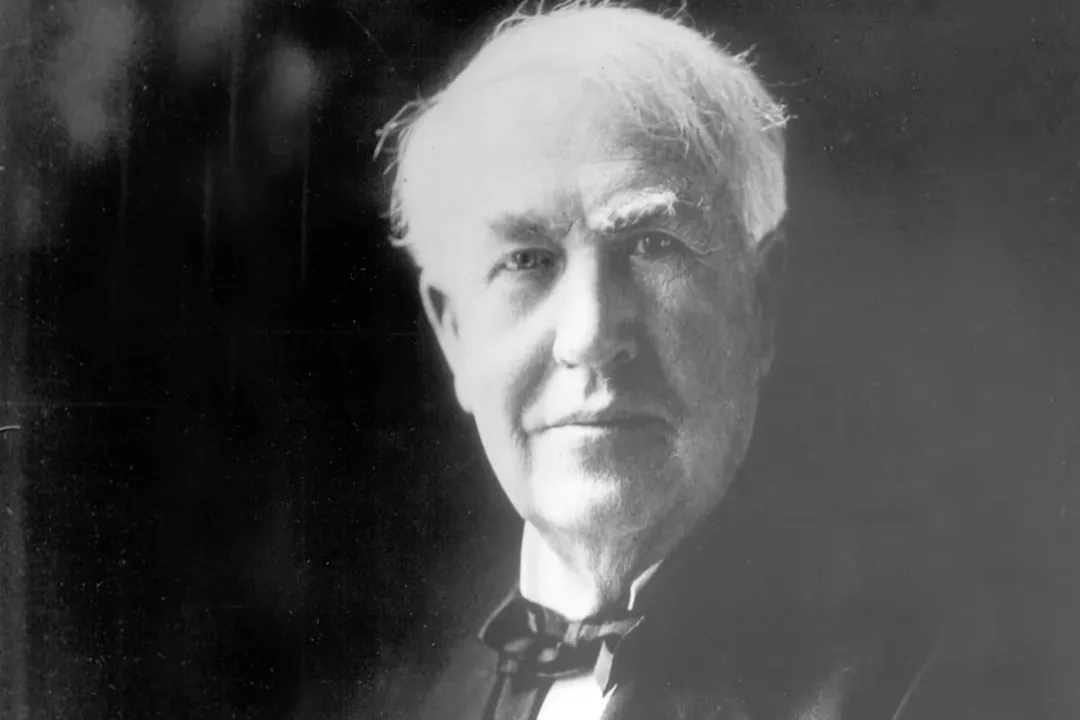
The incandescent light bulb, perhaps his most celebrated invention, was useless in isolation. [3] Edison’s primary goal was not just to invent a better light source but to create a complete system for electric lighting that could be commercially viable and replace gas lighting in homes and cities. [7][10] This required developing a practical, long-lasting filament capable of burning for many hours, which he achieved through exhaustive testing, eventually settling on carbonized cotton thread filaments around October 1879. [10][6]
However, the invention’s use depended entirely on the infrastructure built around it. [3] Edison developed the necessary components to bring electricity from a central station to the user: high-resistance dynamos (generators) for producing the current, durable underground wiring systems to safely distribute it, fuses, switches, and the crucial lamp sockets. [1][7][10] The first central power station, located in Lower Manhattan at Pearl Street, began operation in 1882, providing power to an initial customer base of about eighty buildings, primarily businesses in the financial district. [3][7][9] This established the blueprint for city-wide electrification. [7]
It is an interesting point to consider that the initial application focused heavily on commercial enterprise—lighting offices and public spaces—rather than immediate widespread domestic use. [3] Edison understood that to secure funding and prove the concept, he needed high-volume, consistent demand, which businesses provided more readily than individual homes initially. The entire architecture he designed, however, was based on a Direct Current (DC) system. [2] While immensely successful in its controlled initial environments, this DC distribution model eventually faced significant limitations in its ability to transmit power over long distances efficiently, which ultimately led to the famous "War of the Currents" and the eventual dominance of the alternating current (AC) systems developed by his rivals. [2] The use of Edison's light was revolutionary, but the system he built for it represented the state-of-the-art technology of its time, even if it was later superseded for long-distance transmission needs. [3]
# Sound Capture
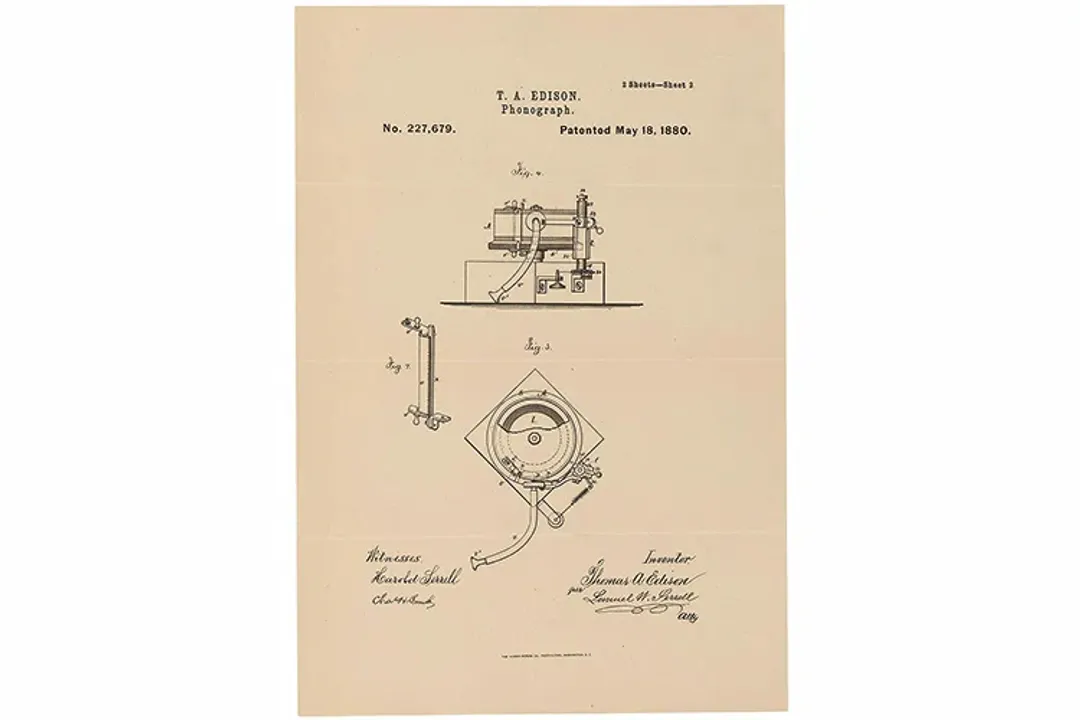
Long before the light bulb dominated public consciousness, Edison invented the phonograph in 1877. [3][5] This device, initially conceived as a way to automate office dictation, used a diaphragm to vibrate a stylus that etched sound waves onto a rotating cylinder wrapped in tin foil. [3][6] The application immediately captured the public's imagination because it offered the ability to record and reproduce the human voice for the first time. [5]
The immediate uses were varied. While its initial intent was for business dictation—a precursor to modern digital recorders—it quickly found a home in entertainment. [3][4] People were fascinated by hearing their own voices or those of performers repeated back to them. [5] Over time, as the technology evolved from foil to wax cylinders and later to disc records, the phonograph became the central mechanism for the entire recording industry. [4][5] Early models were heavy and cumbersome, designed for stationary use in an office setting, but the core concept—the mechanical storage of acoustic vibrations—was the foundation upon which the entire modern music and audio archive industry was built. [5][10]
# Mimeograph
Beyond recording transient sound, Edison created tools for replicating written information reliably. [9] One such tool was the mimeograph, which operated using a simple principle: ink passing through a stencil cut by a stylus. [10] This device was immediately applicable in businesses, schools, and administrative offices for producing multiple copies of documents, letters, or circular sheets quickly and cheaply, long before the advent of electronic copiers. [4][9] It was an invention explicitly designed for increasing administrative efficiency and dissemination of information within established organizational structures. [4]
# Motion Pictures
Edison’s work in capturing sound paved the way for his next major media contribution: motion pictures. [5] He recognized the potential of combining sound recording with moving images, though the initial successful components focused on the visual aspect. [5]
Edison’s laboratory developed the Kinetograph, which was the first practical motion picture camera, and the Kinetoscope, the device used for viewing the resulting film. [10][5] The Kinetograph used perforated celluloid film, which allowed for a faster, more continuous recording speed than previous photographic methods. [5]
The use of the Kinetoscope was novel: it was not a projection system for mass audiences but rather an individual viewing experience. [10] It was essentially a large, wooden cabinet with a peephole. A viewer would drop a coin into the machine and look through the lens to watch a short, looping film strip inside. [5][10] This created an immediate revenue stream—pay-per-view—and established the commercial model for early cinema before projection technology became standardized. [10] While Edison later pursued projection technology, the Kinetoscope’s application as a coin-operated entertainment device marks a clear instance of applying technology to a specific, immediate commercial niche. [5]
# Communication Advances
Edison built a reputation early in his career by improving existing communication technology, most notably the telegraph. [6][7] His innovations centered on increasing the capacity and reliability of existing lines. [7]
# Telegraph Improvements
One significant improvement was the quadruplex telegraph, which allowed for four separate messages to be sent simultaneously over a single wire—two in each direction. [6][10] This effectively quadrupled the capacity and revenue potential of the existing telegraph infrastructure without requiring new physical wires, making it an immediately valuable business application for telegraph companies. [10] He also worked on the automatic telegraph, designed to speed up the transmission of stock tickers. [6]
# Telephone Transmitter
While Alexander Graham Bell invented the telephone, Edison drastically improved its functionality, making it practical for widespread use. [2][6] Edison developed the carbon microphone transmitter, which was far superior to Bell's original liquid transmitter. [3][7] The carbon transmitter provided a much louder and clearer signal, which was essential for making telephone calls practical outside of very short distances. [3][7] This specific component was arguably the key to establishing the telephone as a viable, everyday communication tool, not just an experimental novelty. [6]
# The Invention Factory
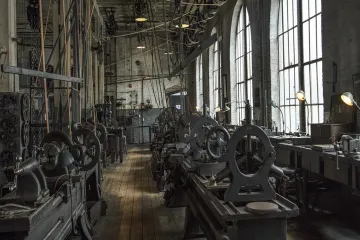
Perhaps Thomas Edison’s most enduring, if less tangible, invention was the process of invention itself—the Menlo Park laboratory in New Jersey, established in 1876. [6][8] This was not merely a workshop; it was the world's first industrial research and development (R&D) facility. [8]
The primary use of the Menlo Park facility was the systematic, team-based approach to problem-solving and invention. [8] Instead of working in isolation, Edison gathered a team of skilled mechanics, machinists, and scientists, often referred to as his "muckers". [6][8] This structure allowed for rapid prototyping, testing, and iteration across various disciplines simultaneously. [8]
This methodical approach contrasts sharply with the lone-genius stereotype of invention. Here, invention became a production line. [8] When the team needed a better filament for the light bulb, they didn't just try one material; they methodically tested thousands of organic materials. [10] This institutionalization of innovation—where the goal was to produce inventions on a schedule, much like manufacturing goods—was a profound contribution to economic development. [8] It is insightful to recognize that this model of dedicated, multi-disciplinary corporate R&D, focused on market applicability from day one, remains the foundational structure for virtually all major technological corporations today, whether they are developing software, pharmaceuticals, or new hardware [8]. Edison essentially invented the modern concept of organized technological progress aimed at commercial deployment. [8]
# Other Devices
The sheer volume of Edison’s patent output means that many highly useful, though less famous, devices also emerged from his labs. [1][4] These inventions primarily targeted clerical efficiency and duplication. [4]
- Electric Pen: This device used a rapidly vibrating stylus to pierce paper, creating a stencil-like effect. [1][4]
- Mimeograph Machine: As mentioned earlier, this directly evolved from the electric pen’s stencil creation, allowing for the fast duplication of documents using that stencil. [4][9]
- Tasimeter: An extremely sensitive device designed to measure minute changes in temperature, showing Edison's interest in precise measurement tools, though its commercial success was limited. [6]
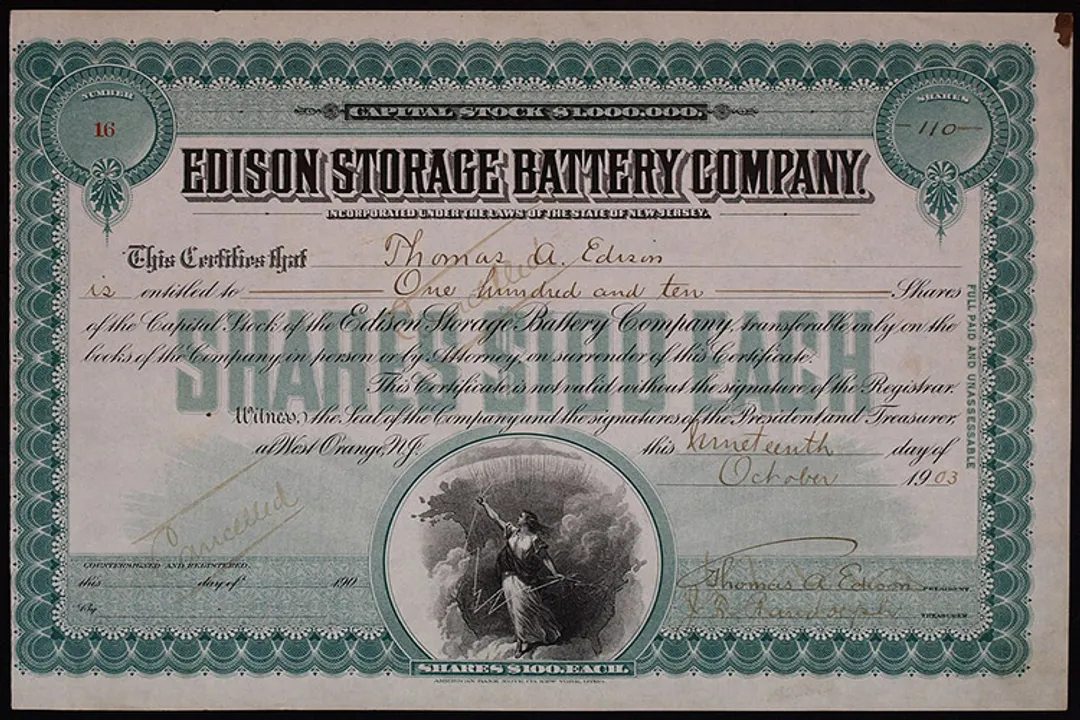
- Storage Batteries: Edison also dedicated significant time to developing improved storage batteries, seeking better and more durable power cells that could hold a charge longer and withstand more cycles than existing lead-acid types. [1][9] This shows a continuous loop in his thinking: inventing a device, then inventing a better way to power it. [9]
When looking at the timeline of his work, there's a clear progression from improving existing industrial communication (telegraph) to creating entirely new consumer media (phonograph/Kinetoscope), and finally, solving the foundational power problem (DC system) to support it all. [7] The applications moved from B2B (Business to Business) to B2C (Business to Consumer) enablement, suggesting a sophisticated understanding of market evolution as well as pure engineering challenges. [3][4]
# Legacy of Application
Thomas Edison’s work was less about isolated novelty and overwhelmingly about providing functional uses for new scientific principles. [7] His legacy is not just a collection of patents but a restructured world where information, light, and sound could be manipulated, recorded, and distributed on an unprecedented scale. [1][2] He electrified the world, not just by creating a bulb that glowed, but by designing the entire electrical grid that allowed that glow to reach the customer. [7] His inventions in motion pictures and sound recording established the media industries that would define the 20th century. [5] Even his failures, like the struggles with DC transmission or his initial focus on the Kinetoscope as a peep-show rather than a projector, served as crucial steps that led others to refine and perfect the application, cementing his place as the initiator of many modern technological norms. [2][10] The vast utility derived from his thousands of creations continues to inform how we think about technology deployment today. [6]
Related Questions
#Citations
Thomas Edison Inventions
Thomas Edison
6 Key Inventions by Thomas Edison
Besides the light bulb, what else did Edison invent?
Life of Thomas Alva Edison | Biography | Articles and Essays
Inventions of Thomas Edison
An inventor who electrified the world
Thomas Edison: Inventor of the Light Bulb & Innovation ...
Inventions of Edison
Thomas Edison's Top 5 Inventions