What is Thomas Edison's famous saying?
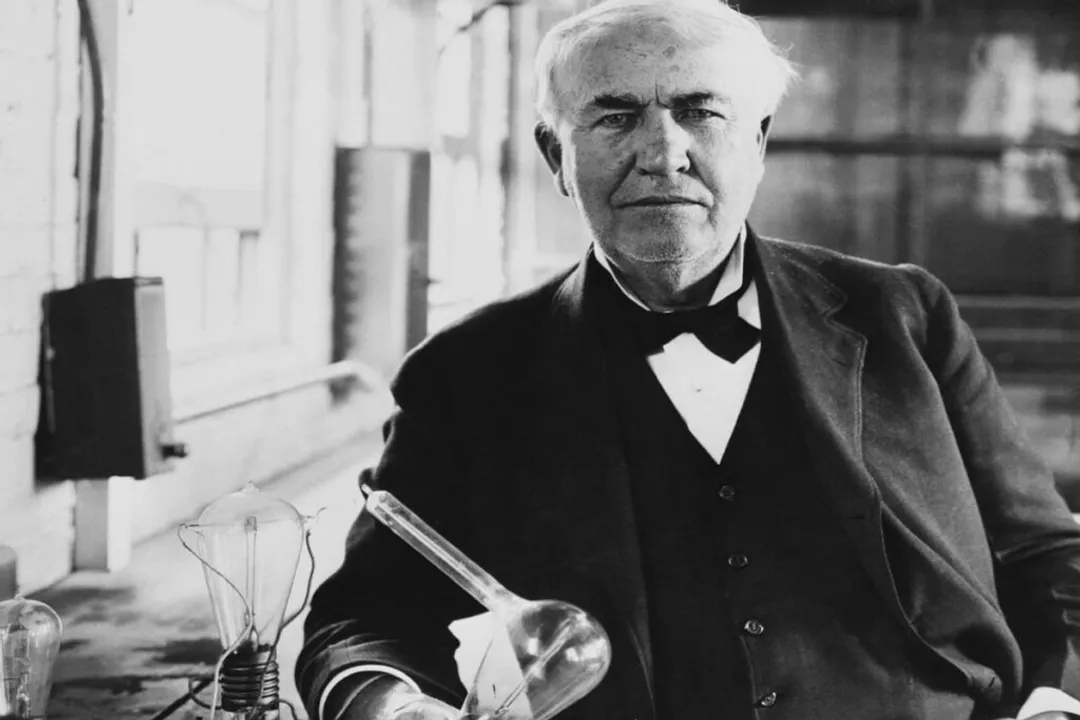
The name Thomas Edison evokes immediate images of innovation, long nights in the laboratory, and the harnessing of electrical power. While he amassed over a thousand patents, his enduring legacy is often summarized not by a device, but by a handful of fiercely motivational phrases. Ask most people for Thomas Edison’s most famous saying, and the answer usually centers on a powerful acknowledgment of setbacks, often framed around the creation of the incandescent light bulb.
# Failure Iterations
The quote most frequently associated with Edison is a testament to radical persistence: “I have not failed. I’ve just found 10,000 ways that won’t work.”[1][4][7][9] This phrasing perfectly captures the spirit of relentless experimentation that defined his career. It is a masterclass in reframing failure, transforming the negative concept of falling short into the positive concept of gaining valuable data. In this view, every trial, whether it yields the desired outcome or not, contributes to the final solution; it is simply a step on the path forward. [6][9]
Other versions exist, demonstrating how oral history or retelling can subtly shift the message. Some recount his response to a reporter’s question about the difficulties of developing the light bulb as: “I have gotten a lot of results! I know several thousand things that won’t work”. [5] This earlier recording points to the outcome being a collection of results rather than outright failure. [2][4][9] The sheer scale of the quoted attempts varies across anecdotes, with references to 1,000 ways, 700 times, or the widely accepted 10,000. [8] Regardless of the specific number cited, the underlying philosophy remains the same: negative results are just as valuable as positive ones, as you cannot find the best way until you have eliminated those that are ineffective. [2][5]
# Quote Accuracy
The precision of Edison’s famous utterances is a topic unto itself, especially when seeking the exact words spoken in a specific moment versus the pithy statement later published or repeated. [8] For instance, the oft-quoted figure of ten thousand ways not working is traced back to a common retelling stemming from a 1910 account by F. L. Dyer and T. C. Martin in Edison: His Life and Inventions. [5] Intriguingly, discussions surrounding the light bulb’s development suggest the actual number of trials leading to a successful filament (the carbonized bamboo) might have been closer to 2,774 attempts. [8] This discrepancy highlights a fascinating dynamic in popularizing genius: the number is often inflated by cultural memory to better represent the magnitude of the struggle, rather than the exact empirical count. [8] The quote gains its rhetorical power from the large, round number, cementing its place in the public consciousness. [1][4]
It is important to note that Edison himself also stated, “I have not failed 700 times. I have not failed once. I have succeeded in proving that those 10,000 ways will not work”. [8] This version is perhaps the most accurate depiction of his mindset: the work was not an accumulation of failures, but a structured process of elimination leading toward a known, provable target. [5]
# Inspiration Sweat
While the failure quote deals with iteration, another saying captures the essence of genius itself, and it is arguably just as famous for defining the required effort: “Genius is one percent inspiration, ninety-nine percent perspiration.” [2][4][7] According to one source, this observation was reportedly made around 1903. [5] This maxim establishes a clear hierarchy of value in invention and creation—the initial spark is rare and necessary, but the majority of the work, the real effort, is sheer, dogged hard work. [6]
This sentiment is echoed in his emphasis on persistence. He stated that the greatest certainty for success is to “always to try just one more time,” because “Our greatest weakness lies in giving up”. [2][4][7] This contrasts sharply with the idea of effortless genius, instead framing success as a marathon of physical and mental toil. Furthermore, he suggested that being busy is not the same as working; accomplishment requires forethought, system, planning, intelligence, and honest purpose in addition to perspiration. [4]
# Opportunity Work
Edison’s philosophy wasn't purely about putting in time; it was about seeing potential where others saw only effort. Perhaps the most direct expression of this practical viewpoint is the observation that “We often miss opportunity because it’s dressed in overalls and looks like work.” [2][4][7] In a slightly different phrasing, this becomes the reason why many people miss opportunity: because “it usually goes around wearing overalls looking like hard work”. [4]
This saying acts as a philosophical counterpoint to the 99% perspiration quote. The perspiration is necessary, but if one is not attuned to seeing the potential utility within that hard work—if one only sees the grime of the "overalls"—the opportunity will pass by. [2] This ties directly into his business acumen. For Edison, the sale was the ultimate proof of utility; “Anything that won’t sell, I don’t want to invent”. [2][4][7] This reveals a critical, practical filter applied to his inventive process, ensuring his exhaustive efforts were directed toward things the world actually needed. [4]
# Innovation Mindset
The enduring fame of these quotes stems from their ability to provide a working model for innovation that appeals to modern audiences, particularly those in business and technology. While many historical figures are credited with grand vision, Edison provides a methodology—a quantifiable approach to overcoming obstacles. [4]
Consider how these key philosophies align when viewed together, establishing a sequence for innovation:
| Edison Maxim | Core Focus | Implication for Modern Effort |
|---|---|---|
| "Genius is one percent inspiration, ninety-nine percent perspiration." | Effort Allocation | The idea is cheap; execution is everything. |
| "I have not failed. I’ve just found 10,000 ways that won’t work." | Reaction to Setback | Reframe experiments as data points, not defeats. [5] |
| "We often miss opportunity because it’s dressed in overalls and looks like work." | Perception of Work | Actively seek value hidden in unglamorous tasks. [2] |
| "Anything that won’t sell, I don’t want to invent." | Defining Utility | Innovation must solve a perceived problem or need to be successful. [7] |
One insightful element, often missed when quoting him solely on persistence, is his view on what constitutes a good inventor. He stated, “I have more respect for the fellow with a single idea who gets there than for the fellow with a thousand ideas who does nothing”. [4] This is a strong vote for decisive action over endless ideation—a direct rebuttal to 'analysis paralysis'. [2] His own process involved deciding a result was worth getting and then pursuing it with trial after trial until it arrived. [4]
# Practical Tenacity
Edison’s words offer more than historical commentary; they function as actionable directives for anyone attempting something difficult, whether launching a new product or mastering a complex skill. The lesson gleaned from comparing the different failure numbers—the transition from the literal hundreds of attempts to the symbolic ten thousand—is that the narrative matters deeply. [8] To adopt his mindset means consciously controlling that narrative: don't tell yourself you failed ten thousand times; tell yourself you successfully eliminated ten thousand non-solutions. [5] This subtle shift in language impacts resilience when the path ahead looks impossible. [9]
The idea that we should “When you have exhausted all possibilities, remember this - you haven’t” is not meant to be taken literally on a spreadsheet, but rather as a mental command to push past the point of comfortable resignation. [2][7] Many people give up when a problem looks impossible, but Edison viewed that moment not as a stopping point, but as the true beginning of the inventor’s required dedication. [4][9] He understood that the greatest discoveries often reside just past the threshold where most people lose the will to continue. [2]
Furthermore, looking at his emphasis on application, it is clear that for Edison, success was measured externally by utility, not just internally by effort expended. A modern interpretation of his drive suggests that preparation (the perspiration) is only truly effective when it is aimed at solving a problem recognized by the market or society (the need). [4][7] The constant search for a “better way to do it” becomes an unending, market-driven mandate, not just a technical challenge within a closed lab setting. [4] His sayings, therefore, map out a complete path: dream big, work impossibly hard, treat every mistake as a necessary data point, and ensure that the final result offers genuine value to others. [2][4]
Related Questions
#Citations
Quotes | Thomas Edison
Thomas A. Edison Quotes - BrainyQuote
Thomas A. Edison Quotes - Goodreads
Thoms Edison Images and Quotes | Licensing
Thomas Alva Edison - Oxford Reference
I have not failed. I've just found 10000 ways that won't work. - Reddit
Thomas Edison Quotes: Falconer Electronic Inc. Favorites
11 Inspirational Thomas Edison Quotes on Never Give Up - Medium
What Is The Accurate Edison Quote On Learning From Failure?