What were the facts about Thomas Edison's light bulb?
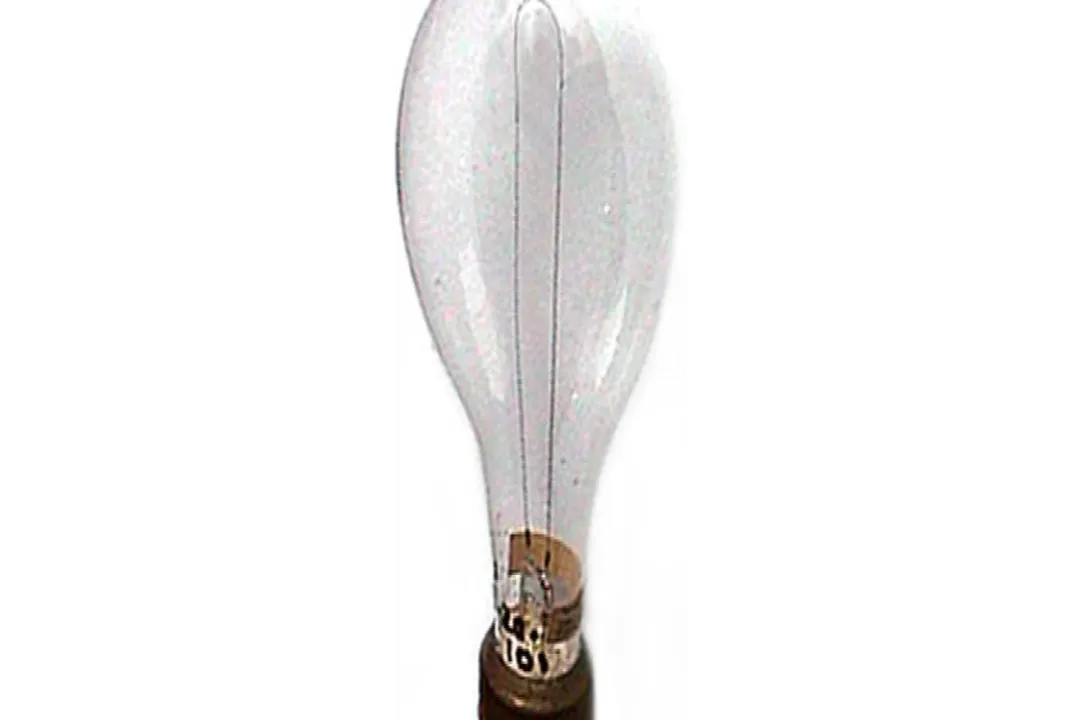
The story of Thomas Edison and the electric light bulb often feels like a neat, tidy narrative—a singular genius discovering the answer in a flash of inspiration. The reality, however, is far more intricate, involving decades of preceding scientific work, intense commercial pressure, and a relentless focus on engineering practicality. While Edison is rightly celebrated, his greatest achievement wasn't the initial concept of electric illumination but the creation of a durable, economically viable, and fully integrated lighting system.
# Past Inventions

Long before Thomas Edison set up his Menlo Park laboratory, the principle of generating light by passing electricity through a conductor was well understood. As far back as the early 1800s, Sir Humphry Davy demonstrated the electric arc lamp, which produced brilliant but harsh light unsuitable for home use because the electrodes rapidly consumed themselves. The next major step involved the incandescent principle—heating a filament until it glowed without burning up—which required a vacuum to prevent immediate oxidation.
Various inventors tackled this challenge throughout the 19th century. Names like Warren de la Rue, Joseph Swan, and William Sawyer contributed significantly to developing early incandescent bulbs. Swan, in particular, created a functional bulb using carbonized paper filaments in the late 1870s, even demonstrating it publicly before Edison. However, these early attempts suffered from severe limitations: they had incredibly short lifespans, often burning out in mere minutes or hours, and they required prohibitively high currents, making them uneconomical for widespread use. The core problem was finding a filament material that could withstand high temperatures for extended periods.
# Practicality Focus
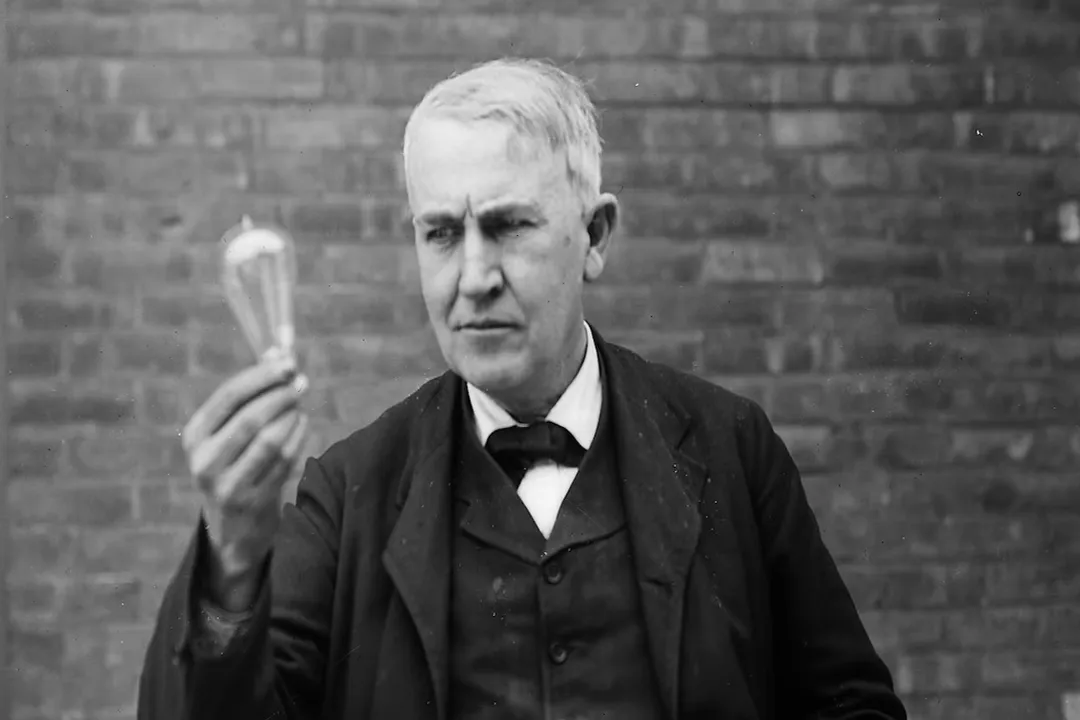
Edison’s approach differed fundamentally from his predecessors because he wasn't just looking for a light; he was looking for the light—one that a typical customer could afford and easily replace, much like a candle. His goal was a bulb that could last for hundreds of hours and operate on a low-voltage, high-resistance circuit, which allowed for practical wiring distribution within buildings.
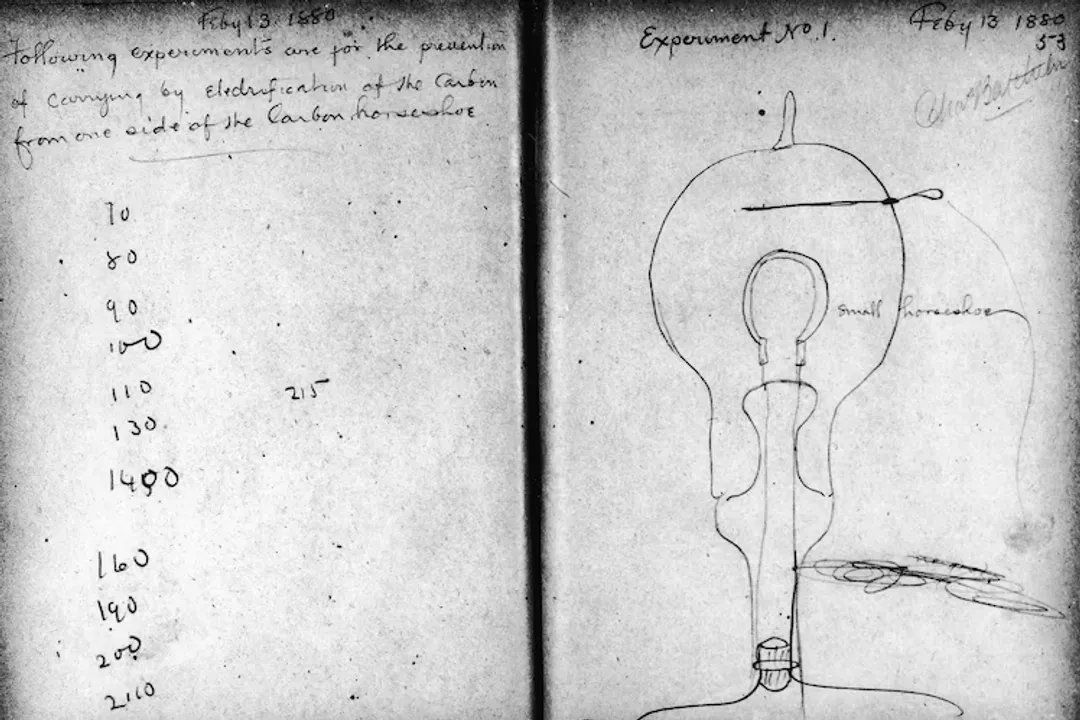
The critical engineering hurdle was finding the right filament material. Edison and his team systematically tested thousands of materials, ranging from platinum to materials soaked in borax. Platinum, while having a high melting point, proved too expensive and required a very high current to glow effectively, making it commercially unfeasible. This meticulous, trial-and-error approach is characteristic of the research conducted at Menlo Park.
It’s worth noting the economic driver behind the engineering specifications. If a light bulb only lasts a few hours, the recurring cost of replacing the filament quickly outweighs any savings from the electricity used. A device must justify its presence on the balance sheet or household budget through longevity. Edison understood that the mean time between failures was the true measure of success for a consumer product, not just the ability to glow momentarily. This insight drove the intense search for durability over raw brightness.
# Filament Material
The breakthrough came in late 1879 when Edison’s team successfully tested carbonized materials. While early experiments used carbonized thread, the material that provided the critical jump in performance was carbonized cotton thread. This initial success, which provided about 13.5 hours of light, was quickly eclipsed by further refinement.
The sustained breakthrough came with the use of carbonized bamboo fiber. By carefully treating and carbonizing strips of bamboo, Edison’s laboratory created a filament that could burn for over 1,200 hours. This marked the first truly practical incandescent lamp, setting the standard for the next several decades. The final lamp assembly itself was also refined, involving the creation of a high vacuum inside the glass bulb to keep the carbon filament from igniting or degrading too quickly. This level of vacuum was difficult to achieve consistently at the time.
# System Needed
The second, often overlooked, half of Edison’s contribution was the electrical infrastructure necessary to make the bulb useful. A few working light bulbs meant little if there was no way to power them reliably in a neighborhood or city. Edison’s vision extended far beyond the device itself; he needed to create the entire ecosystem of electric light supply.
This meant developing:
- Generators (Dynamos): Powerful enough to serve a localized area.
- Wiring: Safe, insulated conductors to run power throughout buildings.
- Measuring Devices: Meters to track consumption so customers could be billed accurately.
- Sockets and Switches: Safe and user-friendly interface components.
Crucially, Edison championed the parallel circuit configuration over the series circuit that many of his contemporaries favored. In a series circuit, if one light goes out, the entire string goes dark. In a parallel circuit, each light operates independently on the same voltage potential, meaning that if one bulb burns out, the others remain lit. This is the fundamental electrical design used in homes today. Building this system was arguably more challenging and revolutionary than perfecting the bulb filament itself, as it required not just invention, but massive capital investment and the creation of utility business models.
# Myth Versus
It is a historical fact that Edison did not invent the light bulb from scratch. He built upon the work of dozens of predecessors, most notably Joseph Swan, with whom he would eventually face legal challenges resolved by merging their interests into the Edison & Swan United Electric Light Company. Edison himself acknowledged the contributions of others, stating that his work was based on the progress made before him.
What Edison did invent was the first commercially successful incandescent lighting system. The success in 1879 was not just about lighting a single bulb for a few hours, but creating the durable filament combined with the low-resistance, parallel-wired power distribution system that made electric light an affordable reality for the masses. The enduring legacy is less about the glass enclosure and more about the infrastructure—the grid—that allowed electric light to transition from a laboratory curiosity to a world-changing technology.
Related Questions
#Citations
Edison's Lightbulb | The Franklin Institute
History of the Light Bulb | Lighting Basics
Interesting fact about Thomas Edison's early life - Facebook
Thomas Edison didn't invent the light bulb—but here's what he did do
Thomas Edison invented the light bulb - Fact or Myth? : r/mythbusters
Edison light bulb - Wikipedia
Fact or Fable? Thomas Edison Invented the Light Bulb - Entergy
This day in history: Edison "perfects" the light bulb | Signify
Edison Light Bulb | Smithsonian Institution