What type of electricity did Edison use?
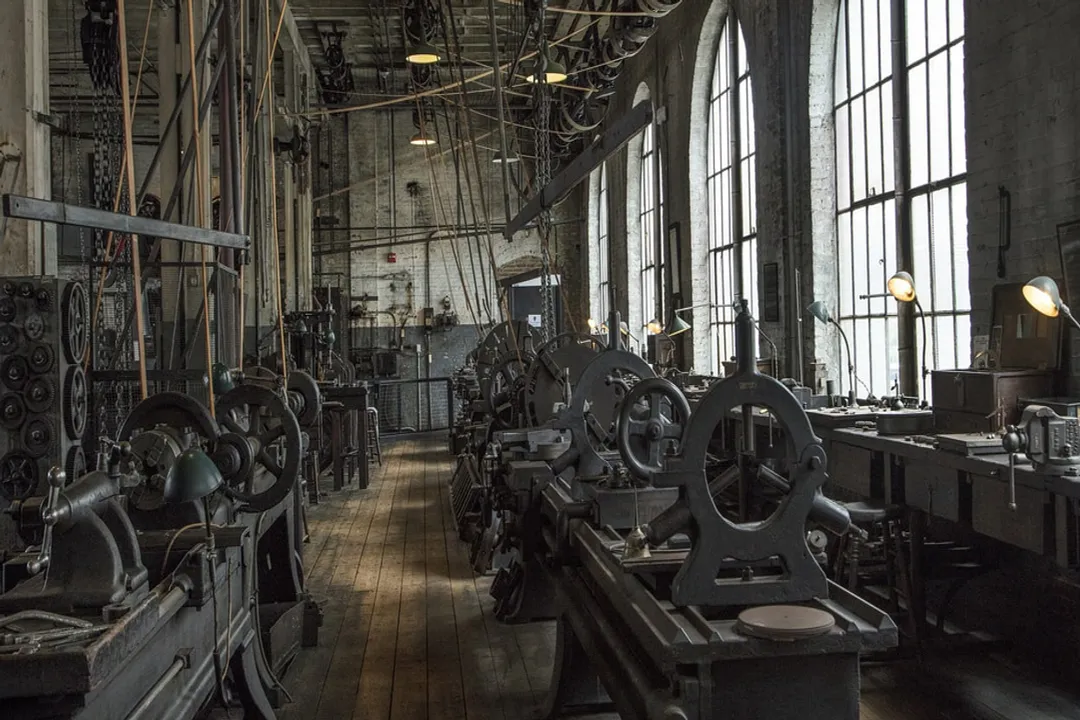
Thomas Edison exclusively championed and built his electrical empire around Direct Current (DC). When he flipped the switch on his Pearl Street Station in Manhattan in , lighting up a square mile of Lower Manhattan, the power flowing into those early homes and businesses was entirely DC. This commitment to a specific electrical modality defined his entire approach to electrification and set the stage for one of history’s most dramatic technological showdowns.
# Current Type
Edison’s initial system relied on central power stations distributing electricity at a relatively low voltage, typically around volts. This low voltage was considered safe and necessary for powering his incandescent light bulbs, which were the centerpiece of his invention. The power generation equipment of the era—the dynamos—were well-suited for producing DC power efficiently for short runs. His belief was simple: the current that flowed out of the generator should be the current that powered the lamp.
This commitment meant that any location wanting electric service needed to be relatively close to an Edison generating station. The infrastructure was expensive and localized. To cover a city block, you needed a dedicated station, wires running directly from it, and generators humming away, all to support the load within that small radius.
# System Design
The design was inherently decentralized. To light a major metropolitan area, you would require dozens, perhaps hundreds, of localized power stations, each serving a limited geographic area. This was a massive undertaking in infrastructure investment, requiring the installation of extensive underground wiring networks, which also presented maintenance challenges. The equipment Edison perfected included generators, meters, fuses, and sockets—all designed around the predictable, unidirectional flow of DC power. The entire ecosystem, from the power plant to the lamp socket, was integrated around this single standard.
# AC Opposition
The insistence on DC immediately placed Edison at odds with proponents of the burgeoning Alternating Current (AC) technology, most famously represented by George Westinghouse and Nikola Tesla. While Edison focused on perfecting his low-voltage DC system for immediate commercial use, others saw the potential for AC to transmit power over vastly greater distances.
The fundamental difference is the flow: DC moves in one direction, while AC periodically reverses direction. This reversal allowed AC to be easily stepped up to very high voltages for efficient long-distance transmission and then stepped back down for safe use in homes and factories. Edison's DC system lacked this transformative capability without massive, inefficient equipment.
# Voltage Hurdles
A significant practical barrier for Edison was the voltage limitation inherent to DC distribution. Because Edison needed the end-user voltage to be low (around volts) for safety and bulb operation, the power station had to generate power at a voltage not much higher than that. Transmitting power over long distances requires high voltage to minimize resistive losses (heat loss in the wires), which are proportional to the square of the current. Since DC couldn't easily step up the voltage, Edison’s current experienced significant power loss over distances exceeding just a few miles.
For a general reader trying to visualize the difference, imagine moving water. Edison's DC was like trying to pump water uphill from a small reservoir located right next to the house. It works perfectly, but you need a new, small reservoir on every single hill. AC, however, is like having one massive, high-pressure pumping station miles away, using a thin, high-pressure pipe (high voltage) to send the water almost anywhere, then using a simple pressure reduction valve (a transformer) right before it enters the house to bring it down to a safe, usable level.
# Public Conflict
Edison famously viewed AC as inherently dangerous due to its ability to reach higher voltages, leading him to wage a very public, often unethical, campaign against it. He became convinced that promoting AC would lead to public electrocutions and, consequently, a rejection of electric lighting altogether.
His opposition manifested in dramatic, fear-based demonstrations. One of the most infamous episodes involved Edison’s agents publicly electrocuting animals, including a circus elephant named Topsy, using AC electricity to "prove" its lethal nature. This was a concerted public relations effort designed to associate AC with death and danger, an attempt to protect his established DC business interests. Edison also financially supported the development of the electric chair, ensuring that the first executions performed using electricity were done with Alternating Current, further cementing the public perception of AC as the "killing current".
# System Economics
The core of the War of the Currents was not purely technological; it was an economic fight over infrastructure scaling. Edison's direct current system was capital-intensive and geographically restricted. The need for numerous, smaller power stations meant his company had to dig up streets repeatedly to lay more conduit and build more plants to serve growing urban populations.
AC, backed by George Westinghouse and utilizing Tesla's patents, offered a vastly superior economic model for grid expansion. A single, massive AC power station, perhaps located near a coal source far outside the city center, could power an entire metropolitan area and its suburbs through high-voltage transmission lines. This drastically lowered the per-customer cost of delivery and allowed for rapid expansion into areas where running a separate DC generating station would have been prohibitively expensive.
If we look at the initial investment required, for every square mile served by Edison's DC system, an equivalent area served by AC required significantly fewer generating assets. This efficiency in distribution ultimately proved to be the decisive factor in the marketplace, especially as cities grew outward from their centers.
# AC Triumph
The turning point arrived when AC proved its capability in major projects. The successful lighting of the World's Columbian Exposition in Chicago using Westinghouse's AC system was a massive public relations victory for alternating current, demonstrating its reliability and capacity on a grand scale. Shortly thereafter, Westinghouse won the contract to harness the massive hydroelectric power of Niagara Falls to generate electricity, sending it long distances to Buffalo, New York, using AC transmission. This demonstrated not just commercial viability but also the potential for clean, renewable power generation far from population centers.
By the turn of the century, the technological and economic advantages of AC for generation and transmission were undeniable. Edison's initial low-voltage DC system simply could not compete with the flexibility offered by transformers and high-voltage lines.

# Modern Relevance
While the electrical grid that powers our homes and industries today runs primarily on high-voltage AC, it is fascinating to consider that Edison's initial choice of DC was not entirely wrong—it was just incomplete for widespread distribution. Today, nearly every electronic device—from your phone charger to your computer—contains a transformer or rectifier circuit that converts the incoming AC power from the wall socket back into DC power before it runs the actual circuitry.
This effectively means that while the transmission system (the lines between cities) relies on AC because it is the most economical way to move energy miles, the utilization system (what powers the actual appliance) reverts back to DC, the very current Edison mastered. The technological battles of the s and s established a hybrid reality: a powerful, long-distance AC backbone feeding localized AC-to-DC conversion points everywhere devices are plugged in. It's a testament to the era's engineering that the core principle Edison fought to defend is still essential at the point of use, even if the delivery method evolved completely around his opponent's technology.
Related Questions
#Citations
War of the currents - Wikipedia
Edison's Electric Light and Power System
Tesla versus Edison: the conflict that gave us alternating current
AC/DC: What's the Difference? | American Experience - PBS
Direct Power Transmission: Did Edison Get it Right?
Why didn't Thomas Edison like alternating current? - Quora
Electric Light and Power System - Thomas A. Edison Papers
Edison & the Elephant NOT in the Room - The Engineering Mind
[FREE] What type of electricity did Edison use to power his lightbulb ...