How did Thomas Edison's invention change America?
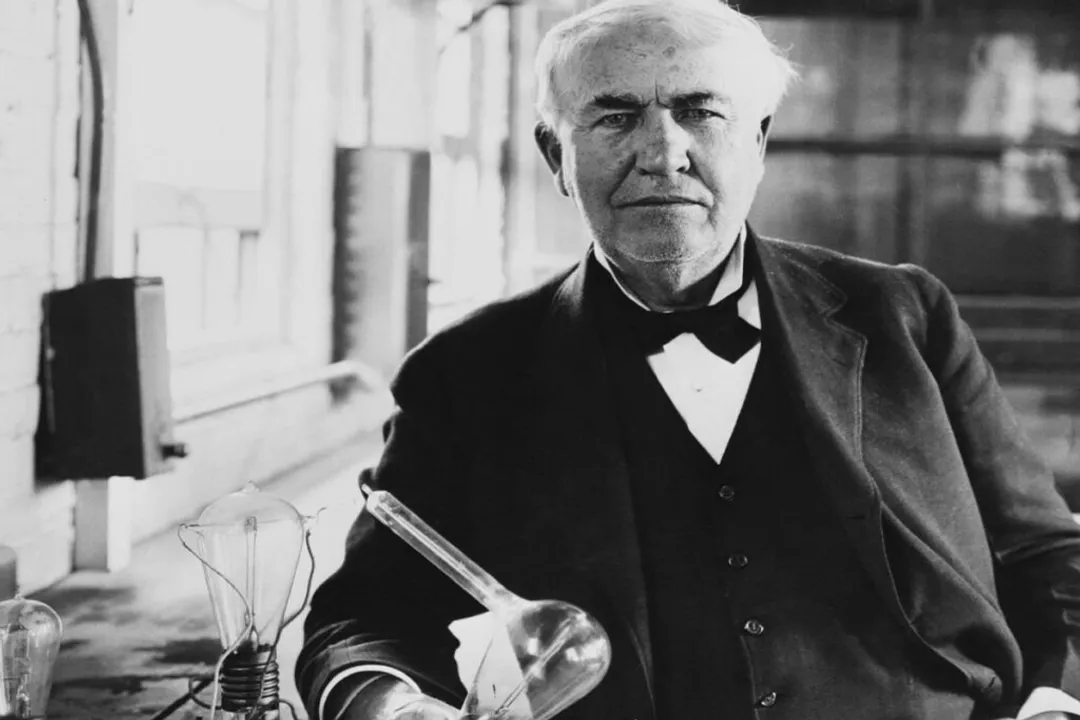
The impact of Thomas Alva Edison on American life is almost impossible to overstate; he didn't just invent single objects, but rather laid the groundwork for entirely new industries and redefined the very rhythm of existence for millions. While the popular imagination often fixes on the image of a lone genius tinkering in a workshop, Edison's true genius lay in organization, systematic development, and recognizing that an invention was only valuable if it could be reliably distributed and affordably used by the masses. He secured an astonishing 2,332 U.S. patents, either alone or jointly, solidifying his status as one of the most prolific American inventors.
# Invention Factory
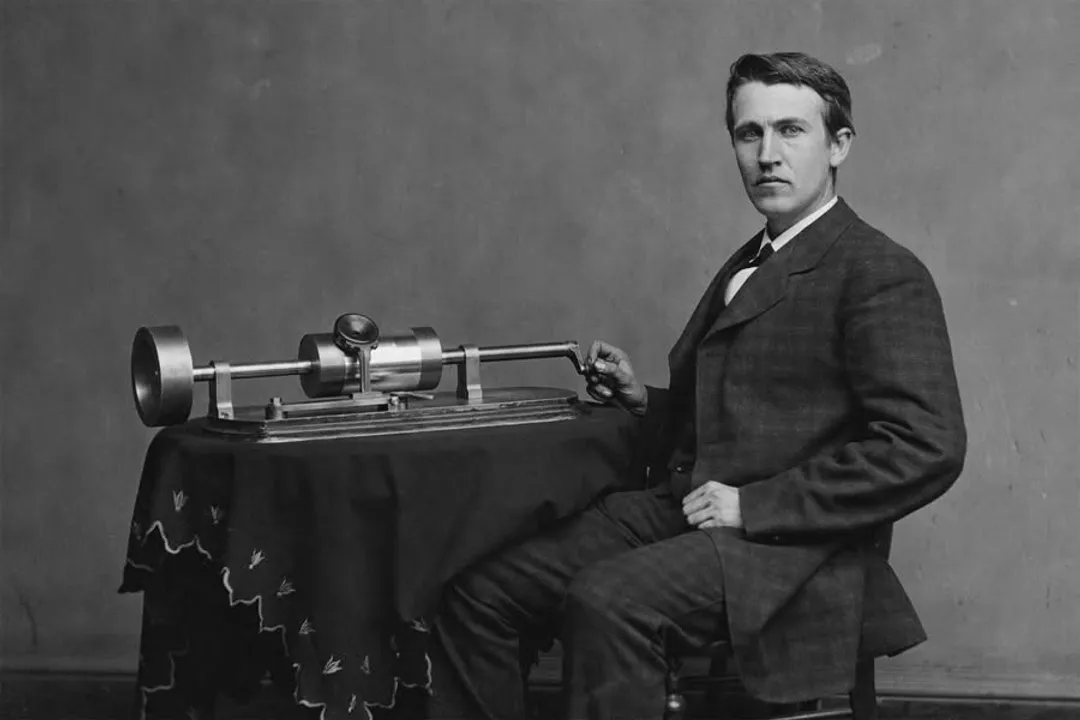
Edison's approach to creation was revolutionary for its time. Rather than working in isolation, he established the first industrial research laboratory in Menlo Park, New Jersey. This facility acted as an "invention factory," employing teams of researchers to tackle problems methodically. This laboratory model contrasts sharply with the lone inventor archetype, showcasing Edison's understanding that complex technological breakthroughs often require collaborative, sustained effort focused on commercial goals. His early work even included improvements to existing technologies, such as stock tickers, before he turned his attention to larger, nation-shaping projects. It is worth noting that this systematic method—the deliberate, organized pursuit of patentable and marketable solutions—is now the standard operating procedure for nearly every major technology corporation in the country, a direct legacy of the Menlo Park environment.
# Light's Arrival
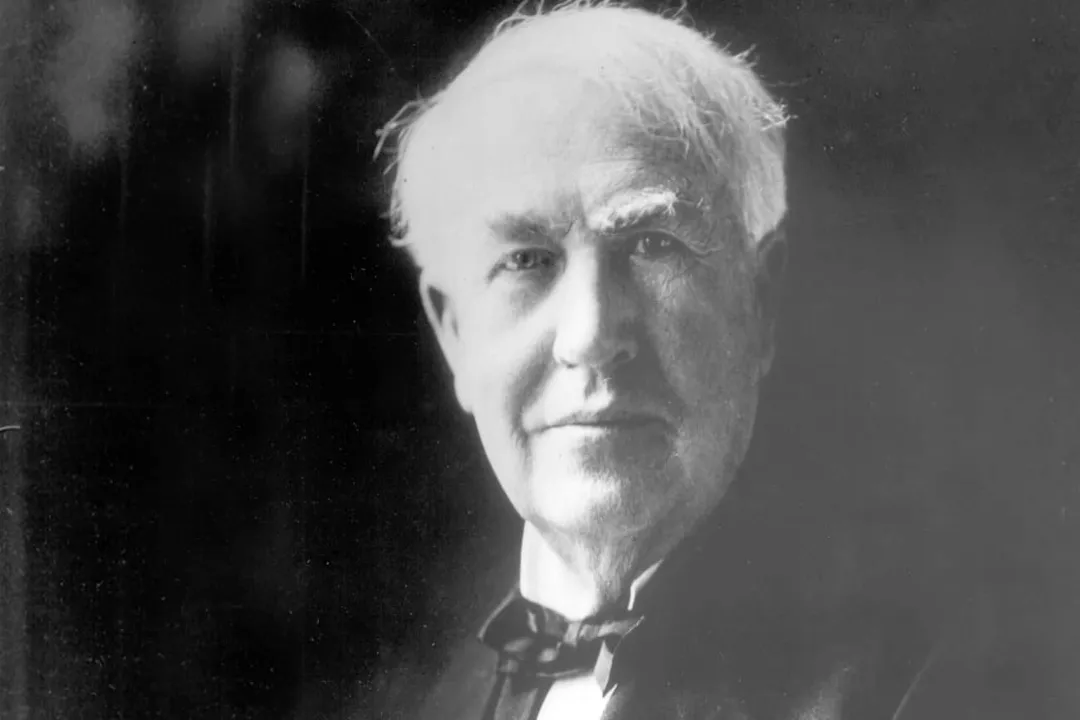
The most visible change Edison brought about was the conquest of darkness. Before his work, cities relied on dimmer, less safe gaslight, which heavily dictated the hours of work and leisure. Edison’s focus was not merely on creating a better light source, but on creating a complete, practical system for electric illumination. His team perfected the practical incandescent light bulb in 1879. This bulb offered a longer life and was safer than earlier experimental lamps.
However, a perfect bulb is useless without a grid to power it. Edison understood that the public needed access to cheap, reliable, centrally generated electricity. His invention of the practical bulb spurred the creation of central power stations, such as the one established at Pearl Street in Manhattan. This transition from localized, often dangerous gaslight to centralized electrical power fundamentally rewired American infrastructure. The immediate consequence was a dramatic extension of the productive day; factories and businesses could operate safely and efficiently after sunset. This shift from a life governed by solar cycles to one dictated by the clock introduced a new temporal flexibility into American society that permeates everything from manufacturing schedules to evening entertainment. It is fascinating to consider that this move was not just about brightness, but about decoupling commerce from geography and astronomy, effectively creating a 24-hour economy in embryonic form.
# Sound Recorded
If light changed when Americans lived, the phonograph changed how they experienced culture and memory. Invented in 1877, this device was initially seen as an office dictation machine but quickly found its footing in entertainment. It was the first machine capable of both recording and reproducing sound.
The phonograph introduced the concept of recorded audio, allowing voices, music, and speeches to be preserved and replayed on demand. This meant that a performance no longer had to be experienced live to be appreciated, creating the first true "recorded media" market. While the early versions produced tinny, mechanically reproduced sound, the principle itself was world-altering. This invention paved the way for the massive music and audio industries of the 20th century, fundamentally altering how artistic expression was consumed, distributed, and monetized across the country.
# Moving Pictures
Following his success with light and sound, Edison turned his inventive attention to capturing motion. Working with his laboratory assistants, he developed the Kinetograph (the motion picture camera) and the Kinetoscope (the individual viewing device). This early apparatus allowed a single person to view a short, moving image through a peephole.
Although the Kinetoscope was an individual experience, it was the essential precursor to modern cinema. It introduced the concept of recorded visual narrative to the public consciousness. Edison’s company would go on to produce many of the earliest films, setting technical and aesthetic standards for the emerging motion picture industry. The ability to see events, stories, or even just moving figures outside of a live theatrical setting was a profound psychological shift, moving shared visual experience from the stage to the screen.

# Systemic Transformation
The true measure of Edison’s influence lies in the interconnectedness of his major breakthroughs. Consider the difference between the experience of reading by candlelight versus reading under an electric lamp powered by a centralized system while listening to a recorded speech on a phonograph. These inventions did not exist in vacuums; they built upon one another, creating entirely new lifestyles.
When we look at the sheer volume of patents—over two thousand—it becomes clear that Edison’s impact was pervasive, touching everything from telegraphy to cement making and early battery technology. One analytical observation is that Edison’s commercial ecosystem—requiring power plants, wiring infrastructure, standardized sockets, and mass-produced media players—established the necessary blueprint for how all major American technologies are adopted. It showed that invention paired with scalable infrastructure deployment is what truly changes the nation, far more than a singular discovery sitting on a shelf.
To put the scale in perspective, before Edison’s organized push for electric lighting, a city’s economic activity after 6 p.m. was severely curtailed by the cost and danger of gas or oil lamps. By providing a centralized, relatively safe, and increasingly affordable alternative, Edison essentially added hours to the American day, every day, across the entire nation. This persistent availability of electric power became such a baseline expectation that its absence today—like a widespread power outage—immediately brings civic and commercial life to a near standstill, highlighting how deeply integrated his vision became.
Edison's prolific output and his unique organizational structure at Menlo Park cemented his place as a figure who didn't just contribute to American progress, but actively engineered its acceleration throughout the late nineteenth and early twentieth centuries. His legacy is not just a collection of objects, but the very structure of modern, electrified, media-saturated daily life.
Related Questions
#Citations
Thomas Edison - Wikipedia
Thomas Edison: Inventor of the Light Bulb & Innovation Pioneer
Thomas Edison and the Process of Invention | New Jersey Digital ...
Life of Thomas Alva Edison | Articles and Essays | Digital Collections
Thomas Edison Inventions
Lighting A Revolution: 19th Century Consequences
As one of the most prolific American inventors, Thomas Edison held ...
How did Edison's inventions change the way Americans lived?
When Thomas Edison Turned Night Into Day - History.com