Who invented the electric power system?
Pinpointing a single inventor for the electric power system is like asking who invented the modern city; the answer involves a long series of foundational scientific breakthroughs, critical engineering applications, and intense commercial competition. Electricity itself has roots stretching back to static experiments, but the concept of generating it reliably, transmitting it efficiently over distance, and distributing it safely to multiple customers defines the system. That system is not the product of one genius but the convergence of minds like Michael Faraday, who discovered the fundamental physics, and Thomas Edison and Nikola Tesla, who engineered the competing architectures that now define our electrical world. [1][5]
# Early Principles
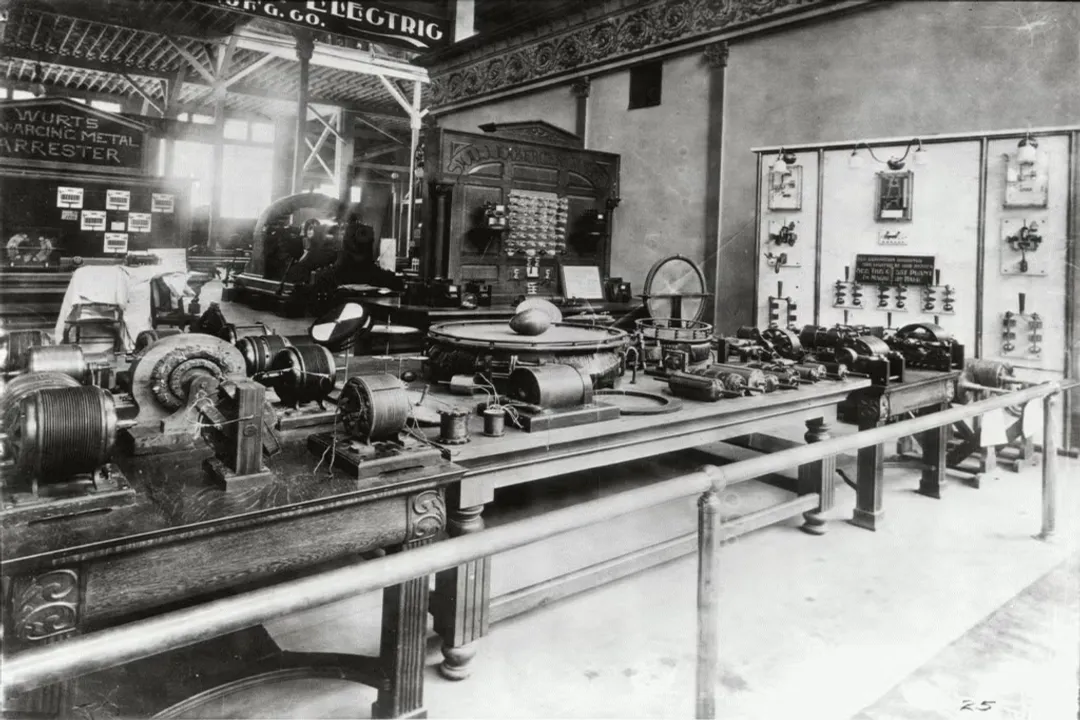
The scientific bedrock upon which all modern systems rest was laid in the early 19th century. Before practical systems could be built, the fundamental relationship between magnetism and electricity needed to be understood. [5] This came largely through the work of Michael Faraday. [1][5] In the 1830s, Faraday demonstrated the principle of electromagnetic induction, showing that a changing magnetic field could induce an electric current in a conductor. [1][4] This discovery provided the theoretical basis for the electric generator (dynamo), the machine required to convert mechanical energy into electrical energy on a large scale. [4][5] While earlier inventors had created primitive batteries, Faraday’s work pointed the way toward continuous, mechanical production of power, moving electricity from a laboratory curiosity to a potential commodity. [5]
# Central Power

While Faraday provided the how of generation, the next great leap was figuring out how to deliver it as a service. This achievement belongs primarily to Thomas Edison. [3][6] Edison’s work went far beyond simply perfecting the incandescent light bulb; he understood that a commercially viable light source required an entire supporting infrastructure. [3][10] Edison’s goal was to create a complete, integrated system for lighting homes and businesses. [6]
Edison and his team developed the necessary peripheral inventions: the central generating station, the conductors, fuses, junction boxes, meters to measure consumption, and importantly, the parallel circuit arrangement. [3][10] The parallel circuit was vital because it ensured that if one light went out, the others remained lit, unlike a series circuit where breaking one link kills the entire chain. [10] In September 1882, Edison launched the first commercial central power station in the world on Pearl Street in Lower Manhattan, New York City. [3][10] This operation used steam-driven generators to supply direct current (DC) power to a small district, marking the first time electricity was sold as a utility service. [6][8] The expertise required to balance the generators, manage the heat, and maintain consistent voltage demonstrated an engineering feat unparalleled at the time. [3]
It is often necessary to separate the invention of the light from the invention of the system. Edison’s mastery lay in the latter—creating the standardized, interconnected means of delivery that made the light useful to the masses. His system, while successful in a dense, localized area like downtown Manhattan, was inherently limited by the physics of DC electricity. [7]
# Current Conflict
The success of Edison’s direct current (DC) system soon met its most significant challenge, leading to the period known as the "War of the Currents" in the late 1880s and early 1890s. [7] DC power suffered from significant limitations, primarily due to the inability to easily change its voltage level. [1][7] To deliver DC power over any meaningful distance—even a mile or two—required extremely thick, expensive copper conductors to minimize resistive energy loss. [7] This meant that a city needed a separate power plant every square mile or so to maintain service, making widespread electrification prohibitively costly. [7]
The alternative system, alternating current (AC), was championed by inventors like Nikola Tesla and entrepreneurs like George Westinghouse. [7] AC had a crucial advantage: it could be transformed to very high voltages using transformers, allowing power to be transmitted over vast distances with minimal loss, and then stepped back down to safer, usable voltages near the end-user. [1][7] While Edison fought vigorously against AC, claiming it was inherently unsafe—a campaign that involved sensational and sometimes misleading public demonstrations of AC electrocutions—the engineering reality favored AC for scalability. [7]
# Long Distance
The decisive moment arrived when the technological superiority of AC for transmission proved overwhelming. [1] Tesla's polyphase AC system designs were key to making AC both practical and efficient. [7] The 1893 World's Columbian Exposition in Chicago, where Westinghouse famously won the contract to illuminate the fair using AC power, served as a massive public demonstration of AC's capability over the older DC standard. [7]
Following this success, the construction of the first major hydroelectric power plant at Niagara Falls, designed to use Tesla's AC system, cemented AC as the global standard for large-scale power transmission. [7][9] This transition represented more than just swapping one type of current for another; it fundamentally changed the economics and geography of power generation.
If we consider the primary goal of a power system to be the reliable delivery of electricity to the broadest possible area at the lowest cost, then the victory of the AC architecture is the defining characteristic of the modern system inventor. The ability to centralize power generation in optimal locations—near fuel sources or abundant water—and send that power hundreds of miles away was an innovation that DC could never match. [1][9]

# System Evolution
The history of the electric power system, viewed through the lens of energy regulation and scale, shows continuous refinement beyond the initial DC/AC battle. [9] Early power systems, like Edison’s, were essentially localized monopolies serving specific neighborhoods. As AC took hold, the focus shifted to linking generation sources together to create more resilient regional grids. [1]
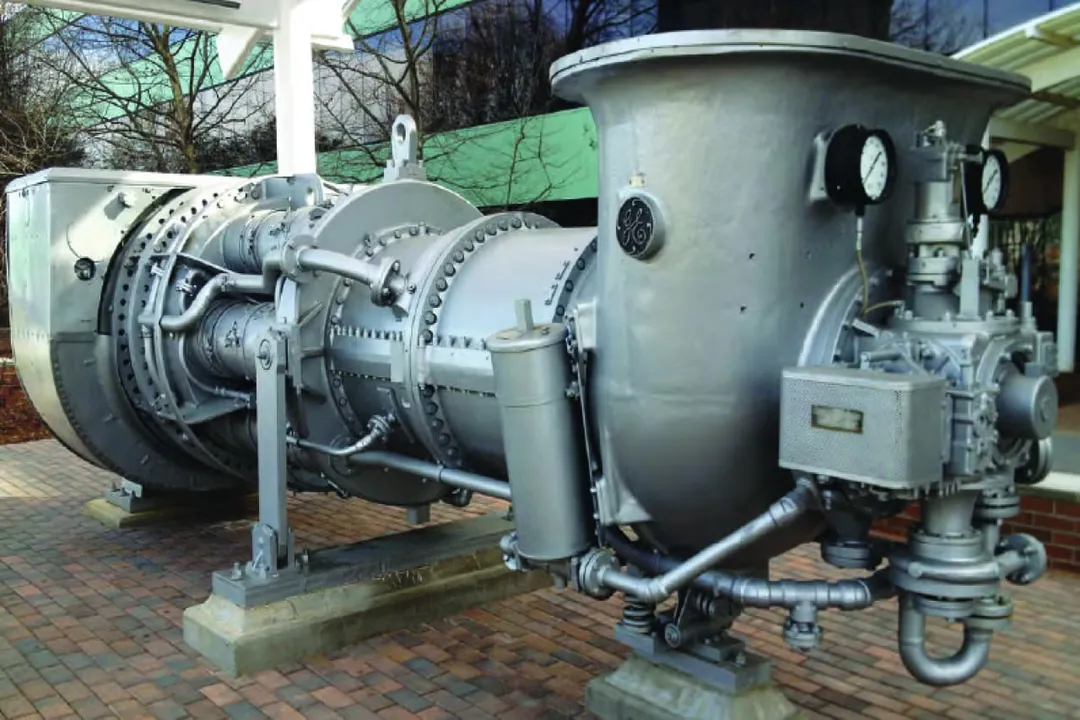
One important consideration that isn't always foregrounded in the stories of the famous inventors is the development of utility-scale generation itself. While Edison focused on the urban distribution network, the means to generate gigawatts of power evolved separately. The transition from smaller DC steam engines to massive, centralized AC turbo-generators—often located far from cities near coal fields or major rivers—transformed the industry. [9] For instance, in the early 20th century, the development of high-pressure steam technology allowed generators to become exponentially more efficient than the slower, lower-pressure engines powering the initial DC stations. [9] The standardization of system components, including transformer design and protective relaying to handle faults on long lines, were equally critical engineering achievements that allowed the grid to become the complex, interconnected structure it is today. [1]
To appreciate the complexity, one can look at the required voltages: while Edison’s DC system operated around 110 volts, modern transmission lines operate far in excess of 100,000 volts before being stepped down for local use. This incredible voltage differential is only manageable through the alternating current architecture first promoted by Tesla and Westinghouse, showing that the system is as much about voltage manipulation as it is about generation. [1] The evolution is ongoing, moving now toward smart grids and renewable integration, but the basic backbone—AC generation and transmission—established in the late 19th century remains the essential framework. [4]
Related Questions
#Citations
Electric power system - Wikipedia
Key figures in the history of electricity - Endesa
Electric Light and Power System - Thomas A. Edison Papers
Electricity timeline - Energy Kids - EIA
Who discovered electricity? Probably not who you're thinking
How Edison, Tesla and Westinghouse Battled to Electrify America
The History of Electricity Timeline
History of Power: The Evolution of the Electric Generation Industry
Edison's Electric Light and Power System