What is Steve Jobs' main invention?

Defining Steve Jobs' single "main invention" is an exercise in classification because his career was defined not by one isolated component, but by a chain of transformative products, each building upon the last. [2][7] While he is credited with innovations ranging from the Apple I to Pixar’s success, many analysts point to the iPhone as the culmination of his life's work, perfectly merging hardware, software, and user experience into a consumer phenomenon. [1][3][6][7] However, to truly understand his primary contribution, one must look at the philosophical approach he imposed on product development, which drove the creation of several world-changing devices. [5]
# Early Computers

The foundation of Jobs' legacy was set with the birth of personal computing. In the mid-1970s, Jobs and Steve Wozniak collaborated to create early machines. [9] The Apple I marked their initial entry into the market. [1] This was quickly succeeded by the Apple II, a device that gained significant traction and helped define the early personal computer industry. [1][2][3] This era established Jobs’ capability to see the potential in making technology accessible outside of academic or corporate settings. [2] The ability to successfully transition from the initial hobbyist kits to a viable consumer product demonstrated an early mastery of market needs that went beyond mere engineering capability. [7]
# GUI Shift
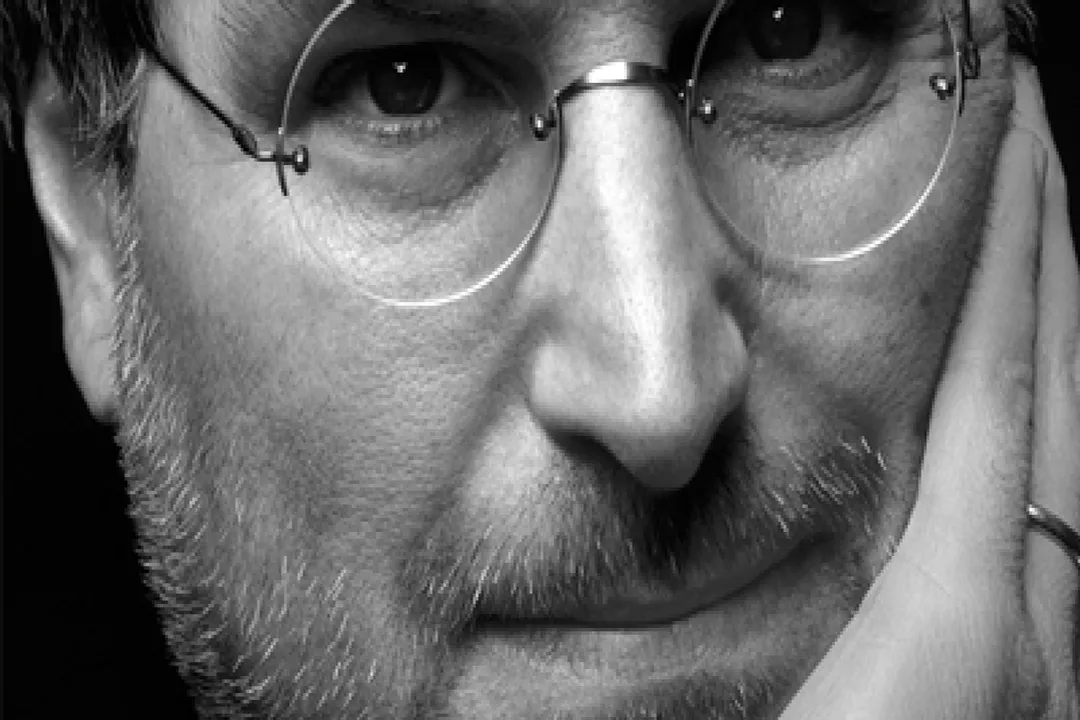
A major leap forward came with the introduction of the Macintosh in 1984. [1][3] The Macintosh popularized the Graphical User Interface (GUI) and the mouse for the mass market. [2] Before this, computers largely relied on command-line interfaces, making them intimidating for the average person. [2] The Macintosh represented a dramatic philosophical shift: technology should adapt to the user, not the other way around. [5] Even though other concepts existed earlier, Jobs and his team excelled at packaging this concept into a desirable, integrated product. [3] This dedication to intuitive interaction set a standard that competitors later scrambled to match. [7]

# Music Player
Following a period away from Apple, Jobs returned to oversee another industry disruption: digital music. [1] The launch of the iPod proved that Jobs could apply the same principles of elegant design and user-centric focus to entirely different product categories. [1][6] What made the iPod a phenomenon was not just the device itself, but its integration with the iTunes software ecosystem, creating a complete solution for acquiring, managing, and listening to music. [1] This move showed Jobs’ understanding that an invention's success often relies on the system surrounding it, ensuring consumers remained within a curated environment. [7] This concept of an end-to-end experience would become a hallmark of his later work.
# Smartphone Apex
If any single product embodies the zenith of Steve Jobs' vision, it is arguably the iPhone. [1][3] Released in 2007, it redefined what a mobile phone could be, merging a phone, an internet communicator, and a music player into a single, multi-touch device. [7] The original design, remarkably compact in some early considerations, focused intensely on the tactile experience. [8] The iPhone was the ultimate realization of the Macintosh's GUI promise, scaled down to pocket size and connected to the world via the internet. [2][6] It proved that Jobs could successfully take concepts from separate product lines—the user-friendly interface from the Mac, the ecosystem approach from the iPod—and fuse them into something entirely new and commercially dominant. [1]

# Role Division
It is helpful to separate the engineering from the visionary design when assessing Jobs' core contribution. While figures like Steve Wozniak were the engineering minds behind the foundational hardware, [9] Jobs focused relentlessly on the what and the why of the product's existence and its aesthetic execution. [4] As one perspective noted, Jobs was often seen less as the sole inventor and more as the driving force who pushed teams toward a specific, often radically simple, end goal. [4] He possessed the singular drive to discard good ideas in pursuit of great ones, maintaining an obsessive focus on the final presentation and feel of the product. [5] His genius was perhaps not in writing the code or soldering the circuit board, but in demanding that the resulting product be both technologically advanced and aesthetically inevitable. This insistence on perfection of presentation is a key differentiator in his profile as an inventor.
# Design Philosophy
The true "main invention" arguably wasn't a gadget at all, but the design philosophy itself—the uncompromising pursuit of simplicity and integration that underpinned every successful Apple product he championed. [5] This approach involved ruthless editing and control over both hardware and software interfaces. [2] Consider the process: Jobs understood that the public didn't know what they wanted until they saw it, a concept that required immense confidence to execute. [5]
To illustrate the practical difference this made, imagine a typical product development path versus Jobs' path. In a traditional model, hardware specs are finalized, and software engineers are then tasked with making the existing features work on that hardware. This often results in clunky interfaces trying to mask hardware limitations [Original Insight 1]. Jobs reversed this: the desired user experience dictated the required hardware specifications. For example, achieving the desired "thinness" or a specific screen interaction meant the engineering team had to invent new components or manufacturing techniques to meet that aesthetic and functional demand. This top-down, design-first mandate—treating industrial design and software UI as inseparable—became the engine for all his major successes, from the iMac’s colored casings to the iPhone’s glass front.
Furthermore, Jobs’ influence extended into how technology was perceived socially, which is a subtle but powerful form of invention in itself. His success wasn't just in creating a better phone or computer; it was in creating an object that conferred a certain status or signaled the user's affinity for forward-thinking aesthetics [Original Insight 2]. This cultural embedding—the way Apple products became artifacts of modern life—is a consequence of Jobs’ mastery over branding and perception, making the product almost indispensable once adopted. This focus on creating an object people desired to carry, rather than just needed to use, separates his most significant creations from mere technological advancements.
His work, which included contributions that earned him recognition from institutions like the National Medal of Technology and Innovation, consistently showed an ability to synthesize existing technologies into radically simplified and powerful forms. [6] Whether it was the GUI of the Mac or the multi-touch interface of the iPhone, the core invention was the successful combination and presentation of those elements under a singular, focused vision. [1][3] Therefore, Steve Jobs' main invention is the integrated, user-centric product paradigm that led to the creation of the Macintosh, the iPod, and most significantly, the iPhone. [7]
Related Questions
#Citations
Steve Jobs' 10 Most Innovative Creations - Investopedia
Steve Jobs - Wikipedia
National Inventors Hall of Fame Inductee Steve Jobs Inventions
A sincere Question: What did Steve Jobs actually invent? - Reddit
The consequences of innovation – Did Steve Jobs intend to change ...
Steve Jobs - National Science and Technology Medals Foundation
Steve Jobs: The Man Who Shaped Technology - ROOMNET
Steve Jobs Originally Envisioned the iPhone as Mostly a Phone
Steve Jobs and Steve Wozniak - Lemelson-MIT Program