What were Galileo's main inventions?
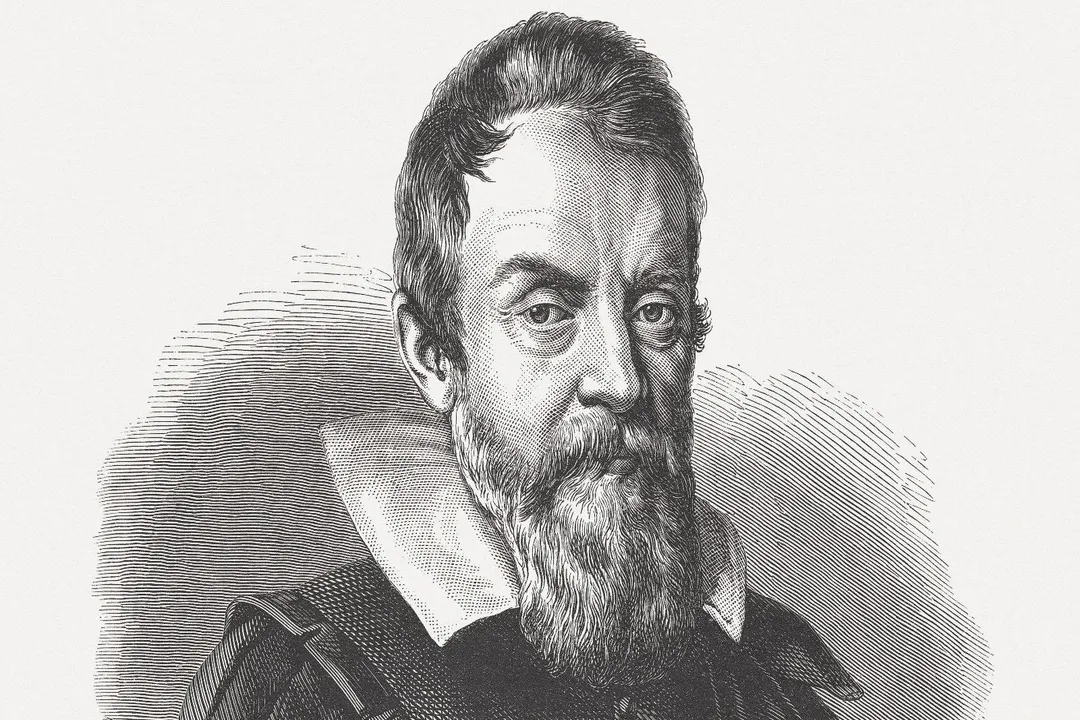
Galileo Galilei’s name often evokes images of celestial charts and confrontations with authority, yet his lasting influence is profoundly rooted in the physical tools he developed or dramatically refined. He was not merely an observer of the cosmos; he was an engineer who created the means by which his revolutionary views could be proven, shifting science from abstract reasoning to evidence-based inquiry. [2] While popular memory often focuses on his telescopic discoveries, the practical instruments he designed for terrestrial measurement and timekeeping were equally transformative in establishing his reputation as the father of modern experimental science. [6] His contributions were a dual effort: designing better eyes for looking through the eyepiece, and creating better standards for measuring what was happening on Earth.
# Lens Refiner
The most famous piece of equipment associated with Galileo is, without question, the telescope. [9] It is crucial to understand that Galileo did not invent the telescope itself; the technology for a refracting telescope based on lenses existed before he began his work around 1609. [1] Instead, his genius lay in recognizing its potential far beyond simple terrestrial viewing and in his relentless process of refinement. [7]
Galileo heard about a spyglass constructed in the Netherlands and quickly grasped the optical principles involved. [6] He didn't just copy it; he immediately set about improving it. [1] Early Dutch models offered only about three times magnification, sufficient for spotting ships at sea, but Galileo systematically experimented with grinding and mounting lenses to achieve significantly greater power. [1][2] Within a short time, he was producing instruments that offered magnifications of 20x or more. [1] This improvement was not trivial; it transformed the device from an interesting novelty into a potent scientific instrument capable of revealing details previously hidden from humanity. [7]
He constructed his own instruments, often grinding the lenses himself, and made several versions. [1][6] This hands-on experience gave him an intimate knowledge of the device's limitations and possibilities, knowledge he could then apply to its most profound purpose: looking upward. [7]
# Celestial Proofs
The true power of Galileo's improved telescope was unleashed upon the night sky, providing tangible, visible evidence that undermined the established Ptolemaic, Earth-centered view of the universe. [7][2] His observations were direct contradictions to the Aristotelian cosmology which held that the heavens were composed of perfect, unchanging spheres. [3]
Among his most crucial telescopic findings were:
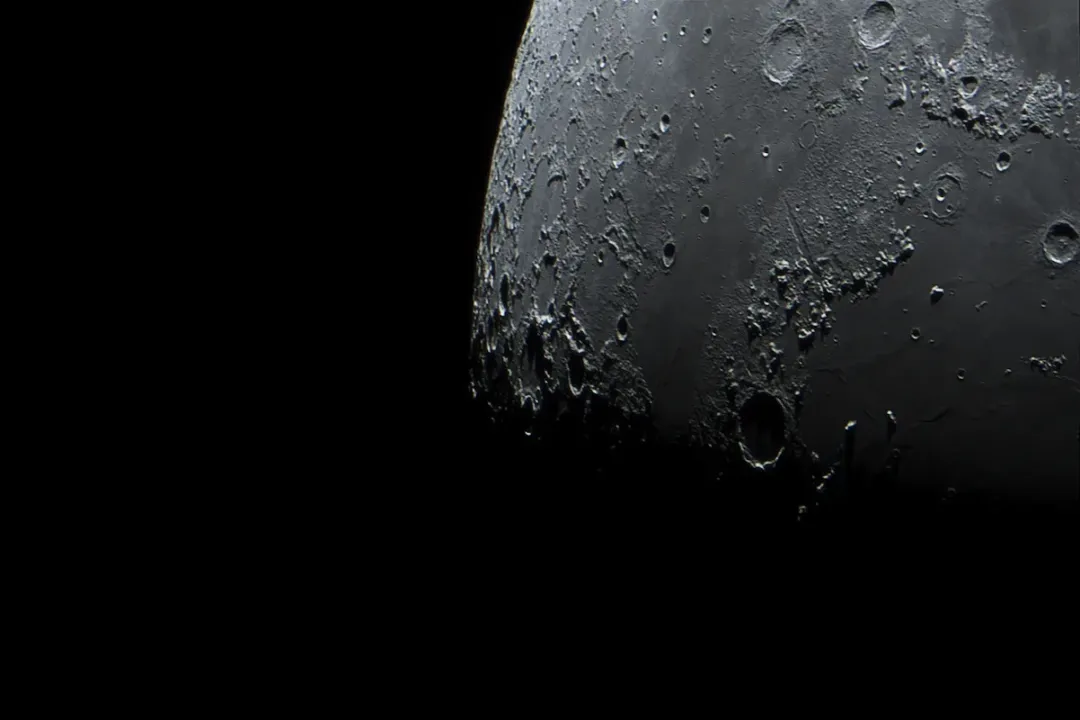
- The Moon’s Surface: Galileo observed that the Moon was not a smooth, perfect orb as previously thought. He saw mountains, valleys, and craters, concluding that it was a body much like Earth, complete with topography. [3][8]
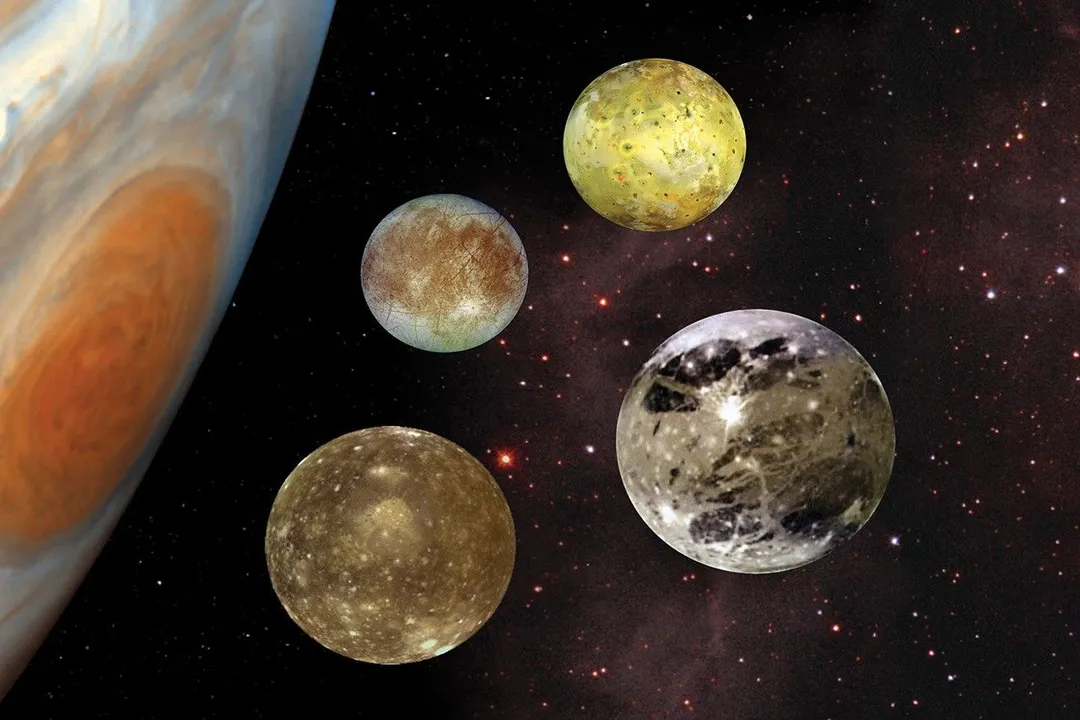
- The Moons of Jupiter: In early 1610, he discovered four celestial bodies orbiting Jupiter—now known as the Galilean moons. [1][6] This was a miniature model of the solar system in action, proving that not everything revolved around the Earth. [8][3]
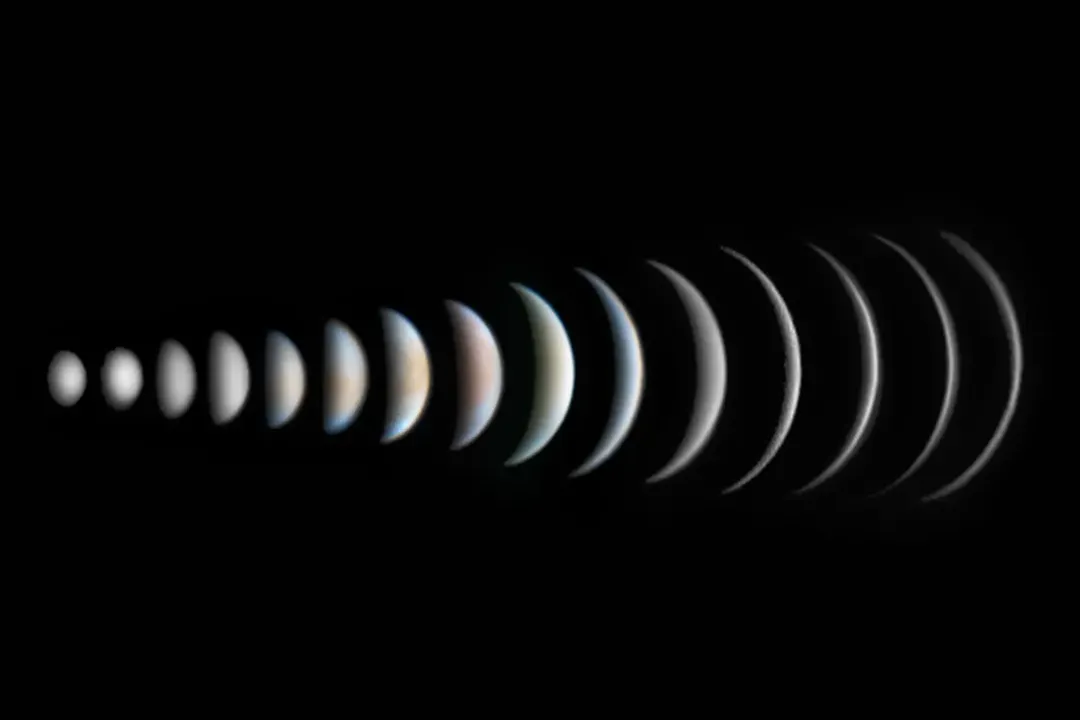
- Phases of Venus: Galileo observed that Venus exhibited a full set of phases, similar to the Moon. [3][6] This finding was virtually impossible to explain within the established Earth-centered model but fit perfectly with the Sun-centered (Copernican) system. [8]
- Sunspots: Observing the Sun, despite the danger, he noted dark spots appearing on its surface and tracked their movement, demonstrating that the Sun itself was imperfect and that it rotated on an axis. [1][8]
These observations, made possible by his engineering prowess in lens-making, provided empirical evidence that was impossible to ignore, bolstering the heliocentric theory proposed by Copernicus. [7][6]
# Measuring Instruments
While the telescope captured the public imagination, Galileo also dedicated considerable intellectual energy to instruments used in mechanics and military science. [1] His work here demonstrates a consistent commitment to quantifying the physical world.
# Military Compass
Around 1597, Galileo developed what he called a proportional compass, often referred to as a military compass. [1] This instrument was sophisticated for its time, functioning as a slide rule to solve a variety of practical problems related to geometry, gunnery, and commerce. [1]
The compass consisted of two hinged arms, marked with several scales. By aligning certain markings, users could quickly solve complex calculations such as determining the trajectory of a cannonball, calculating the area of a surface, or finding the true ratio between two different measurements. [1] An interesting aspect of this tool, which often goes unstated, is how it democratized advanced calculation. Prior to this, such precise artillery calculations might have relied solely on the specialized knowledge of a few trained mathematicians or military engineers. By creating a tangible, mechanical aid, Galileo made complex, necessary calculations accessible to a wider audience of surveyors and artillery masters, thereby shifting the basis of trust from an individual's reputation to the demonstrable accuracy of the tool itself. [4]

# Tracking Time
Another significant contribution often linked to Galileo involves the principles of timekeeping, specifically through the study of the pendulum. [4] Although he did not invent the pendulum clock—that came later—his early observations laid the theoretical groundwork. [1]
The story often told, perhaps embellished over time, involves young Galileo observing a lamp swinging in a cathedral in Pisa. [1] He noticed that regardless of how wide the arc of the swing was, the time it took to complete one full back-and-forth motion remained constant. [1] This property is known as isochronism.
This discovery was vital because it established a reliable, natural standard for measuring short intervals of time based on consistent physical law, rather than less dependable methods like the pulse or pouring water. [4] While he never finished a working pendulum clock, his notebooks contain designs for such a device, marking a critical step in the history of metrology. [1] In fact, his son Vincenzo even constructed a device based on his father's designs after Galileo's death. [1] This insistence on finding a consistent, repeatable standard for measurement across both the heavens and earthly mechanics underscores Galileo’s unified scientific approach.
# Empirical Standard
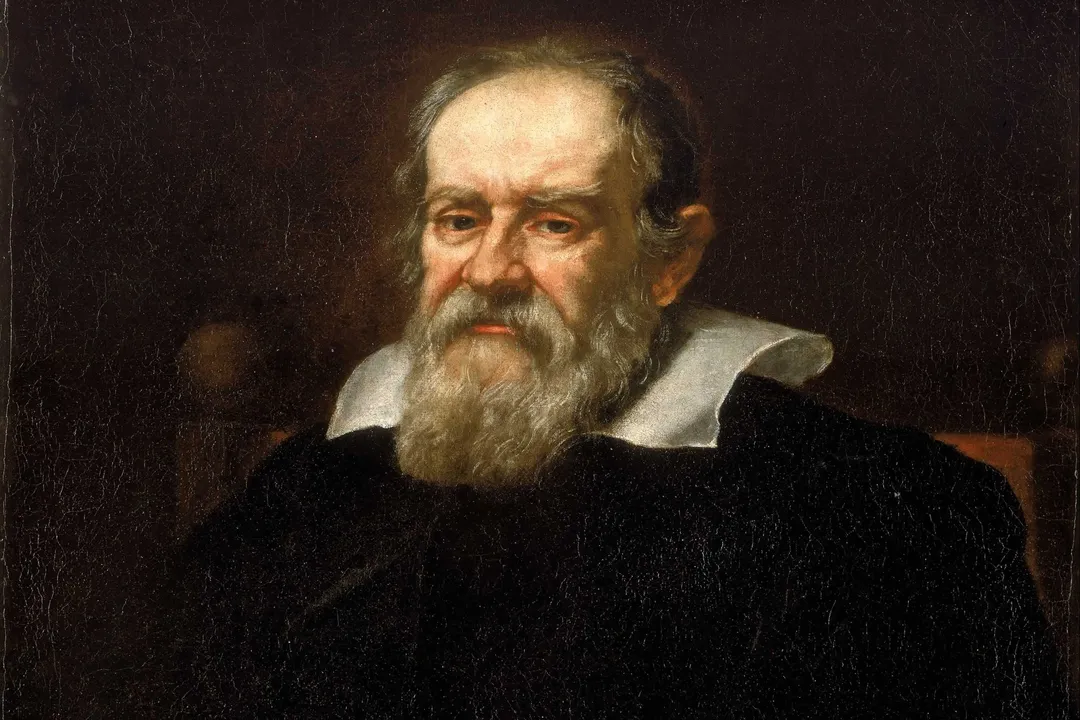
The collection of Galileo's practical inventions and instrument improvements—the high-power telescope, the proportional compass, and the theoretical foundation for the pendulum clock—serves a larger purpose than just the individual objects themselves. [2] They represent a tangible break from scholastic philosophy, which often relied on authority and deduction rather than direct observation. [4]
When Galileo made his telescopic observations, he provided visual proof that the cosmos was not what was written in ancient texts. [7] When he designed a tool like the proportional compass, he provided a mechanical proof for an engineering calculation. [1] This insistence on grounding knowledge in direct, reproducible measurement is the core of his expertise. [2]
Here is a comparison of the application focus for his major tangible contributions:
| Instrument/Principle | Primary Domain | Measured Quantity | Impact on Authority |
|---|---|---|---|
| Telescope | Astronomy | Angular Distance, Appearance | Challenged ancient cosmological models. [7] |
| Proportional Compass | Surveying/Gunnery | Ratios, Areas, Trajectories | Mechanized complex mathematics. [1] |
| Pendulum | Mechanics/Time | Time Interval | Established natural, repeatable standard for time. [4] |
It is fascinating to note the immediate feedback loop these inventions created within the scientific community. The revolutionary data gathered by the improved telescope created an urgent demand for even higher magnification and greater stability, pushing optics forward at an unprecedented rate. This contrasts sharply with previous eras where scientific instruments saw slow, incremental improvements over centuries. Galileo’s work established a modern paradigm: an improved tool yields new knowledge, and that new knowledge immediately spurs the creation of even better tools to investigate the new questions raised—a virtuous cycle that continues to drive physics and astronomy today. [2]
# Authority Confirmed
Galileo Galilei’s role transcended that of a mere inventor; he was a methodologist who used his creations to dismantle old ideas and build new ones on the bedrock of demonstrable fact. [2] His greatest invention, perhaps, was the template for modern physical science itself, one where mathematical description and empirical evidence go hand-in-hand. [4]
His instruments allowed him to transition science away from the philosophical realm and anchor it firmly in the laboratory and the observatory. [6] He demonstrated that if one could build a reliable instrument—be it for seeing distant stars or calculating angles on a battlefield—the results derived from it carried a new kind of irrefutable authority that no amount of textual citation could match. [7][2] For anyone studying the history of technology, Galileo’s career is a powerful demonstration that an invention's value is not inherent in its construction, but in the unforeseen questions it enables us to ask. The ability to reliably measure time with the pendulum concept, for example, later became essential for navigation and precise astronomical timing, proving that seemingly disconnected mechanical studies fed back directly into the grander cosmological picture he was painting. [1] His legacy is therefore less a list of patents and more a demonstration of how engineered perception can rewrite reality.
#Videos
Galileo's Greatest Inventions | Scientific Revolution - YouTube
Related Questions
#Citations
What Did Galileo Invent? - Universe Today
Galileo | Biography, Discoveries, Inventions, & Facts - Britannica
What did Galileo discover? | Royal Museums Greenwich
What were Galileo's contributions to science? : r/AskHistorians - Reddit
Galileo's Greatest Inventions | Scientific Revolution - YouTube
Galileo Galilei: Biography, Inventions & Other Facts - Space
Galileo and the Telescope | Modeling the Cosmos
Galileo's Observations of the Moon, Jupiter, Venus and the Sun
Who was Galileo? What was his invention? - Quora