What inspired Alexander Graham Bell to invent the telephone?

Alexander Graham Bell's invention of the telephone did not spring from a singular moment of inspiration but rather from a convergence of his professional life, his deep personal connection to sound, and a pressing technological challenge of his era: improving the telegraph. To truly understand what sparked the device that would forever change human communication, one must look closely at Bell’s dedication to the world of acoustics and his tireless efforts to overcome electrical limitations.
# Teaching Sound

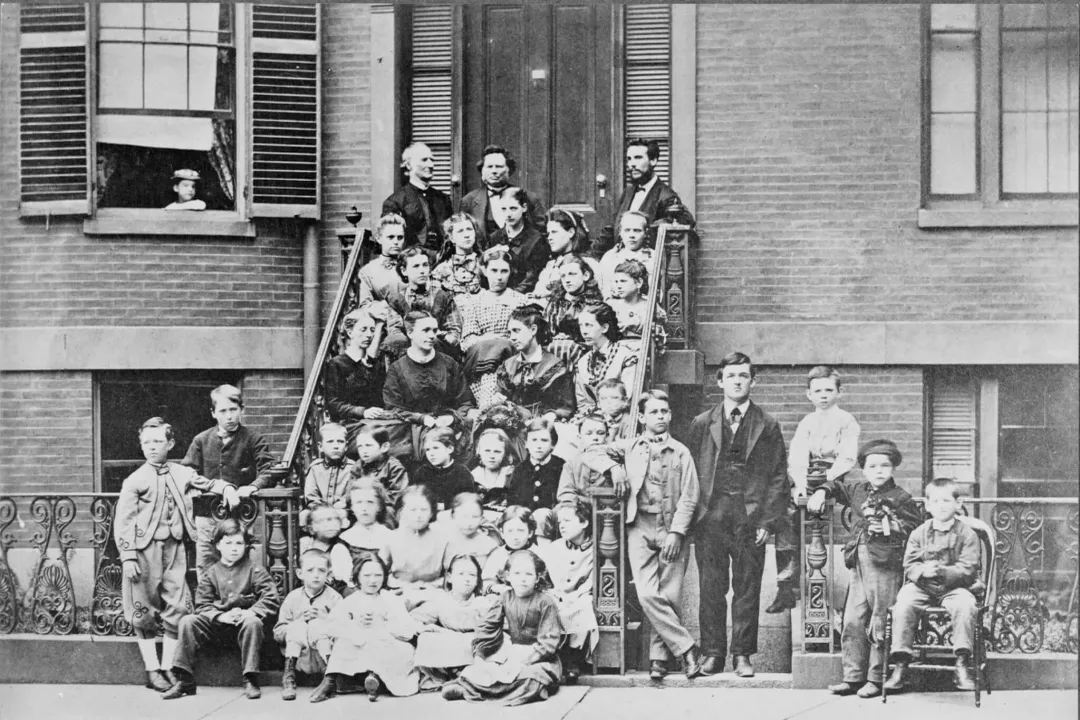
Bell’s early life and career provided the unique intellectual foundation necessary for his later breakthrough. He was profoundly connected to the study of speech and hearing, largely due to his family’s involvement with the deaf community. His father, Alexander Melville Bell, developed a system known as Visible Speech, a set of symbols designed to show people how to articulate sounds correctly, which Alexander Graham Bell taught and adapted. This intimate, practical engagement with the mechanics of human sound—how vibrations form words—instilled in Bell an acute sensitivity to auditory phenomena that few contemporary inventors possessed.
When Bell moved to Boston, initially to teach at the Clarke School for the Deaf, his focus remained fixed on vocalization and hearing. Even while developing his electrical experiments, this background meant he approached the problem of transmitting sound with an understanding rooted in how sound moves through the air, rather than purely through electrical circuits. This acoustic expertise arguably placed him on a different path than other inventors of the time who were focused solely on electrical signaling.
Bell’s early professional life was saturated with the science of making sound understandable to the ear, which primed him to think about carrying sound over distance electrically.
# Telegraph Limits
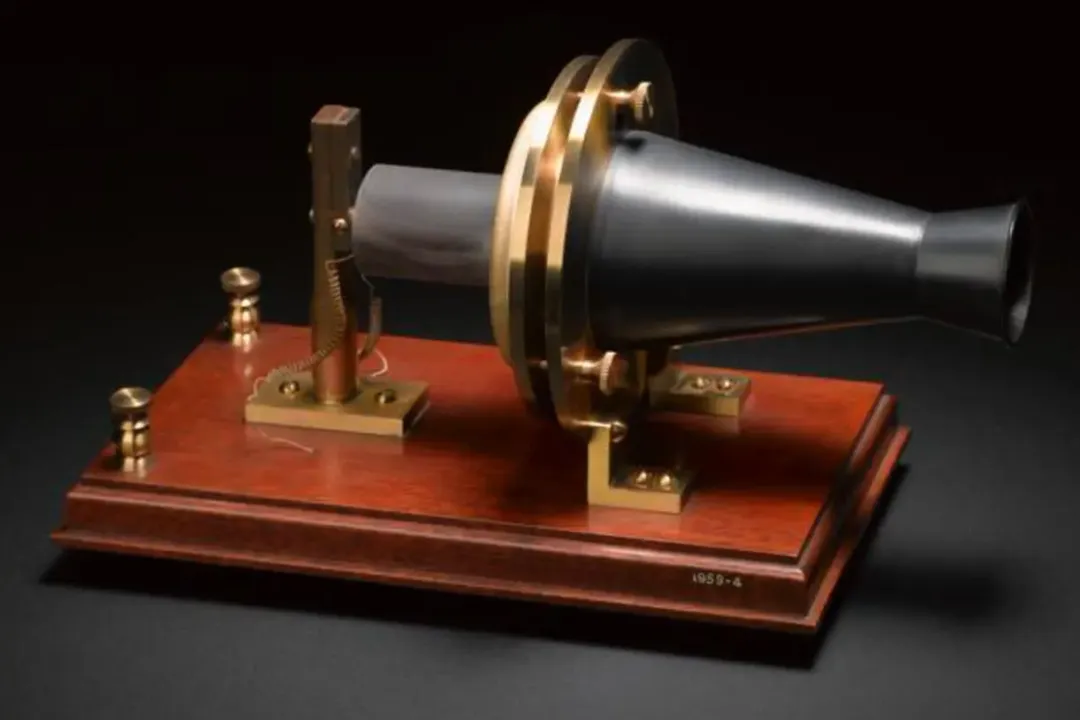
By the early 1870s, the primary driver for electrical communication innovation was the telegraph. The system was successful, but its main drawback was capacity; a single wire could only carry one message at a time. The commercial imperative was strong: innovators sought a way to send multiple messages over the same wire simultaneously, maximizing the use of expensive infrastructure. This sought-after device was called the harmonic telegraph.
Bell became deeply invested in solving this problem. His idea for the harmonic telegraph relied on using different musical pitches, generated by tuning forks, to carry separate messages over the line at the same time. The theory was that if he could control the electrical current’s vibration frequency precisely, he could separate the signals at the receiving end. This work required intense experimentation with vibrating reeds and electromagnetism. It was during this concentrated effort to perfect the transmission of multiple, distinct musical tones that the conceptual door to the telephone swung open.
# The Voice Leap
The leap from a device that could transmit a simple, distinct musical note (like those on a piano) to one that could transmit the complex, rapidly changing vibrations of the human voice was the real genesis of the telephone. Bell realized that if he could make an electromagnet vibrate continuously in sympathy with the ever-changing pressure waves of speech, he could potentially send the voice itself, rather than just coded telegraphic clicks.
This realization was an evolution of his telegraphic research, not a complete break from it. The crucial insight, born from his struggle with the harmonic telegraph, was the necessity of a variable current, not just intermittent or distinct tones. He hypothesized that a membrane attached to a coil could mimic the tympanum (eardrum), vibrating in response to sound waves and inducing a corresponding, fluctuating electrical current in the coil.
It is important to note the competitive environment. Bell was racing against others, including Elisha Gray, who was also working on similar telephony concepts. Bell’s application for his patent was filed on February 14, 1876, the very same day Gray submitted a caveat describing a liquid transmitter design. Bell was ultimately granted the patent for the telephone, U.S. Patent No. 174,465, just a few weeks later.
# Watson’s Role
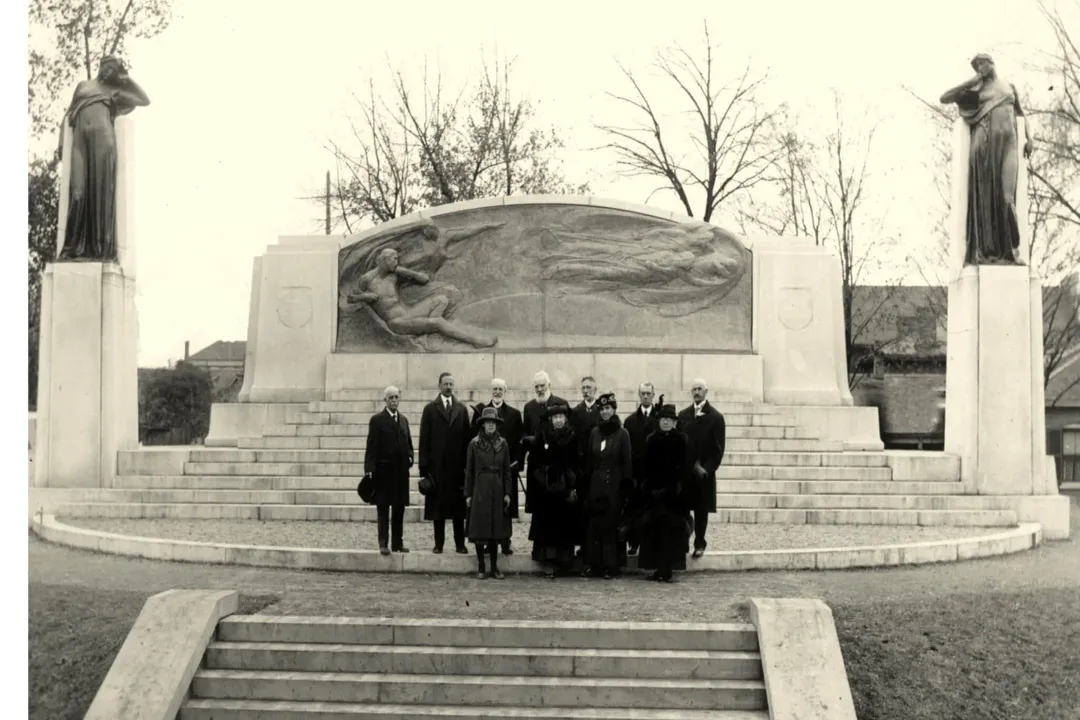
Bell’s laboratory work was often conducted with the assistance of Thomas Watson, an electrical engineer and machinist. Watson’s practical skills were essential for translating Bell’s acoustic theories into working hardware. The experimentation was intense, and the process involved repeated failures in achieving clear sound transmission.
The famous breakthrough moment occurred on March 10, 1876. While working on the liquid transmitter—a device Bell had experimented with that used acid to vary resistance—Bell accidentally spilled some battery acid onto his clothing. He spoke into the transmitting device in the other room: "Mr. Watson—Come here—I want to see you". Watson, hearing the distinct, articulate words over the receiver, confirmed the success of the transmission. This moment crystallized the inspiration: the electrical signal could indeed carry the complexity of human speech if modulated correctly.
It’s fascinating to consider the contrast between the intended goal—the harmonic telegraph—and the actual result. The harmonic telegraph aimed for digital signaling (discrete musical tones multiplexed), but Bell stumbled into analog transmission (a continuous electrical wave mirroring the sound wave), which is what made the voice truly intelligible. This transition from discrete signaling to continuous wave modulation is the often-understated genius stroke.

# Legacy and Credit
The history surrounding the invention is layered, involving several individuals who contributed to the overall field of voice transmission. While Bell secured the foundational patent, the complexity of the invention meant that the journey to a fully functional device involved others, including Watson's critical engineering support. For general readers, it is helpful to recognize that Bell is credited with the invention because he secured the fundamental patent covering the principle of transmitting vocal sounds by means of a variable electric current.
For instance, other inventors had worked on concepts related to transmitting sound, and some later developed superior methods for voice transmission, such as the carbon microphone developed by Thomas Edison, which significantly improved the clarity and distance of calls. However, Bell’s initial patent covered the core concept of the telephone itself.
# Finalizing the Concept
Bell's inspiration, therefore, was a triple helix: the professional drive to solve the telegraph's capacity limits (harmonic telegraph), the acoustic expertise gained from teaching the deaf (understanding sound vibration), and the experimental tenacity demonstrated by his assistant, Watson, which led to the successful test. The invention was not just about making a sound travel; it was about making speech travel intelligibly across a wire, a feat achieved by meticulously connecting the physical laws governing human vocalization to the electrical laws governing current fluctuation.
Examining the timeline, one can see that Bell’s success hinged on having the right cross-disciplinary knowledge at the precise moment the telegraph industry was demanding innovation. If he had been purely a telegraph operator focused only on multiplexing tones, he might have stopped at the harmonic telegraph. His background in phonetics seems to have provided the conceptual key to unlock the variable current needed for the human voice. This highlights how seemingly tangential life experiences can become the essential ingredient for technological leaps.
The subsequent development and refinement of the telephone, including the crucial improvements to the transmitter, showed that the initial concept was just the beginning. But it was Bell’s unique combination of acoustic sensitivity and electrical experimentation that defined the invention’s origin story. The world changed because a teacher of the deaf sought a better way to send more business messages.
Related Questions
#Citations
The Story Behind the World's First Telephone
Alexander Graham Bell - PBS
The Story Behind the Telephone | The Franklin Institute
Alexander Graham Bell - Wikipedia
Alexander Graham Bell: Telephone & Inventions - History.com
Who is credited with inventing the telephone? - Library of Congress
Why is Alexander Graham Bell credited with inventing the telephone?
Ahoy! Alexander Graham Bell and the first telephone call
Alexander Graham Bell | Biography, Education, Family, Telephone ...
Alexander Bell - Lemelson-MIT Program