How did Alexander Graham Bell's invention work?

The device that forever changed human communication began not as a simple gadget, but as a deep exploration into the nature of sound itself. Alexander Graham Bell was not initially trying to create a device to let people chat across miles; rather, his early work was intensely focused on speech and its transmission, driven by his life's vocation teaching the deaf. [3][6] This background provided him with an acute understanding of how vibrations—the essence of sound—could be manipulated and perceived. [3]
# Teacher's Work
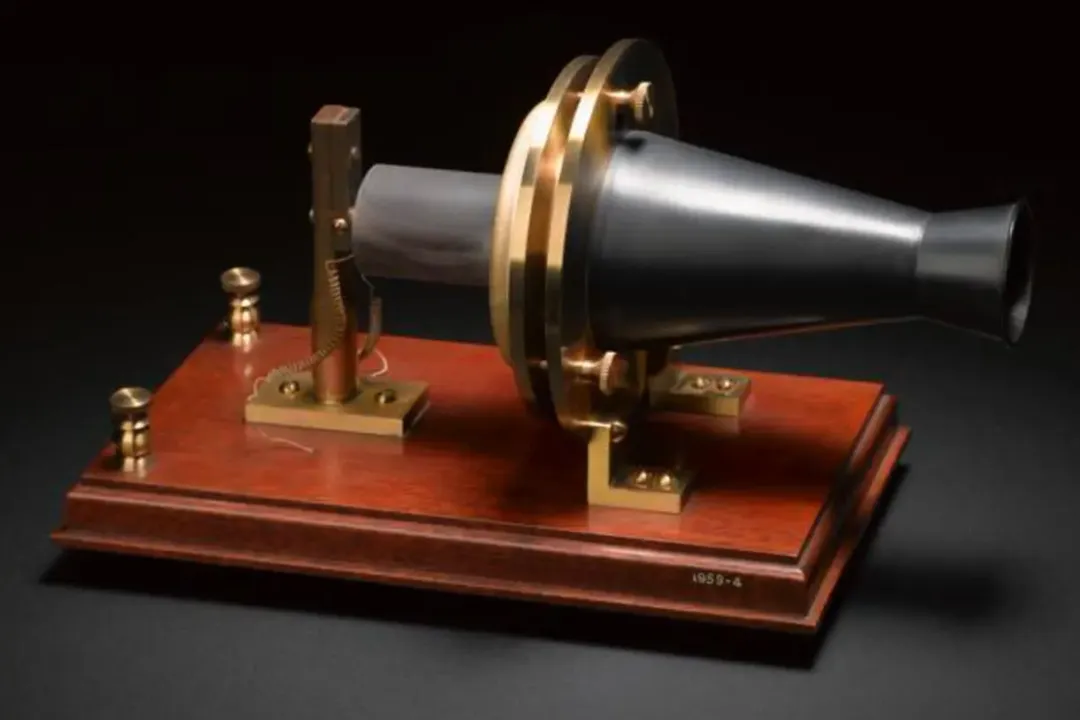
Bell’s foundational expertise lay in acoustics, stemming from his family’s dedication to elocution and his own work instructing the deaf on visible speech methods. [3] His father developed "Visible Speech," a system that represented speech sounds graphically, which Bell later adapted and taught in the United States. [3] When he began experimenting with what he called the "harmonic telegraph," the goal was to send multiple telegraph messages simultaneously over a single wire using different musical pitches. [9] However, his experiments with transmitting vocal sounds—a requirement of the harmonic telegraph—led him down a path that would supersede simple pitch transmission entirely. [9]
# Sound Conversion
The true breakthrough that separated Bell’s eventual telephone from the existing telegraph was the understanding that a variable electric current, mimicking the precise waveform of the human voice, was necessary. [9] Telegraphy relied on intermittent signals—a simple make-and-break circuit to create distinct "dots" and "dashes". [9] Bell realized that speech required a continuous, fluctuating electrical signal, generated by the movement of a magnet near a coil of wire. [2][9] This principle, known as electromagnetic induction, is what transformed the acoustic pressure waves of speech into corresponding electrical waves that could travel along a wire. [2] The genius, therefore, wasn't just in making a sound travel, but in making the quality of that sound travel faithfully. [9]
It is interesting to consider the sheer difference in the electrical signal generated: where the telegraph produced binary pulses, Bell’s device created an analog signal. Think of it like drawing with a fine-tipped pen that moves smoothly according to the sound’s intensity, versus drawing only with a stamp that either hits the paper or doesn't. This continuous analogy, mirroring the actual sound pressure, is what allowed for the recognition of spoken words rather than just coded signals. [9]

# The Transmitter
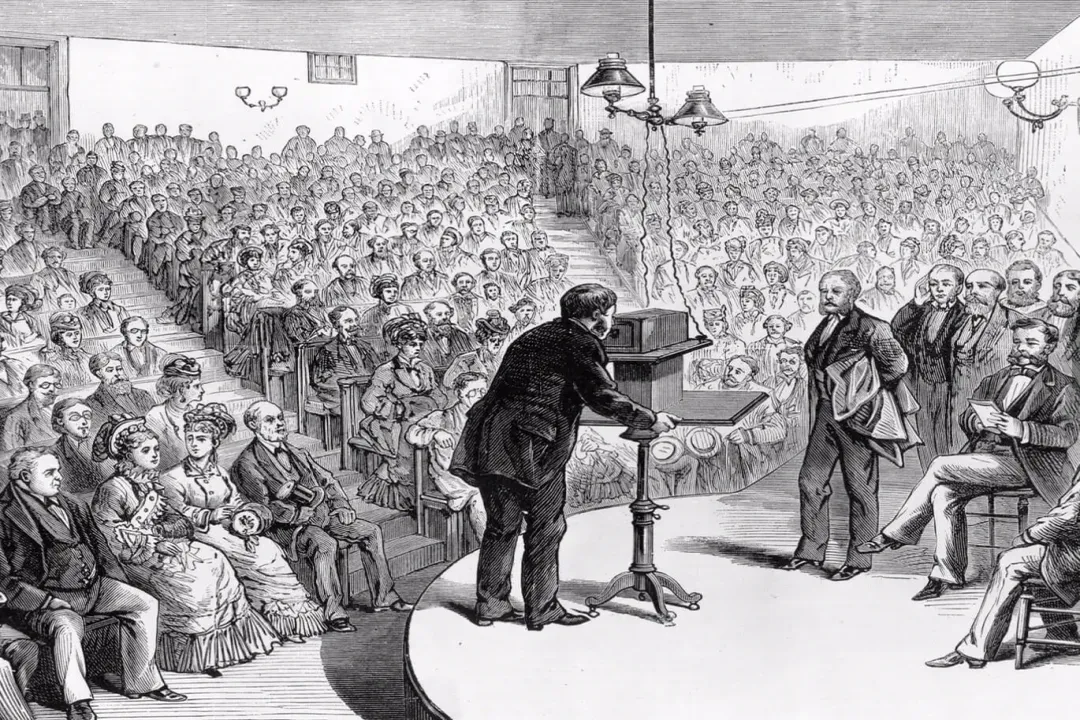
The mechanism that initiated this electrical transformation required capturing the vibrations of the voice. In Bell's design, sound waves hitting a thin, flexible membrane—the diaphragm—caused it to vibrate. [2][9] This diaphragm was mechanically linked to the mechanism that would generate the electric current. One of his most successful early designs involved a liquid transmitter. [2]
In this liquid arrangement, a needle or plate attached to the diaphragm dipped into a small amount of slightly acidic water. [2] As the diaphragm vibrated due to the voice, the plate moved up and down, slightly altering the resistance of the liquid pathway through which the electric current was flowing. [2] Changes in resistance created corresponding changes in the strength of the electric current flowing through the wire, thus modulating the signal to reflect the original sound wave. [2] While Bell and his assistant, Thomas Watson, tested various methods, the core requirement remained consistent: the physical movement of sound had to directly manipulate the electrical signal in a continuous fashion. [2][9]
# The Receiver

The process was beautifully symmetrical; what happened at the transmitting end needed an exact reversal at the receiving end to recreate the audible sound. [9] In the receiver, the incoming electrical current, which had been modulated by the transmitter’s vibrations, passed through an electromagnet. [2][9]
This electromagnet was positioned near a second diaphragm, often made of thin iron. [2] As the current flowed, the strength of the magnetic field pulsed in exact synchronization with the incoming electrical signal. [2] When the current grew stronger, the magnetic pull increased, drawing the diaphragm inward; when the current weakened, the pull lessened, allowing the diaphragm to spring back. [2] This rapid, minute movement of the receiver’s diaphragm pushed the surrounding air, recreating the original sound waves that had been spoken into the transmitter hundreds of yards away. [9]

# Famous Words
The culmination of this intense experimentation was a moment etched into history. Bell had been granted his patent for the invention on March 7, 1876. [1] Just three days later, on March 10, 1876, the apparatus finally worked well enough to convey a full sentence. [2] Working in different rooms, Bell spilled battery acid onto his clothes and called out into the mouthpiece, "Mr. Watson—Come here—I want to see you". [2][8] Watson, in the adjacent room, heard the distinct, albeit faint, words coming through the receiver, confirming the success of the electrical speech transmission. [2][8]
It is quite a juxtaposition to reflect on the sheer complexity of the patent application, which described a broad range of methods for achieving this goal, compared to the simplicity of the apparatus that actually made that first successful transmission—a setup utilizing those vibrating reeds and a liquid contact. [1][2] The legal protection secured by that patent was extensive, covering the fundamental concept of transmitting vocal sounds electrically, yet the physical reality of that first success was remarkably straightforward mechanical physics. [1][2]
# Innovation Context
Bell's inventive success was not an isolated event, but rather one example of how innovation often occurs when deep expertise intersects with perceived limitations. [4] His entire professional life had been steeped in the physics of sound, giving him the unique perspective needed to move past incremental improvements on existing technology like the telegraph. [3][4] The process of innovation itself, as Bell demonstrated, frequently involves intense focus on one problem—in his case, sending musical pitches—only to have the solution to a much larger problem—voice communication—reveal itself along the way. [4] His subsequent work, which included continued improvements to the telephone and significant contributions to aviation and hydrofoils, underscores a pattern of applying deep physical understanding to practical challenges. [6] Bell’s legacy is not just the device itself, but the demonstration that specialized, focused knowledge, even if aimed at a seemingly niche problem, can unlock broad societal change. [4]
#Videos
Alexander Graham Bell's Telephone Prototype | Earth Science
Related Questions
#Citations
Alexander Graham Bell patents the telephone | March 7, 1876
The Story Behind the World's First Telephone
Alexander Graham Bell - Wikipedia
How innovation works? Graham Bell's Telephone
Alexander Graham Bell - National Inventors Hall of Fame®
Alexander Graham Bell's Telephone Prototype | Earth Science
On this day in 1876, 29-year-old Alexander Graham Bell patented ...
The Story Behind the Telephone | The Franklin Institute
Ahoy! Alexander Graham Bell and the first telephone call