What was the purpose of Alexander Graham Bell's telephone?
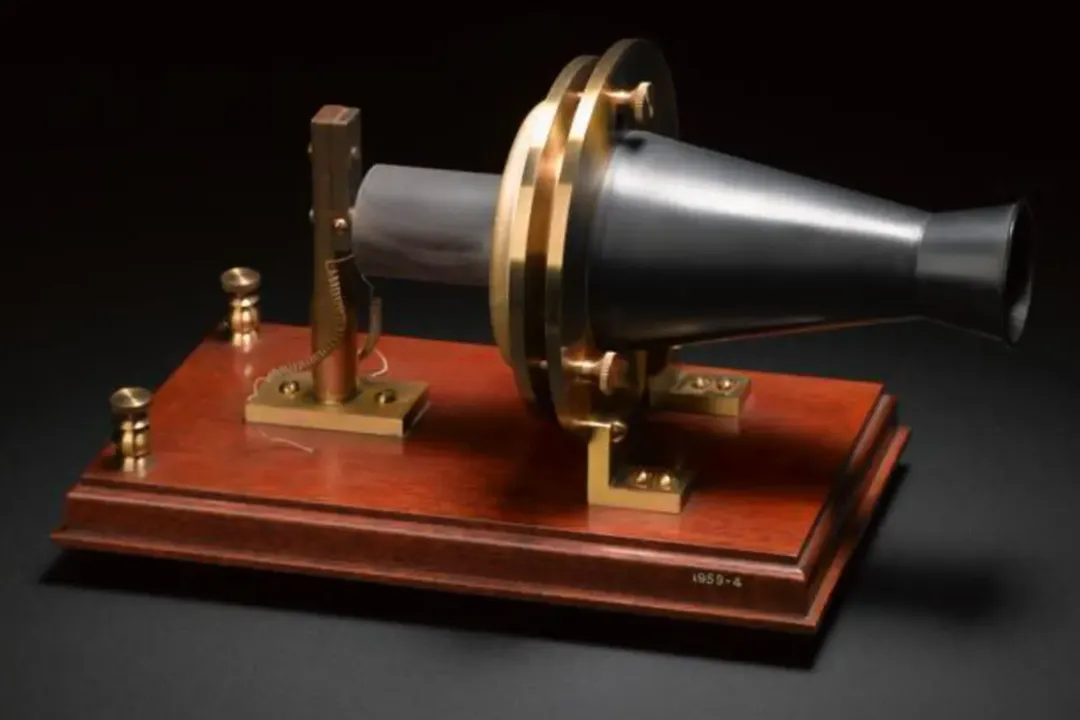
Alexander Graham Bell’s invention of the telephone was not a single, isolated stroke of genius, but rather the culmination of years dedicated to understanding the mechanics of sound and speech, driven by deeply personal motivations. [3][9] While the popular narrative often focuses solely on the success of the first transmitted words, understanding the purpose requires looking back at Bell's life, particularly his profound connection to the deaf community. [9] His early work was immersed in the study of acoustics and the mechanisms of human hearing and speech, often stemming from his father’s work on visible speech systems. [3] This background meant that Bell viewed sound not just as a physical phenomenon, but as a medium for complex human connection. [1][9]
# Teaching Sound
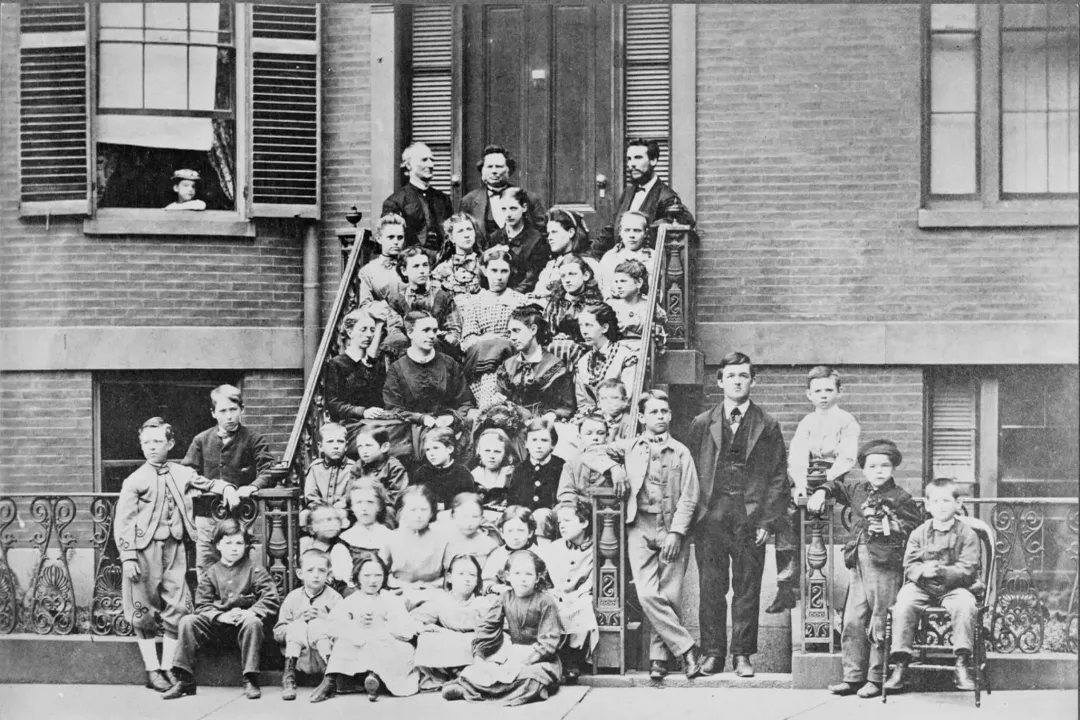
Bell’s primary professional engagement before the telephone centered on educating the deaf. [3] He taught at the Boston School for Deaf Mutes and later established his own school in Boston for the instruction of the deaf. [4][9] His father, Alexander Melville Bell, developed "Visible Speech," a set of symbols representing the articulation of sounds, which Bell himself taught to deaf students and their parents. [3][9] This dedication meant Bell spent significant time analyzing how sound traveled and how the human ear perceived it. [5][8] This expertise in acoustics and the physiology of speech was the bedrock upon which the telephone was constructed. [3]
His experiences teaching led him to develop methods for deaf students, including techniques that required him to understand the electrical transmission of sound waves. [4] The underlying desire was to find ways to make speech more accessible and understandable, especially for those who could not hear it naturally. [9] It is here that the initial purpose blurs: was the telephone initially conceived as a direct aid for the deaf, or was it a scientific exploration of sound that became a commercial opportunity? Sources suggest his work with the deaf was the primary impetus for his deep dive into vocal acoustics. [3][9]
# Telegraph Improvement
While the work with the deaf provided the foundation in acoustics, the immediate, practical purpose that drove the invention toward completion was the desire to revolutionize existing communication technology, specifically the telegraph. [4][8] By the 1870s, the telegraph was the fastest way to send messages over long distances, but it had significant limitations. [5]
The telegraph operated by sending coded electrical pulses—Morse code—requiring trained operators to manually transcribe the dots and dashes at both ends. [5][7] Bell saw an opportunity to supersede this coded system. His vision was to create a device that could transmit the actual human voice—articulate speech—directly through electrical wires, eliminating the need for manual decoding. [4][5] This shift from coded signals to direct voice transmission represented a fundamental change in communication speed and intimacy. [8]
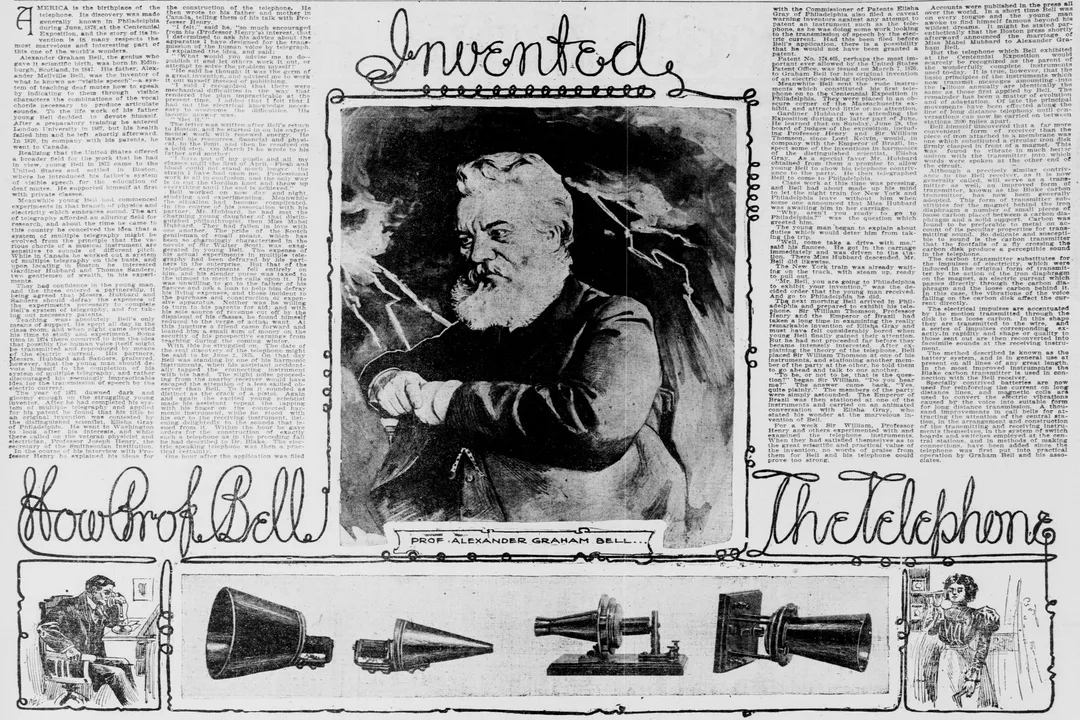
This concept was often termed the "harmonic telegraph," which aimed to send multiple telegraph messages over a single wire simultaneously by using different musical tones or frequencies. [4][5] Bell was investigating methods to transmit continuous electrical variations that corresponded to the vibrations of sound waves. [4] In his mind, if he could transmit one musical tone, he could transmit the complex vibrations that make up human speech. [4][5] The purpose evolved from merely improving telegraph capacity to achieving the transmission of speech itself. [4]
It is fascinating to consider the difference in communication quality this represented. A coded message, like Morse code, is efficient for conveying set information but inherently lacks the nuance of tone, emotion, and immediate understanding present in spoken dialogue. [7] Bell’s goal was to retain the fullness of the human voice in transit, something the telegraph could never achieve. This ambition sets the telephone apart from its technological predecessor.

# The Breakthrough
The definitive moment often cited, March 10, 1876, serves as the practical demonstration of the telephone's purpose being realized. [4][5] The famous first words spoken were, "Mr. Watson—Come here—I want to see you". [4][5][8] This event confirmed that the electrical apparatus could successfully convert sound waves into electrical currents, transmit them, and then convert them back into audible sound at the receiving end. [5] The purpose was achieved: electrical current successfully mimicked the complexities of human vocalizations. [4]
The initial device, though crude compared to later models, proved the principle: voice communication across distances was possible. [1][5] Bell and his assistants, like Thomas Watson, worked to refine the apparatus, but the core purpose—voice transmission—was established in that first successful test. [4][5] The ability to convey immediate, verbal instructions or conversation, rather than relying on pre-written or coded messages, unlocked vast potential. [7]
# Commercialization and Expansion
Once the technical feasibility was proven, the immediate purpose shifted toward securing the invention and establishing its commercial viability. [6] Bell filed his patent application on February 14, 1876, receiving the patent—number 174,465—a few weeks later. [4][8] The rapid progression from patent to demonstration and subsequent commercial interest shows that while the invention was rooted in scientific inquiry and humanitarian pursuits, its practical application was instantly recognized as a massive business opportunity. [6]
The Bell Telephone Company was founded in 1877. [8] The purpose of the telephone, from the perspective of the newly formed corporation, became connecting individuals and businesses across geographical barriers for voice communication. [2] This commercial application quickly overshadowed, or perhaps integrated with, Bell's original acoustic research interests. [9]
The early purpose was highly localized: connecting businesses or affluent homes within a city. [2] The initial investment and infrastructure required meant that access was limited, contrasting sharply with the eventual mass market appeal it gained. [2] A fascinating observation here is the speed at which Bell transitioned from inventor-scientist to patent-holder and businessman; the inherent value of instantaneous, direct verbal communication was too immediate for the technology to remain purely academic or philanthropic for long. [1]
The telephone was designed to provide instantaneous, direct communication between two specific parties, a quality that the telegraph, with its required intermediate operator or coded system, could not match. [7]
# Comparing Early Systems
To better appreciate the purpose, it helps to compare what the telephone replaced versus what it competed with at the time of its introduction:
| Feature | Morse Telegraph | Bell Telephone (Initial) |
|---|---|---|
| Transmission | Coded electrical pulses (dots/dashes) [5] | Continuous electrical current mirroring sound waves [5] |
| Interpretation | Required trained operator to decode [5] | Direct reception of the human voice [4] |
| Speed/Nuance | Slower, lacks tonal quality [7] | Immediate, retains tone and emotion [7] |
| Infrastructure | Established network in the 1840s [6] | Required entirely new, dedicated lines/switches [2] |
This comparison illustrates that the telephone's initial purpose was to introduce fidelity and immediacy into long-distance messaging that the established technology fundamentally lacked. [7]
# Impact on Society and Legacy
The long-term purpose of Bell's invention arguably expanded far beyond connecting two individuals in a private conversation. It reshaped societal structures, business practices, and even personal relationships. [2][6] By enabling people to converse without physically meeting, it began to shrink the distances that separated communities and commerce. [2]
The telephone quickly became essential for commerce, allowing businesses to close deals, coordinate logistics, and manage distributed operations in real-time. [2][6] In this sense, the purpose became economic synchronization across distances. Before the telephone, urgent matters required waiting for the mail or sending a messenger; with the telephone, decisions could be made instantly, which drastically altered the pace of business operations. [6]
Furthermore, the infrastructure developed for the telephone—switching stations and physical wiring—created an entirely new industry and necessitated new social protocols around voice communication. [2] The establishment of centralized exchanges, where operators connected callers, was itself a massive societal undertaking designed to fulfill the purpose of universal connection. [6]
While Bell’s personal dedication remained connected to helping the deaf—he continued to work in this area and championed education for the deaf throughout his life [9]—the telephone's public purpose became inextricably linked to general connectivity and commerce. [3][8] Bell himself reportedly viewed the telephone as a means to help the deaf, perhaps by allowing them to hear transmitted sound more clearly or by creating an industry where they could find employment as operators. [9] The irony is that the commercial success of the voice-only device shifted the focus away from the specialized acoustic needs he initially sought to address. [3]
It’s worth noting that the telephone didn't just replace the telegraph; it created a new category of interaction. While the telegraph remained important for bulk data transmission (like stock market updates or telegrams), the telephone became the medium for personal connection, emergencies, and conversational exchanges that required subtle human interpretation. [7] This differentiation in purpose—coded data versus direct speech—allowed both technologies to coexist and serve different needs for decades. [6]
# The Evolution of Communication Purpose
The initial purpose was about transmission; the subsequent purpose became about presence. When Bell spoke those first words to Watson, the purpose was proving the transmission worked. When subsequent users picked up the receiver, the purpose shifted to feeling the presence of the other person, hearing their tone, and reacting in real-time. [7] This element of immediate, emotional connection is what truly differentiated it from all preceding communication methods, including the telegraph and the mail system. [1]
The technology that resulted from Bell's work set the stage for every subsequent form of voice communication, including radio, mobile phones, and internet voice calls. [8] The fundamental principle—converting acoustic energy into electrical signals for transmission and back again—remains the conceptual starting point. The purpose, therefore, was not just to invent a machine, but to establish the possibility of remote, real-time, voiced human interaction, fundamentally altering expectations about accessibility and immediacy in communication. [1][2] The success of the device proved that the limitations of distance were primarily technological, not social or logistical. [6]
The entire endeavor, spanning from Bell's acoustic studies for the deaf to the first successful call, demonstrates a purpose that was multifaceted: to deeply understand sound, to aid the hearing impaired, and, finally, to bridge distances through the most natural means of human expression—the voice. [3][9] That initial, quiet, technical exploration blossomed into the engine of modern global connectivity. [4]
Related Questions
#Citations
The Story Behind the World's First Telephone
The Story Behind the Telephone | The Franklin Institute
Alexander Graham Bell - PBS
Alexander Graham Bell: Telephone & Inventions - History.com
Ahoy! Alexander Graham Bell and the first telephone call
Invention of the Telephone: Topics in Chronicling America
What is the importance of Alexander bell inventing the telephone?
Alexander Graham Bell - Wikipedia
The Influence of Alexander Graham Bell - Gallaudet University
How the Telephone Was Invented | Britannica