What were Alexander Graham Bell's goals?
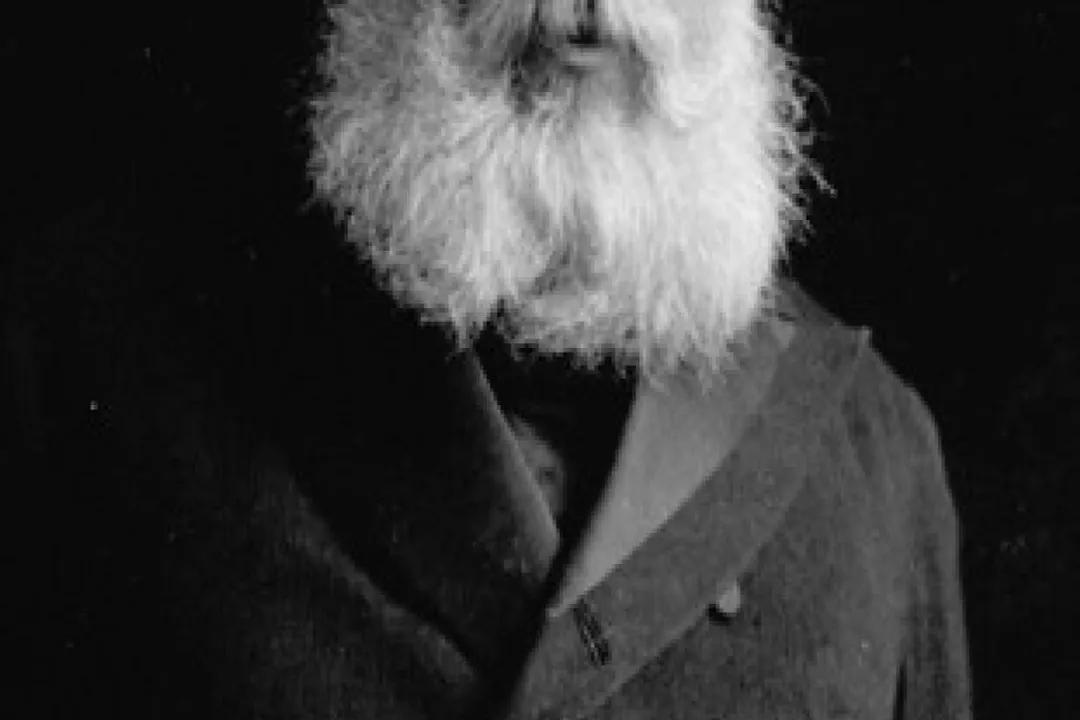
Alexander Graham Bell’s life was not simply a series of happy accidents leading to world-changing inventions; it was driven by deeply personal and clearly defined objectives rooted in the very nature of sound and human connection. From his earliest days, Bell was immersed in the study of speech and acoustics, an environment that profoundly shaped his subsequent ambitions. His primary, lifelong goal was less about creating a single gadget and more about mastering the transmission of the human voice across distances, a pursuit fueled by his intimate understanding of hearing impairment.
# Shaping Intentions
The trajectory of Bell’s goals was heavily influenced by his family's background. His father, Alexander Melville Bell, was renowned for developing Visible Speech, a system of phonetic symbols intended to help the deaf learn to speak. This work meant that young Alexander grew up steeped in the mechanics of vocalization and the challenges faced by those with hearing loss. His mother, Eliza Grace Symonds, was nearly deaf, providing a personal connection to the difficulties of auditory communication. These formative experiences established an initial, powerful goal: to improve the lives of the deaf community through a deeper scientific understanding of sound.
While many associate Bell solely with the telephone, his initial and most persistent educational goal was centered on teaching the deaf to speak. He worked as a teacher of elocution and a professor of vocal physiology, striving to make the invisible process of speech visible and understandable. This commitment informed his later technological leaps. Bell often stated that his work with the telephone was an extension of his primary mission, seeing sound transmission as a tool to bridge human gaps, whether literal or social.
One key area of divergence in his early professional life involved the pedagogical approach to the deaf. Bell championed methods that encouraged the use of vocalization and lip-reading, standing in contrast to oralism versus manual communication methods prevalent at the time. His goal was clearly centered on integrating the deaf into the hearing world through improved speech, though this aspiration was constantly tested by the realities of his scientific exploration.
# The Voice Machine
The quest to transmit speech electrically became the most famous manifestation of Bell's broader goals. It was not a sudden flash of inspiration but rather the logical next step in his long-standing obsession with vocal mechanics. Bell’s immediate technical goal in the early 1870s was to create a "harmonic telegraph," a device that could send multiple telegraph messages simultaneously over a single wire using different musical tones—a concept based on his understanding of sound waves.
However, as he worked alongside his assistant, Thomas Watson, the focus shifted from transmitting multiple telegraph signals to transmitting the human voice itself. The technical breakthrough came from understanding that the human voice created an undulating electrical current that mirrored the sound waves hitting a diaphragm, allowing the transmission of speech. Bell’s successful transmission of the famous phrase, "Mr. Watson—Come here—I want to see you," on March 10, 1876, marked the achievement of a goal that was both deeply technical and profoundly personal: making the voice travel.
It is insightful to consider that Bell pursued this communication goal not for commercial dominance, but because it represented the highest potential expression of his understanding of acoustics. For Bell, the telephone was a scientific proof of concept demonstrating that speech vibrations could be converted, transmitted, and perfectly reconstructed. The subsequent rush to patent and commercialize was perhaps a necessary step to fund his other goals, rather than the primary ambition itself.
| Invention Goal Focus | Primary Underlying Ambition | Timeframe Context |
|---|---|---|
| Harmonic Telegraphy | Efficient use of existing telegraph lines | Pre-1875 |
| The Telephone | Electrical transmission of the human voice | 1875–1876 |
| Sound Recording (Graphophone) | Permanent capture of ephemeral sound | Post-1877 |
| Aeronautics | Understanding principles of flight | Late 1870s onward |
| Hydrofoils | Rapid water transport via dynamic lift | Early 1900s |
# Scientific Reach
While the telephone cemented his fame, Bell himself sought to be known as an inventor and scientist across multiple disciplines. His financial success from the Bell Telephone Company granted him the freedom to pursue scientific inquiries that were far removed from telecommunications, demonstrating a goal of broad, systematic discovery. Bell viewed invention as a continuous process of testing hypotheses against the natural world, meaning any unsolved problem was a potential new goal.
One major area of sustained focus was aviation. Bell was fascinated by flight, believing that air travel was a natural progression following his work on sound waves and vibrations. He established the Aerial Experiment Association (AEA) in 1907 with the specific goal of developing practical airplanes. This work involved intense, systematic experimentation with kites, large tetrahedral box kites, and eventually, powered aircraft. His goal here was not simply to invent a flying machine, but to scientifically understand the principles of heavier-than-air flight.
Another significant, though less publicized, ambition involved hydrofoil technology. After his aviation work, Bell turned his attention to water transport. His goal in this domain was to create vessels capable of high speeds by lifting the hull out of the water, drastically reducing drag. Working with Casey Baldwin, Bell developed the HD series of hydrofoils. Their work culminated in the HD-4, which set a world marine speed record in 1919, demonstrating that Bell’s scientific approach—hypothesis, systematic testing, and data collection—was universally applicable, whether the medium was air, wire, or water. This persistent goal to master new physical domains sets Bell apart from inventors focused on a singular market need.
A lesser-known but related goal involved photophone technology. Building on the principles of the telephone, Bell aimed to transmit sound via beams of light, essentially inventing wireless optical communication decades before its practical application. While his immediate goal was not commercial success in this area, it underscored his drive to find every possible medium through which vibrations—sound or otherwise—could be carried.
# Deaf Education Redefined
Even after the phenomenal success of the telephone, Bell’s commitment to the deaf community did not wane; it simply evolved. His goal shifted from teaching speech to preserving the knowledge and history of deaf culture and ensuring the future welfare of deaf individuals.
Following the establishment of the American Association to Promote the Teaching of Speech to the Deaf (which later became the Alexander Graham Bell Association for the Deaf and Hard of Hearing), Bell continued to support oral education methods. However, later in life, he acknowledged the value of sign language, although his writings often reflected the prevailing view that oralism was superior for societal integration.
Interestingly, Bell held a complex perspective on the future of heredity, which related to his work with the deaf. He participated in eugenics studies, driven by the goal of reducing the incidence of hereditary deafness, though this work is now viewed critically. This demonstrates a goal that, while originating from a place of care and scientific observation, aligned with the sometimes flawed scientific understanding of his era. A modern analysis of Bell's stated goals reveals a consistent theme: he sought to eliminate barriers, whether those barriers were distance (telephone), gravity (aviation), or silence (teaching speech). The means changed—from phonetics to electrical circuits to hydrofoils—but the underlying purpose, facilitating human interaction or overcoming physical limits, remained constant.
If one were to quantify the time spent versus the recognized impact, it might appear that the telephone consumed the majority of his career. However, considering the depth of his personal connection, the decades spent teaching, and his later advocacy, Bell dedicated a significant, arguably greater, portion of his passion toward aiding the deaf. The inventions that brought him wealth were often the means to fund the research that he felt truly mattered to humanity.
# The Scientist's Mindset
To truly grasp Bell’s goals, one must look beyond specific inventions and examine his approach to inquiry itself. His papers reveal a commitment to systematic, often tedious, experimentation. Bell did not just want to invent; he wanted to understand the fundamental laws governing the phenomenon he was studying.
This is evident in his meticulous record-keeping, which now forms a crucial collection detailing his thought process. When working on flight, for instance, he was not content with a single successful flight; he needed to understand the aerodynamics that made the flight possible, leading him to invent the dynamic soaring hydrofoil design as a parallel investigation into lift.
Bell’s philosophy involved moving from the known (sound waves in air) to the unknown (electrical transmission, or dynamic lift in water). An original insight drawn from comparing his diverse goals is that Bell treated all phenomena as reducible to quantifiable forces. Whether he was trying to measure the tension required for a vocal cord vibration or the angle of attack for an airfoil, the goal was to find the mathematical or physical constant governing the action. This scientific purity suggests his ultimate goal transcended any single patent: it was the systematic mastery of physical principles.
His later years were marked by a desire to simplify and improve communication even further, leading him to experiment with solar energy conversion and even rudimentary sound-to-light mechanisms, though these did not reach the commercial success of his earlier work. He continued to refine hearing aids and sound amplification devices, circling back to his initial purpose until the end.
In summary, while the world remembers Alexander Graham Bell for the telephone, his goals were much broader and more deeply rooted in pedagogy and pure science. His ambition was to solve problems related to human connection and physical limitation, using relentless experimentation as his tool. The telephone was merely the most famous solution to the first problem he fully solved, opening the door for him to tackle the next great challenge in aviation, marine science, and ongoing efforts to grant voice to the voiceless. The sheer breadth of his documented experiments indicates a man whose true goal was simply to keep inventing based on what he observed, driven by a deep-seated desire to connect people and overcome natural impediments.
Related Questions
#Citations
Alexander Graham Bell | Biography, Education, Family, Telephone ...
Alexander Graham Bell: Telephone & Inventions - History.com
Alexander Graham Bell - Wikipedia
Alexander Graham Bell - PBS
Inspiration from Alexander Graham Bell's Life and Achievements
The Power of Purpose: How Alexander Graham Bell Gave the World ...
7 Epic Alexander Graham Bell Inventions
Inventor and Scientist | Articles and Essays | Alexander Graham Bell ...
Alexander Graham Bell - National Inventors Hall of Fame®