What did the Montgolfier brothers invent?
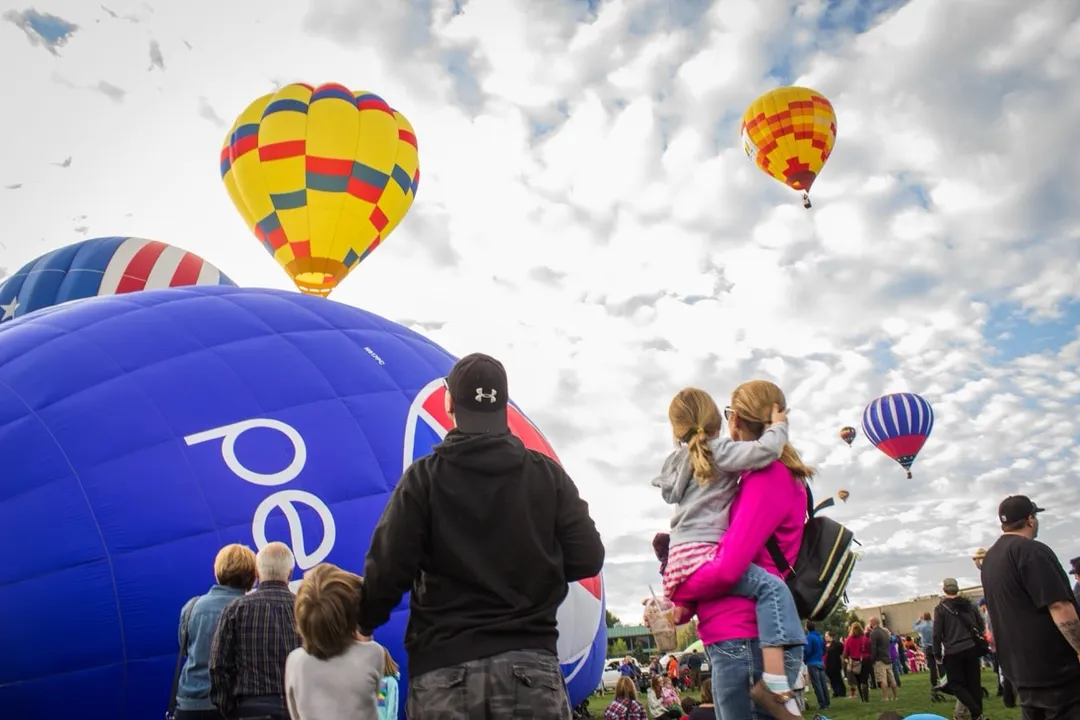
The invention that immortalized the names of Joseph-Michel and Jacques-Étienne Montgolfier was the hot air balloon, a magnificent achievement that fundamentally altered humanity's relationship with the sky. [2][3][4][5][10] These two brothers, hailing from Annonay, France, were not initially aeronauts, but rather paper manufacturers. [1][5][10] Their success in achieving heavier-than-air flight did not come from a single "Eureka!" moment but rather through a series of observations and practical experiments rooted in their family trade. [10]
# Annonay Roots
The Montgolfier family business, established by their father, Joseph-Michel and Jacques-Étienne both became involved in the paper-making enterprise. [10] This background is more significant than it might first appear. Manufacturing paper requires vast amounts of material and, crucially, large, lightweight sheets of material—the perfect precursor for constructing an aerial envelope. [1][5] While the sources don't explicitly detail the exact moment inspiration struck, it is plausible that their constant work with thin, large-scale materials made the leap from paper structures to aerial envelopes far more intuitive for them than for someone outside that specialized industry. The construction of the early balloons required vast quantities of paper and fabric, materials they had readily available. [1]
# Smoke Theory
The initial concept for their lighter-than-air craft stemmed from the observation that smoke and hot air rose. When attending festivals or watching fires, the brothers noticed that smoke was carried upward, suggesting that the smoke itself possessed a lifting quality. [1][2][5] They hypothesized that this rising agent was a specific element or gas, which they termed "Montgolfier gas" or simply "smoke gas". [1][2][5][9] It was this supposed gas, not the mere heat, that they believed was responsible for the lift. [5] This scientific misconception, while ultimately incorrect—the true principle relies on the fact that heated air is less dense than the cooler surrounding air—was the driving force behind their initial experiments. [4]
The practical testing began indoors. They noticed that a light bag made of fine silk, when held over a fire, would ascend when filled with the smoke. [9] This simple indoor demonstration proved that they were on the right track toward making something float, even if their underlying chemical theory was flawed. [1][5]
# Flight Milestones
The journey from small indoor tests to public spectacle involved several critical, well-documented steps, each building upon the last. [1][10]
# First Public Ascent
The first major public demonstration occurred in June 1783 in Annonay. [1][5][10] The Montgolfiers inflated a large paper and fabric bag using straw and wool as fuel, creating the necessary hot air. [4][5] This unmanned balloon successfully ascended into the air. [1][5][10] The sight was remarkable enough that local officials were informed, signaling the importance of the event. [5] This successful unmanned flight provided the necessary proof of concept to seek an audience with the French court in Paris. [1]
# Versailles Passengers
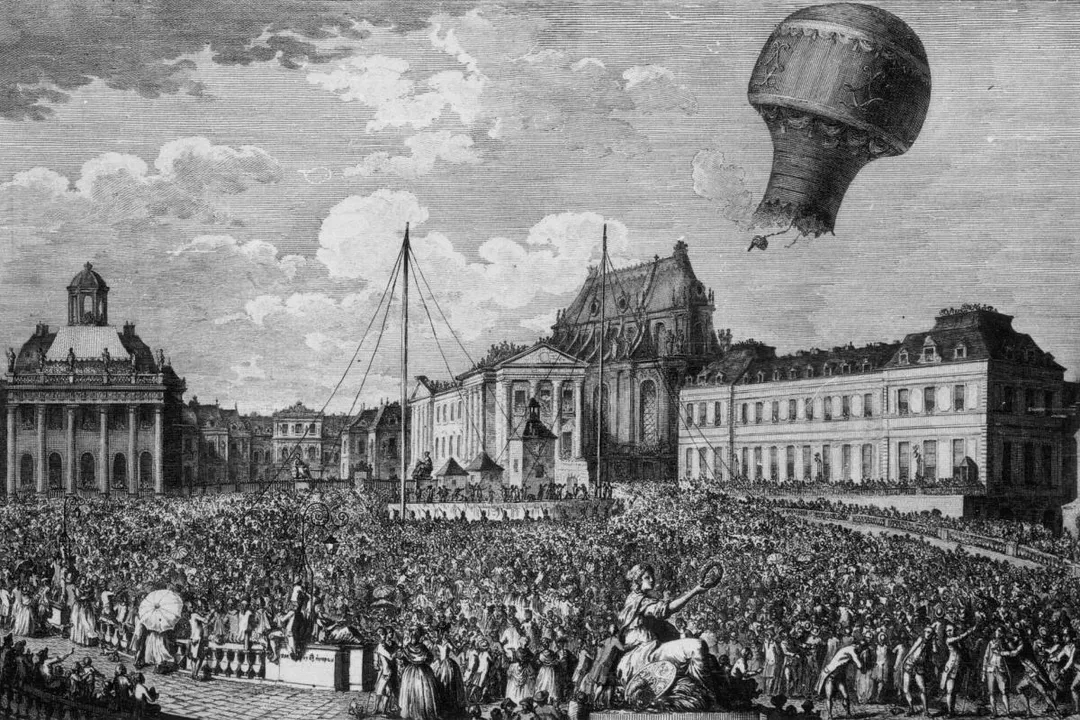
After presenting their findings to the French Academy of Sciences, they were encouraged to conduct a flight before King Louis XVI and Queen Marie Antoinette at the Palace of Versailles. [1][7][10] For this demonstration, which took place on September 19, 1783, the brothers included living passengers to test the effect of altitude on organic life. [7][10] These first official aerial voyagers were a sheep, a duck, and a rooster. [1][7][10] The flight was a success; the animals landed safely, demonstrating that life could survive the journey aloft. [7] This event confirmed to the skeptical scientific community and the enthralled public that the machine was stable enough for human trials. [1]
# Manned Free Flight
The final, crowning achievement came a few months later in Paris. While tethered flights occurred earlier, the first untethered, free-flying manned ascent happened on November 21, 1783. [1][4][10] The honour of being the first humans to fly belonged to Jean-François Pilâtre de Rozier and the Marquis d'Arlandes. [1][7][10] They launched from the Château de la Muette, marking the true beginning of human aeronautics. [1][7]
The fact that the first manned flight was conducted by individuals other than the brothers themselves speaks volumes about their engineering prowess and their faith in the safety of their machine, even if they weren't in the basket at that exact moment. [10] Imagine the scene: two noblemen ascending over the French capital, propelled only by the hot air trapped in a massive bag of paper and cloth. It must have seemed like pure magic to the onlookers below, demonstrating an almost divine mastery over gravity. [4]
# Balloon Design
The construction of the early Montgolfier balloons was both ingenious and somewhat crude by modern standards, relying heavily on the materials at hand. [1] The very first successful unmanned balloon featured an envelope that measured approximately 11 meters (about 36 feet) in diameter. [1]
The construction involved attaching sheets of paper together to form the massive, lighter-than-air envelope. [1] For the first manned flight, the envelope was slightly different; it was constructed of taffeta cloth lined with paper. [7] The opening at the bottom, where the heat was introduced, was reinforced with hoops of wicker. [7]
Here is a quick summary of the key components of the early Montgolfier craft:
| Component | Material | Function |
|---|---|---|
| Envelope | Paper and Taffeta Cloth | To contain the heated air [1][7] |
| Opening/Mouth | Wicker Hoops | To maintain the opening shape and provide access for fire |
| Fuel Source | Straw and Wool | To generate the necessary hot air and "smoke gas" [4][5] |
| Gondola | Wicker Basket | To carry the passengers (animals or humans) [7] |
The brothers recognized that the fire needed to be kept burning during the flight to maintain altitude, necessitating a carefully managed fire source suspended beneath the opening of the envelope. [7] This direct heat source is what distinguishes their invention as a hot air balloon, even though they initially attributed the lift to the smoke itself. [4][5]
# Aviation Birth
The success of the Montgolfier balloon triggered an immediate and widespread frenzy in France and across Europe. [2] It was a spectacle that captured the public imagination instantly. [4] The achievement was not just a scientific curiosity; it was a profound moment in history, effectively marking the birth of aviation. [2][3][10] While subsequent inventors would refine the design, focusing on hydrogen gas or streamlined shapes, the Montgolfiers provided the essential first step: proving that human beings could indeed ascend into the atmosphere using a controlled, lighter-than-air vehicle. [2][9]
Considering the reaction, it is striking how quickly the focus shifted from if it could fly to how they could fly higher or farther. Within a year, inventors were already experimenting with different lifting gases, eager to move past the heavy, cumbersome need for an open fire burning below the basket. This rapid transition from the Montgolfiers' hot air concept to the chemically-lifted balloons that followed demonstrates that the primary contribution was demonstrating the possibility of controlled ascent, rather than perfecting the specific lifting mechanism itself. [2][9]
The brothers, Joseph-Michel and Jacques-Étienne, were subsequently recognized and honored for their groundbreaking work, securing their place in the annals of history as the pioneers who first gave humanity wings. [9][10] Their invention remains a testament to observation, practical application, and the courage to test theories—even flawed ones—at great heights. [4]
Related Questions
#Citations
Montgolfier brothers - Wikipedia
The Montgolfier Brothers' Balloon | The Museum of Flight
When Was The Hot Air Balloon Invented? Wild History
The Montgolfier Hot Air Balloon - Age of Revolution
The History of Hot Air Balloons: When Were They Invented?
Jacques-Étienne and Joseph-Michel Montgolfier | Research Starters
The first hot air balloon flight 19 September 1783 - Versailles
Montgolfier Brothers | Smithsonian Institution
Joseph-Michel and Jacques-Étienne Montgolfier | First Flight, Hot Air ...
Today we celebrate the first manned hot air balloon flight, launched ...