Why did the Montgolfier brothers send three animals up in their balloon?
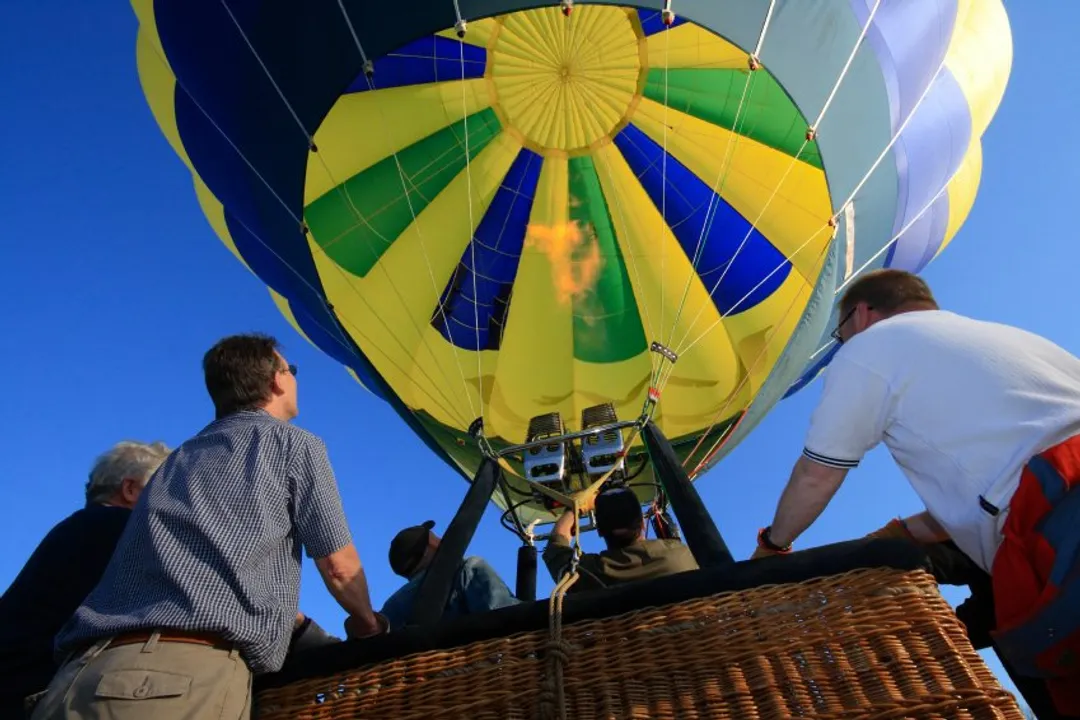
The historic moment when humanity first launched living creatures into the sky, preceding any manned ascent, remains a fascinating chapter in the story of aviation. When Joseph-Michel and Jacques-Étienne Montgolfier sent their hot-air balloon aloft from the grounds of the Palace of Versailles on September 19, 1783, the small wicker basket carried a very specific, carefully chosen scientific crew: a duck, a sheep, and a cockerel. [1][2][8] The decision to include these three particular animals was not arbitrary; it represented the very first structured attempt to understand the physiological effects of altitude on terrestrial and avian life, a necessary precursor to sending people into the unknown vastness above the Earth. [1][9]
# Scientific Precedent
Before the Montgolfiers could dream of strapping themselves into their developing contraption, the fundamental question looming over their magnificent, paper-lined envelopes of heated air was simple yet terrifying: Would life survive the ascent?[5] The Montgolfiers had already conducted several successful unmanned flights, some tethered and some free, using smoke generated by burning straw and wool to inflate their craft. [5] However, these tests only confirmed that the lighter-than-air principle worked; they offered no data on how the atmosphere at higher altitudes—with its corresponding pressure and temperature changes—would affect a complex organism. Sending up a payload of straw or a weight was one thing; sending up a living being was an entirely different level of commitment and risk, demanding observable biological data. [1] The brothers, driven by an inventive spirit honed by their paper-making enterprise, knew they needed biological proof of concept before risking a human life, even their own. [4] This step was a hallmark of their methodical approach, demonstrating an early understanding of the protocols that would later become standard in aerospace exploration.
# Crew Selection
The composition of the first aerial crew—a sheep, a duck, and a cockerel—reflects a primitive but logical attempt to cover different biological classes necessary for early safety certification. [1][8] Each animal served a distinct, if perhaps imperfectly understood, scientific purpose in the context of the late 18th century.
# The Sheep Substitute
The sheep was arguably the most critical passenger, intended as a stand-in for a human being. [8] It was believed that a sheep, being a mammal of comparable size and structure to an average man, would offer the best proxy for judging the effects of the thinning air and changing pressures on human physiology. [1] The hope was that if the sheep could withstand the flight unharmed, a human might too. The sheep was reportedly placed snugly inside the basket, awaiting its historic voyage. [8] This substitution points to a pragmatic, if somewhat naive, approach to early biomedical testing, relying on readily available farm animals rather than specialized laboratory subjects. [8] It speaks volumes about the era that the test subject for the world’s first flight was essentially a large, woolly analog for the pilot. [1]
# Avian Testing
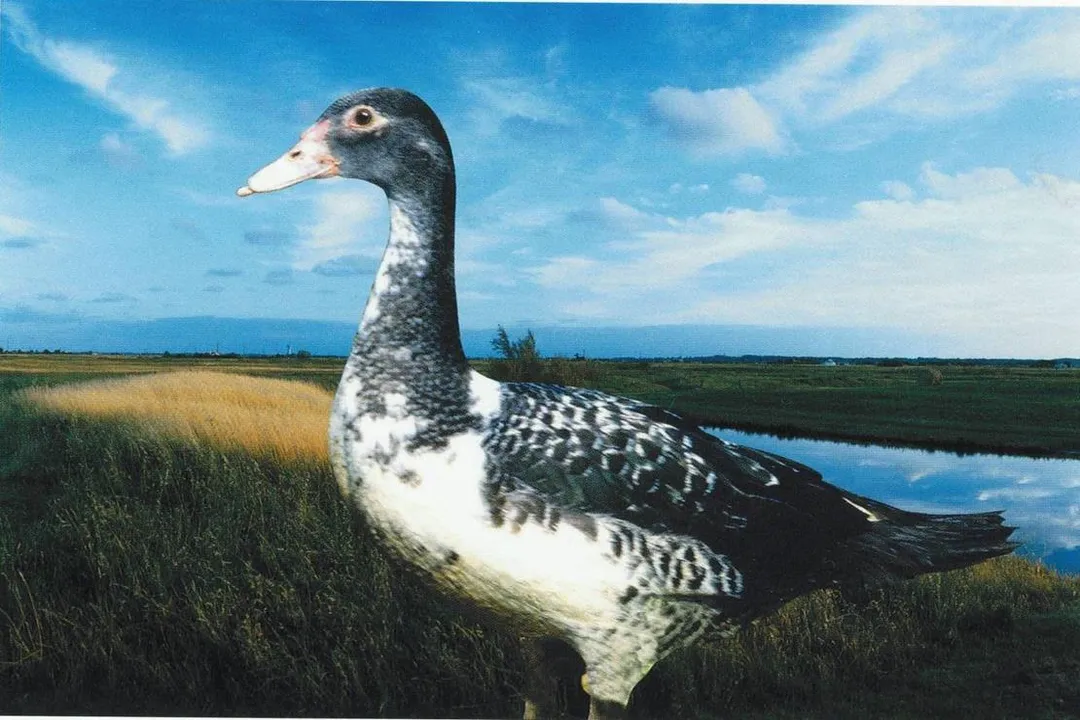
The inclusion of the duck and the cockerel addressed a different, yet equally important, biological variable: flight itself. [1][8] The brothers and their contemporaries understood that birds were masters of flight and had evolved mechanisms to cope with atmospheric variations. If a bird, already adapted to natural aerial navigation, suffered ill effects such as suffocation or injury due to the balloon’s ascent, it would suggest that the altitude itself—perhaps the lack of oxygen or the rapid movement—was fundamentally hostile to all life, regardless of whether it was naturally flying or passively transported.
The duck was often specifically cited as the inclusion meant to test the effect of altitude on an animal naturally capable of flight. [1] If the duck survived, it provided reassurance that the change in air density or pressure alone, as experienced during the balloon’s climb, would not incapacitate a creature already accustomed to navigating different atmospheric layers. [8] The cockerel, or rooster, completed the trio. While sometimes grouped simply as a secondary bird test, its inclusion alongside the sheep and duck created a small, cross-species biological snapshot: a terrestrial mammal, a waterfowl, and a common fowl. [1] It ensured a broader base of initial physiological observation from the returned specimens. [8]
It is worth noting an interesting comparative element here: had the Montgolfiers possessed knowledge of modern aerospace medicine, they might have chosen a creature that flies at much higher altitudes, like certain migratory birds, to better gauge the environment. Instead, their selection was based on immediate availability and perceived suitability as analogues for human or known biological responses, highlighting the experiential nature of their scientific methodology. [4] This early biological trial design, pairing a ground-based mammal with creatures adapted to lower-altitude flight, established an unwritten standard for comparative aerial physiology that would subtly persist for decades as scientists tried to map out survivable zones in the atmosphere. [1][8]
# The Versailles Flight
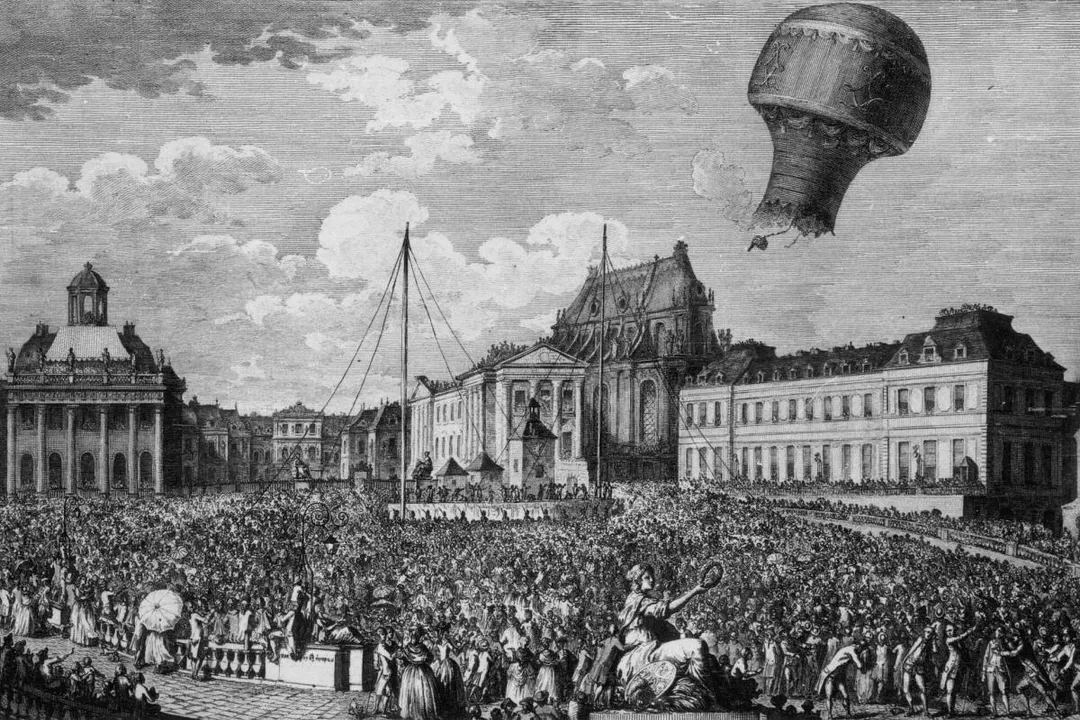
The chosen venue for this critical test was the vast royal estate at Versailles, a stage fit for such a momentous occasion, attended by King Louis XVI and Queen Marie Antoinette. [2] On the designated morning, the massive balloon, heated by a roaring fire burning straw and dampening wool, ascended into the sky. [2][5] The design of the balloon, known as a Montgolfière, relied on simple physics: heating the air inside made it less dense than the surrounding cooler air, generating the necessary lift. [5]
The flight itself was relatively brief but intensely scrutinized. The passengers traveled aloft, propelled by the fire below, until the air cooled or the fuel was sufficiently expended to begin the descent. [2] The balloon traveled approximately two miles (or about 3,000 meters, depending on the source interpretation of the period’s measurements) before landing safely in the woods near Buckingham, just outside Versailles. [1][2][8] The safe return of the craft was critical; a crash would have rendered any biological observations inconclusive or attributed injury to impact rather than altitude. [2]
# Assessing the Results
Upon landing, the attention immediately turned to the three passengers. [1][8] Accounts confirm that the sheep, the duck, and the cockerel were all alive upon retrieval. [2][8] This was the ultimate validation for the Montgolfiers’ hypothesis: living organisms could survive being carried aloft by heated air. [1][9]
There was some initial confusion or debate regarding the condition of the animals. Some reports suggested the duck might have sustained an injury, perhaps a broken wing, leading to speculation that it had perhaps tried to fly and fallen within the basket, or perhaps suffered from the altitude after landing. [1][8] However, the general consensus, and the conclusion that paved the way forward, was that all three had survived the experience without any permanent harm attributable to the journey itself. [2][8] The sheep, the crucial human analogue, was reportedly in good health, and the birds seemed generally unaffected by the high-altitude transit. [1][8]
This success was an immediate and profound signal to the scientific community and the monarchy. It transformed the hot-air balloon from a fascinating toy or parlor trick into a viable vehicle for human transport. [5] The experiment provided the necessary empirical evidence to proceed to the next, even more daring, stage: the first manned untethered flight, which would follow only a few months later in November 1783. [2][4]
# Legacy of the First Passengers
The trio of animals, often forgotten in the shadow of the first human balloonists, Jean-François Pilâtre de Rozier and the Marquis d'Arlandes, were the true pioneers. [4] They faced the unknown conditions of the upper atmosphere for the first time, enduring whatever pressure and temperature fluctuations the brief journey entailed. [1] While they did not choose their mission, their safe return provided the first "go" signal for manned flight. It is a fascinating point of comparison to note that the 1783 flight occurred without any understanding of atmospheric composition—the role of oxygen, for instance, was not yet scientifically codified in the way we understand it today. [4] The Montgolfiers succeeded purely through empirical observation, relying on the simple, observable fact of the animals’ continued life signs post-flight. [5]
The choice of animals also created a unique historical artifact. Unlike the manned flights, which generated immediate, detailed personal accounts, the story of the sheep, duck, and cockerel relies on the observations of the recovery team. [8] Imagine the scene: the landing in the woods, the careful opening of the wicker basket, and the immediate visual assessment of three very surprised farm animals. That assessment, recorded in historical documents, validated the entire enterprise. The Montgolfiers’ brothers’ work, rooted in their paper manufactory, represented a leap of faith backed by methodical, if rudimentary, biological testing. [4] They didn't just invent a machine; they established the very first protocol for aerial biological safety testing, ensuring that the future of aviation would be built upon observed, rather than purely theoretical, foundations. [1][9]
Related Questions
#Citations
A Rooster, a Duck, and a Sheep Walk Into a Hot Air Balloon...
The first hot air balloon flight 19 September 1783 - Versailles
When Was The Hot Air Balloon Invented? Wild History
Montgolfier brothers - Wikipedia
A Brief History of Hot Air Ballooning - Broadland Balloon Flights
Today in 1783, the Montgolfier brothers' balloon launched carrying ...
Who Were the First to Fly? Meet the Ballooning Brothers
The day a duck, a sheep and a cockerel took to the air in 1783
Farm animals were the first passengers to fly in a hot air balloon.