What did Kirkpatrick Macmillan invent?
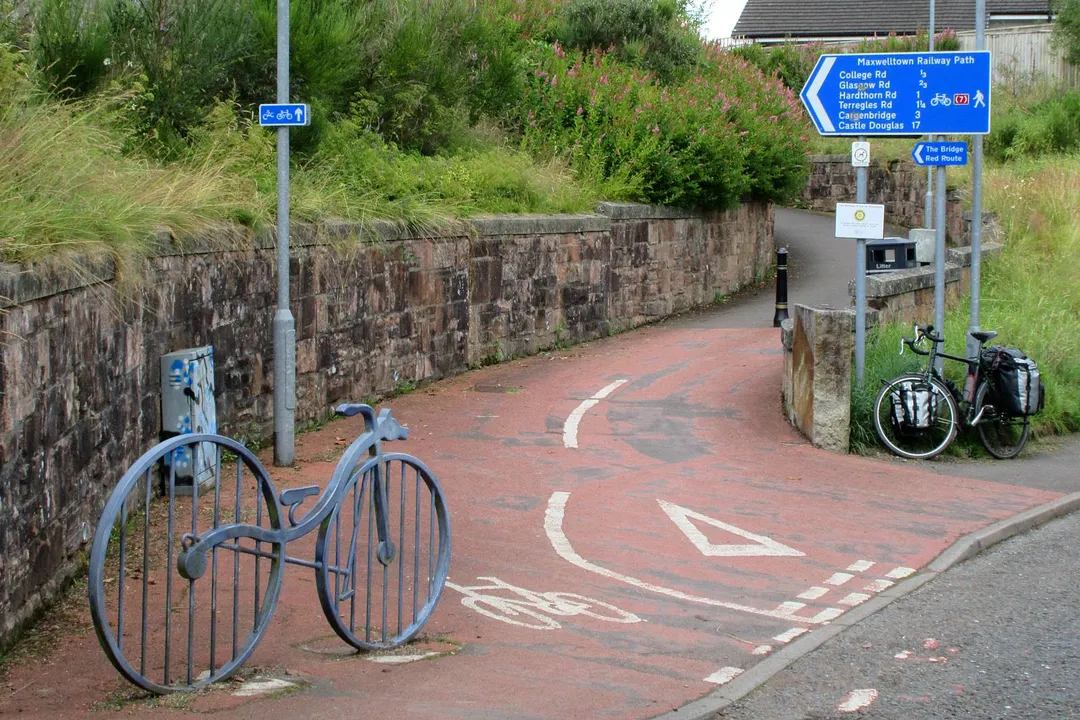
The name Kirkpatrick Macmillan might not immediately spring to mind when discussing the origins of the modern bicycle, yet this blacksmith from the Scottish Borders holds a fascinating, if somewhat debated, position in cycling history. Born in the early 19th century, Macmillan is credited by many accounts with creating a machine around 1839 that possessed the defining feature of the "safety bicycle" that would eventually dominate the roads: a rear-wheel-driven mechanism. [1][2][5][8] Unlike the clumsy hobby-horses or the front-wheel-driven velocipedes that preceded it, Macmillan's design aimed to move the power source away from the steering wheel, representing a significant conceptual leap in personal transport technology. [1][2]
# Blacksmith Inventor
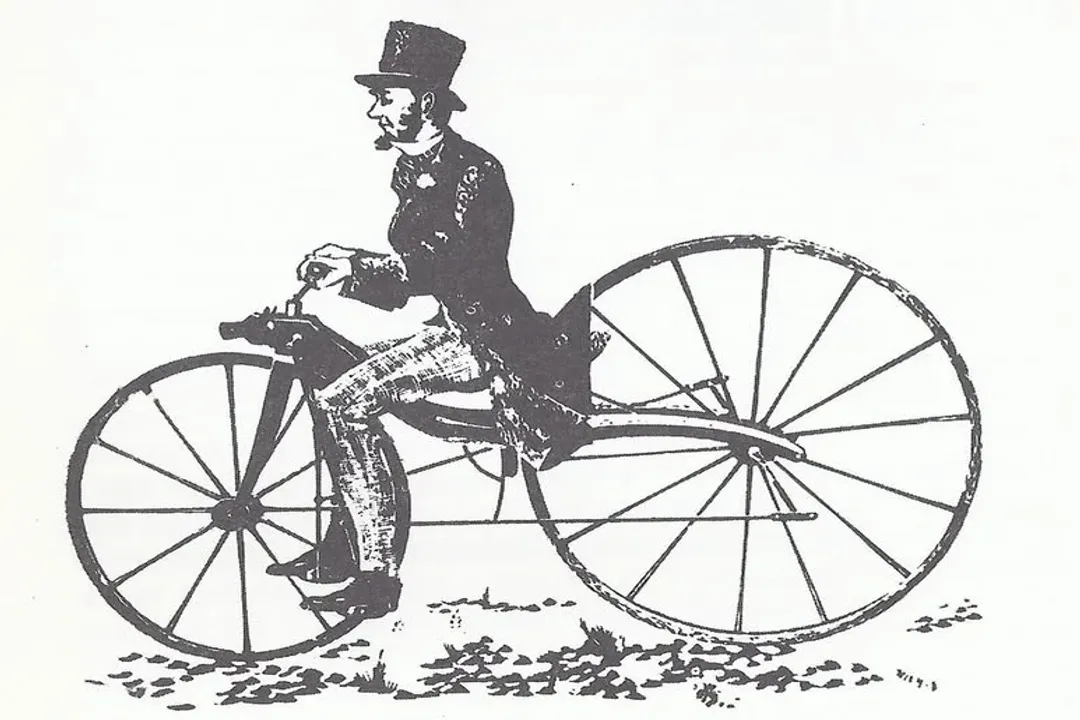
Kirkpatrick Macmillan lived from 1812 to 1878, spending his life working in Courthill, near Hawick, in what is now known as the Scottish Borders. [1][2][8] His trade as a blacksmith was immensely relevant to his mechanical endeavors. Working with iron and metal gave him the practical skills necessary to fabricate the complex linkages required for a self-propelled vehicle. [2] His contemporaries in the field were often engineers or clockmakers, but Macmillan brought the practical, workshop-honed expertise of a tradesman to the problem of human-powered locomotion. [8]
The core of the story is that Macmillan, driven perhaps by a desire for personal transport that didn't require constant kicking along the ground, engineered a device that allowed the rider to remain seated while generating forward momentum. While the exact timeline is slightly murky, with the commonly accepted date being 1839, his work occurred well before the widespread adoption of the pedal crank mechanism in the 1860s. [1][5] His contribution is rooted in this specific mechanical solution: driving the rear wheel rather than the front.
# Rear Drive System
The machine attributed to Macmillan was not propelled by pedals attached directly to the front wheel, as seen in the later vélocipède or "boneshaker". [1] Instead, it employed a series of linkages that connected the rider's feet to the rear axle. The mechanism involved cranks and treadles—essentially levers that the rider pushed back and forth in a rocking motion. [1][5] These treadles were linked via rods to a ratchet mechanism attached to the rear wheel. [5]
This system meant that as the rider worked their feet up and down on the treadles, the connecting rods translated that motion into a rotational push on the back wheel, propelling the entire contraption forward. [2] The crucial engineering difference here is the separation of steering and propulsion. In earlier designs, the front wheel served both purposes, making steering heavy and power application clumsy. [1] Macmillan’s design, by placing the drive on the rear axle, established a layout that would become standard for bicycles centuries later. It is a genuine insight to recognize that this mechanical separation—placing the power application on the non-steering wheel—is arguably a more fundamental step towards the practical bicycle than simply adding cranks to the front wheel, even if the final implementation (direct crank drive) proved more efficient than Macmillan's linkage system. [1]
The machine was famously reported to have solid wooden wheels, possibly banded with iron, lacking the pneumatic tires that would revolutionize cycling comfort much later. [5] The overall frame construction would have been heavy, characteristic of early metalworking techniques. [2]
# Historical Controversy
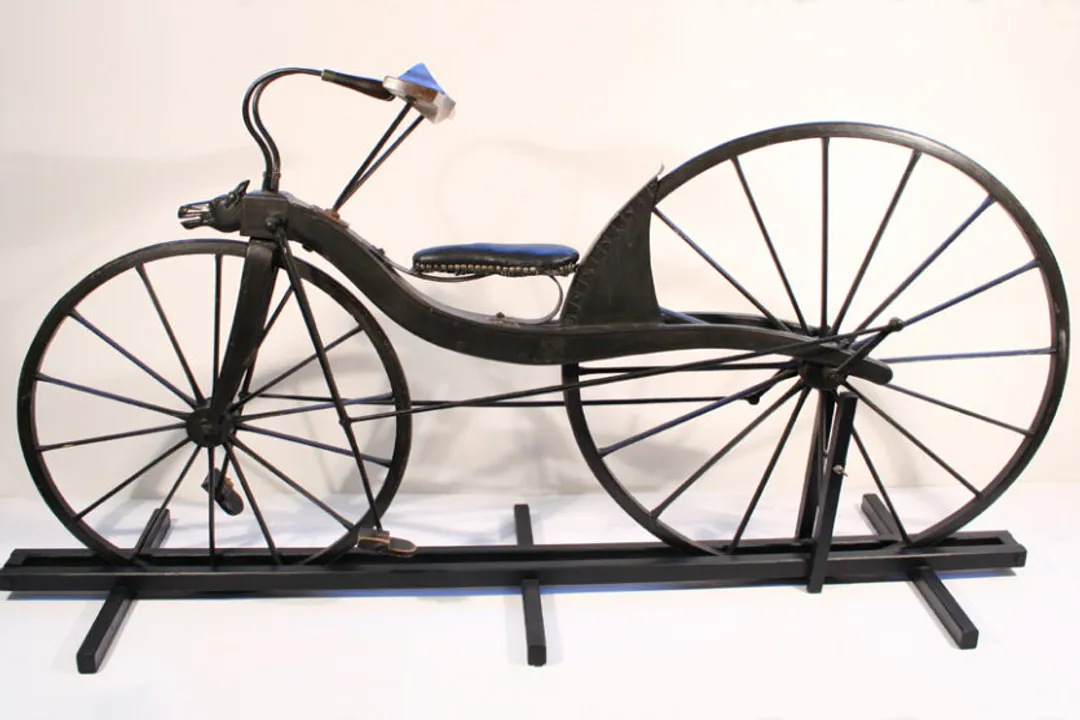
Despite the compelling nature of the invention, the historical documentation surrounding Kirkpatrick Macmillan's bicycle is tenuous, which leads to ongoing debate among historians. [1][5] The primary source material confirming the invention is surprisingly late: a letter written in 1895 by his son, James Macmillan, to the Kirkintilloch Herald. [1][5] This account, written over fifty years after the alleged invention, details Macmillan’s construction of the machine and its alleged use. [5]
A critical piece of local folklore supporting the claim involves Macmillan allegedly riding his machine into the town of Dumfries and knocking over a young girl, resulting in a fine. [2][8] Local tradition suggests that the resulting embarrassment, and perhaps the legal trouble, led him to abandon further development or public demonstration of his creation. [2][8] This element of the story, whether entirely factual or embellished over time, serves as a possible explanation for why such a mechanically advanced design did not immediately enter mass production or influence others directly, which is a fascinating socio-historical point to consider. [2][8] If true, the combination of local disapproval and the cost of a fine might have been enough to suppress an innovation that was arguably decades ahead of its time in mechanical configuration.
Historians often point out the lack of contemporary evidence from the 1840s or 1850s that would confirm the design’s existence outside the family narrative. [1] Furthermore, the true mass adoption of the bicycle is usually credited to Pierre Michaux and his son Ernest in Paris in the 1860s with their front-wheel crank-driven design. [1] The challenge for Macmillan's legacy is proving that his rear-wheel linkage system was both built and functional before the Michaux design gained traction, and that it was not an independent, isolated creation that died with its inventor. [5]
# Replicas and Memory
Because Macmillan’s original bicycle has been lost to time—a common fate for early, experimental prototypes—the public understanding of his invention relies heavily on reconstructions. [1][3][5] The need to visualize and preserve this history has driven dedicated efforts in the Scottish Borders.
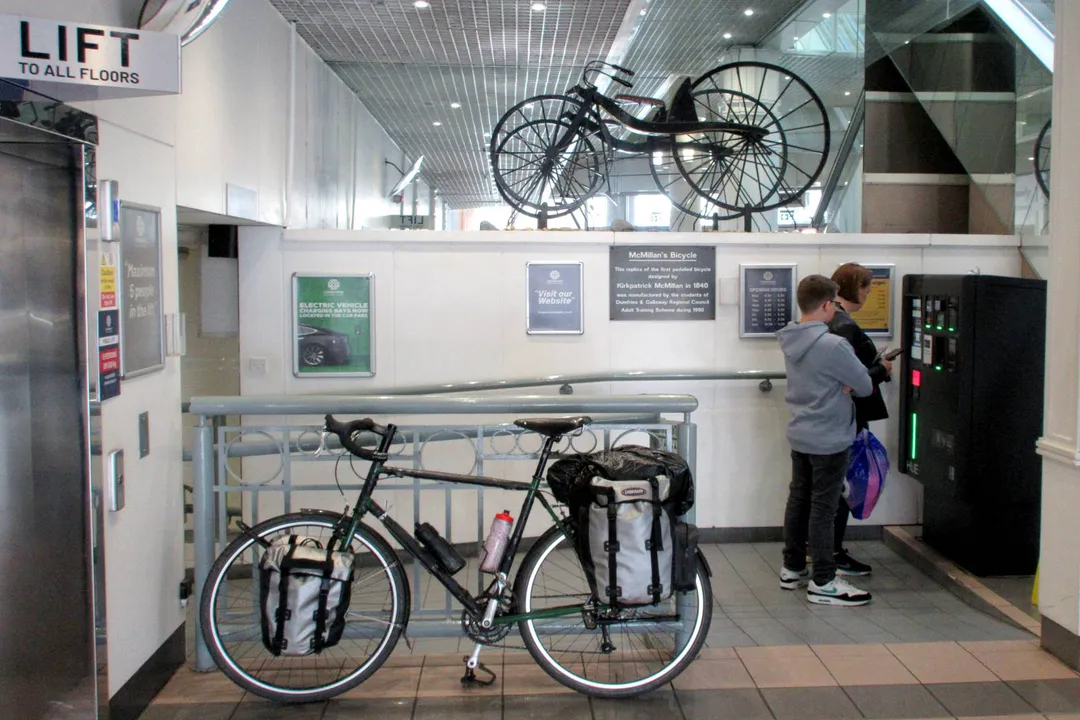
One significant effort was undertaken by the Dumfries Bicycle Club, which commissioned a replica based on the contemporary descriptions available. [5] This replica, designed to honor the local inventor, is now part of the collection at the National Museum of Scotland, housed at the Museum of Flight near East Lothian, though sometimes displayed in Glasgow. [5][7] Another replica is sometimes associated with Drumlanrig Castle, reinforcing the regional connection to the story. [3] Seeing these replicas helps bridge the gap between the written story and a tangible object, allowing enthusiasts to appreciate the engineering challenge Macmillan faced. [7]
These reconstructions are essential for appreciating the how of the invention. They illustrate the mechanical translation from leg movement to wheel rotation, which is far more complex than simply putting one’s feet on pedals. [5] When examining such a replica, one can immediately see the extended rods and the ratchet assembly that differentiates it from later designs. For example, the weight distribution and the necessary body English required to keep the machine moving smoothly would have presented a steep learning curve for any early rider. [5]

# Legacy and Routes
Despite the historical ambiguity, Kirkpatrick Macmillan is celebrated within Scotland, particularly in the Borders region, as a pioneer of personal mechanical transport. [8] His contribution is recognized by institutions dedicated to preserving Scottish history and ingenuity. [7][8]
The connection to the land where he worked also inspired modern cycling enthusiasts. For instance, the route between Dumfries and Keir Mill—the location where Macmillan supposedly built his device—has been identified and mapped as a way for cyclists to trace the potential path of this groundbreaking machine. [4] Following such a route, perhaps on a modern machine, provides a tangible sense of connection to the landscape that hosted this early innovation, highlighting the journey from an iron-forged concept in a small Scottish workshop to a global phenomenon. [4]
If we consider the timeline, Macmillan’s alleged invention in 1839 occurred when transportation was dominated by horses or walking. His creation represents an early push toward mechanized, individual mobility that preceded the railway boom’s main expansion and the later explosion of bicycle popularity. While the direct lineage to the modern bike is disputed in favor of the French crank-driven design, Macmillan’s mechanical solution—driving the rear wheel—remains a highly original engineering concept for that era. [1] His story serves as a reminder that invention is rarely a singular event; rather, it is often a series of parallel attempts across different locations, only one of which gains the historical momentum to become dominant. Macmillan’s unique contribution lies in his successful, albeit locally documented, implementation of rear-wheel drive before the rest of the world standardized the concept.
# Comparing Power Transfer Methods
To better understand Macmillan's specific contribution, a comparison with the immediate next step in bicycle development is useful. The immediate successor, the boneshaker, used cranks directly attached to the front wheel hub. [1]
| Feature | Macmillan’s Design (c. 1839) | Michaux/Boneshaker (c. 1860s) | Modern Safety Bicycle (c. 1880s+) |
|---|---|---|---|
| Drive Wheel | Rear Wheel | Front Wheel | Rear Wheel |
| Power Transfer | Rods and Linkages to Ratchet | Direct Crank attached to Axle | Chain and Sprocket |
| Rider Input | Pushing Treadles (rocking motion) | Pedaling in a circle | Pedaling in a circle |
| Steering | Front Wheel (separate) | Front Wheel (integrated) | Front Wheel (separate) |
| Primary Mechanism | Lever-Action Power | Direct Rotational Power | Geared Rotational Power |
| [1][5][7] |
This table clearly illustrates that Macmillan bypassed the front-wheel drive issue entirely by moving the power source to the back, an engineering choice that aligns perfectly with modern design principles regarding steering stability and frame geometry. [1] While the linkage system was inefficient—it lost energy through friction in the rods and the ratchet mechanism likely only engaged on one direction of the stroke—the concept of rear-wheel drive was realized. [5] The gap between Macmillan’s mechanical linkage and the later efficient chain drive is significant, but the conceptual separation of steering and power is the true element of genius often attributed to him. [1] The subsequent adoption of the chain drive by inventors like John Kemp Starley in the 1880s was essentially an elegant, more efficient way to achieve the same goal: driving the rear wheel while steering with the front. [1] Macmillan’s work, therefore, sits in an important mechanical niche: the first known attempt at the layout that would eventually win out, even if his execution of power transfer was superseded.
# The Enduring Appeal of the Local Legend
The persistence of the Macmillan story, even with its evidentiary gaps, speaks to a deep cultural appreciation for local ingenuity. [8] In an age where major technological breakthroughs often seem to emerge from established industrial centers, the image of a humble blacksmith in the Scottish Borders independently devising a complex mechanical solution holds significant appeal. [2] It reinforces the narrative that innovation can spark anywhere, regardless of formal scientific or industrial backing. The fact that the original machine is gone means the physical proof is absent, leaving the story to be sustained by oral tradition and the few documented reminiscences. [1][5] This forces those interested in the history of technology to engage in a different kind of research—one that combines engineering assessment with historical skepticism and cultural anthropology. It is less about definitively declaring him the inventor of the bicycle and more about understanding why his attempt deserves preservation in the annals of engineering attempts. The replica at the museum is not just a model of a machine; it's a testament to the belief in this local hero's contribution.
Related Questions
#Citations
Kirkpatrick Macmillan
Historic Figures: Kirkpatrick Macmillan (1812 - 1878) - BBC
Kirkpatrick MacMillan Bicycle
Kirkpatrick Macmillan 1: Dumfries to Keir Mill
Kirkpatrick Macmillan and his Rear-wheel Driven Bicycle
Scottish inventors pedal driven bicycle history
Replica of Kirkpatrick Macmillan's bicycle - Future Museum
Kirkpatrick Macmillan Inventor | History of Scotland