How did the Wright Brothers impact the world?
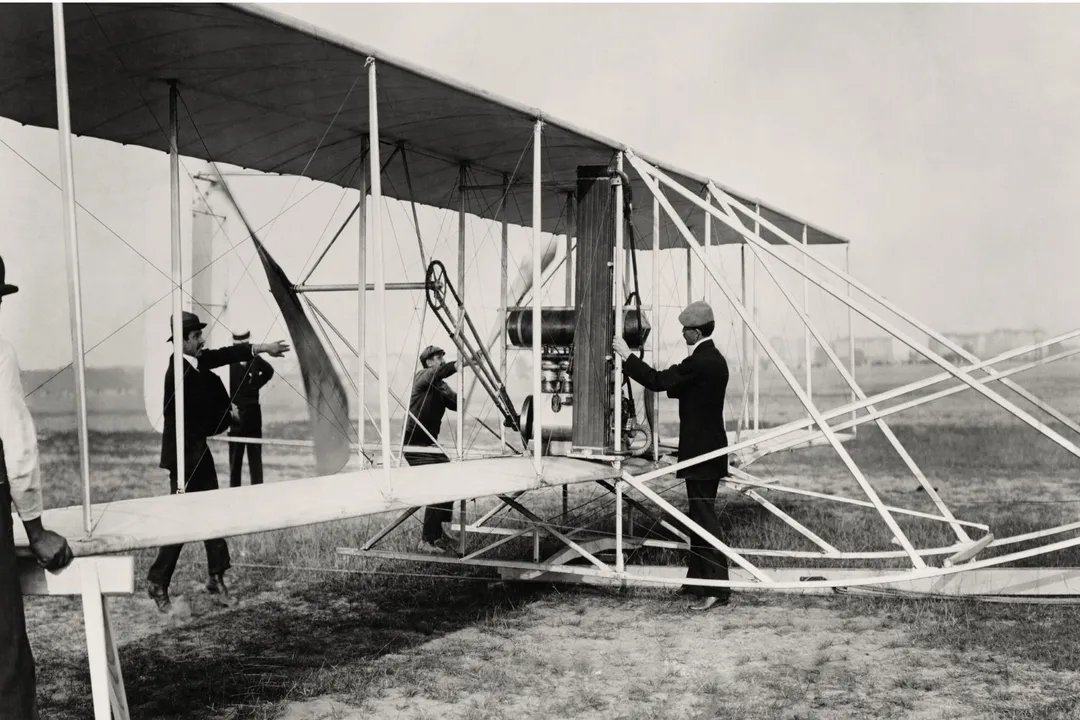
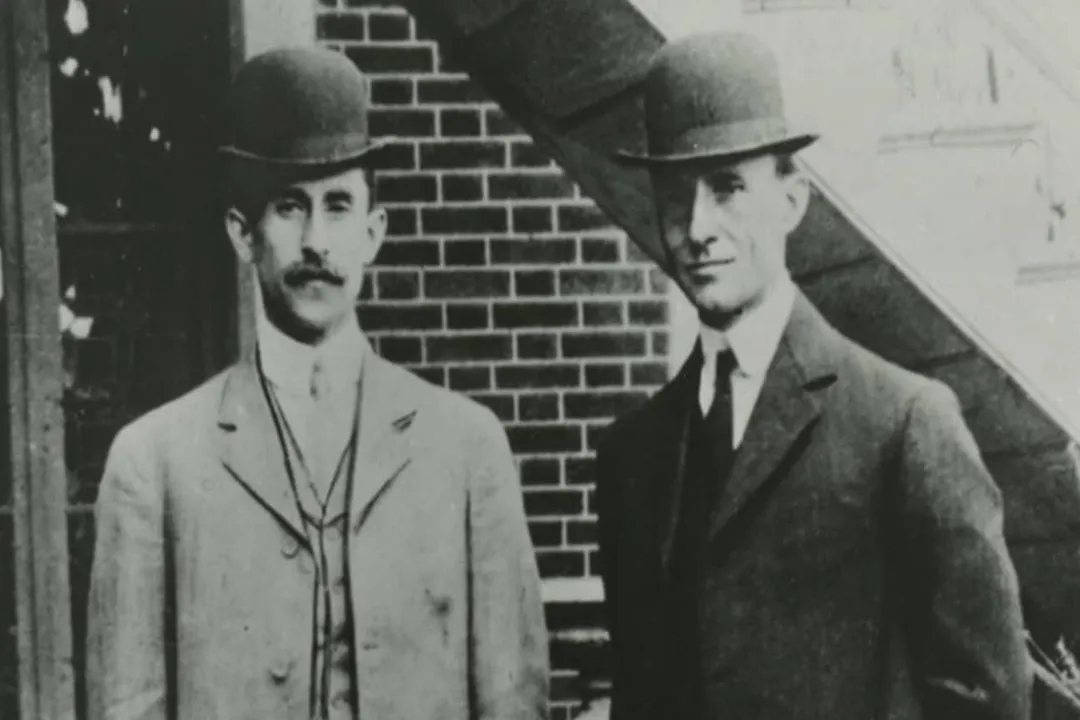
The faint roar of an engine sputtering to life on the cold sands of Kitty Hawk, North Carolina, on December 17, 1903, marked an instantaneous and irreversible shift in human capability. That morning, Orville Wright guided the Wright Flyer into the air, sustaining flight for 12 seconds over a distance of 120 feet. A few days later, Wilbur achieved the longest flight, covering 852 feet in 59 seconds. These initial, brief excursions were not merely sporting achievements; they were the definitive answers to an age-old human aspiration, forever altering geography, warfare, and commerce. The brothers, Wilbur and Orville, mechanics from Dayton, Ohio, who fixed and sold bicycles, had accomplished what many scientists and wealthy inventors had failed to secure: sustained, controlled, heavier-than-air flight.
# Kitty Hawk Moment
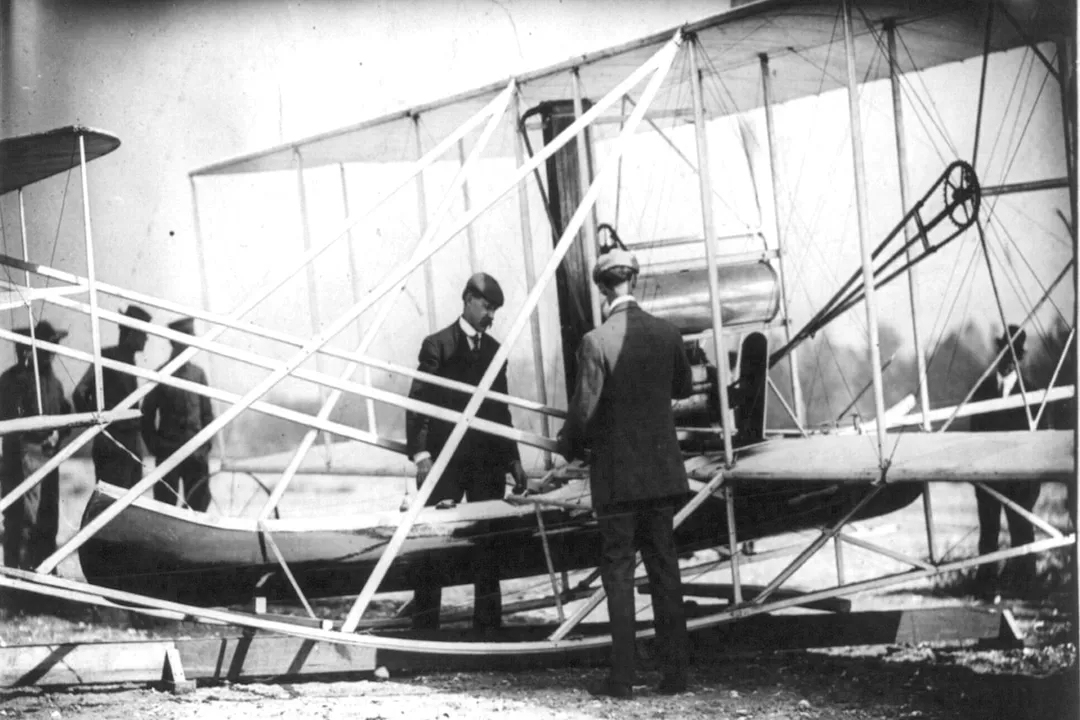
The location itself, a remote stretch of dunes in North Carolina, was chosen with scientific rigor, not romantic impulse. The Wrights required high, consistent winds for testing their experimental gliders and soft sand to cushion inevitable landings. They had spent years perfecting their understanding through meticulous glider tests, often making hundreds of controlled descents before attempting powered flight. This methodical preparation separated them from many contemporaries who focused solely on building a powerful engine to strap onto a fixed-wing structure. The Flyer itself was an engineering marvel of its time, constructed from spruce wood, covered in unbleached muslin, and powered by a custom-built, four-cylinder engine delivering 12 horsepower. Their decision to build the engine and propellers themselves—rather than adapting an existing motor—underscored their belief that every component needed precise control for success.
# Control Solved
The true genius of the Wright Brothers was not in creating a flying machine, but in creating a controllable flying machine. Many earlier attempts focused on achieving mere lift or power, resulting in aircraft that were little more than uncontrolled gliders prone to crashing once airborne. The Wrights recognized that a pilot needed to manage three axes of motion: up and down (pitch), side-to-side rocking (roll), and turning left or right (yaw).
Their innovation for lateral control—the ability to correct side-to-side roll—was wing warping. This required the pilot to manipulate wires that twisted the wingtips in opposite directions, a technique that directly prefigured modern ailerons. For pitch control, they used a forward-mounted elevator, and for yaw, they developed a system where the rudder could be interconnected with the wing-warping mechanism. This integration ensured that when the pilot corrected for a bank, the aircraft also coordinated its turn without sliding sideways—a concept often referred to as three-axis control. This mastery over control is perhaps their single greatest contribution to aviation science.
It is worth noting that the established aviation community often dismissed the necessity of this complex control mechanism, preferring simplicity or relying on inherent aircraft stability, which proved insufficient for true maneuvering. The Wrights’ insistence on this integrated, pilot-driven control system—born from observing how birds balanced themselves—was the conceptual breakthrough that unlocked practical flight. While others chased raw power, the brothers obsessed over the input/output relationship between the pilot's action and the machine's reaction, a focus that distinguishes their scientific experience from that of pure mechanics.
# Bicycle Builders
The brothers’ background in the bicycle industry profoundly shaped their approach to invention and business. Bicycles required an intimate understanding of balance, steering geometry, and lightweight yet sturdy construction—all skills directly transferable to aeronautics. Furthermore, their experience running a successful small business instilled in them a necessary degree of secrecy and an aggressive approach to protecting their intellectual property.
After the 1903 success, they spent several years refining the Flyer, building better models, and working to secure patents, often met with skepticism, particularly from the American press and government. They famously demonstrated their machine in Europe and the United States in 1908, which finally shattered the doubts surrounding their earlier claims. In Europe, Wilbur performed stunning maneuvers, convincing audiences and military officials of the aircraft's capability. The contrast between their initial secrecy and the explosive public demonstrations of 1908 highlights a crucial aspect of their professional life: they were determined to maintain financial and technical control over their invention until they could secure favorable commercial terms. This calculated patience, typical of shrewd small-business owners rather than government-backed researchers, allowed them to dictate the initial commercialization of air travel, ensuring they, not others, profited from their years of labor.
# Aeronautics Basis
The Wright Brothers’ impact extends far beyond the initial 12-second flight; they established the foundational science upon which all subsequent heavier-than-air craft are built. Their use of a wind tunnel—a device they essentially developed themselves for aerodynamic research—to test over 200 wing shapes provided the first reliable data on lift and drag coefficients for various airfoils. This move from purely empirical guesswork to systematic aerodynamic testing cemented their status as aeronautical engineers.
The principles they discovered—wing warping, three-axis control, and data-driven design—became the essential starting point for every subsequent aircraft designer.
Here is a quick comparison of their foundational focus versus earlier attempts:
| Feature | Wright Brothers Focus | Predecessor Focus (General) |
|---|---|---|
| Primary Goal | Controlled, sustained flight | Achieving lift or power |
| Key Innovation | Three-axis control (Wing Warping) | Fixed wings or powered ascent attempts |
| Methodology | Systematic testing (Wind Tunnel) | Trial-and-error/Brute force |
| Engine | Custom-built for power-to-weight ratio | Adapted commercial engines |
This methodical foundation meant that once the concept was proven, technological scaling became an engineering problem rather than a fundamental physics problem. Their patents, though later the subject of legal battles, protected the very mechanisms that made flying predictable.

# Air Travel Beginnings
The immediate consequence of the 1908 demonstrations was the rapid acceptance of aviation as a viable technology, leading to the creation of the entire air travel industry. What began as a means of individual transportation quickly expanded into commercial viability, shrinking the globe in terms of travel time. While it took decades for airliners to become commonplace, the conceptual framework—that humans could reliably move through the atmosphere in machines they built—was established by the Wrights.
The impact spread into unexpected areas. For instance, the initial limitations of overland communication and transport were immediately challenged. An area that might take days to traverse by horse or train could suddenly be surveyed or reached in hours, altering everything from emergency medical response to geological mapping. The ability to view the earth from above also gave rise to new perspectives in geography and environmental study, influencing fields like oceanography and weather prediction, as later noted by organizations studying the sea and atmosphere. The idea of flight transitioned from myth to measurable reality because of their success.
# Air Power
Perhaps the most profound, albeit somber, impact of the Wright Brothers' achievement was on global conflict and national security. By demonstrating a functional flying machine, they inaugurated the age of air power. Initially, military powers were slow to recognize the potential, viewing aircraft as novelties rather than instruments of war. However, the subsequent two decades saw rapid integration of aviation into military doctrine.
The period leading up to World War I served as a crucial proving ground where the utility of aerial reconnaissance and later, aerial bombing, became undeniable. The Wrights’ basic design enabled the rapid development of faster, stronger, and more reliable military aircraft throughout the 1910s and 1920s. By the time of World War II, air superiority was often the deciding factor in major engagements, a direct, if tragic, lineage tracing back to that first 12-second hop. The rise of the U.S. Air Power, for example, is historically framed as beginning with the Wrights’ breakthrough in 1903, evolving rapidly through successive conflicts. This single invention completely redefined strategy, defense budgets, and the concept of national boundaries in the 20th century.
# Enduring Inspiration
The story of Wilbur and Orville Wright remains a potent symbol of American innovation and perseverance. Their work is commemorated annually, with December 17th recognized as Wright Brothers Day, celebrating their specific contribution to the nation and the world. They exemplify how focused, determined effort, built upon a solid technical foundation, can transform the impossible into the mundane. Even today, engineers, entrepreneurs, and inventors look to their story as a testament to the value of patient, systematic experimentation over leaps of faith. Their legacy is not just in the airplanes flying overhead, but in the enduring principle that complex problems yield to methodical investigation.
Related Questions
#Citations
The Wright Brothers | National Air and Space Museum
The Wright Brothers: Changing the World with the First Flight in History
How the Wright Brothers Influenced NOAA's Mission
The Wright Brothers - Visionaries on Innovation - Henry Ford Museum
Wright brothers - Wikipedia
Wright Brothers Day: How the Wright Brothers Taught the World to Fly
First Flight: How Wright Brothers Changed the World
Culmination of Wright Brothers' Inventions - Northrop Grumman
Editorial: The Rise of the U.S. Air Power, 1903-1941: The Wright ...
[PDF] Wright Brothers: Twelve Seconds That Changed the World