Who made the pen in the world?
The creation of the modern pen involves a fascinating intersection of journalism, chemistry, and necessity, tracing back to a Hungarian inventor frustrated by the imperfections of his tools. [1][2] Before the widespread adoption of the smooth-writing instrument we know today, writers often contended with fountain pens that leaked, smudged, or required frequent refilling with runny ink. [6][8] The impetus for change often springs from mundane, everyday annoyances, and for László Bíró, that annoyance was the slow-drying ink used in newspaper printing that routinely stained his hands as he worked as a journalist in Budapest. [2]
# Hungarian Journalist
László Bíró, a Hungarian national, observed the problem firsthand: the ink used for printing newspapers dried almost immediately and did not smear, a stark contrast to the fountain pen ink available for writing. [2] He reasoned that if a suitable ink could be developed, it could revolutionize writing instruments. [2] This challenge required a new delivery system entirely, one that could handle a thicker, more viscous ink that wouldn't bleed through thin paper. [3]
Bíró enlisted the help of his brother, György Bíró, who was a chemist. [1][3] Together, they tackled the dual problem of creating a suitable ink formula and designing a mechanism to dispense it reliably. [3] This collaboration between a journalist's observation and a chemist's formulation was key to the invention's success. [1][2] The pair developed a new type of ink that was oil-based and thickened, which would flow smoothly but dry rapidly upon contact with paper. [2][3]
# Ball Mechanism
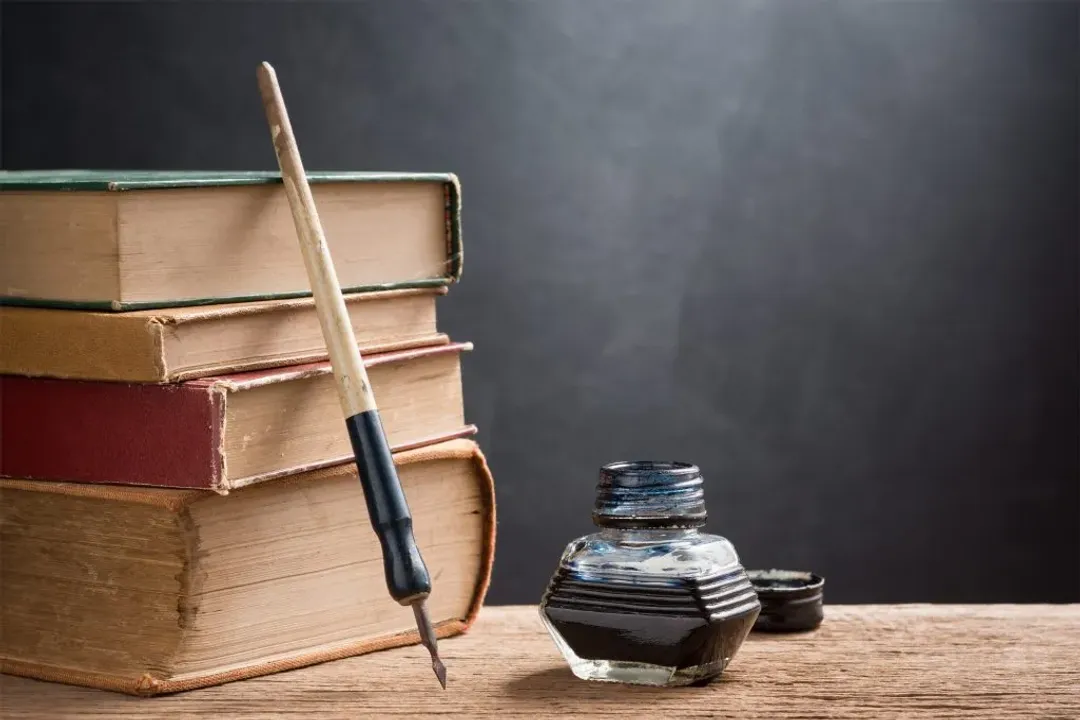
The true genius of their invention was not just the ink, but how the ink was delivered to the page. [3] They realized that the tiny, rotating ball mechanism, similar to the ones used in certain industrial applications like paint pots, could control the flow of the thick ink. [2] The design involved placing a tiny, precision-made ball bearing in a socket at the pen's tip. [3] As the pen moves across the paper, the ball rotates, picking up the viscous ink from the cartridge reservoir and rolling it onto the writing surface. [3][4] This system prevented the ink from drying out in the tip while simultaneously preventing leaks, solving the primary shortcomings of earlier pen designs. [3]
The patent for this groundbreaking device was filed in Paris in 1938. [1] It is important to distinguish this innovation from simpler predecessors; while there were earlier patents for ball-and-socket pens, Bíró’s innovation specifically centered on the right combination of thick, quick-drying ink and a perfectly fitted mechanism to make the pen practical for everyday use. [3][8] Pens utilizing this technology are often referred to as ballpoint pens, acknowledging the core mechanism that made them effective. [3]
# Patenting Move
The outbreak of World War II dramatically altered the course of the invention's commercialization. [2] As Jewish individuals, the Bíró brothers were forced to flee Europe. [2] They moved first to Argentina, where they established a company called Eterpen in 1940 to manufacture their pens. [2] The writing instrument was marketed there under the name Birome. [2]
The utility of the new pen quickly became apparent to official bodies that required reliable writing instruments, especially in environments where altitude changes could affect fountain pen performance. For instance, the British Royal Air Force showed significant interest in the pen because the higher altitudes flown by their aircrews caused fountain pens to leak due to lower air pressure, making the sealed ballpoint design highly desirable. [2] Recognizing the massive potential, the brothers later relocated to France and eventually settled in the United Kingdom. [2]
It is interesting to reflect that many truly transformative inventions, like Bíró’s pen, often require a confluence of personal need (stained fingers), chemical knowledge (the ink), and mechanical insight (the ball socket). [2][3] A purely mechanical improvement would have failed without the specialized ink, and vice versa; the system was the true invention. Considering the state of writing technology at the time, it might be insightful to note that an estimated three decades passed between the first rudimentary ballpoint concepts and Bíró's practical application, highlighting how long seemingly simple solutions can take to materialize. [8]
# Mass Market
Despite the initial high-profile interest, the widespread consumer adoption of the ballpoint pen was not immediate, often due to cost and manufacturing complexity. [4] While Bíró and his partners secured the U.S. rights and founded the Reynolds International Pen Company, the pens initially sold for high prices, such as $12.50 in the United States upon their introduction in 1945, which limited their appeal to the general public. [4]
The story of mass accessibility involves another key figure: Marcel Bich. [7] Bich, a French manufacturer, did not invent the ballpoint pen itself, but he is credited with perfecting the production process to make it extremely affordable and reliable for the average consumer. [7] By perfecting the manufacturing techniques and focusing on high-volume, low-cost production, Bich essentially turned the ballpoint pen from a specialty item into a common disposable commodity. [7] This strategic pivot—from an expensive writing instrument to an inexpensive, accessible tool—is arguably as critical to the pen's legacy as the initial invention. [7]
The transition from quality, high-priced instruments to mass-market disposables created a fascinating divide in the pen world. Early adopters, perhaps those buying the original Birome pens, experienced a high-quality writing instrument, whereas later consumers encountered varied quality until manufacturing standards stabilized. [4] A simple comparison can be made between the estimated price point: a fountain pen in the early 20th century was a significant investment, comparable in purchasing power to a moderately priced electronic gadget today, whereas the modern BIC pen, championed by Bich’s ethos, is a low-cost, high-turnover item. [7]
| Inventor | Key Contribution | Initial Market Focus |
|---|---|---|
| László Bíró | Invention of viscous ink and ballpoint delivery system [1][3] | Specialized, reliable writing (e.g., military, travelers) [2] |
| Marcel Bich | Mass-production efficiency and affordability [7] | Global consumer market (disposability) [7] |

# Pen Evolution
The ballpoint pen, pioneered by Bíró, is certainly one of the most significant writing inventions of all time, often cited alongside the quill and the fountain pen. [8] Its impact is measurable in the sheer volume produced and the way it standardized written communication across various professional fields. [4] The development of this technology also spurred further innovations in related areas, such as rollerball pens, which use a liquid ink system but retain the ball mechanism, offering a middle ground between the smoothness of a fountain pen and the convenience of a ballpoint. [8]
Bíró’s professional career continued to be linked to his creation; he held patents related to the ballpoint pen until his death in 1985. [1] His dedication showcases how an inventor’s success often rests not just on the initial idea, but on continuous refinement and protection of that idea across different global jurisdictions. [1] The trajectory from a messy journalistic desk to a reliable military tool, and finally to the ubiquitous stationery cupboard item, illustrates a complete life cycle for a successful product concept. [2][4][7] The legacy of the penmaker, therefore, is shared: the initial genius of the Bíró brothers who solved the functional problem, and the manufacturing acumen of innovators like Bich who solved the accessibility problem. [7]
#Videos
Invention of A Pen | The Dr Binocs Show | Peekaboo Kidz - YouTube
Related Questions
#Citations
László Bíró - Wikipedia
The Story of László Bíró, the Man Who Invented the Ballpoint Pen
Who invented the ballpoint pen? - Goldspot Pens
The Inventor Behind the Modern Ballpoint Pen
When Were Ballpoint Pens Invented? – A.T. Cross
The History of Pens - Executive Pens Direct
Did you know that Marcel Bich didn't invent the ballpoint pen… but ...
The Greatest Pen Inventions of All Time - Blog - Pen Heaven
Invention of A Pen | The Dr Binocs Show | Peekaboo Kidz - YouTube