What kinds of experiments did the brothers do when they were learning about hot air balloons?
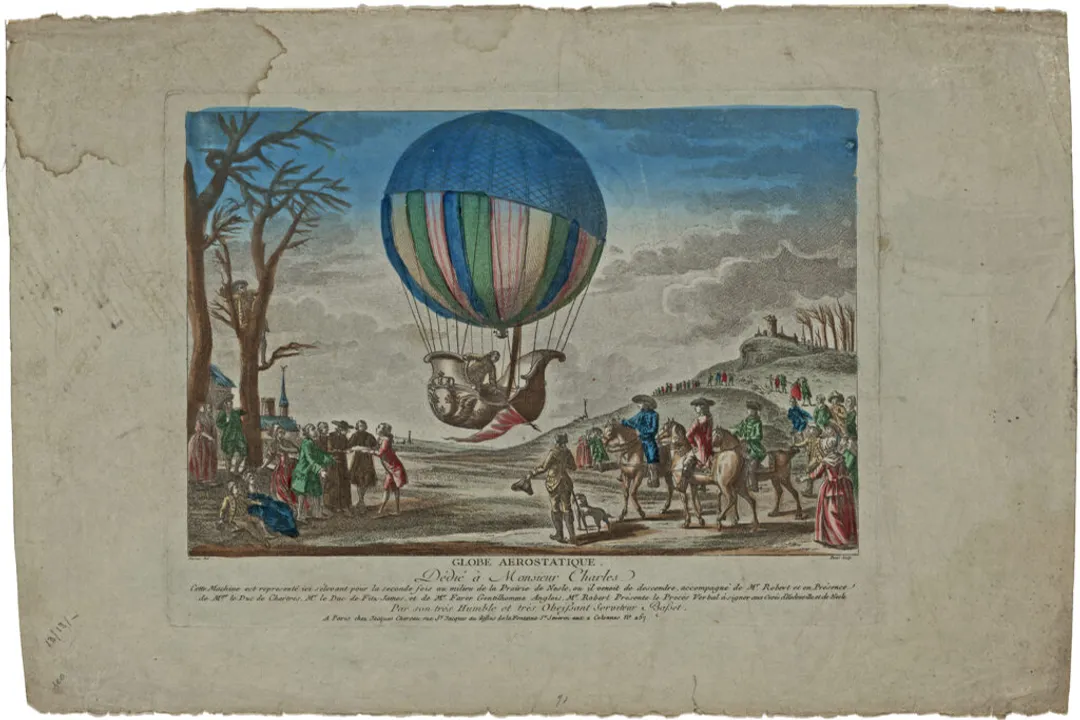
The curiosity that led Joseph-Michel and Jacques-Étienne Montgolfier to invent the hot air balloon began not with grand scientific ambition, but likely with simple observation and domestic experimentation in their workshop in Annonay. [1] The brothers, who were involved in their family’s paper manufacturing business, were keenly interested in the physical properties of air and smoke, particularly how smoke behaved when heated. [4][5] Their initial explorations were rooted in trying to understand why materials appeared to float or rise when exposed to heat or fire.
# Initial Smoke Tests

The earliest investigations seem to have centered on the visible component of combustion: smoke. It was a natural starting point for men working with paper and fire. The Montgolfiers observed that smoke, when channeled or contained, exhibited a tendency to ascend rapidly. [4] This led them to hypothesize that the smoke itself, or perhaps an invisible substance within the smoke, was the active lifting agent. [4] One of the reported early methods involved burning various materials and observing the residue or the cloud formed. They were essentially trying to create what has been described as an “artificial cloud”. [4]
A significant observation mentioned in historical accounts suggests that they experimented with small squares of cloth or paper, holding them over a fire. When the material was heated, it would sometimes rise when released. [5] This demonstrated a principle of buoyancy, even if their initial understanding of the cause was slightly misdirected. They were experimenting with the phenomenon of rising, using the tools at hand: fire, paper, and thin fabrics. [1]
It is crucial to distinguish between their early chemical curiosity and the eventual physical reality. Some sources suggest the brothers initially believed they were dealing with a specific type of gas, perhaps something related to what they called "inflammable air" or even an "electrophoric fire". [2][4] This indicates that their experimentation was not purely empirical observation; it was driven by the prevailing, albeit incomplete, scientific theories of the late 18th century. [4] Their early experiments were therefore a blend of empirical testing—seeing what rises—and trying to match that observation to contemporary scientific explanations, even if those explanations were incorrect. [2]
# Containment Engineering
Once the principle of rising—whether due to smoke or heated air—was recognized, the next logical experimental step involved containment. A small square of cloth held over a fire offers momentary lift, but to achieve sustained flight, a large volume of the lifting medium needed to be trapped. This shifted the focus from what was rising to how to keep it rising.
The brothers began experimenting with different materials for the envelope, recognizing that the container needed to be as light as possible while still being capable of holding a large, heated mass. [1] Early experiments likely involved testing various paper types and textiles. Given their background, paper was an obvious starting material. However, paper burns easily and is permeable to air, meaning hot air would quickly escape, and the material itself was vulnerable to the heat source. [4]
The transition point appears to be the realization that while the smoke was visible, the true agent might be the hot air itself, a concept that gained traction after observing that heating common air produced lift, regardless of the specific material burned beneath it. [4] This refined understanding prompted experimentation with more robust, though still lightweight, materials. Silk was reportedly used in some of the larger, more significant experiments, as it offered better containment than paper for a given weight, though it was considerably more expensive. [1]
Consider the material science challenge they implicitly faced: they needed a material that maximized the ratio of enclosed volume to material weight, while also being heat-resistant enough to survive the initial inflation process. If we were to chart their material progression, we might see a clear trade-off curve: Paper (cheap, low heat resistance, high permeability) Silk (expensive, better resistance/permeability) Lined Paper (a compromise to improve durability and containment). [1] This iterative process of material testing—seeking the lightest, strongest, and least permeable barrier—was a direct result of their need to scale up their initial small observations into a viable machine.
# Scaling the Volume
The successful flight of their demonstration models required a massive increase in scale, moving from pieces of cloth held by hand to something capable of lifting an object or even a person. This introduced entirely new engineering hurdles that required further experimentation beyond simple material choice.
The early, smaller tests likely focused on achieving lift in a contained space. However, when they began constructing larger envelopes, they had to contend with structural integrity and efficient heating. How do you ensure the large fabric structure doesn't collapse under its own weight before the air inside is hot enough? How do you heat such a large volume evenly?
When constructing their larger balloons, they famously used a combination of materials. For one notable early construction, they used thin paper attached to a light cloth frame. [1] This suggests an experimental approach where the cloth provided the primary structure and attachment points, while the paper served as the main gas/air retainer, perhaps glued or pasted onto the fabric frame. This blending of materials demonstrates an evolving experimental strategy, adapting known paper manufacturing techniques to a novel aerial structure. [3]
A critical experiment, though perhaps not intended as such, involved the very first public unmanned flight in June 1783 in Annonay. This demonstration, involving a large bag, proved that the device could lift a significant weight—reportedly over 500 pounds. [6][5] This was not just a proof of concept; it was a rigorous, albeit dramatic, test of their latest structural design, proving that the containment engineering worked at scale. If the material hadn't held together under the stress of inflation and initial lift, the entire project would have ended in a spectacular, flammable failure.
# The Public Debut Experiments

The experimentation didn't stop with the small-scale tests; the transition to public demonstration was itself a series of highly visible, high-stakes experiments. Following the successful unmanned launch, the next logical, and perhaps most terrifying, experimental step was testing the effect on living creatures.
The Montgolfiers, along with their supporters like Jean-François Pilâtre de Rozier, prepared for the first tethered flight with animals in September 1783, overseen by the Académie des Sciences in Versailles. [1] The goal was to determine the safety of the lifting medium—the hot air—on biological organisms before risking a human pilot. [2] The passengers for this famous experiment included a sheep, a duck, and a rooster. [1] This was a biological experiment conducted under the guise of aeronautics. The success of this flight, with the animals returning unharmed, provided the necessary empirical data to proceed to manned flight. [1][2] The sheep, for instance, was a surrogate for a human, as it could survive without movement or external intervention for a period comparable to a short flight.
It is interesting to note the context: by this stage, the brothers were no longer purely tinkering in their workshop; they were interacting with established scientific bodies. Their experiments were becoming formalized demonstrations, each step intended to answer a specific question for a skeptical, elite audience. [4] The choice of animals was specific: the duck, presumably, was there to test the effect of altitude on a creature capable of flight itself, while the sheep represented terrestrial mammals. [1] This level of specificity elevates the endeavor from mere trial-and-error to applied, directed experimentation.
Reflecting on their path, one might observe that the Montgolfiers’ success hinged on their ability to move past the visual evidence (the smoke) and embrace the physical reality (the heated air). This pivot required an experimental discipline—a willingness to discard a hypothesis (smoke is the lifter) when controlled testing indicated another factor (hot air is the lifter) provided a more consistent and scalable result. [4] This shift from a vague hypothesis to a quantitative understanding of air density versus ambient air density is the true scientific breakthrough hidden within their spectacle.
# Manned Flight Confirmation
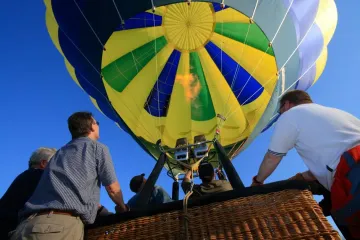
The final, definitive series of experiments concerned human conveyance. After the successful animal flight, the brothers—or rather, their appointed representatives—moved to a manned tethered flight, and then shortly thereafter, the first untethered flight with Jean-François Pilâtre de Rozier as the aeronaut. [1]
The experiment for the first true flight on November 21, 1783, required meticulous attention to detail that went beyond mere inflation. They had to create an apparatus that allowed the pilot to regulate the heat source safely within the basket while the massive envelope was aloft. [4] This meant experimenting with the basket design, the placement of the fire source (which involved burning straw and wood to generate the necessary heat), and establishing clear communication protocols for the ground crew to manage the ascent and descent. [1] While the primary lift mechanism was proven, the control system—the ability to manage the flight—was the subject of this final, crucial experimental phase. The ability of the pilot to successfully manage the fire and guide the balloon through its initial ascent validated the entire engineering effort. [4]
It is worth considering that while the Montgolfiers were the originators, much of the later, finer-tuning experimentation regarding balloon maneuvering and safety was conducted by others, such as Pilâtre de Rozier. However, the foundational experiments—determining the required volume, the right materials, and the proof of concept with living beings—were squarely the work of Joseph-Michel and Jacques-Étienne. Their initial, seemingly simple acts of holding paper over a fire evolved into a systematic testing program that spanned several months, moving from domestic curiosity to world-altering aviation achievement. [9] The legacy is one where observation sparked an initial, flawed theory, which was then refined through systematic, progressively larger-scale engineering tests until the desired outcome was achieved. [5] Their entire process serves as a fundamental example of the scientific method applied in a practical, high-stakes engineering challenge.
# Engineering Lightness
A final aspect of their experimentation lay in the extreme pursuit of lightness. Every gram added to the envelope, the rigging, or the basket represented a loss in potential lifting capacity. The work they did to ensure the paper, the adhesive, and the seams were as minimal yet strong as possible was a hidden, constant experiment.
For instance, in their construction, they used paste to join the sheets of paper together. [1] The type, consistency, and application of this paste would have been a variable in their material testing. Too much paste adds weight and reduces the lift-to-weight ratio; too little, and the structure tears apart during inflation. This necessity of managing the non-lifting components—the structure itself—is an often-overlooked experimental dimension. It's not just about the hot air; it's about the physics of the container. A lighter envelope requires less energy (less fire/fuel) to achieve the same altitude, making the flight time longer and safer. When looking at historical schematics of the early Montgolfier balloons, the sheer quantity of stitched or pasted paper sheets required to create a volume large enough for human flight speaks to the painstaking, small-scale testing required just to perfect the envelope's construction method. [3] The brothers succeeded because they mastered the art of reducing weight as aggressively as they mastered the art of adding lift.
Related Questions
#Citations
Montgolfier brothers - Wikipedia
This Month in Physics History | American Physical Society
Montgolfier Brothers | Smithsonian Institution
The Science and Spectacle of the First Balloon Flights, 1783
The Montgolfier Hot Air Balloon - Age of Revolution
First Public Hot Air Balloon Demonstration
History - Plano Balloon Festival
George Washington and Ballooning
Today In History: Demonstrating the Montgolfier Balloon | June | 2025