What was the impact of Rudolf Diesel's invention?

Rudolf Diesel introduced an engine that redefined mechanical power, a device so fundamental to the modern world that its absence is almost unimaginable. When this German inventor finally unveiled a working model, it didn't just improve upon existing technology; it created an entirely new category of internal combustion, one defined by efficiency and raw, enduring torque. The impact of this creation, patented in the late 1890s, rippled outward from the factory floor to the oceans, fundamentally restructuring global logistics, agriculture, and warfare in ways the inventor himself could only partially foresee. [2][7]
# Technical Leap
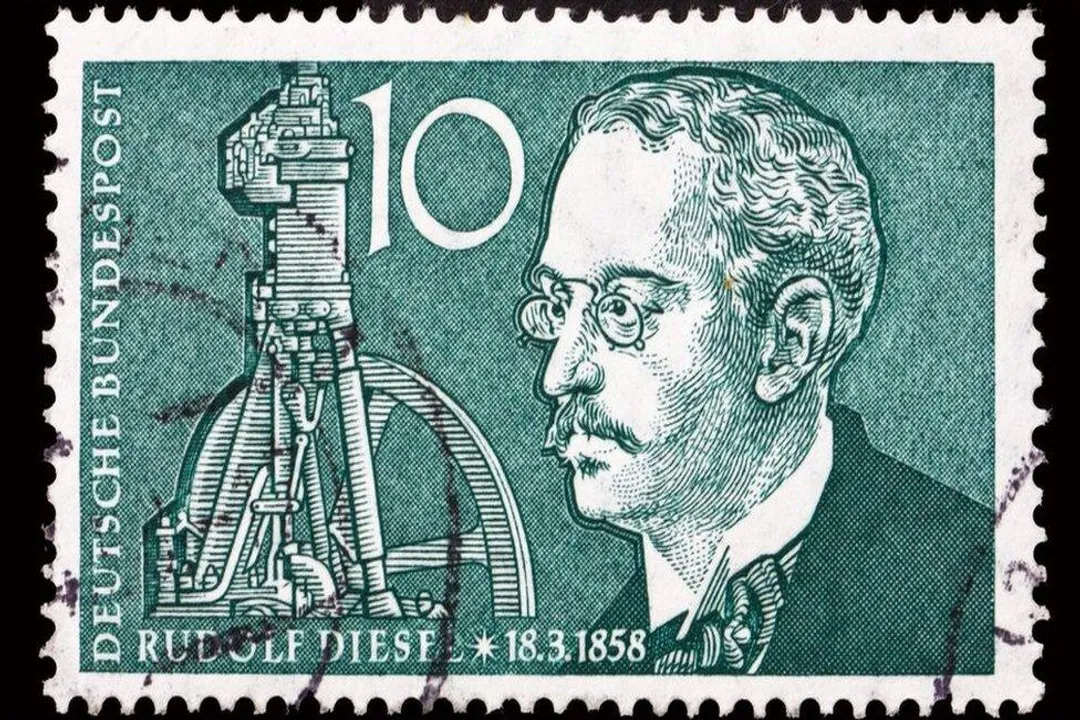
The genius of the Diesel engine lay in its ability to achieve ignition without a spark plug. This distinction is critical when comparing it to the contemporaneous gasoline engine. [2][9] Where gasoline engines required a complex electrical system to time a spark, Diesel's design relied on the physics of extreme compression. [2][8] Air is compressed so intensely within the cylinder—often reaching pressures exceeding 500 psi—that its temperature skyrockets, sometimes surpassing Fahrenheit. [8][9] Fuel, injected at this precise moment of intense heat, spontaneously ignites. [2][8]
This mechanism delivered a significant efficiency advantage. Early designs promised thermal efficiencies substantially higher than the contemporary steam engines, which required vast amounts of coal and water to operate, and the gasoline engines, which wasted more energy as heat. [5][8] The ability to convert more of the fuel's chemical energy directly into mechanical work meant that for high-load, continuous applications, the operating costs were drastically lower. [5] This efficiency became the engine’s primary selling point and the bedrock of its future dominance in heavy sectors. [9]
# Early Validation

The path to acceptance was anything but smooth. Rudolf Diesel faced considerable skepticism and numerous technical setbacks, requiring perseverance that has become legendary in the history of engineering. [7] He experienced failures and had to restart his work several times, grappling with issues like controlling the injection process and managing the immense pressures involved. [7] One notable challenge involved securing adequate funding and convincing investors that his theory could translate into reliable machinery. [7]
The turning point often cited is the 1900 Paris Exposition Universelle. It was here that Diesel presented his engine to the world stage, demonstrating its capability on a commercial scale. [2][7] This exhibition served as vital proof that the concept was viable beyond the laboratory. [7] Furthermore, Diesel held a long-term vision that extended beyond the use of petroleum distillates. He envisioned his engine as a champion of renewable energy, famously running an engine during the exposition on peanut oil, showcasing a potential fuel source derived directly from agriculture. [3][4] This early focus on non-petroleum fuels positions Diesel as remarkably forward-thinking regarding energy sources, even if the petroleum industry ultimately dominated the fuel market for the next century. [3]

# Powering Industry
Once proven, the engine’s impact on stationary power applications was swift and profound. Before diesel, factories relied heavily on centralized steam engines connected by belts and pulleys to drive machinery—a system that was inherently inefficient due to power transmission losses. [9] The availability of smaller, reliable, and fuel-efficient diesel engines allowed for decentralized power generation. Factories could now place power sources closer to the machines that needed them, simplifying the mechanical linkages and increasing overall system effectiveness. [9]
In sectors like mining and quarrying, the robustness of the diesel engine proved indispensable. [6] These environments demand machinery capable of operating reliably under extreme conditions, often far from electrical grids or easily accessible fuel supplies. Diesel engines provided the high torque necessary to move massive amounts of earth and rock, outperforming their gasoline counterparts in sustained heavy labor. [6] The ability to run on heavier, less refined fuels also provided an economic advantage in remote locations. [5] This reliance meant that the very foundations of resource extraction—coal, ore, timber—were mechanized and scaled up by Diesel's creation. [6]
# Transportation Shift
The most visible and arguably most transformative impact of the diesel engine occurred in locomotion and shipping. [2][5] Steam power had defined rail travel, but the diesel locomotive offered superior efficiency, faster startup times, and eliminated the need for constant water replenishment, a significant logistical hurdle for steam engines traversing dry regions. [9] While the transition took decades, the superior tractive effort and fuel economy of diesel engines eventually made them the standard for heavy rail transport worldwide. [9]
On the water, the impact was immediate and revolutionary for large vessels. Marine propulsion systems rapidly adopted diesel technology because the engines offered immense power density—a lot of power packed into a relatively small, light package compared to equally powerful marine steam plants. [2][6] This freed up valuable cargo space and allowed ships to travel farther between refueling stops, thereby reducing transit times and shipping costs across global routes. [6] This change effectively shrank the globe economically, facilitating the massive expansion of international trade that characterized the 20th century. [5]
# Endurance Factors
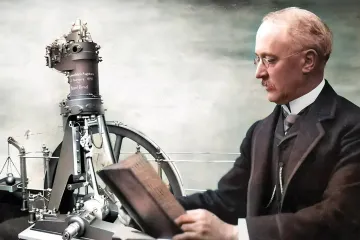
When examining the engine’s lasting legacy, one must look at what keeps it relevant even as the world pivots toward electrification. [5] The answer lies in its power density and its torque characteristics, which remain difficult to replicate economically in battery-electric systems for the heaviest duties. [6]
Consider the difference between a vehicle that requires quick bursts of acceleration, like a passenger car, versus one that must sustain maximum effort for hours on end, such as a transcontinental truck or a generator supplying a hospital during a storm. [5] This scenario highlights an essential, though perhaps unstated, advantage of the compression-ignition design. For high-duty cycles—tasks demanding sustained, high-load operation—the energy density of diesel fuel provides superior operational range and less downtime for refueling compared to current battery technology. [6] This reality cements its place in maritime shipping, heavy construction, and long-haul freight where performance metrics currently outweigh zero-emission aspirations. [5]
If we were to structure the relative advantages of the three primary internal combustion types from the early 20th century, it presents a clear hierarchy based on application:
| Engine Type | Primary Advantage | Typical Application (Historical/Modern) |
|---|---|---|
| Gasoline | High RPM, Light Weight | Passenger Cars, small aircraft |
| Diesel | High Torque, Fuel Efficiency | Rail, Marine, Heavy Trucking, Stationary Power |
| Steam | Abundant Fuel Source (Coal) | Early Rail, Stationary Industrial Plants |
| [5][6][9] |
This table illustrates that while gasoline engines won the personal transport race, Diesel captured the industrial backbone. A key factor contributing to this industrial dominance, which often gets overlooked in popular histories focused on cars, is the lower flammability risk of diesel fuel itself compared to gasoline, adding an extra layer of operational safety in confined spaces like engine rooms or mines. [9]
# Personal Fate
The life of Rudolf Diesel concluded in an atmosphere of mystery that contrasts sharply with the clear-cut, powerful mechanics of his invention. [2] In 1913, while traveling by ship from Antwerp to London, Diesel vanished overboard in the North Sea. [2] His body was discovered floating nearby several days later. [2] The circumstances surrounding his death were never fully resolved, leading to endless speculation—was it an accident, suicide, or perhaps something more sinister related to business dealings or wartime politics that were brewing just prior to World War I? [2] Regardless of the truth, the inventor's quiet, uncertain end stands as a strange counterpoint to the monumental, loud impact his engine had on the world stage. [2] The invention itself endured, adapting and growing, long after its creator was gone. [7]
The invention’s impact is multifaceted: it drove industrial scale, it powered the machinery of global commerce, and it fundamentally altered the energy demands of civilization. [2][5] From the largest container ships moving goods across oceans to the construction equipment building our cities, the core principle established by Rudolf Diesel—that intense compression alone can ignite fuel to create reliable, massive power—remains a foundational element of the modern mechanical world. [1][6] It stands as a testament to an engineering vision that was technically superior for its intended purpose and remains stubbornly relevant despite massive shifts in energy policy and technology. [5]
Related Questions
#Citations
How Rudolf Diesel's engine changed the world - BBC News
Rudolf Diesel - Wikipedia
Rudolf Diesel - Lemelson-MIT Program
Rudolf Diesel's First Diesel Engine - Waste Vegetable Oils
Rudolf Diesel's Enduring Invention - Engine Technology Forum
History of diesel engines | Cummins Inc.
Against all odds – learning from great projectors: Rudolf Diesel
Rudolf Diesel: The Mind Behind the Engine - Stanford
Diesel Engine History and Inventors | UTI