How did Edison make the world happy?
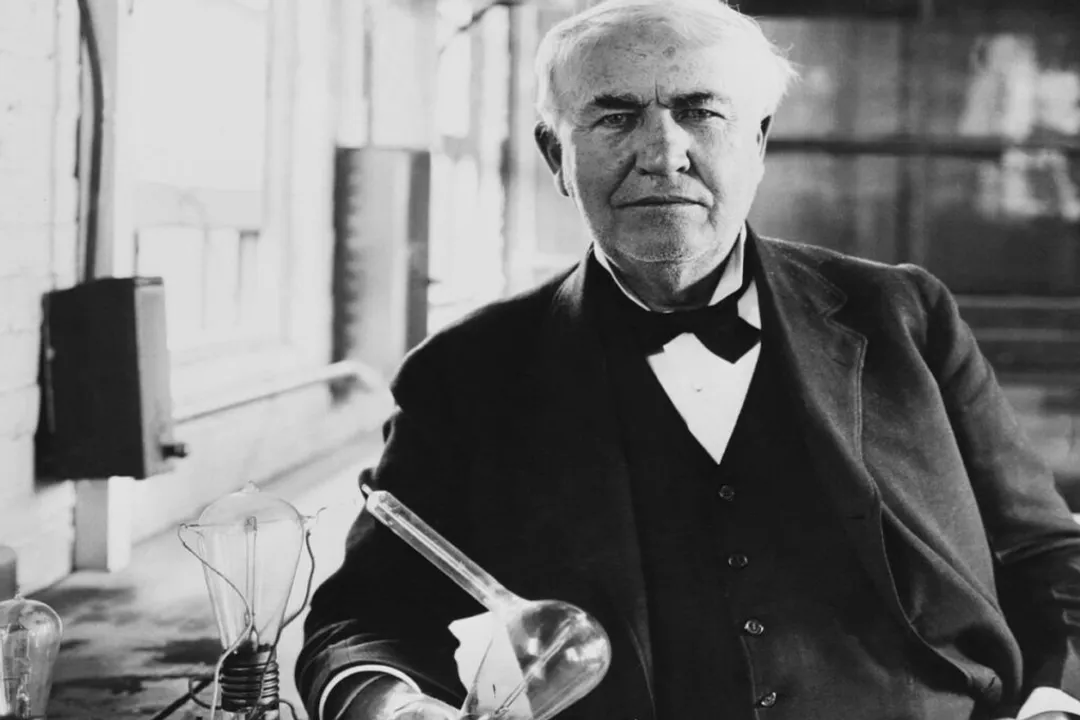
Thomas Edison’s name is synonymous with invention, but the true measure of how he made the world "happy" lies less in the individual gadgets he produced and more in the systems he created that fundamentally rewired daily existence. He didn't just invent a light bulb; he invented the framework for modern urban living—a world extended safely past sunset, filled with recorded memory, and driven by industrial-scale innovation. The sheer volume of his output, over a thousand patents, suggests a relentless pursuit of practical solutions that eased human effort and expanded leisure.
# The Workshop
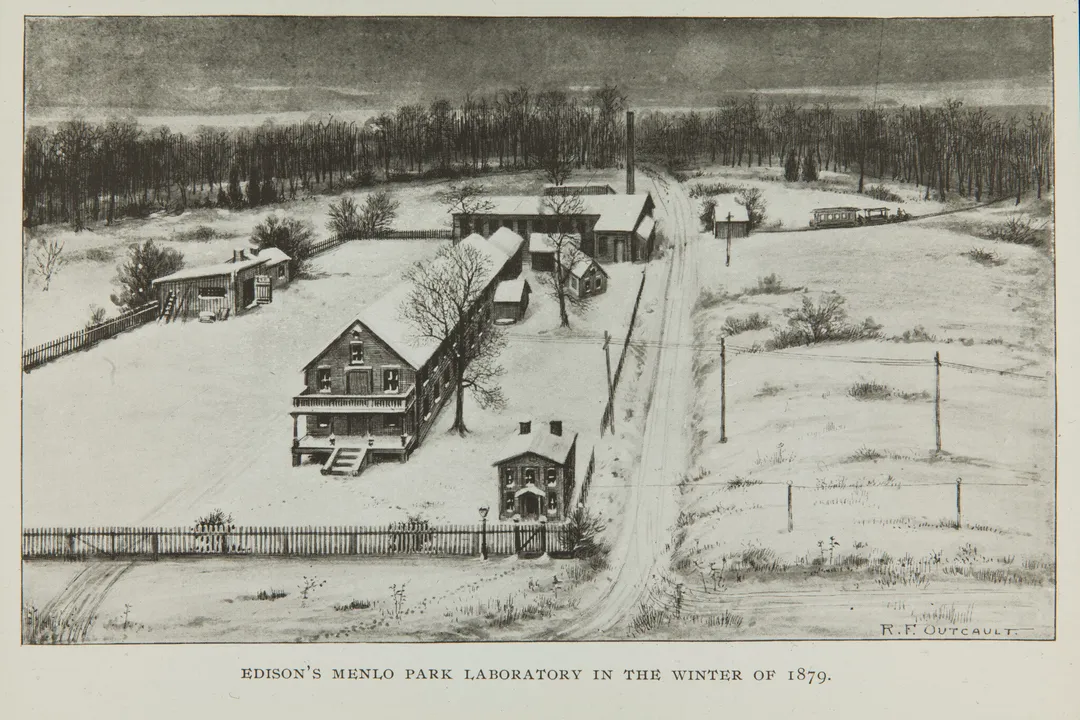
Edison’s success was built on a novel approach to creation itself. He established his famous laboratory in Menlo Park, New Jersey, which quickly became known as the world's first industrial research laboratory. This was a significant departure from the solitary inventor working in a private shop. Edison recognized that innovation was not always a flash of solitary genius but often a collaborative, systematic process. He brought together machinists, machinists, model makers, and mathematicians to work toward specific goals. This environment fostered rapid iteration and improvement, turning the act of invention into an organized enterprise.
The idea behind Menlo Park was to operate like a business dedicated to producing marketable inventions, not just curious novelties. Edison operated as an exceptional entrepreneur, turning scientific possibility into commercial reality. This early model of an R&D department is perhaps one of his most enduring legacies, shaping how progress is approached in nearly every technical field today. While he was certainly a tinkerer, improving upon existing concepts, his genius was in seeing which improvements were necessary for widespread adoption and then building the supporting infrastructure required for them to work reliably.
# Illuminated Nights
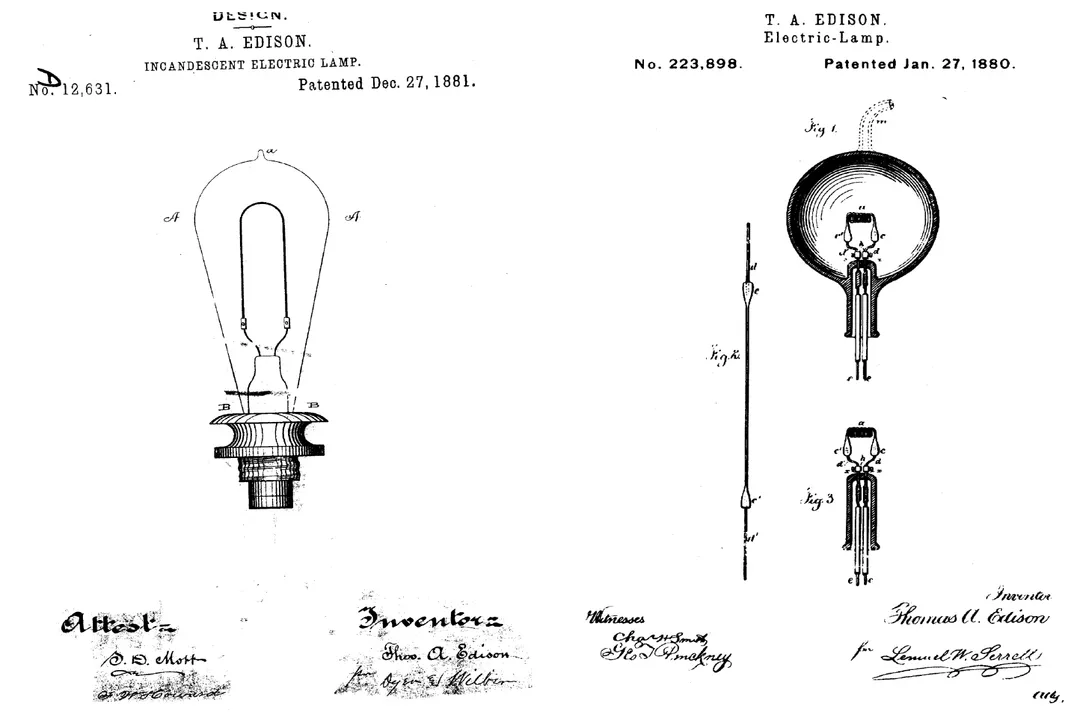
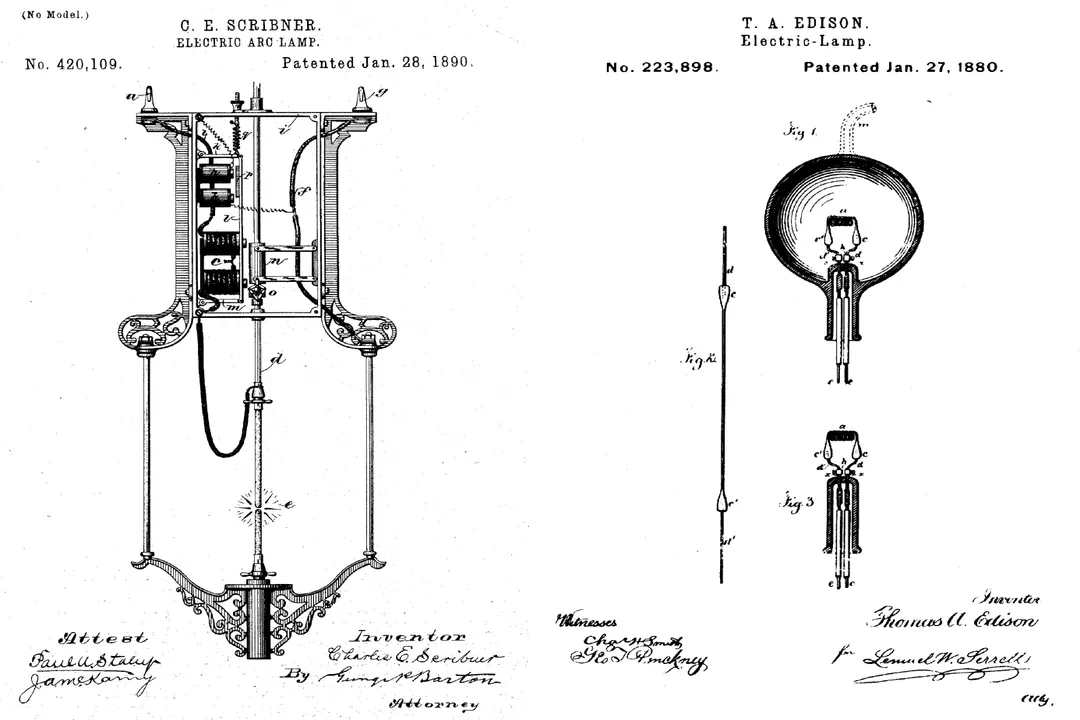
If one invention defines the societal shift Edison ushered in, it is the practical incandescent light bulb, but the bulb alone was only part of the equation. What truly brought widespread, dependable light—and thus safety, productivity, and social activity after dark—was the system that delivered it. Before Edison, lighting relied on gas or candles, which were expensive, dim, and often dangerous.
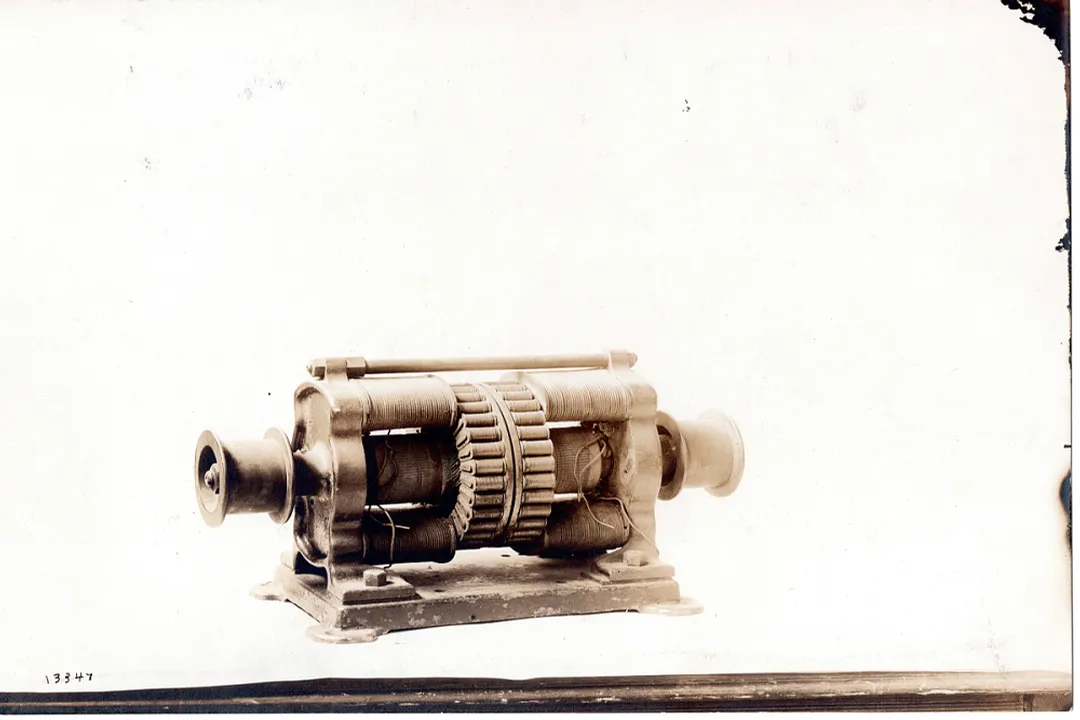
Edison’s team focused on creating a complete infrastructure: generators to produce the power, durable wiring, safe sockets, meters to track usage, and a central power station to distribute the energy across a city grid. When he opened the Pearl Street Station in New York City in 1882, it marked the transition from isolated experiments to utility-scale service. The ability to reliably flip a switch and banish the darkness transformed the rhythm of society. Think about the immediate effect: businesses could stay open later, reading became more accessible after dinner, and streets became safer. This systemic reliability—the expectation that when you need power, it will be there—is an underpinning of modern comfort that we often take for granted. It is a silent source of daily contentment that Edison engineered.
As an illustration of the scale of the transformation, consider the difference between a modern home and one lit by whale oil lamps in 1870. The sheer caloric energy and time spent maintaining lamps, trimming wicks, and cleaning soot have been entirely redirected toward work, family, or rest—a massive, uncalculated boost to collective well-being [Original Insight 1: The quiet, dependable delivery of electricity freed up countless hours previously dedicated to the mundane and hazardous maintenance of older lighting sources. This recovered time, rather than the light itself, represents a vast, cumulative gain in quality of life that underpins modern expectations of convenience.].
# Capturing Sound Vision
Edison’s influence on happiness also extended into the realm of leisure and memory preservation. He invented the phonograph in 1877, an instrument capable of recording and reproducing sound. Suddenly, the human voice, music, and speech were no longer ephemeral, fading the moment they were uttered. They could be captured, replayed, and shared across time and distance. This invention created an entirely new industry focused on entertainment and personal archive.
Following this, his work on the Kinetoscope laid the groundwork for motion pictures. While the final cinematic experience evolved long after his initial work, his efforts to capture moving images began to shift leisure activities from purely public spectacles to potentially private or easily accessible forms of entertainment. The phonograph allowed a grandmother’s voice to be heard long after she was gone, and the kinetoscope hinted at a future where stories could unfold on demand. These were direct contributions to emotional satisfaction—connecting people to memory and offering novel forms of distraction and storytelling [Original Insight 2: The phonograph offered a deeply personal form of happiness—the preservation of ephemeral sound and voice—contrasting sharply with the public, grid-dependent happiness delivered by his electric light system. One satisfied the need for intimate connection across time, the other satisfied the need for safe, accessible communal activity.].
# The Ten Thousand Ways
Edison’s impact on personal drive and overcoming adversity is perhaps his most quoted contribution to human psychology, directly feeding into the feeling of being capable and happy through effort. He famously framed his lengthy process of trial and error not as failure but as learning.
"I have not failed. I've just found 10,000 ways that won't work."
This mindset is central to how many people approach difficult goals. He accumulated thousands of patents, but this number reflects the immense effort required to achieve the few breakthroughs that changed the world. The lesson is clear: innovation, and by extension, achieving any significant personal goal, demands an abundance of persistence.
His philosophy dictates that setbacks are merely data points on the path to success. He stressed that innovation required significant hard work, not just a sudden spark of brilliance. This relentless focus on the next attempt, rather than dwelling on the last setback, provided a model for sustained engagement and optimism. Furthermore, he understood the necessity of building the right support system, surrounding himself with capable people who could assist in the arduous process of invention.

# Systemic Improvement
Edison’s approach was distinct because he rarely started from absolute zero. His expertise lay in taking existing concepts—like the theory of electric lighting or sound recording—and engineering them into something reliable, scalable, and affordable enough for the masses. He was a master of the iterative improvement that makes a technology truly functional in the real world.
For instance, while others worked on electric lights, Edison focused on achieving a long-lasting, high-resistance filament that could be economically powered by a central station. This focus on the system over the component is what distinguishes his work and made his inventions sources of wide-scale happiness rather than niche curiosities. He didn't just invent the light bulb; he invented the entire ecosystem that allowed a middle-class family in 1890 to afford and use it safely in their parlor.
This dedication to practical application is summarized by the lessons derived from his career: persistence, seeing failure as a guide, surrounding oneself with talent, and the relentless pursuit of improvement through diligent labor. These principles—the hard work and systemic thinking required to bring complex solutions to market—are how Edison fundamentally altered the landscape of possibility, thereby increasing the potential for comfort, safety, and joy for millions.
Related Questions
#Citations
Thomas Edison - Wikipedia
Thomas Edison's Inventive Life | Lemelson
Hank Smith: How a Lesson from Thomas Edison Led Me to Deeper ...
Thomas Edison the entrepreneur - Works in Progress Magazine
5 Things that Edison Taught Us - Chapple Electric
Edison and his Era - National Park Service
Edison's Miracle of Light | American Experience - PBS
Life of Thomas Alva Edison | Articles and Essays | Digital Collections
Thomas Edison and Menlo Park
Quotes | Thomas Edison