What was the primary drawback of using the initial mechanical pantograph system for copying recordings?
Answer
Each duplication stage introduced cumulative noise, distortion, and reduced frequency response
The pantograph method was inherently lossy; every copy made from a copy degraded the sound quality noticeably due to friction and mechanical imperfections during the tracing process.
#Videos
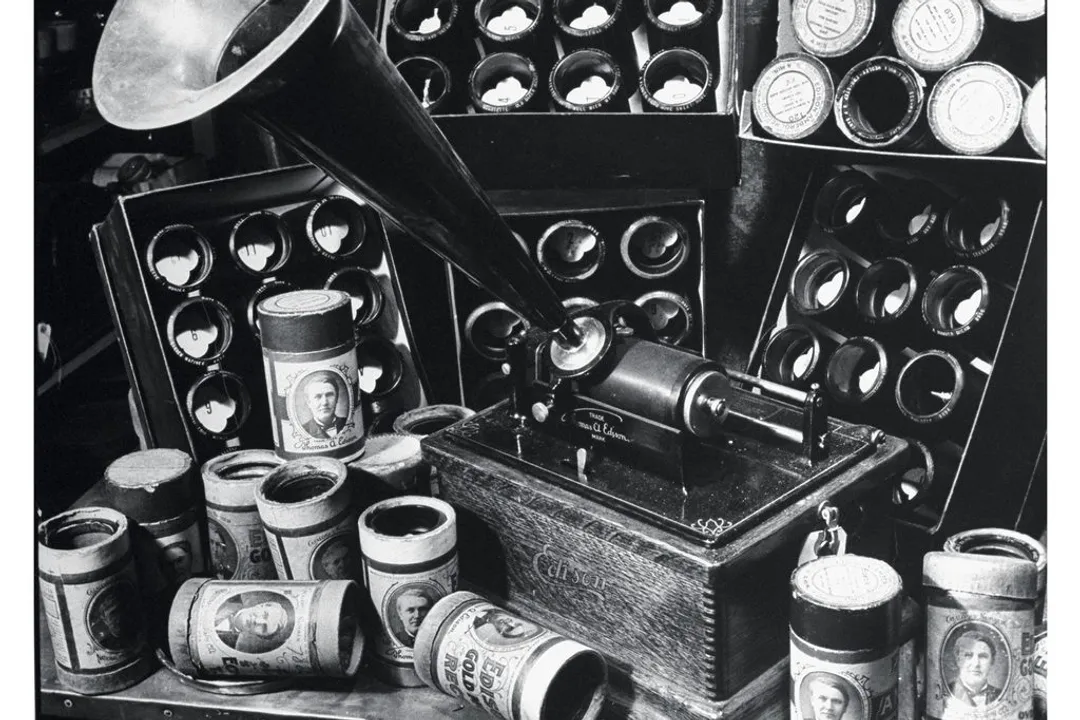
How the Cylinder Phonograph Works - YouTube
Wax Cylinder Production - YouTube
Related Questions
What material comprised Thomas Edison's earliest successful sound records?What component converted airborne sound pressure variations into mechanical movement during recording?What severely limited the dynamic range achievable with early mechanical recording methods?Which mechanism ensured the recording stylus moved steadily along the length of the spinning cylinder?If the resulting grooves etched into the wax were deeper or wider, what did this signify about the original sound?What was the primary drawback of using the initial mechanical pantograph system for copying recordings?How was faster mass production of consumer playing cylinders eventually achieved?What was the function of the large horn during sound playback?Compared to earlier brown wax, what advantage did later, harder wax formulations often offer?Why did the flat disc record format eventually dominate the market over the wax cylinder?