Who invented the disc record gramophone?
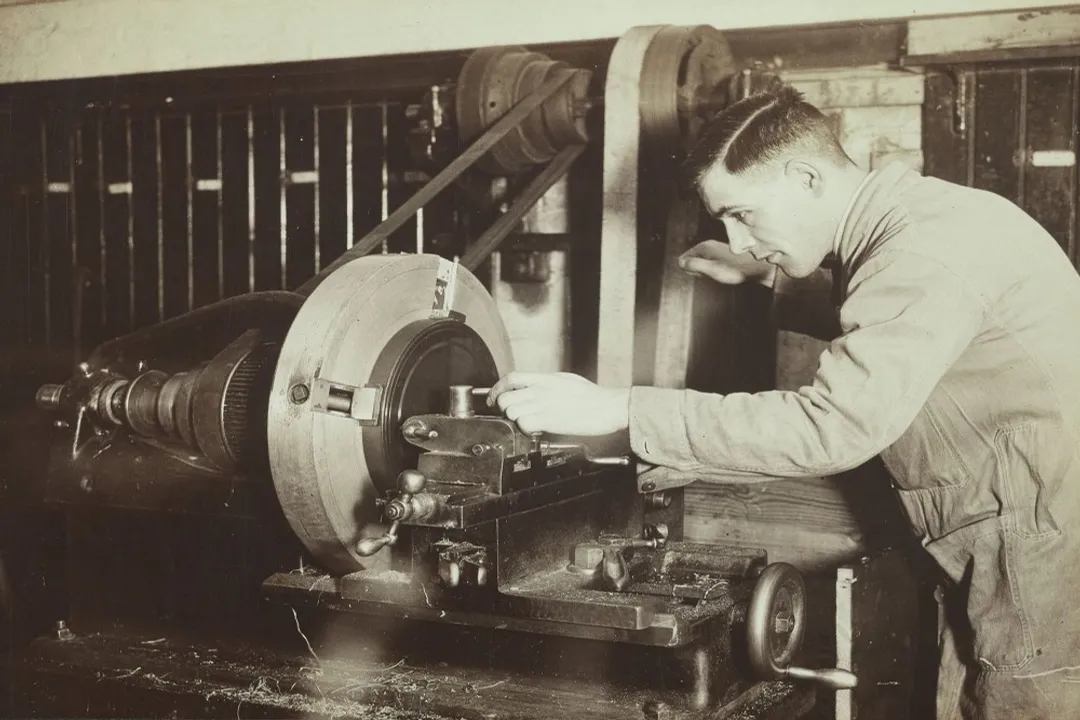
The very notion of capturing and reproducing sound seemed like pure magic when the first devices appeared in the late 19th century. Before the familiar black vinyl discs dominated record stores, sound recording was dominated by a different technology—one that spun fragile, vertically grooved wax cylinders. This early format, while groundbreaking, held inherent limitations that prevented music and voice from truly entering the mainstream home entertainment sphere. The shift from this delicate, stylus-shredding cylinder to a more robust, replicable format marks a crucial turning point in audio history, a change overwhelmingly credited to one tenacious inventor: Emile Berliner.
# Edison's Cylinder
Thomas Edison’s phonograph, patented in 1877, was the world's first apparatus for recording and reproducing sound. This initial device used a diaphragm that vibrated a stylus, which etched sound waves onto tinfoil wrapped around a cylinder. Later versions improved upon this by using wax cylinders, which allowed for better fidelity. A key characteristic of the cylinder was that the groove was cut vertically—meaning the stylus moved up and down to trace the sound variations. While a technological marvel, the cylinder suffered from severe practical drawbacks. The recording process was often difficult, and the playback mechanism, which relied on a relatively heavy stylus, tended to wear down the soft wax groove quickly, making repeated listening a process of slow degradation. Moreover, copying a cylinder recording was not easily done on a large scale; each copy generally required a direct, relatively slow recording session.
# Berliner's Concept
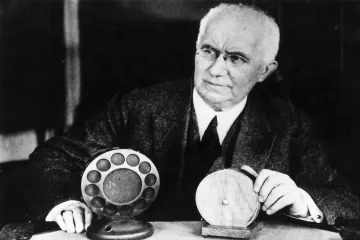
Emile Berliner, a German immigrant working in Washington D.C., saw these limitations as barriers to mass adoption. He envisioned a system where sound could be recorded onto a flat disc, similar to a photographic plate, allowing for easier duplication and handling. Berliner’s core inspiration came from the idea of using a diaphragm that vibrated a stylus horizontally, carving a lateral groove onto a flat surface. This lateral cut was the fundamental differentiator from Edison’s vertical groove. He filed his initial patent application for the "Gramophone" in 1887. He initially conceived of the disc as a recording medium to be played back using a stylus that would trace the side grooves, not just the edge.
# Lateral Cut
The technical move to the lateral cut offered immediate, though perhaps initially unseen, advantages over the vertical cut used by Edison's phonograph. Berliner’s vision involved a disc that could be stamped or pressed from a mold, vastly simplifying mass production compared to carving unique wax cylinders. By 1895, Berliner's company, the United States Gramophone Company, was manufacturing players and discs. The discs themselves were initially made of zinc. The ability to mold copies meant that a single master recording could generate thousands of identical copies relatively quickly, transforming the economics of recorded sound. This shift from engraving to pressing is perhaps the single most important element separating the gramophone from its predecessor, moving recorded music from a curiosity to a viable commercial product. It meant that a single hit song could be made available across the entire nation simultaneously, an impossible feat with the previous technology.
# Early Gramophone
Berliner’s first successful demonstration of his flat disc player, which he called the Gramophone, took place in 1888 at the Franklin Institute in Philadelphia. The original machine was quite rudimentary; it was a hand-cranked device. The early discs were relatively small, about seven inches in diameter, and revolved at about 120 revolutions per minute (rpm). The sound reproduction on these earliest models was not always high fidelity—it was described as sounding somewhat tinny—but the crucial factor was the format rather than perfection of sound quality at that initial stage. In contrast, Edison’s cylinder players were already quite established, but their replayability was limited. The mechanism for playing the discs involved a turntable driven by clockwork or hand crank, with a stylus tracking the lateral groove, transmitting vibrations through a diaphragm and horn.
# Manufacturing Leap
The evolution of the disc material itself speaks volumes about the commercial potential Berliner recognized. Moving from fragile, easily warped zinc masters to more durable shellac was essential for consumer use. Shellac, a resinous substance secreted by the lac insect, offered a harder surface that could better withstand the tracking force of the tone arm while still being pressable in molds. While the exact early formulation might vary, the goal remained consistency and durability for mass market appeal.
To illustrate the difference in early production scaling:
| Format | Recording Method | Duplication Method | Typical Material |
|---|---|---|---|
| Cylinder | Direct stylus engraving | Re-recording or Pantograph cutting | Wax |
| Disc (Gramophone) | Lateral stylus engraving | Pressing from a mold | Zinc, later Shellac |
This manufacturing difference underpins the entire success of the gramophone over the phonograph in the long run. The cost per unit dropped dramatically once shellac pressing became the standard, opening the door for lower retail prices and higher volume sales.
# Patent Battles
Berliner’s invention did not arrive in a vacuum, and his success naturally drew conflict with the established leader, Thomas Edison. Edison’s original phonograph patents, granted in 1878, covered sound recording generally, but Berliner skillfully navigated around them by focusing specifically on the flat disc and lateral groove method. Berliner obtained his key U.S. patent, No. 382,279, in 1888. Despite this, legal challenges were inevitable. Edison’s company frequently sued Berliner’s entities over perceived infringements related to sound recording generally. Berliner’s success in defending his disc format helped solidify the dominance of the disc record over the cylinder in the early 20th century. For instance, the use of discs became so prevalent that by 1902, the Columbia Phonograph Company, an early proponent of cylinders, began marketing its own disc phonographs.

# Commercializing Sound
Berliner established the Berliner Gramophone Company in 1893. However, the real commercial push came through licensing and consolidation. In the United States, Berliner licensed his invention to Frank Seamon, who established the U.S. Gramophone Company in 1895. This company later evolved, with Eldridge R. Johnson becoming a key figure, eventually leading to the formation of the Victor Talking Machine Company. Johnson made significant improvements to the apparatus, particularly the spring-wound motor which replaced the hand-crank or bulky external power sources, creating a more user-friendly home appliance.
It is fascinating to note how early commercial entities adapted the technology. While Berliner’s original patent covered a system where the record could be played from the center outwards, the initial consumer products often played from the outside inwards, which seems counterintuitive to modern users who expect the needle to start at the edge. This initial configuration might have been chosen for mechanical reasons related to the early tracking arms or simply to mimic the established orientation of the cylinder players, where the cylinder spun from right to left. However, the industry quickly standardized on the edge-in playing method for discs, which ultimately defined the user experience for decades to come.
# International Reach
Berliner’s influence was not confined to America. He was instrumental in spreading the gramophone concept globally. In Germany, for instance, Berliner founded the Deutsche Grammophon company. This international expansion was crucial because it allowed for the development of recording centers and musical traditions specific to different cultures, all being distributed via the standardized disc format. The ability to press and distribute records internationally—even if initial mastering was done locally—created a global market for recorded music far faster than the cylinder format could have supported.
# The Gramophone’s Transformation
The term "gramophone" itself is often used interchangeably with "record player," but it specifically refers to the apparatus developed from Berliner’s patents, particularly the disc-playing machine. Over time, the machine evolved significantly from the simple hand-cranked box. Improvements focused on better speed regulation (the motor), stylus design (to reduce groove wear), and the construction of the horn (to improve sound projection). The visible horn, characteristic of early models, was eventually enclosed within the wooden cabinet to create the familiar "Victrola" style, which acted as an internal sound baffle.
Emile Berliner’s contribution, therefore, was not just inventing a sound reproducer, but inventing the format—the flat disc—that proved superior for mass production, durability, and standardization. While Edison invented the concept of recording sound, Berliner invented the blueprint for the modern recorded music industry. His shift from vertical to lateral grooves, and the resulting ability to press records cheaply and reliably from molds, laid the essential foundation for recorded media as we know it today. His work transitioned sound recording from a niche laboratory experiment into an accessible, repeatable form of entertainment.The very notion of capturing and reproducing sound seemed like pure magic when the first devices appeared in the late 19th century. Before the familiar black vinyl discs dominated record stores, sound recording was dominated by a different technology—one that spun fragile, vertically grooved wax cylinders. This early format, while groundbreaking, held inherent limitations that prevented music and voice from truly entering the mainstream home entertainment sphere. The shift from this delicate, stylus-shredding cylinder to a more robust, replicable format marks a crucial turning point in audio history, a change overwhelmingly credited to one tenacious inventor: Emile Berliner.
# Edison's Cylinder
Thomas Edison’s phonograph, patented in 1877, was the world's first apparatus for recording and reproducing sound. This initial device used a diaphragm that vibrated a stylus, which etched sound waves onto tinfoil wrapped around a cylinder. Later versions improved upon this by using wax cylinders, which allowed for better fidelity. A key characteristic of the cylinder was that the groove was cut vertically—meaning the stylus moved up and down to trace the sound variations. While a technological marvel, the cylinder suffered from severe practical drawbacks. The recording process was often difficult, and the playback mechanism, which relied on a relatively heavy stylus, tended to wear down the soft wax groove quickly, making repeated listening a process of slow degradation. Moreover, copying a cylinder recording was not easily done on a large scale; each copy generally required a direct, relatively slow recording session.
# Berliner's Concept
Emile Berliner, a German immigrant working in Washington D.C., saw these limitations as barriers to mass adoption. He envisioned a system where sound could be recorded onto a flat disc, similar to a photographic plate, allowing for easier duplication and handling. Berliner’s core inspiration came from the idea of using a diaphragm that vibrated a stylus horizontally, carving a lateral groove onto a flat surface. This lateral cut was the fundamental differentiator from Edison’s vertical groove. He filed his initial patent application for the "Gramophone" in 1887. He initially conceived of the disc as a recording medium to be played back using a stylus that would trace the side grooves, not just the edge.
# Lateral Cut
The technical move to the lateral cut offered immediate, though perhaps initially unseen, advantages over the vertical cut used by Edison's phonograph. Berliner’s vision involved a disc that could be stamped or pressed from a mold, vastly simplifying mass production compared to carving unique wax cylinders. By 1895, Berliner's company, the United States Gramophone Company, was manufacturing players and discs. The discs themselves were initially made of zinc. The ability to mold copies meant that a single master recording could generate thousands of identical copies relatively quickly, transforming the economics of recorded sound. This shift from engraving to pressing is perhaps the single most important element separating the gramophone from its predecessor, moving recorded music from a curiosity to a viable commercial product. It meant that a single hit song could be made available across the entire nation simultaneously, an impossible feat with the previous technology.
# Early Gramophone
Berliner’s first successful demonstration of his flat disc player, which he called the Gramophone, took place in 1888 at the Franklin Institute in Philadelphia. The original machine was quite rudimentary; it was a hand-cranked device. The early discs were relatively small, about seven inches in diameter, and revolved at about 120 revolutions per minute (rpm). The sound reproduction on these earliest models was not always high fidelity—it was described as sounding somewhat tinny—but the crucial factor was the format rather than perfection of sound quality at that initial stage. In contrast, Edison’s cylinder players were already quite established, but their replayability was limited. The mechanism for playing the discs involved a turntable driven by clockwork or hand crank, with a stylus tracking the lateral groove, transmitting vibrations through a diaphragm and horn.
# Manufacturing Leap
The evolution of the disc material itself speaks volumes about the commercial potential Berliner recognized. Moving from fragile, easily warped zinc masters to more durable shellac was essential for consumer use. Shellac, a resinous substance secreted by the lac insect, offered a harder surface that could better withstand the tracking force of the tone arm while still being pressable in molds. While the exact early formulation might vary, the goal remained consistency and durability for mass market appeal.
To illustrate the difference in early production scaling:
| Format | Recording Method | Duplication Method | Typical Material |
|---|---|---|---|
| Cylinder | Direct stylus engraving | Re-recording or Pantograph cutting | Wax |
| Disc (Gramophone) | Lateral stylus engraving | Pressing from a mold | Zinc, later Shellac |
This manufacturing difference underpins the entire success of the gramophone over the phonograph in the long run. The cost per unit dropped dramatically once shellac pressing became the standard, opening the door for lower retail prices and higher volume sales.
# Patent Battles
Berliner’s invention did not arrive in a vacuum, and his success naturally drew conflict with the established leader, Thomas Edison. Edison’s original phonograph patents, granted in 1878, covered sound recording generally, but Berliner skillfully navigated around them by focusing specifically on the flat disc and lateral groove method. Berliner obtained his key U.S. patent, No. 382,279, in 1888. Despite this, legal challenges were inevitable. Edison’s company frequently sued Berliner’s entities over perceived infringements related to sound recording generally. Berliner’s success in defending his disc format helped solidify the dominance of the disc record over the cylinder in the early 20th century. For instance, the use of discs became so prevalent that by 1902, the Columbia Phonograph Company, an early proponent of cylinders, began marketing its own disc phonographs.
# Commercializing Sound
Berliner established the Berliner Gramophone Company in 1893. However, the real commercial push came through licensing and consolidation. In the United States, Berliner licensed his invention to Frank Seamon, who established the U.S. Gramophone Company in 1895. This company later evolved, with Eldridge R. Johnson becoming a key figure, eventually leading to the formation of the Victor Talking Machine Company. Johnson made significant improvements to the apparatus, particularly the spring-wound motor which replaced the hand-crank or bulky external power sources, creating a more user-friendly home appliance.
It is fascinating to note how early commercial entities adapted the technology. While Berliner’s original patent covered a system where the record could be played from the center outwards, the initial consumer products often played from the outside inwards, which seems counterintuitive to modern users who expect the needle to start at the edge. This initial configuration might have been chosen for mechanical reasons related to the early tracking arms or simply to mimic the established orientation of the cylinder players, where the cylinder spun from right to left. However, the industry quickly standardized on the edge-in playing method for discs, which ultimately defined the user experience for decades to come.
# International Reach
Berliner’s influence was not confined to America. He was instrumental in spreading the gramophone concept globally. In Germany, for instance, Berliner founded the Deutsche Grammophon company. This international expansion was crucial because it allowed for the development of recording centers and musical traditions specific to different cultures, all being distributed via the standardized disc format. The ability to press and distribute records internationally—even if initial mastering was done locally—created a global market for recorded music far faster than the cylinder format could have supported.
# Gramophone's Form
The term "gramophone" itself is often used interchangeably with "record player," but it specifically refers to the apparatus developed from Berliner’s patents, particularly the disc-playing machine. Over time, the machine evolved significantly from the simple hand-cranked box. Improvements focused on better speed regulation (the motor), stylus design (to reduce groove wear), and the construction of the horn (to improve sound projection). The visible horn, characteristic of early models, was eventually enclosed within the wooden cabinet to create the familiar "Victrola" style, which acted as an internal sound baffle.
Emile Berliner’s contribution, therefore, was not just inventing a sound reproducer, but inventing the format—the flat disc—that proved superior for mass production, durability, and standardization. While Edison invented the concept of recording sound, Berliner invented the blueprint for the modern recorded music industry. His shift from vertical to lateral grooves, and the resulting ability to press records cheaply and reliably from molds, laid the essential foundation for recorded media as we know it today. His work transitioned sound recording from a niche laboratory experiment into an accessible, repeatable form of entertainment.
#Videos
Emile Berliner, Kammer & Reinhardt Gramophones, First ... - YouTube
Related Questions
#Citations
The Gramophone | Articles and Essays | Emile Berliner and the Birth ...
Emile Berliner - Wikipedia
Berliner's Gramophone | National Museum of American History
Making gramophone records | National Science and Media Museum
Meet the Hero: Emile Berliner - Lowell Milken Center
For the record: Emil Berliner and the gramophone
Introduction: On the Gramophone
Berliner Gramophone Disc Collection - Archives at Yale
Emile Berliner, Kammer & Reinhardt Gramophones, First ... - YouTube